
Unnatural. Abnormal. Powerful. Wicked. Strange. Horrible. Terrifyin
g. These are some of the words used to compile definitions of a “monster”. In Stryker’s essay, she refers to herself as a monster, and discusses her relation to Frankenstein in this sense. Both Frankenstein and Stryker are demonized for their bodies and embodiment, and thus directly or indirectly rejected from society for their deviance.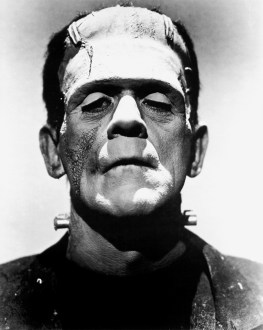
The label of deviance thrust upon Stryker (and Frankenstein) is socially constructed by the particular social audience that condemns their embodiment. I feel this condemnation is an obvious difference between the condemned and those in the social audience. This blatant separation creates a misunderstanding between the involved parties. I feel that, for most people, they are afraid of what they do not understand or what is “strange”. I think this fear is what fuels the demonization.
We, as humans, tend to condemn the different because we are afraid of it, just like we were afraid of the monsters we thought lived under our beds and in our closets. However, labeling someone a monster just for being themselves can have damaging effects if the individual takes this label and makes it a part of their embodiment; thus furthering the separation and isolation.
 Unruly Bodies
In order to understand why people would fear the unknown, it would be best to quantify what “unknown” represents, which is a part of existence that has not been previously familiarized, such as mental health or a high-stress situation like skydiving.
According to the dictionary (http://www.dictionary.com/browse/fear), fear is an emotion caused by impeding danger. Of course, since unknown makes no guarantee about incoming events, it would be easy to assume that there would be danger linked to the unknown.
As to why the unknown would be demonized, it would be due to some personal or collective interest. For example, the ostracization of foreign country would be an appeal to fear and a way to present oneself as the protector from the foreign country. Another way this fear is appealed to would be anti-African American sentiments in reconstruction-era America, using caricatures of African Americans and fear of those caricatures usurping white women’s purity and other abuses of freedom as reasons for preventing the dissolution of slave labor.
I suppose that fear is a tool of power that can be used to control opinions and actions, so it is a personal and social construct.
As someone who is also majoring in psychology, I have seen this fear of the unnatural categorized as a normal evolutionary urge, and just being “us vs. them”. While I understand the desire to explain this away as something caused by our genes, I feel that ignores how harmful this “fear of the unnatural” is. It can be extended to the fear of anything different, which feeds into racism, homophobia, transphobia, and a host of other dangerous and dehumanizing practices. Rather than passively hoping that the presence of diversity will chase away these prejudices, we have to recognize how harmful they are, actively look for them, and call them out!