Me Before You: A Tragic Tale of Romance and Assisted Suicide 

When I first watched Me Before You, I felt like my heart was ripped out of my chest. The story follows Louisa “Lou” Clark who becomes the caregiver of Will Traynor, a man who was adventurous before becoming paralyzed after an accident. Will unfortunately faces many challenges both physically and mentally, leading him to choose assisted suicide despite falling in love, and I haven’t been able to stop thinking about this movie ever since. Recently I started to question, if it was romantic, or was it reinforcing the idea that a disabled life isn’t worth living? After reading Nicole Schroeder’s “Dying a ‘Good’ Death: Disability and the Assisted Suicide Debate” from the Disability Visibility Project, I started to see the story through a completely different lens.

Before I fully dive in, I want to fully paint the picture of this movie. Firstly, Will’s parents hire Lou to care for him after his accident two years in an attempt to raise his spirits. Lou’s unapologetic, positive personality slowly breaks through his bitterness, and they form a deep connection. After finding out he plans to go to Swtizerland for assisted suicide, Lou tries her best to change his mind by trying everything from taking him to concerts and a trip out of the country. But in the end, Will does not change his mind even after falling for Lou. The movie paints his choice as noble as a way of reclaiming control over his life and giving Lou a chance to live hers. The final scene shows Lou reading Will’s farewell letter in Paris, smiling through her tears. It’s meant to be bittersweet, but it also raises difficult questions about what “a good death” really means, and whether society offers disabled people real choices about living.

Nicole Schroeder’s essay completely reframes this debate. She argues that the real issue isn’t about whether people have the right to die, but it’s about why so many disabled people feel they need to. She writes, “those of us protesting do not want people to be in needless pain; instead we want resources other than death to alleviate suffering while people are still alive.” That line stuck with me because it exposes how the conversation around assisted suicide often ignores the failures that lead people to that point: lack of access to care, isolation, and social neglect.

In the film, Will isn’t shown receiving much support beyond Lou’s companionship and his personal caretaker, Nathan. Even with wealth, he seems completely alone in a world not built to include him. Schroeder highlights that in a “hyper-capitalist world,” assisted suicide can become a cheaper alternative to improving care and accessibility. It’s haunting to think about how Will’s decision might have been shaped not by genuine choice, but by a culture that sees disability as tragedy especially after losing the hyper-active life he once had. 

One of Schroeder’s most important points is that assisted suicide is often presented as a form of autonomy, when in reality, many disabled people are making choices under pressure. She shares that in Canada, nearly half of those choosing Medical Assistance in Dying (MAID) cite feeling like a burden or experiencing loneliness. That statistic immediately reminded me of Will telling Lou he didn’t want her to give up her life for him. What sounds selfless in a romantic story becomes more complicated when you realize how society teaches disabled people to internalize guilt for simply existing.

The movie’s emotional framing makes Will’s death feel inevitable, even “beautiful,” but Schroeder challenges that idea. She calls out how assisted suicide has “eugenics-centered roots,” meaning that the very systems allowing it have historically viewed disabled lives as less valuable. When I look back at Me Before You now, I can’t unsee this unfortunate pattern that tangles up love, care, and death into a message that equates disability with hopelessness.

When I first watched Me Before You, I can still remember myself tearing up during the beach scene when Will tells Lou that he is still going to Switzerland after she pours her heart out to him. Me and many fans of this movie are still heartbroken over what could’ve blossomed between Will and Lou. But now, I think the real heartbreak isn’t Will’s death….it’s that the story never gives him another option. Schroeder’s essay reminded me that true dignity doesn’t come from the “freedom” to die; it comes from having the support and resources to live fully. The film romanticizes Will’s choice, but if it reflected the realities Schroeder describes like underfunded care systems, social isolation, and ableist messaging, it might look less like empowerment and more like surrender to a world that failed him.

I still love Me Before You for its intensity and emotional honesty, but I see it differently now. It’s not just a love story; it’s also a mirror of how our society defines whose lives are worth fighting for.
Hydration and Health Normativity

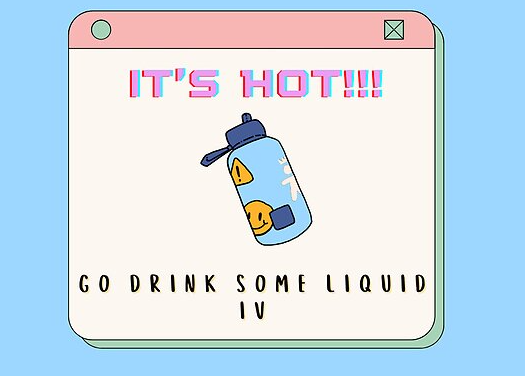
A sticker of a computer pop-up with a water bottle reading “IT’S HOT!!! Go drink some Liquid IV” by the artist disablelovely on redbubble.

When I was younger, I knew something wasn’t exactly right with my body. It wasn’t necessarily hard to see, but one of the biggest issues always had to do with water.

Continue reading

Regarding Sick Girls, Women, and All Those Perceived as Such

The body perceived as a ‘woman’ is the body assumed to contain a hysteric mind. While this concept is pervasive in every aspect of our society, one can especially see the ways in which past thoughts on the ‘gendering’ of bodies determine how one is treated when looking at medical settings. Looking at this from a phenomenological point of view, others’ perception of one’s body leads to a complete denial of one’s internal experiences.

Continue Reading →

A Nightmare in Healthcare

Before reading I just want to put a warning that my emotions were high during this post and I hope I don’t offend anyone who is going into healthcare or have family in healthcare.

As a little kid you are taught the basics; police officers arrest the criminals, firefighters put out the fire, dentists clean your teeth, teachers teach and lastly a doctor “helps” you with a stomach ache or something.

Well this can be true and untrue at the same time considering that we have this huge issue of doctors refusing treatment that occurs in the healthcare system since the 18th century. Sadly this is a recurring nightmare for POC because it continues to be a problem that POC don’t receive the same fair treatment as a non-colored person in the healthcare system. 20-30% are more likely to experience negative healthcare outcomes due to racial bias, now this percentage is continuing to be documented as research continues so this number could be higher or lower. But after hearing Lovejoy’s story about how she went misdiagnosed because she had something that only “white people” can have is sad and the fact that she had to endure the pain that she did because of that.

Now you’re probably thinking what does this got to do with me well I’ll tell you. Now I didn’t experience this first hand but I saw with my own eyes happen to my mother in 2019. My mom at the time had kidney stones that bothered her that entire year. She went in for multiple tests while it was still at its early stage of development and I think you can guess that of course the doctor’s found nothing wrong at the time. During that entire year of back and forth hospital trips they couldn’t seem to figure out what could be wrong with her (all they had to do was check her blood) and when they did start finally doing that after months my mom had endured severe bruising on her arm and it swelled up because they spent a whole 15 minutes poking her with IV because they couldn’t find her vein on my brown skinned and veins showing at all times mother. When they finally found the issue by switching through different hospitals and instated her in the hospital I had to hear the news from her doctor that she was even lucky to be still alive since she went so long being untreated.

The fact that I almost lost my mother to a system that you’re taught will help when you’re ill is frightening to see as a young black woman. Those memories of my mother being treated unjustly and watching and hearing her be in pain for months and feeling hopeless because there was nothing that professionals can do for her something I will never forget. I was 16 when this happened and now I’m 21 still in fear of what could happen to me if I were to fall ill and have to go to the hospital.

Let me make my silly little choices, and you can make yours.

Let me make my silly little choices, and you can make yours.

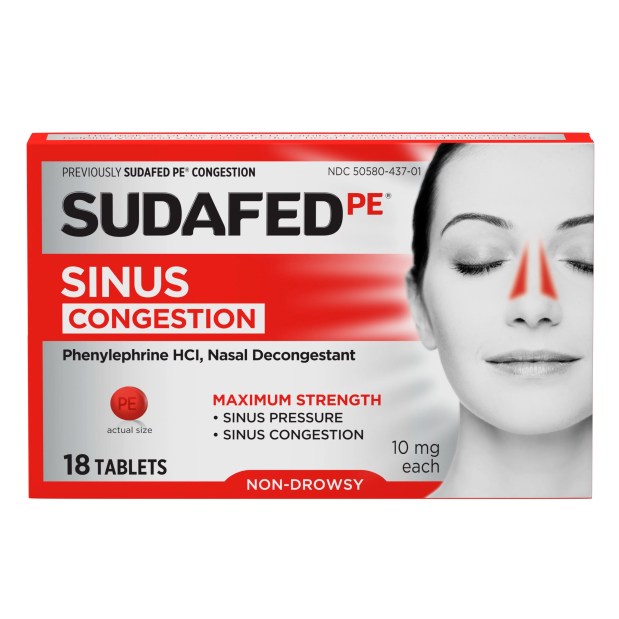
Front cover of the Sudafed PE OTC box.

Recently, an FDA panel announced that Sudafed PE and other decongestants are, essentially, ineffective. Since this announcement, I’ve seen countless articles pop up on my Google News feed about removing Sudafed PE, Mucinex, and Benadryl from the shelves. The argument to remove the medicines is that we shouldn’t be selling ineffective products–but are they really ineffective? An argument can be made that these are exceptionally effective placebos (sugar pills/ineffective medicine).

The placebo effect is well documented; even when a patient knows they are taking a placebo, sometimes just taking a pill helps to trick the body into the desired effect. Bodies and minds are weird, and whatever works, works. Even if Sudafed and its relatives are little more than placebos, I think they should be allowed to stay on the shelves. After all, the placebo effect can reduce symptoms by up to 50%, and that’s more than enough to convince me.

For all the many ailments I have–visible and invisible, temporary and chronic–very few have effective and fast solutions. There is no Xanax for depression, no Zofran for migraines, but there is Sudafed for a stuffy nose. Maybe it’s silly to continue to take something that has been proven not to work, but I swear I feel my sinuses clear up minutes after taking Sudafed. It allows me to get a restful sleep instead of battling with the correct sleeping position that allows me to breathe.

With the lack of effective medications available for a variety of illnesses, I am frustrated by the attempt to remove existing medications instead of putting new ones on the market. While I am not necessarily a fan of being stuffed full of pills, I like having the hope that maybe there is an accessible medication out there that will work for me. When the number of approved medications is even further limited, frustrated and exhausted people like me turn to home remedies and endless concoctions of honey, sea salt, herbs, and usually get roped into the wellness industry once or twice.

If Sudafed doesn’t work for general populace, there is nothing I can do about it. But whether it’s the placebo effect at work or there really is some merit to Sudafed, let me decide how to spend my money. Taking Sudafed off the shelves leaves me one less remedy for a restful night–and when I’m combating so many other ailments for a moment of peace, this tiny relief is a huge victory for me. Leave the silly little pill on the silly little shelf and let me make my silly little choice; you are free to pass it in the aisle if you wish, but leave some for me.

What about the “right-to-live?”

I remember when Jahi McMath died—for the second time. 

Senior year of high school, I came across an article about Jahi McMath, a 13-year-old Black girl who was declared brain dead after her tonsils were removed. It was Jahi’s first surgery, and she was scared. She didn’t want to go through with it, but her mom convinced her it would make her life easier (Jahi had sleep apnea, and removing her enlarged tonsils was intended to help). After speaking with the doctor, Jahi consented to the surgery, and she was fine for about an hour afterwards.

Jahi’s blood vessels were unusually close to the surface of her throat; the doctor had noted this in his chart for her, but the post-op staff was unaware. So when Jahi started coughing up blood, they didn’t see it as the alarm that it was, although Jahi’s family did. They repeatedly raised the alarms for her, but no one listened until her heart stopped.

Jahi was declared brain dead; her brain had stopped functioning due to the massive blood loss. In California, brain death is legal death. But Jahi’s family didn’t accept that. Her mother, Nailah, was convinced Jahi was still alive; Jahi responded to some stimuli and questions. Nailah asked Jahi if she wanted to be taken off life support, and Jahi said no through physical movements her mother taught her.

In the long legal battle that followed, Nailah and her family were forced to flee the state with Jahi under threat of legal action and jail time. Nailah’s insistence that Jahi was alive, and refusal to take her off life support, violated California’s medical ethics, so they went to New Jersey, where families can reject the notion of brain death on religious grounds—Nailah technically “kidnapped” Jahi to do this. There, Jahi had at-home around-the-clock medical support from nurses and doctors who were willing to lose their medical license or be shunned from the medical community; the doctors that treated Jahi were treated as quacks by the medical community. In the view of the community at large, you cannot treat a body that is already dead, and although Jahi’s body was not dead, her brain technically was. The California hospital where Jahi had been declared dead consistently disavowed the McMath family’s efforts and actively disparaged them for “desecrating a body.” But they were wrong.

With consistent care, and rogue researchers willing to look into her case, Jahi was able to exhibit signs of life, brainwave activity, and even underwent puberty. In 2017, a neurologist at UCLA independently confirmed that Jahi was no longer “brain dead.”

Jahi died—for the final time—in June of 2018, not even six months after the New Yorker article was published due to internal bleeding from abdominal complications. Despite overwhelming evidence, the hospital that issued Jahi’s death certificate refused to ever accept Jahi’s recovery and overturn her death certificate.

In 2020, I, much like Jahi, was preparing to go into surgery to get my tonsils removed for sleep apnea, just as she had been. Her name haunted the back of my mind in the days counting down to my surgery, but I, just like Jahi, spoke with my surgeon and asked him how many times he had done the surgery, what the risks were, how long he had been a surgeon. I had the insight that a 20-year-old had and a 13-year-old didn’t, but we were in the beginning of a pandemic, in the middle of the shutdown, and my mom wasn’t even allowed in the waiting room with me. Though I was nearly certain I would be fine (my surgeon routinely did much more complex and precise surgeries, like removing tumors that had grown into the blood vessels of the throat), I was alone when I frantically pulled the anesthesiologist aside and had to shamefully admit that I had been taking quinine pills until yesterday morning, a stupid superstition I had bought into as a way to stave off a Covid infection.

Quinine, for those unaware, is an herbal supplement that used to be used as a “cure all” back in the days of the Black Plague and the Spanish Flu. It didn’t work back then, but I’m a big believer in the placebo effect, and I needed to take something to put my mind at ease. One of the side effects of quinine—that I didn’t know until the morning before my surgery when I actually read the bottle—is that it can thin your blood. This makes you a higher risk for surgery; you’re more likely to bleed uncontrollably because the blood is much harder to coagulate. The bottle said to stop taking quinine two weeks before surgery. Feeling like I was going to cry, and possibly even about to die, I waited anxiously to be taken back and prayed that I would wake up afterwards.

Obviously, I did, or I wouldn’t be writing this right now. But I’m aware how lucky I was, and am. Jahi’s case is in direct opposition to Terry Schiavo’s: Terry Schiavo was a White woman declared brain dead who the hospital refused to stop treating, whereas Jahi was falsely declared brain dead and refused further treatment. Jahi’s family noticed this too; they knew if Jahi had been White, she would have likely received the attention she needed, and even if she had still been declared brain dead, her family’s choices would have been respected. Having come after both of them, and being light-skinned myself, I know my family would have had the respect and space they needed to make whatever decision for me they felt was right if my surgery had gone wrong.

Still, it haunts me; Jahi’s story is barely told outside of fringe medical pieces, but Terry Schiavo’s is well-known enough to be casually referenced in feminist writings. Who gets the right-to-live? Who is allowed to die? Why are our bodies’ needs and wishes ignored depending on the kind of body we inhabit? I hope Jahi is resting peacefully now, but I carry the anger and fear of what was allowed to happen to her.

How Covid Destroyed My Family’s Life

I am an immigrant but I came to America at a young age. When my family first came everything was great. Back home my parents owned their own business and they were doing pretty well. They had built a house from scratch with land they bought and I was daddy’s little girl. I got whatever I wanted and my closets were decorated with dresses of all sorts of colors in the rainbow. My sister and I went to a private school and we had our own taxi take us back and forth. Needless to say, I was living in a fairy tale, so I thought America would be no different.

At first everything was fine, then suddenly my life around me started to turn into a nightmare. My father became more and more distant and soon very scarce in my life. The man I had seen every day of my life was now a stranger to me. My parents divorced and my mom had to start from rock bottom. There were moments where we slept in her car, and had no home. My mother would scrape up everything she had just to get us food and sometimes there wouldn’t be enough for herself. She worked as a Certified Nursing Assistant and that took such a toll on her body that she ended up having to go into surgery to remove masses from her stomach. She worked at this job for 10+ years and made less than 25,000 dollars a year. But during all this, she made sure my sister and I had a good life.

When I started college, she went back to college and got her Nursing Degree. About 5 months before Covid hit she officially became licensed as a Registered Nurse. She called me on the phone so proud of herself saying how we were going to finally be able to do the things other families get to do like go on vacation. All her dreams had turn to reality, and again, like before her life suddenly turned into nightmare. Her job failed to give her PPD, leaving her at the mercy of covid, and unfortunately she caught it. Immediately we knew something was wrong. Her symptoms became more severe over time and she was not able to work anymore. The woman I had seen go through so much was defeated by a virus that no one was taking seriously. As I went to sleep I could hear her cry in her room because of all the pain.

During that time she talked about very bad things and it worried my sister and I for her safety. No matter which doctor she went to everyone would say it was all in her head. Or that she is old. She went through more than 8 doctors during quarantine and none of them would listen to her. As a black woman she felt betrayed by the health care system. I thought about this when we had discussed in class the issues with the health care system.

My family is back at square one. My mother had plans that she may never be able to fulfill, and I now have no motivation or hope for the world. I find it hard now to take school seriously because seeing everything my mother went through, will any of this ever be worth it? The stress, the anxiety, the late nights, not knowing what kind of job you will get when graduate college, the debt all seems like such a high price to pay when you might just end up exactly where you began.

Bedroom.

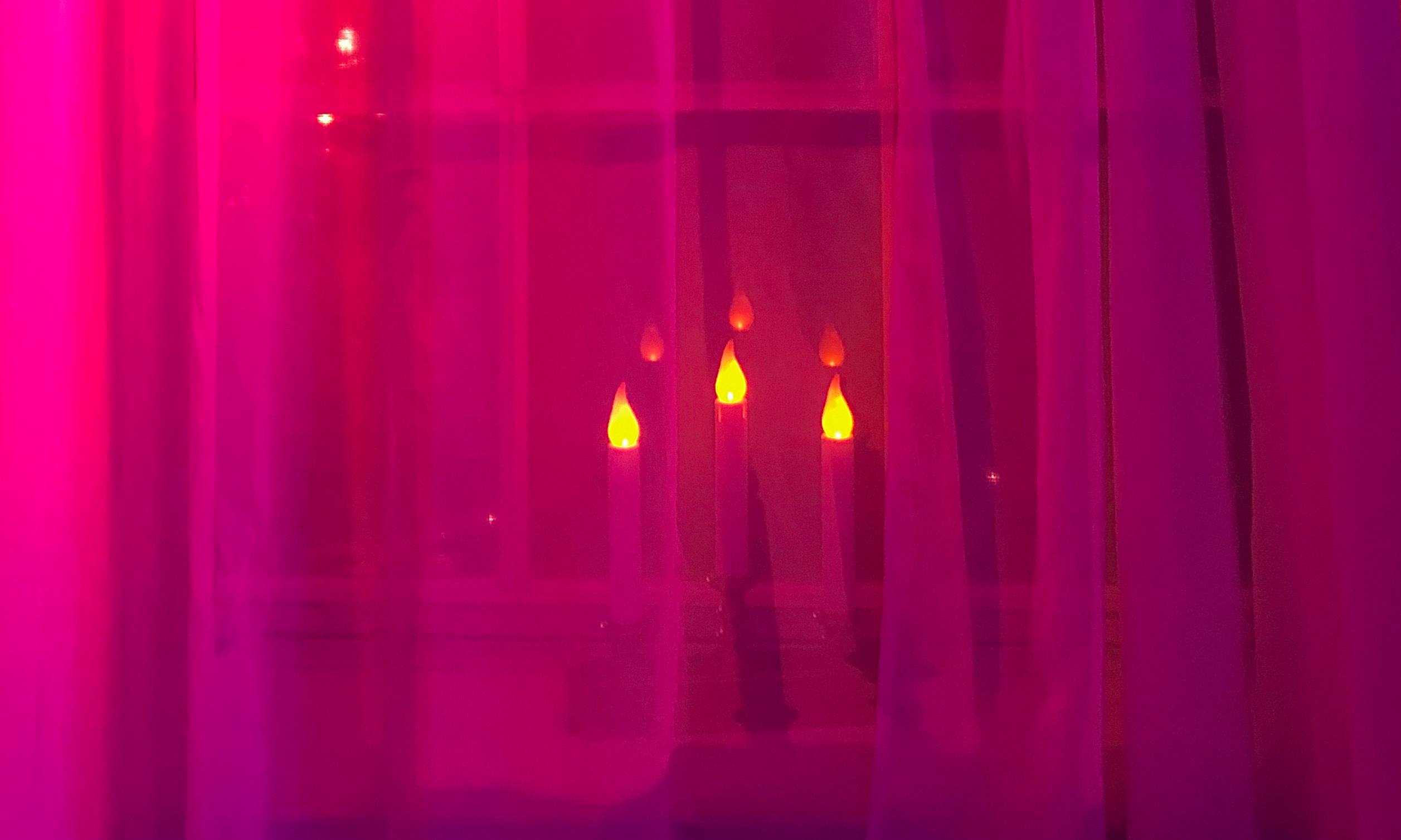
A view from my bed [ID: Hazy photograph of a window illuminated by vibrant red and purple lighting. In the center there is an electric candelabra sitting on the window sill, slightly obscured by sheer curtains.]

2011 was the year I began distancing. By which I mean, I began a life lived from my twin bed, fueled by goldfish crackers and electrolyte drinks, seldom able to access the outside world. It wasn’t mine to call home anymore.

I was drowning in conditions that these doctors hardly knew about. I had no choice but to become my own doctor, nurse, and historian. More than anything, I became my own community.

The outside world was stolen from me by sickness, uncertainty, and administrative violence – this world was never built for my survival. Such predicaments were met with constant calls to push through – go into the world anyways, risk it all for a “normal” life. They said adapting to it would make me better. It wrecked my body and my mind. Being bedridden was extraordinarily taxing and painful in a way that cannot be understood by those who have not been fully immersed in it in this way, yet. But I am inseparable from my bedroom life, I am made of soft pillows and the world I built among them. 

Continue reading

Should You Binge-Watch Embarrassing Bodies?

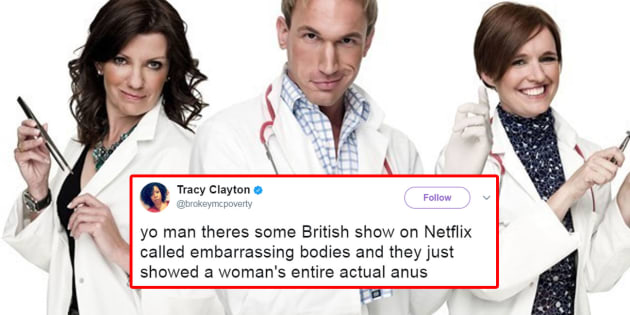
Image result for embarrassing bodies tweetsCircus Water Act


Netflix now carries the British series: Embarrassing Bodies, a show about three doctors who travel through Britain, opening pop-up clinics for passersby seeking cures for a wide array of ailments or deformities.  The show documents one-on-one consults, large group Q and A sessions on specific health-related topics (these are often set in schools, pubs, or other common public gathering places), street interviews on topics such as “baldness” or “boobs” and exhibits set up outside the medical tents where people can learn more about the inner workings of the body.  All of these interventions are designed to make people less worried about their bodies, while setting up expectations about what is “normal” versus what requires medical intervention.

It is hard to think of an American equivalent of this show, though there have been other international spin-offs: Wikipedia lists Embarrassing Bodies Down Under, Dit is mijn lijf (This is my body) in the Netherlands and the strikingly named  Я соромлюсь свого тіла (“I’m ashamed of my body”) in the Ukraine.

Continue reading