
Queerness, at least within queer theory, is the breaking of social norms. Disability breaks the norms of ability, gender, and sexuality. Therefore, Disability is queer.
Continue readingdisability
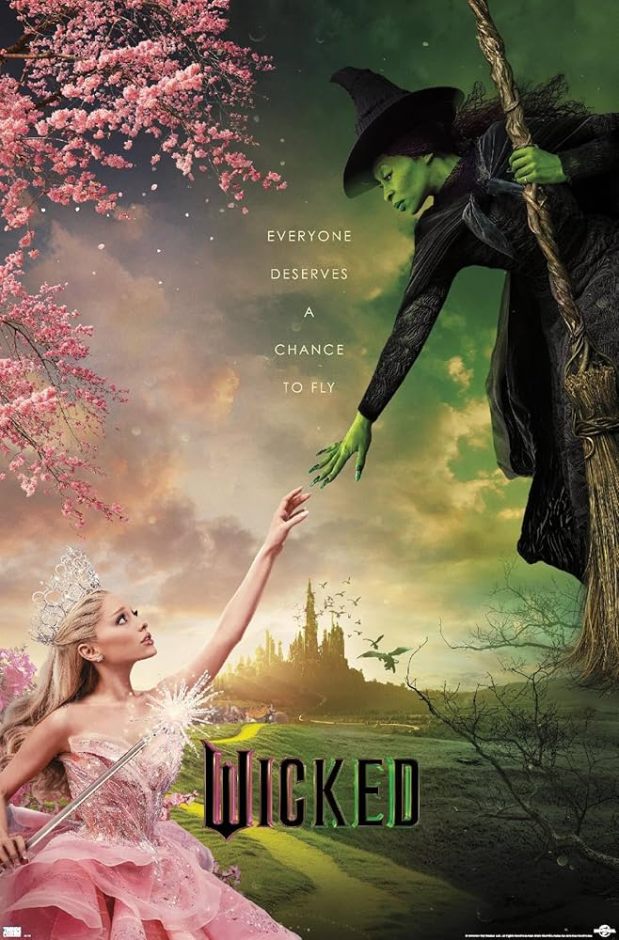
No One Mourns the Sick: The Wicked Myth That the Pandemic Is ‘Over’
You don’t have to watch Wicked to know its famous line—“No one mourns the Wicked”—which basically means that some people aren’t worth grieving. This kept echoing in my head when I heard that both lead actresses of the Wicked: For Good film recently tested positive for COVID.
According to a recent Guardian article, “Both Grande and Cynthia Erivo tested positive for Covid during the filming of the first movie, temporarily delaying production. Erivo reportedly contracted the virus days before shooting the climactic first-act number Defying Gravity, while Grande tested positive before filming the song “Popular.”
The same article notes that during the current press tour Ariana Grande again tested positive, forcing her to miss several events.
That news made me think of Mia Mingus. In her blog “You Are Not Entitled to Our Deaths”, Mingus challenges the idea that disabled or sick bodies are disposable and that those lives aren’t worth protecting or grieving. After reading this blog and our discussion in class, it made me remember hearing about the Wicked news. It made me realize we’re acting like COVID is just a production hiccup, an inconvenience to filming or press tours, rather than the ongoing threat which is killing and disabling countless people. The fact that both leads got sick, during filming and promotion, yet the media and public reaction centers on delays, missed appearances, and disappointed fans speaks volumes.
There’s something horrifyingly Wicked-like about how illness is framed now. If someone masks, they’re “paranoid.” If they don’t appear for a photoshoot or premiere, fans complain. When someone gets COVID, the conversation is about wasted money on promotion, fan backlash over missed premieres, or travel delays , but rarely about health, recovery, or the toll illness takes. The framing treats sickness as a hiccup, not as human suffering. It treats the sick body as a burden to the show, not as a person in need of care.
“Grande’s positive test was the latest hiccup for the full-court Wicked press blitz that has seen the cast hop continents by the day. Due to flight delays, Grande was unable to make the premiere in Brazil, triggering fan backlash she also addressed on her Instagram.”
That is exactly the kind of abled entitlement Mingus warns about: a culture that assumes certain bodies can and should be sacrificed for convenience. Under this logic, “the show must go on,” regardless of who gets hurt. The Wicked cast situation isn’t just celebrity news, but it’s a reflection of a larger societal pattern where health, disability, and our shared vulnerability are minimized, ignored, or erased entirely.
What’s even worse is how normalized this erasure has become. COVID has become “another thing,” something to power through so cameras and promotions stay on schedule. Workplaces expect people to show up sick. Students are told to push through fevers. Long-term effects are brushed off as “just fatigue.” Public health infrastructure? Largely forgotten. Masks, ventilation, testing are all optional. People who get sick frequently or live with chronic conditions are expected to adapt or be pushed aside.
Mingus doesn’t just name this as negligence, she instead frames it as violence. When we treat care as optional, when we prioritize productivity over people, when we mourn canceled premieres more than lost lives, we are making a statement about whose lives matter. We’re deciding who gets protection, who gets grief, and who doesn’t.
We shouldn’t act like the pandemic is over. We need to stop shrugging when someone gets sick, framing illness as inconvenience, or acting like the only thing that matters is the show going on. Production, entertainment, or convenience is not more important than actual human lives. Because if we care at all about disability justice, about valuing every life, then we can’t pretend the pandemic is done. We have to mourn the sick. We have to fight for care. And we have to stop believing the myth that pushing on by ignoring risk, ignoring illness is normal or acceptable.
A Modicum of Power, Respect, and Autonomy
Within the strictly imposed, purposeful, and artificially manufactured hierarchy of our society, the term ‘power’ consists of numerous meanings. The first definition that most think of is how, in many settings, power is about dominance, control, authority, and oppression. It is a matter of commanding people how to act, what to look like, and where to place one’s body. This is presumably the type of power that most incites the oppressor or the privileged to fear any semblance of gain from oppressed groups, as one’s acquisition of power is identified as something that only happens at the detriment of another’s. It is as though some are terrified that they will be unable to impart shame, terror, disdain, or indifference if those they subject to such tools of oppression and control have enough power to refute their efforts. When someone places themselves wherever they choose, exists in a body that defies social norms, or performs actions that are implicitly or explicitly forbidden without politely carrying the emotional or cognitive burdens for others’ comfort, the power dynamic experiences a significant shift.
Perhaps this view of power, as if it is a finite resource, is why our society so carefully enforces arbitrary rules and prioritizes those who can embody them. One can see this when Roxanne Gay is shouted at by a stranger who feels entitled to comment on her body, when civil rights protesters are subjected to horrific violence for challenging atrocious laws and attitudes, when the demands of disabled protestors to attend the activities of everyday life are ignored, and when incarcerated people are forced into appalling conditions. The same message applies: if we cannot control every aspect of your physical being, we will at least attempt to control our view or knowledge of your presence.
In parallel, power can be regained by the supposedly powerless in many ways, such as when one reclaims one’s autonomy and refuses to accept, either internally or externally, the disrespect one has been bestowed. What is power, if not the presence of respect? What is power, if not autonomy over oneself, and even over others? Power is in the ability to go on with one’s day without being harassed and criticized; it is in the circumstances that allow one to move about the world freely, without social or physical barriers; and it is wholly anchored in the presumedly simple concept of peacefully living one’s life however one chooses. Why should one not have the opportunity and ability to determine one’s own life as much as possible in one’s circumstances, with as few barriers as possible? One should further ask oneself, why is seeking oppressive power over others normative and incentivized, yet the simple request of wanting to be seen and treated as human is consistently dismissed as grossly idealistic?
Paper Promises
Many students in the education system today have a disability. This can range from having autism or being in a wheelchair. There are protections for children, but without proper enforcement, there is room for bullying or even hate to happen in an education system. We know children don’t know any better. We can give them a little room for forgiveness in some cases, but it is up to the adults in the children’s lives to teach them principles in a diverse environment. It’s usually easy for some to be respectful to others, but there are always those cases where we love to give a side eye to those who are awfully disrespectful, blatantly or passively.
We establish rules. It’s a policy. If you don’t follow this rule, we will penalize/punish you. But, we all know it is very easy to get away with things in a crowded environment like a public school (all schools are different, but I am speaking from my experience). How do we enforce rules when broken rules are missed? We don’t. We leave it up to those around them to have to courage to go and tell an adult. This can be difficult for some children, especially when there are so many factors that come into play. A child can know something is wrong, but feels socially unable to tell their teacher when they run the risk of getting shamed by their peers.
This happens out in the real world. “Snitches get stitches.” We’ve all heard this phrase. It’s used from the smallest things to elaborate criminal organizations. Sometimes we feel as if the negative consequences will always outweigh the positives when it comes to speaking up. We can see this when we second-guess asking for a re-mark on an exam to asking for help when we cannot make ends meet. In Crip Camp, they demanded that their rights actually be enforced. This shows the importance of actually saying something about what is wrong with the laws in place. Section 504 of the Rehabilitation Act is a federal law that prohibits discrimination, not a policy that we can miss with the consequence being well-being. The things that they protest for are rights that have been passed by legislation and signed by the executive. Although policy is still enforced by regulation, like consequences, a law is something that we should, by no means, have to be compliant with being ignored.
Hydration and Health Normativity
When I was younger, I knew something wasn’t exactly right with my body. It wasn’t necessarily hard to see, but one of the biggest issues always had to do with water.
Continue readingA Spectrum of Expression
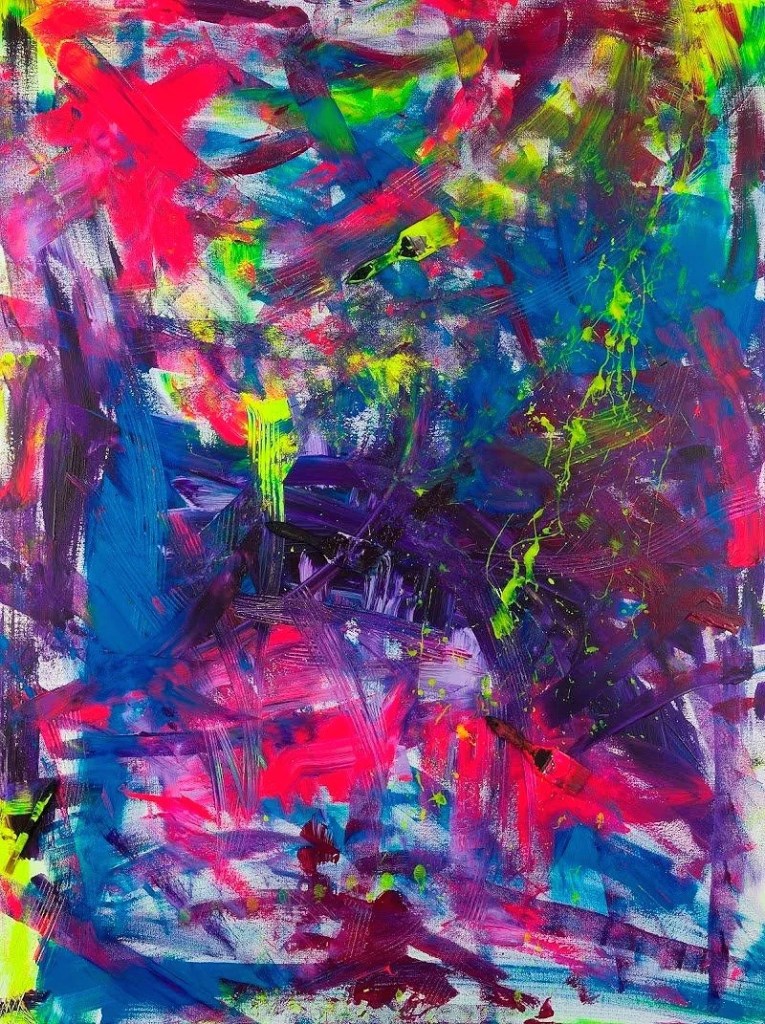
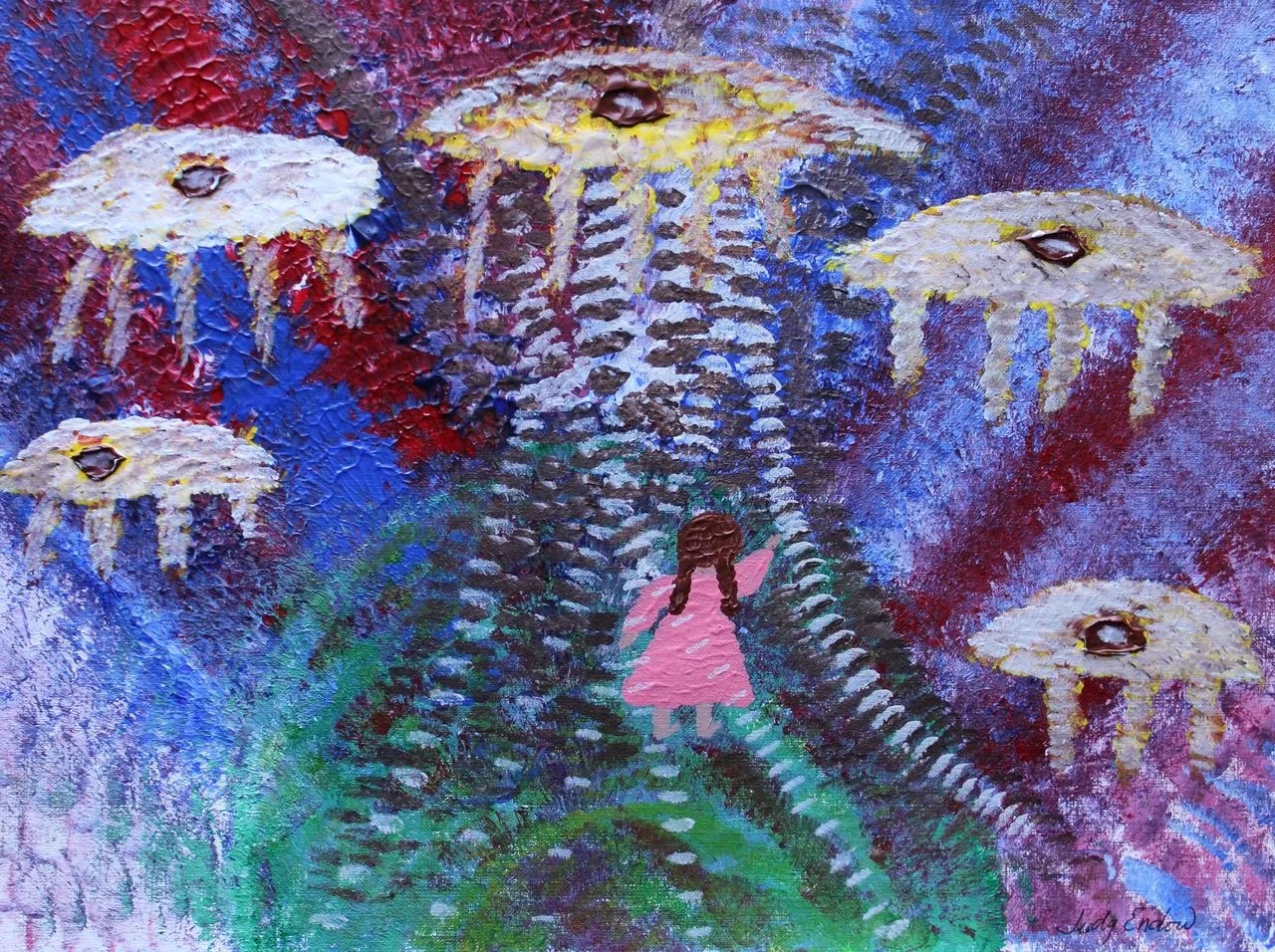
The image above is an untitled UV acrylic painting by Cecile Lobert, an autistic and non-verbal painter. Every autistic person deserves to have their story seen, not just those of us who communicate through traditional methods. Cecile may not use words, but she expresses herself vividly and gives us insight into her life that others cannot do for her. She uses textures, colors, and emotional depth that past and present messaging from neurotypical people leave out.
In 2009, a non-profit advocacy group called Autism Speaks released a nationwide PSA called ‘I Am Autism’, which featured a voiceover from the perspective of their personification of autism. Here are a few lines from the PSA:
“I work faster than pediatric aids, cancer, and diabetes combined
And if you’re happily married, I will make sure that your marriage fails.
Your money will fall into my hands, and I will bankrupt you for my own self-gain.
I don’t sleep, so I make sure you don’t either.
I will make it virtually impossible for your family to easily attend a temple, birthday party, or public park without a struggle, without embarrassment, without pain.
You have no cure for me.
Your scientists don’t have the resources, and I relish their desperation. Your neighbors are happier to pretend that I don’t exist”
Autism Speaks has since apologized for their PSA, but the damage has already been done. Like Chimamanda Ngozi Adichie explains in “The Danger of a Single Story”, people form lifelong beliefs about others based on the first stories they hear about a demographic outside of their own, especially if they never hear from the demographic being discussed.
16 years after ‘I Am Autism’ aired, the Secretary of Health and Human Services said in a nationwide press conference that autistic people will never be able to pay taxes, hold a job, write a poem, go on a date, or use the bathroom unassisted. If you are autistic and or have been emersed in neurodivergent spaces, you know that depiction is not true and certainly not whole. Even autistic people who experience the struggles described above, they can and do have vibrant, meaningful, happy lives. The Autism Speaks PSA and the HHS secretary’s statements are both centered around arbitrary lists of things they think autistic people cannot do, framing it as if not being able to do those things makes autistic people’s lives miserable and empty. These narratives influence the greater population’s perception of disabled people, which then influences policies and practices that harm disabled people.
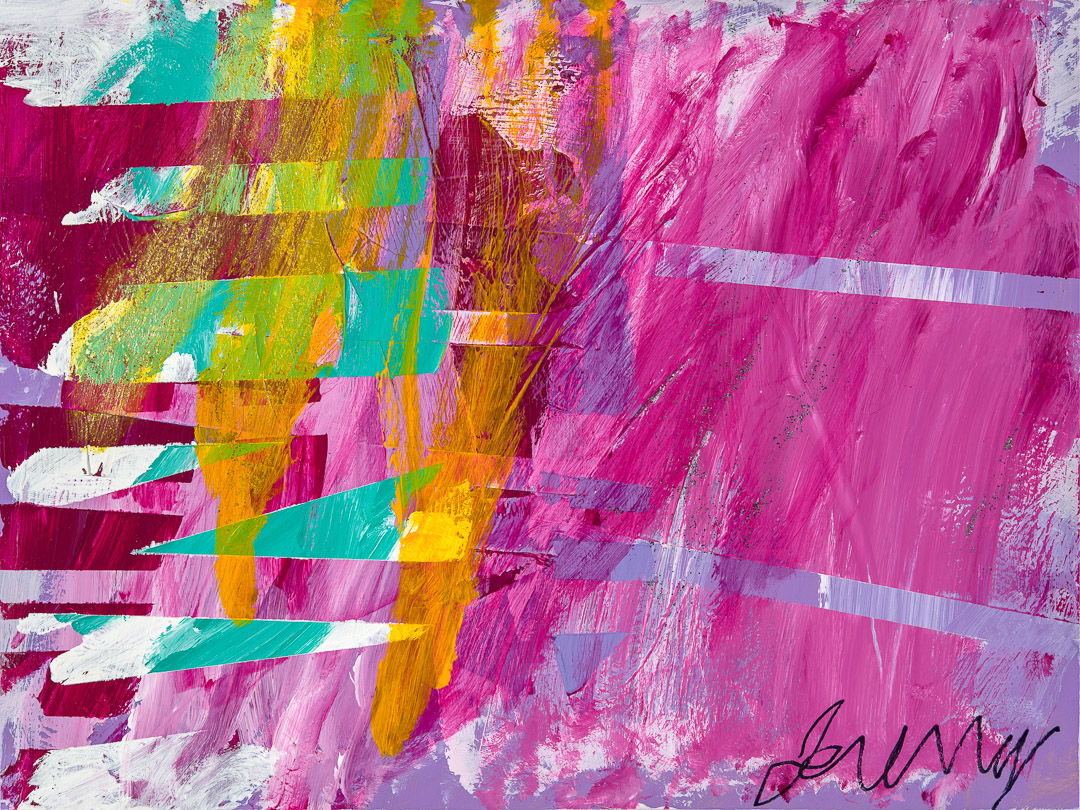
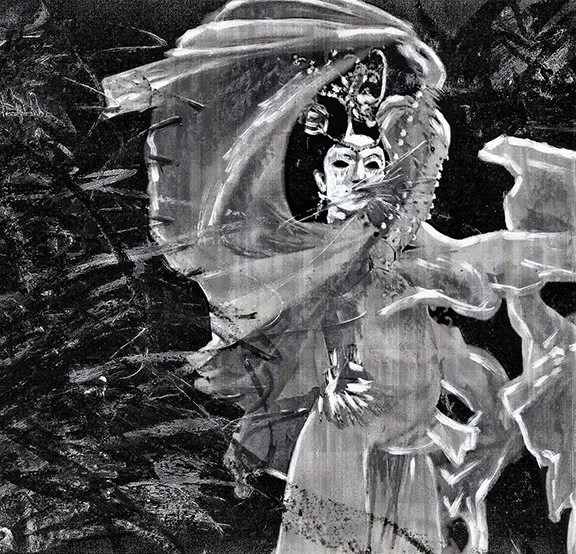
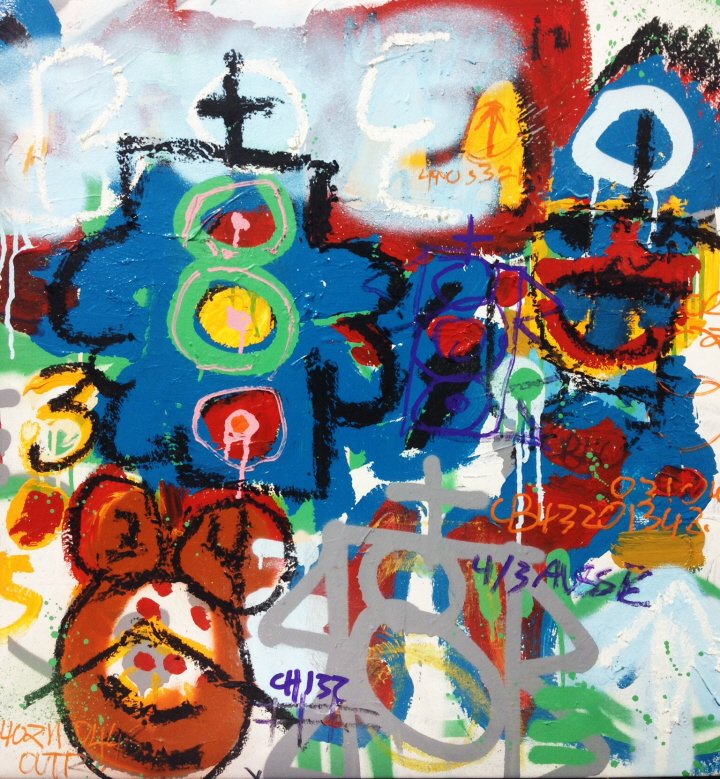
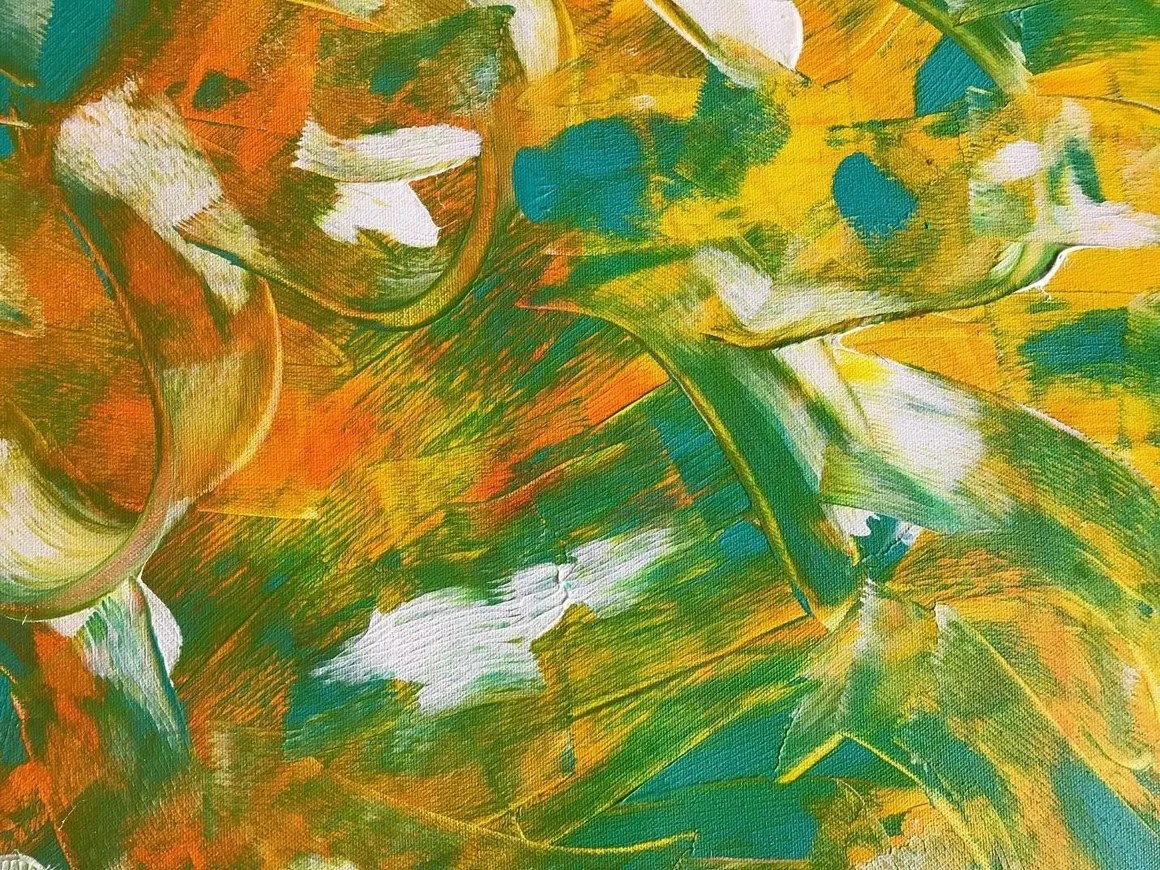
Below you can see more art from autistic artists. Seeing through their eyes rather than the scornful eyes of people who wish to eradicate autism gives them agency and a voice that is being stripped from them. I hope the depth, color, texture, and care put into these pieces allow you to see the depth and range of autistic people’s experiences and abilities which have been downplayed by people with a lot of influence and reach.
Deaf Fest
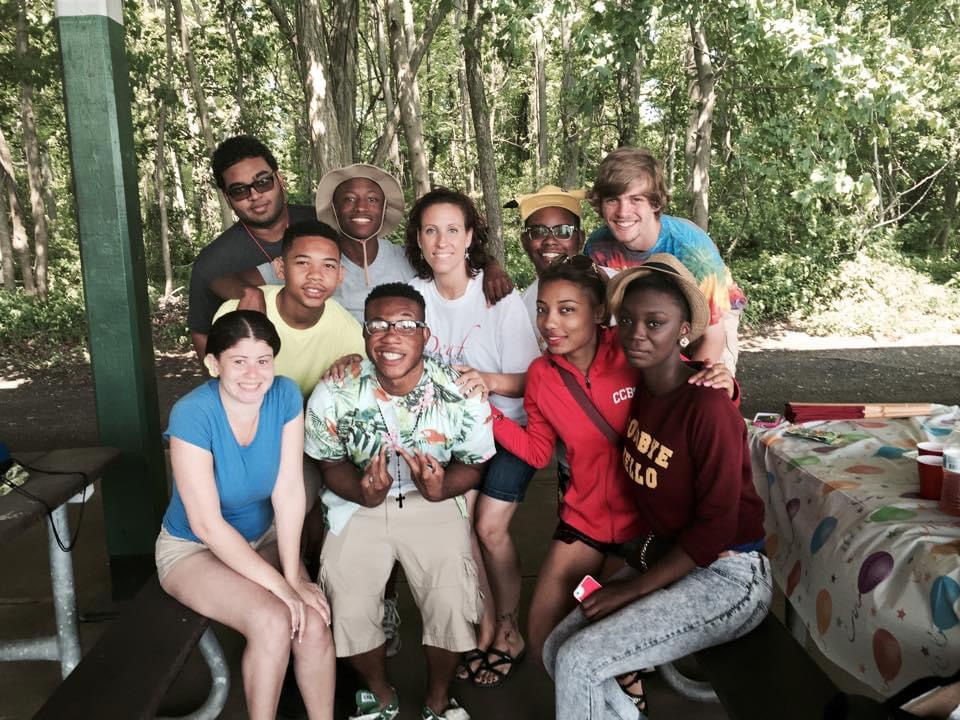
As I was watching Crip Camp (2020) for this class, I was reminded of one of my favorite childhood memories. My mom was a special educator for the Deaf and Hard-of-Hearing for around 25 years. She used to teach in the city schools of Brooklyn, and began working in Baltimore City when my family moved from New York to Maryland. My mom was like a second mother to her students. She would often bring hot food to her students around the holidays, crowd-source school supplies, teach her students Latin-dancing, and even would have some of her students over to her house when they were having a rough time at home. I treasured the days that I was able to come visit the classroom and her students. It always made me smile to see how my mom so deeply cared about her kids.
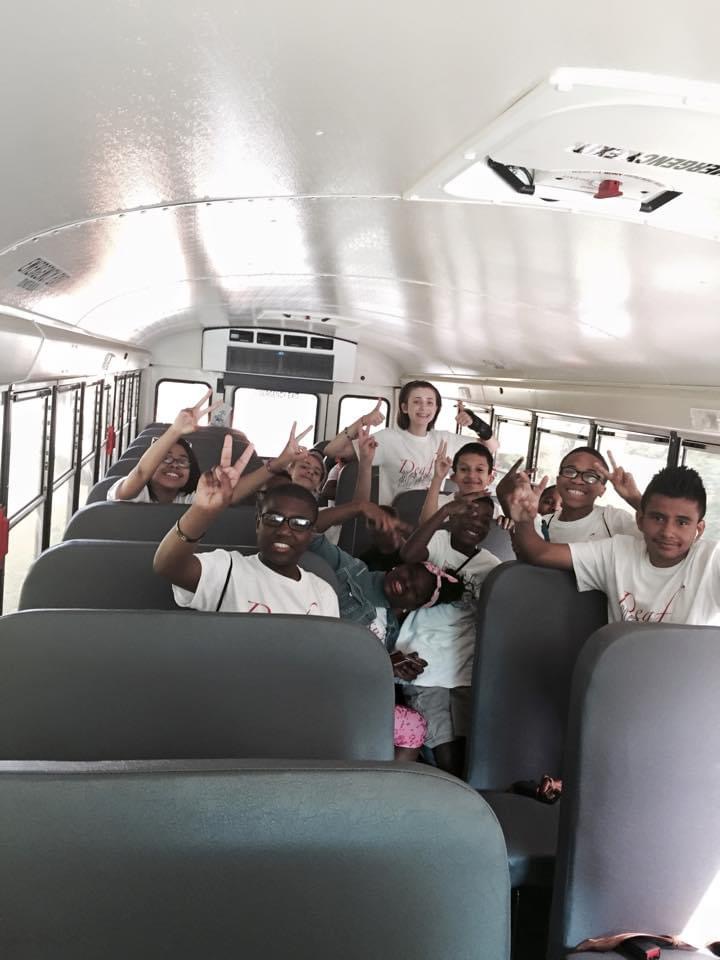
One of the things my mom and the other teachers did for the Deaf and Hard-of-Hearing students every year was Deaf Fest. One sunny day at the beach every year, complete with matching t-shirts designed by my mom, grilled hotdogs, hamburgers, pavilion snacks, arts & crafts, and games. The bus ride to the beach was loud and cheerful, and every student was so excited for the festivities to come. The students gave me my sign name during Deaf Fest one year- the letter “S” combined with the sign for “dance”, because I was always dancing around the classroom when I came to visit them. On the bus and in the pavilion, my mom’s students would help me learn sign language by signing to me. Even though I was very young during these years, I could feel the powerful sense of community Deaf Fest brought.
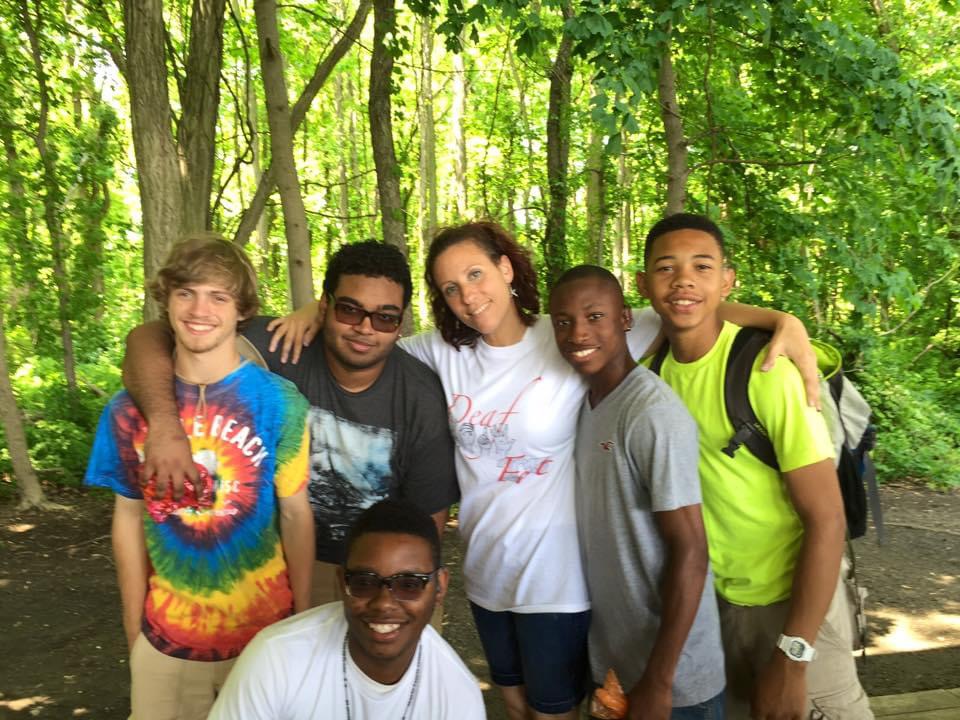
Although Deaf Fest only happened one day at the end of the school year, I was reminded of the happy memories it brought as I was watching Crip Camp. Nostalgic images of Deaf Fest floated through my mind while I witnessed the ways in which Camp Jened members were seen and supported during camp. I also saw resemblance in my memories of the days spent in my mom’s classroom, how the school system rendered these kids invisible to the hearing world. In my college years, I find myself eternally grateful for being able to experience the joy that Deaf Fest brought to my mom’s students, and I hope that I have the privilege of experiencing that level of community again.
Autistic Masking & Trans Passing — The Venn Diagram is a Circle
Autistic people are a lot more likely than the neurotypical population to identify as transgender — something I personally chalk up to us having a keener eye for social norms that make no sense (the gender binary being no exception). As an autistic trans person who has to deal with the social repercussions of both these parts of myself, I have noticed how society is built not only to prioritize cisgender neurotypical people, but to actively shun those who don’t fit in either category in very similar ways.
Continue readingMy Experience with Gendered Autism
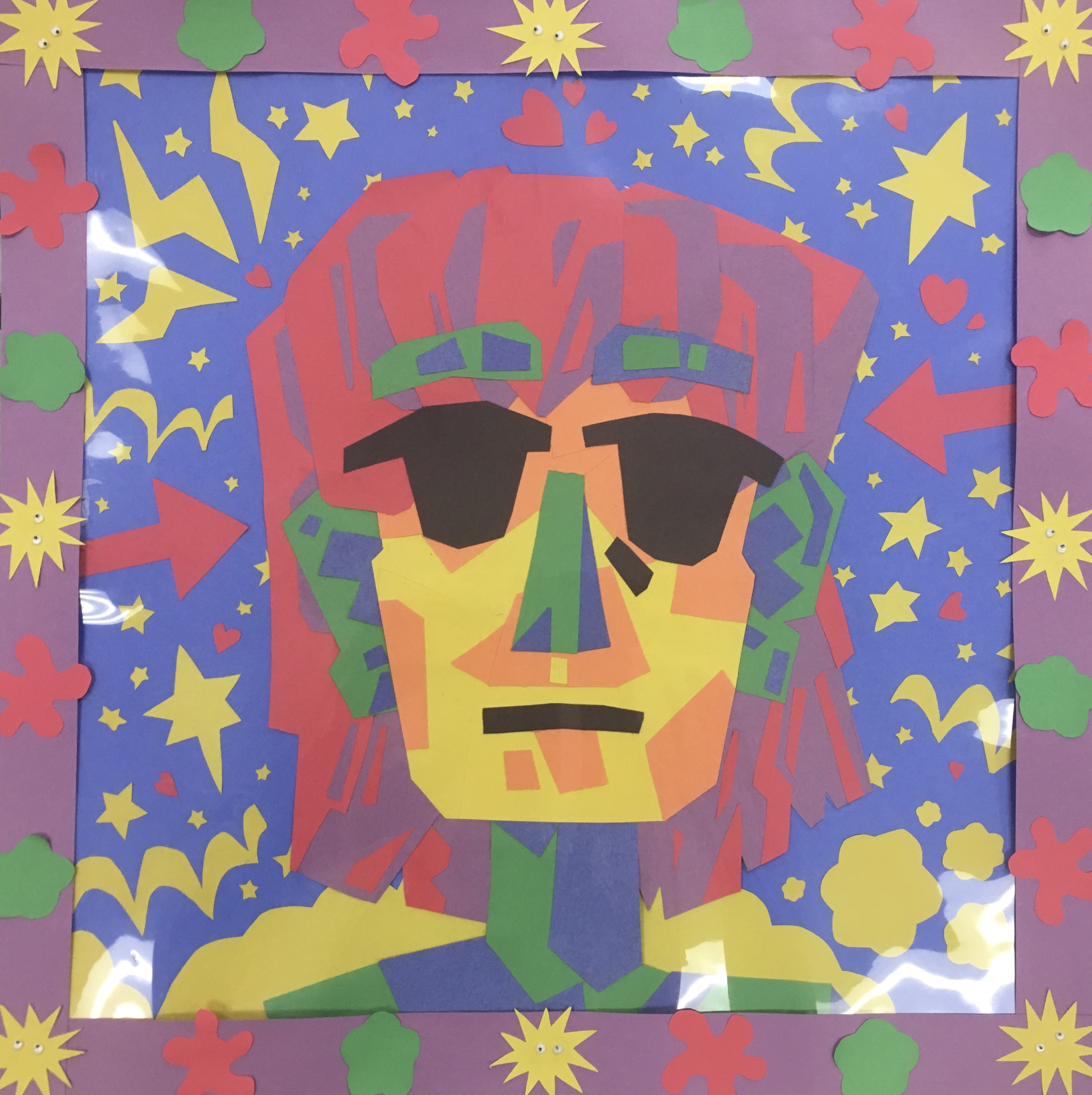
Growing up it was incredibly obvious I was on the autism spectrum. I was very rule-following and smart at school, getting described as “demonstrative” by preschool teachers (who calls a four year old that word?), but was very sensitive about minor things like the texture of lotion or potatoes or certain fabrics, or toys being organized differently from the way I wanted them, or frustration with not being correctly understood. While no diagnosis is the same, these are signs of being on the spectrum, and at three years old when my mom talked to a friend who was a psychologist she posited that I might be autistic.
But when I went to get evaluated, four year old me was denied an official autism diagnosis. Then I was denied again at age seven, and instead put under the label of Sensory Processing Disorder. I finally got the Autism Spectrum Disorder diagnosis at age 12 (a year after also getting diagnosed with anxiety and depression). I also found out that in the years before the DSM-5, I was on the part of the spectrum that would have been denoted Asperger’s Syndrome, but luckily I got the diagnosis too late to become attached to that term and was educated of its problematic origins.
Looking back on my history of diagnoses, I always wondered why despite it being obvious with all my quirks growing up I was over and over again refused a clear answer. But learning about gender and disability studies/justice in the last couple years, it has become apparent why: I grew up a girl.
I was very lucky to have the privilege of parents that let me express myself whatever way I wanted as a kid, and I did exactly that in my special interest of dinosaurs, which were gendered as a “boy” thing. But I realize that I was still unable to escape the social part of socialization: Specifically, the experience of girlhood (as I have understood from mine and others) that involved making yourself and your problems smaller, while boys around the same age were allowed to be loud and take up space.
This difference was especially present when looking at the differences between ways that autistic cisgender boys expressed their traits without much dramatic behavioral intervention or judgement from other kids, such as verbal or physical expressions of stimulation. Meanwhile, if a young girl was perceived to be “different” in the way they behaved, they faced more bullying and ostracizing than boys might. So as I grew up into the American school system as a girl, I learned that I would face more unspoken social consequence for expressing my traits, and thus felt more pressured to mask. And as these traits went unexpressed, from classrooms to doctor’s offices, they too went undiagnosed.
Finding out that this experience I had growing up was validated through the study of how disability is embodied differently across genders and social standards (as Shakespeare implies, there is no accurate one-size-fits-all model of disability), I felt quite vindicated honestly. Even after transitioning and finding community with other transgender autistic people, I can still see this difference in how traits are expressed due to assigned-at-birth-gender socialization. I worry that I may seem annoying at times for making this intersection of my identities my “personality,” but with how much I’ve come to terms with how it has affected my entire life I cannot really deny its stake in the person I’ve grown up to be.
Disability, Pain, & Pride
When we read Shakespeare’s Social Model of Disability, it introduced a concept I had never considered before. At first, I did actually like it, but the more I thought about it, the more my thoughts changed.
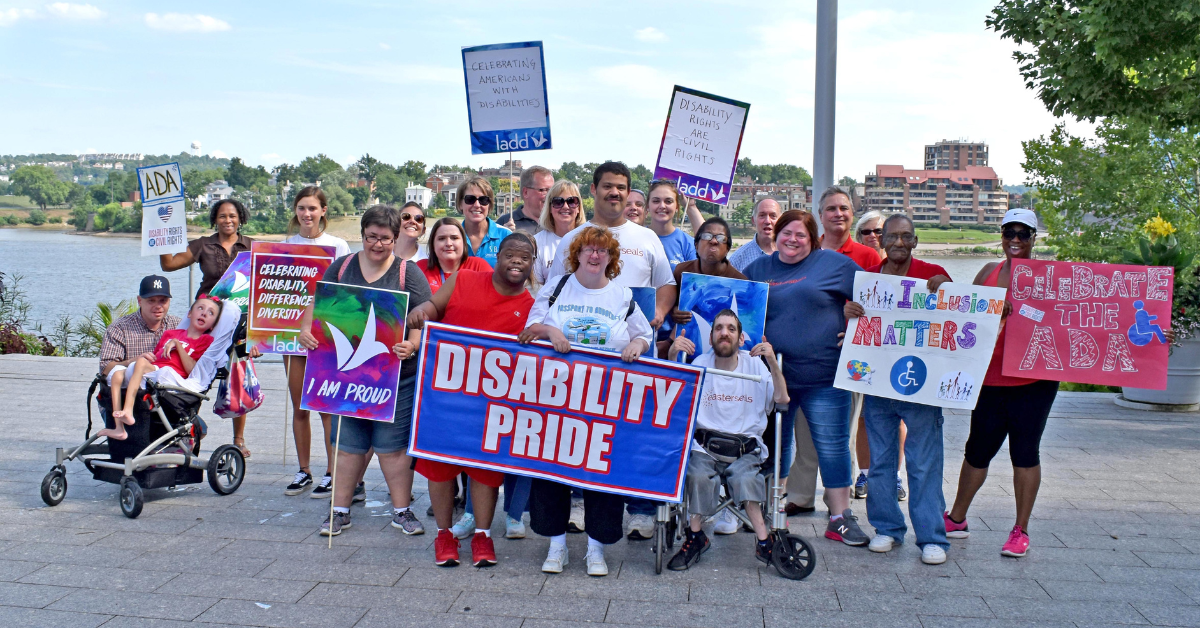
I am someone who is both physically disabled and neurodivergent. I have always been neurodivergent, of course, but my physical disability did not become more prominent until recently; and with it has come shame. I think this is why I was drawn to the social model of disability at first. I am ashamed and embarrassed of the visibility that comes with my disability and how I have to accommodate it. Reading this social model helped me think of this shame in a new light, however – it is not my fault I am ashamed. It is the society around me who has made me embarrassed and forced me to push myself past my limits countless times.
At the same time, however, I realized that this is not fair to myself and my identity as a whole. Yes, it is the society around me that has caused me shame and embarrassment and an unrealistic stubbornness that makes me push myself. But that does not take away the pain I am in, or the potential complications of my disability. And even if it is “just” society causing this shame, that doesn’t take away the pain from the nights I’ve wasted staying up wishing with everything in me I could be “normal”, wishing that I could just understand social cues and not have sensory issues or anxiety or mood issues.
It also takes away from the community I’ve found in spite of this pain. I’ve had negative social interactions because of my neurodivergency and my disability, but framing these things as purely societal issues takes away from all of the positive aspects of social interaction while disabled. I am always so grateful for that community and the people that have been there for me consistently. I’ve learned a lot about both myself and the world around me as I navigate being disabled and neurodivergent, and even though there are bad days, I love the community and the people I’ve found, and I love our persistence despite the pain we experience, regardless of where it comes from.
Image source: https://www.hamiltondds.org/cincinnati-region-celebrates-disability-pride-in-july/

