
Work and Worth: A Journey

As a college student, I’m constantly juggling classes, assignments, and part-time jobs, and I often feel like I’m being pulled in a million directions. It’s exhausting, and I sometimes find it hard to keep up with everything. Beyond my studies, I want to be there for my friends and family, but it often feels like I’m barely keeping my head above water. Lately, I’ve been thinking a lot about how work and health are connected, especially as I prepare to step into the workforce. The transition to independence is daunting, and one of the biggest challenges I face is figuring out how to take care of myself amid all the chaos. Unfortunately, essential topics like nutrition, stress management, and work-life balance are rarely taught, leaving me to navigate them on my own.Reflecting on the history of labor in the United States, I realize that the fight for workers rights has been long and difficult. Over the years, labor movements have battled for fair wages, reasonable hours, and safer working conditions, paving the way for healthier workplaces today. But after reading “Made by the Work: A Century of Laboring Bodies in the United States” by Ed Slavishak, my perspective on the human cost of labor has shifted profoundly. Slavishak dives deep into the harrowing experiences of early 20th-century workers. It’s hard to fathom that laborers in steel mills and coal mines faced daily dangers and grueling conditions, with their bodies treated like mere tools for productivity. One statistic that struck me was that over 25,000 workers died every year from workplace accidents. That number is staggering and heartbreaking. It hits close to home for me because it makes me think about how easy it is to overlook the sacrifices of those who came before us, who were seen as expendable and pushed to their physical limits until they broke.

Sitting in my cozy dorm room, surrounded by textbooks and my laptop, I feel a mix of privilege and guilt. I belong to a generation that, for the most part, doesn’t have to face such dire conditions. It’s easy to take that for granted, especially when I’m so consumed with my own struggles. While my working environment is much safer, I can’t help but feel frustrated by how companies historically handled safety or neglected it entirely. They placed the burden of safety on workers, insisting that “the best safety device was a careful worker” (p. 152). That mindset is infuriating because it shifts the blame onto the very people who had little control over their situations.As Slavishak points out, corporate safety campaigns “shifted responsibility to avoid the costs of updating machinery or improving ventilation” (p. 152). This is maddening. It reminds me of the pressures I face in college. I often feel that I’m expected to power through exhaustion or even illness just to meet deadlines. I think about how many workers today might still feel that same pressure to sacrifice their well-being for the sake of productivity.Learning about unions and workers’ compensation laws has given me a profound respect for those who fought for workers’ rights. They understood that workers deserved to be valued for more than just their output, advocating for crucial things like life insurance and compensation for injuries. Slavishak notes how the insurance department of the Amalgamated Association of Iron, Steel, and Tin Workers directly asked its members, “What are your chances of living twenty more years? Can you afford to tempt fate?” (p. 153). That question resonates with me. It makes me think about the importance of community and looking out for one another in college. We’re not just isolated individuals scrambling to succeed; we’re part of a network that can uplift and advocate for one another. As I navigate my college journey and prepare for the future, I’m reminded that the fight for dignity in the workplace is far from over. It’s not just about securing a job; it’s about creating a work culture that values us as whole people, not just for our productivity. Reflecting on the struggles of past workers fills me with a sense of responsibility to carry their lessons into my own life. Balancing everything can feel overwhelming at times, but I know that by supporting each other, we can work toward a future where every worker is treated with respect not just for their labor, but for their humanity.
The Safe Space

In class, we were learning about experience, about phenomenology. I understood that with our experiences we add in our senses (taste, touch, sight, hearing). I was honestly stumped on what I could talk about. I know that I have many different experience as a woman. But then I started to think about a specific place that made me feel safe…

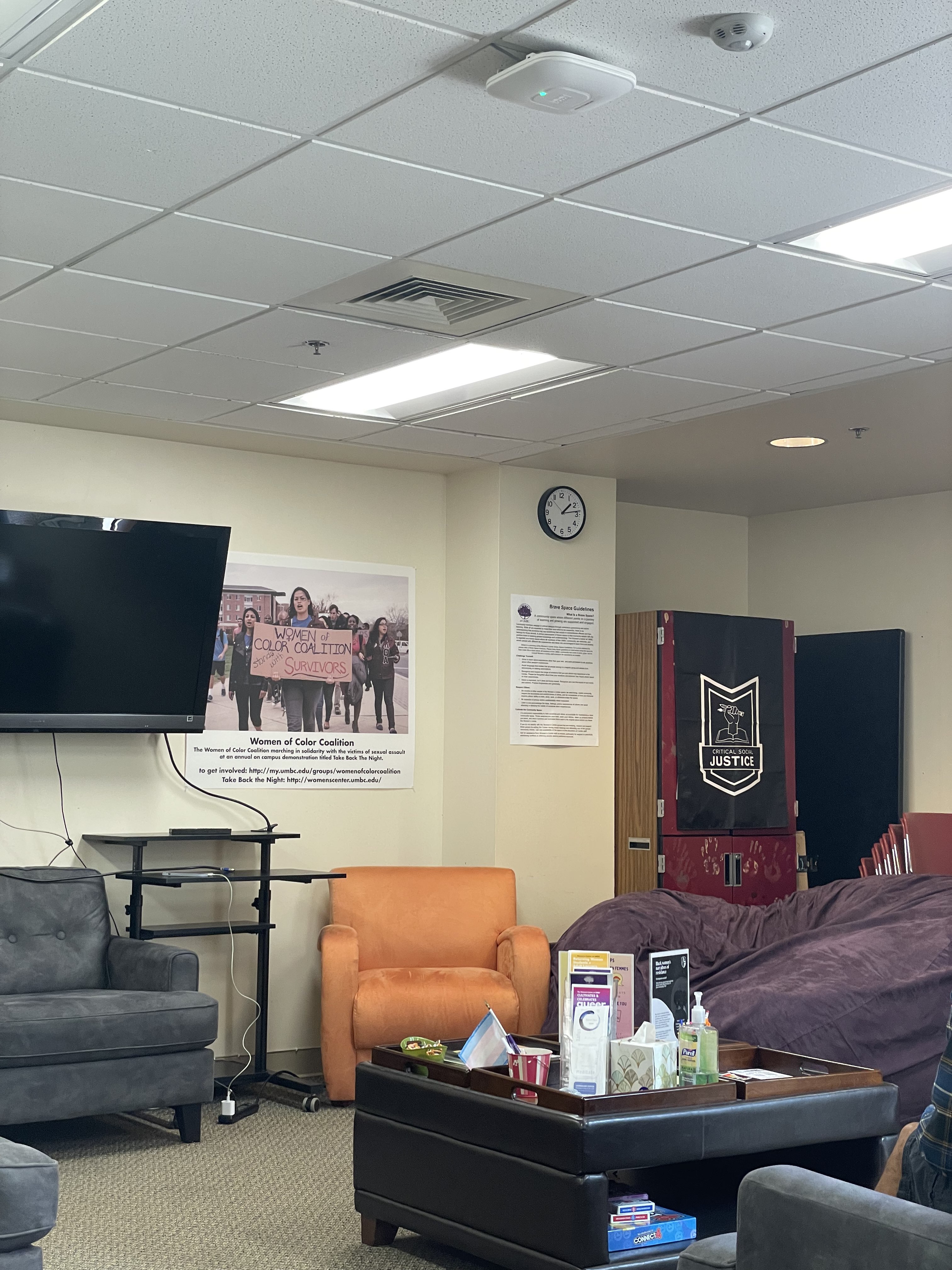
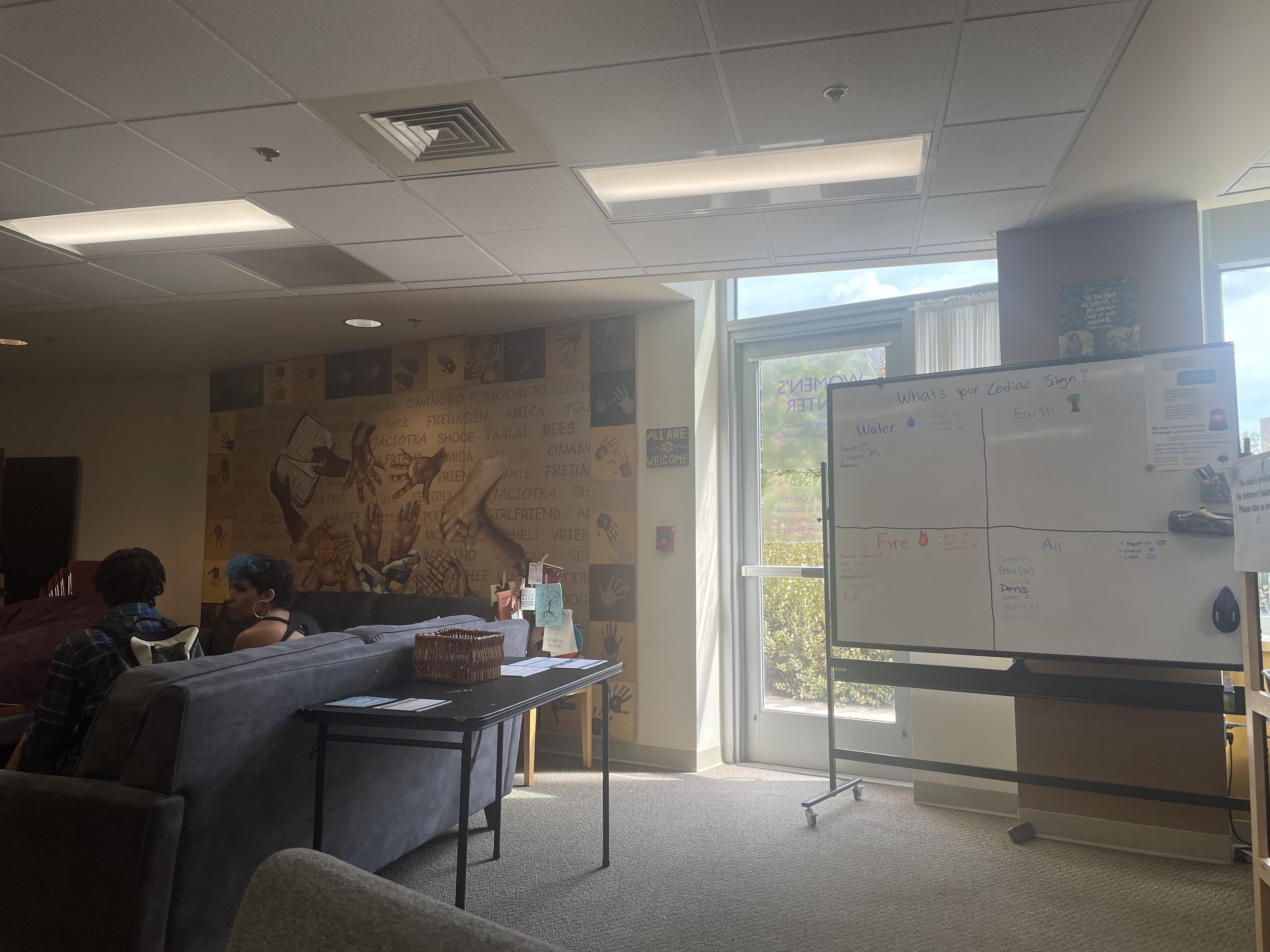
As a woman, I feel the constant stress of my body. But I’m not just any woman, I am a brown woman. The pressures of having to keep my grades up or being the perfect brown daughter who lives up to her parent’s expectations. Where would I go to decompress my feelings of doubt and anxiety? Where could I go to make the world go slow for a moment of peace and quiet? The Women’s Center. A home away from home. I can imagine the structure of the room as my safe space. You enter a room filled with posters of colorful affirmations, handouts of mental health awareness. Seeing the names and faces of those who work in the center makes it all that encompassing. I am always greeted with a welcoming smile by the wonderful staff who are ready to care for you. I see a prayer room for those who have no place to go, another for mothers to feed their children. I look to my right and see the many forms of aid. Did you get your period? Take a tampon or pad. As many as you need because your body, your UTERUS, is cared for in this center. Are you sexually active? Go ahead and take some condoms for protection because no one wants any STDs. Coziness is an understatement as you walk further into their center. The round table, to sit and do work or to relax while playing with a fidget toy from the fidget bowl. The hugging of many bookshelves enriched with stories of colored women, LGBTQ+ personas finding themselves, and in those books, a voice that comforts you. A “You are not alone” “You are accepted for who you are” here and there is what you’ll find. Towards the back of the room, soft couches for you to sit down and relax your aching womanly body. My curvy body type just melting away into the cushion, holding me and letting me rest. Are you hungry? Take a bag of chips from the food shelves. No one’s going to judge how you eat or how much. You won’t be judged for being a skinny to thick body type. Every woman is welcome here at the center. I was always scared to enter this environment not knowing that it was so peaceful.

 Why didn’t I take the risk of pushing that door open my freshman year? Maybe it was the fear of other women judging me because they felt it was their own space. Was it was the unknown territory that frightened me to my core? Or my shyness because of the people who worked there could see me grabbing feminine products. But now, it has become my home, my safe place for the rest of my college experience. Of course there are other places I consider my home, sometimes it’s not even places. It’s people. My boyfriend is my home, my comfort. He makes me feel imperfectly perfect. But then I begin to wonder, What about men? Where are their safe places? Do they not have a safe space because it’s uncommon? I wonder these things when I walk into the center. Of course men are welcome inside the center, but maybe men are intimidated by the space. I feel like they are intimated by those bold lettered words above the entrance of the door. Maybe they feel like they would be judged for walking in and taking their own time to decompress. I started to think about the people I met in the center, the conversations I’ve had. There was one girl, I’ll call her M, she had Nigerian parents, we had a 20 minute conversation about the freedoms being a woman in college. We talked about relationships, how her parents wanted her to date her own ethnicity. She wished her parents allowed her to do anything. But just because she was a girl, she wasn’t able to go out, even past her driveway. I honestly am happy that I had parents who trusted me even though I was young developing woman in a very dangerous world. She too had came to the center to clear her head. That was the first time in a while that I had been confident enough to start a conversation with a stranger. But being in that environment helped me bring out my extroverted side. I also think it was just the fact that I am able to talk so comfortably to women. I would encourage any woman to go there for any needs they desire. Whether it be to get a tampon or pad, or a place to relax. I hope that anyone who reads this knows that there are places to go when you are feeling down to no energy. So don’t be shy, don’t be afraid to step into that center, you won’t regret it 🙂

Creating Spaces

Being a part of a university really showed me the importance of having your own “space.” I mean I always knew that it was nice to feel like you were part of a group of friends or whatever but I didn’t realize the impact and the importance of this. By space I mean a place that you feel safe, valued, heard, welcomed, accepted and so on. Its only in college that I really understood the profound difference it makes in peoples lives to feel included in something or to feel a sense of belonging, even if its only in one small group of people who share your interests.  Continue reading

I think about this class at the bar… is that weird?

Bars are weird places for bodies, especially for me and my female body. In most other places there are standard rules about how it’s okay to touch someone, what to say to someone, how to interact with someone. But when it comes to the bar it seems as if this all gets jumbled, thrown in the air and mixed up. Of course people have different thoughts about what is okay when it comes to touching their body especially when drinking. But the bar is this weird social environment where things get a little tricky. There’s dancing, it’s crowded, there’s alcohol… and things seem to go wrong… a lot

Continue reading