In the Trenches

United in Anger and the AIDS movement taught me important lessons about civil disobedience. One of the most powerful lines in the film was when an individual with AIDS said that they may not be able to fight the disease, but they can fight the system. “As long as I can physically function and physically fight, that’s what I’m going to do” (United in Anger). These words in the film inspire me to become more active in politics. In high school, I was passionate about politics… but COVID-19 slowly sucked the life out of me and I lost my drive. United in Anger reminded me that change can be possible, and also informed me about the ways in which movements can be organized and successful. I found one person’s motto impactful- they said that if you act up, you get impact. This encapsulates how making “the powers at be” uncomfortable, you can “interfere” with “business as usual.” I really appreciate the weight behind these words.  

Read more: In the Trenches

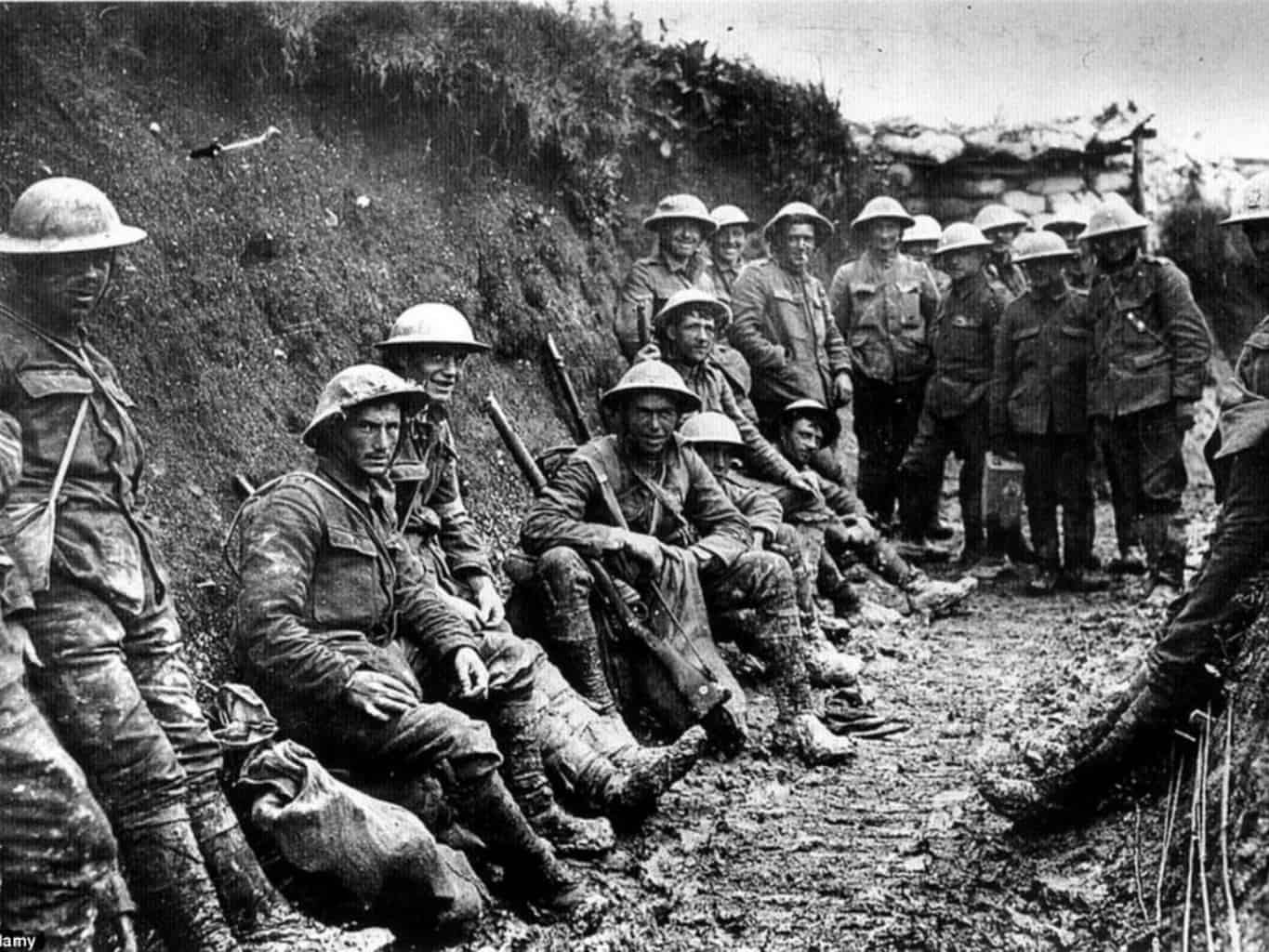
It was also interesting to learn about how ACT UP was “sculpting” the narrative in the media by putting locals in all areas of the country to give their perspective. ACT UP did not want the media to continue using “specific language” to describe people with AIDS, so they represented themselves. There was an individual in the film that compared being impacted by AIDS to being in “the trenches,” because the “war is only happening to those in the trenches” and no one else knows (or is paying attention to) what is happening. ACT UP also used affinity groups to strengthen its community. This reminds me of my peer support group and makes me realize how important it is to gather with like-minded people who have been through similar struggles. 

It was disgusting, disheartening, and shocking (at least to me; I had little prior knowledge of the fight for AIDS care) to learn that there were propositions to have those with AIDS quarantined or get tattoos in order to identify themselves. This is obviously reminiscent of the treatment of individuals who were Jewish, of color, queer, or with disabilities by the Nazis. Unfortunately, there are traces of this bigotry and ideology throughout the United States. 
Beyond Labels

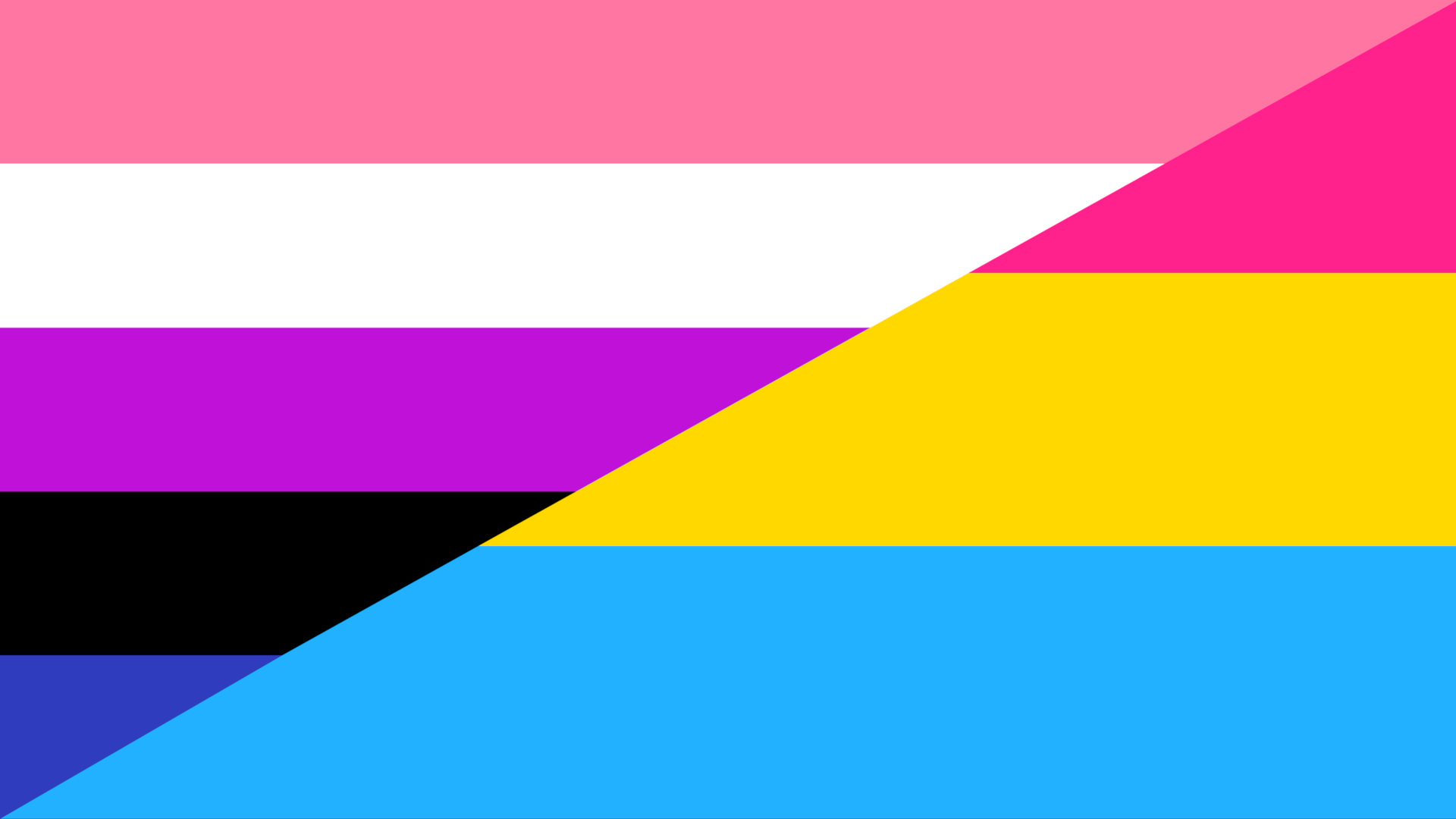
Label the foundation of modern society. Why is labeling yourself or someone so important? Why does it matter so much to someone what my gender or sexuality is? I never really thought about this until recently and the more I think about it the more I question everything. When I was young, I always assumed I was a girl and straight but as I got older and learned more about myself, I learned that no I am not. I learned more about myself. I would describe myself as gender fluid, pansexual and asexual. At the same time labels are not that important to me when come to gender personally but as for sexuality it matter more because I have been with a man for a few years and because of this many people assume I am straight when I tell them I’m pan they seemed confused why I be with a man this irritates me internally because it make me feel like I am not a part of the LGBTQ+ community this way of thinking I have faced more by those in the community then thoughts outside of the community.

Until I started back at college in fall of 2023 when I met the amazing group of people I love dearly I always felt like an outsider I did not feel wanted in the LGBTQ+ community nor the straight people community I felt like I was just drifting in space in a way, this not feeling like I belong the more I go to therapy and work on myself the ,ore I realized this sense of not belonging truly affected me. In the book nonbinary I relate with many of the stories although myself am not nonbinary the questioning of faith and the not feeling like I belong and the questioning of why labeling matters so much. No matter if you feel labels are important to you personally or not, I think things like this should be spoken about more in society, so people like me and many others know they are not alone and feel like they belong somewhere in this strange world we live in.

Pansexual and Genderfluid flag.

Transsexual Gender Euphoria

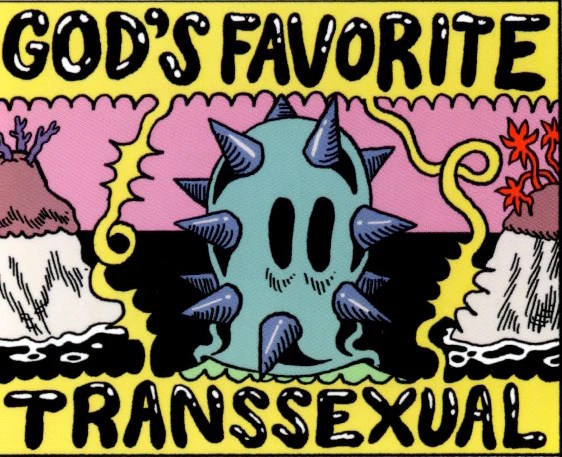
(image description: an illustration of a person with a teal, cactus-like spiky head between two islands on a black ocean against a pink sky. the border, framed in wavy spiked lines, says “GOD’S FAVORITE TRANSSEXUAL” in black bubbly text on a yellow background.
this art belongs to Leo Fox, from his trans comic series Boy Island! you can get this image as a sticker at https://store.silversprocket.net/products/gods-favorite-transexual-by-leo-fox :] )

Since before I started medical transition over a year and a half ago, gaining testosterone-linked physical traits through HRT has been a goal of mine. And recently having the ability to “pass” as cisgender has been such a wild ride in a very gender-affirming way (though I still haven’t gotten used to times when I am perceived and treated as cis male in a social context, such as getting pulled in for a strong dap up after finishing a group project). 

One thing that I have always been excited about was my “passability” opening up new avenues for me to explore queering my gender presentation. There was always something appealing to me about presenting physically masculine with more body hair and a deeper voice while having the freedom to wear whatever I wanted, like skirts with boots, and feeling confident wearing tight shirts without getting dysphoric about my chest. The physical traits I display are also helpful with decoding patterns of comportment and taking up space that I grew up socialized into as a “girl,” because now instead of fearing gender dysphoria from expressing emotions and being particular about the way my body moves, I feel like I am actively participating in throwing off binary norms, rather than taking up as much space as possible and acting closed off and invulnerable as embodied “masculine” stereotypes often go. 

I recognize of course that presenting my gender the queer way I do is something that I have a privilege to do, as I am able to safely be out as transmasculine; I believe not every single trans person should be required to revolutionize trans embodiment and destroy gender norms whenever they can possibly be perceived. No one should be held to that standard, and critiquing those who can find safety within the gender binary is unproductive to the goal of universally embracing trans embodiments.

I believe my medical transition and performed gender, and the euphoria I experience in my trans body, demonstrate Susan Stone’s theory on the transsexual body’s ability to “generate new and unpredictable dissonances which implicate entire spectra of desire” (“The ‘Empire’ Strikes Back”). Her and Judith Butler’s description of the erotic dissonance of the butch lesbian is something I find strong connection to, especially after coming back around to identifying as a lesbian in how inherently queer and “everyone-but-cis-masculinities” my sexuality has been throughout my 8 years of being out. Butch identity and my transmasculine body just feel like they go hand in hand now, and doing what I call “coming home to lesbianism” has been such a euphoric experience for me recently, one that I feel comfortable describing as transsexual gender euphoria.

Thinking about Transmasculine Feminism

Last semester in my Theories of Feminism class I read “The Transfeminist Manifesto” by Emi Koyama. This text spoke out to me as a trans person, and it introduced me to Koyama’s additional work on disability, sex work and intersex advocacy that has greatly increased my knowledge of other parts of the field. However, one thing I noticed throughout the text was the focus specifically on trans women and minimal reference to the experiences of trans men, apart from a couple of paragraphs in the gender-based violence section along the lines of “trans men also have something like this problem, we should also advocate for them.” Koyama herself at the end of the paper points out that while she did have the intention of transfeminine focus due to a higher visibility of injustice within transfeminine experiences, there is more information she could have covered on trans men’s experiences, and invites the reader to think more on the topics she did not discuss (e.g. intersectional analysis, trans men).

I did some Google scholar and library archival research after reading this paper and found out there is indeed not very much overlapping scholarship on feminism and transmasculinity, specifically discussing how feminism applies to – and can be done by – transmasculine folk across the gender and sex spectrums. In response to this deficit I thought, “they should make a transmasculine feminism,” and then remembered that I am in fact someone who has a say in that!

What comes to mind (at least from my perspective) as an avenue to explore transmasculine feminism is the idea of recontextualizing our lived experiences from embodied “feminine,” non-hegemonic-male experiences that feminism applies to. Examples I’ve thought of include socialization growing up, the treatment of our sexed bodies in the medical sphere (spaces commonly designated as “women’s” care), and ongoing experiences with how we are treated based on the gender others perceive us as.

I admit that while some may be comfortable discussing the controversial point of socialization, not all transgender folk may be as willing to critically discuss their socialized experiences in their assigned gender growing up, which could be due to dysphoria that could come from this recollection. While there are perfectly valid reasons for avoiding exploring this vulnerable topic in depth, I would argue that in the process of developing my transmasculine feminist thought thinking about my own girlhood, my medical encounters with my own biology, and how I have been gendered based on appearance, I have become more in tune with how I live gender than I ever have before. This might just be me growing up, but I think embracing the gendered aspects of earlier parts of my life is genuinely so constructive to thinking on how I wish to improve as a person, and more relevantly, as a feminist and activist.

So, from thinking about Koyama’s call to action to include more transmasculine thought on feminism, my personal goal in my GWST academics is to formulate something along the lines of a “Transmasculine Feminist Manifesto.” It feels like a very big task to come up with a personal Big Word for an Academic Thing and then justify to Big Academia why you think that should be a Thing, so I am quite daunted by that, especially considering I’ve been experiencing some intense burnout and for whatever reason have been having more and more of a difficult time putting words to my thoughts. But in the case of arguing for this from an embodied, phenomenological perspective, I suddenly have a lot more faith in my words than I have before, and I am very excited to get into putting research together and synthesizing that with my own life as a transmasculine person.

Sex, Sexuality, and Signing

In my ASL lecture this week, we learned the sign for “signing” – a backward twirling of the fingers, sort of. It looks a lot like you’re winding yarn towards you. After our instructor demonstrated the sign and the class followed suit, he turned and wrote on the board.

gender differences
woman
male

He pointed to “male” and repeated the sign as he had signed it before: rapidly moving his fingers in clean circles, with his hands pointing directly at one another and his palms facing the floor. He then pointed to “woman” and began to sign a variation on this – he tilted his hands so that his fingers were in more of a triangle and angled his hands forward so his palms were facing the class. This time, rather than rolling his wrists to spin his hands, he moved his arms using his elbows.
If the “male” sign was a gallop, this was a prance.

He paused and turned back to the board. He added “gay” following woman and “lesbian” following man –

gender differences
woman/gay
male/lesbian

– and repeated his demonstration, while shaking his head and implying “No, not me!” for the “woman/gay” sign and “See, this one!” for the “male/lesbian” one – he put women and gay men in the same bucket, and men and lesbians in another.

I wasn’t sure what to make of this – no other sign we’d learned had been gendered in any way. I’m still not entirely sure what he meant, it’s somewhat difficult to Google ASL questions – I’ll have to ask next week.

It reminded me, though, of the embodiment of “feminine” and “masculine” we discussed, and how they apply to queer people – as well as how that embodiment is perceived by others. It reminded me of how women are expected and conditioned to use their bodies, as opposed to men. The “woman” sign was dainty and cumbersome, the “male” sign was fluid and practical. I was very conscious of his reaction as well – how awful would it be if he used the “woman” version of “signing”? How humiliating.

Who is she???? No really, I’m asking

As an afab nonbinary person who feels most comfortable dressing in “feminine” clothes, I am often misgendered by others. I don’t really mind being perceived as a girl by strangers, personally– I am lucky enough to not experience dysphoria, but I do still want to be visibly genderweird so that other queer people know I’m friend shaped. That doesn’t mean I like being misgendered though, obviously. Like everyone still has to use they/them pronouns for me, but I can’t beam that into strangers’ brains telepathically (yet) so it is what it is. 

If you were curious, a few of my favorite ways to describe my gender are “girl adjacent,” “girly girl but there’s something definitely wrong with me,” and “oh you know, just, like, the color pink.” One could accurately say that I have a relationship with girlhood in the same way that the toons in Roger Rabbit have a relationship with the laws of physics. That is, it’s only there when it’s fun or funny– which brings us, finally, to the real topic of this blog post. I misgender myself a lot for the purpose of comedy, and I am definitely not the only trans person I know who does this. And oh boy is it funny. Cis people just can’t be on our level, sorry. 

Continue reading

Queer Brokenness: Intersection with Mental Illness

feature-470x260

Image Source: http://trauma.blog.yorku.ca/2015/12/south-asian-queer-community-lacks-visibility/  (Artist – Jinesh Patel)

(Content and Trigger Warning: Self Harm, Suicide, Substance Abuse, Emotional Abuse, Intimate Partner Violence, Bullying)

.

.

I often find that mental illness and queerness aren’t addressed properly or constructively when talked about together. So often the public at large would have us believe that queerness is a result of mental illness or that mental illness is the result of queerness exclusively. With this in mind, the queer community will often push back on society’s behavior by talking about the two exclusively from each other, frequently ignoring all the ways mental illness intersect. That’s does not go to say that queerness is the result of mental illness or vice versa at all, but rather it shouldn’t be ignored that many people in the queer community go through both because of the way society has constructed and reacted towards queerness. For example, queerness has often been perceived as a deviant thing, it has historically been punished and worked against in a variety of ways. Continue reading

Queer Identity Discovery: The Domino Effect and Queer Time

9601

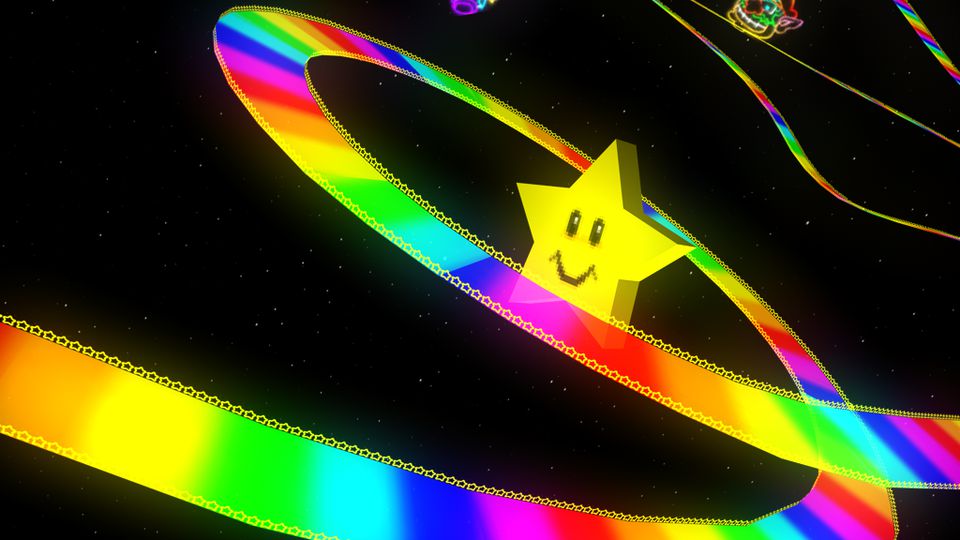
Image Source: http://www.avclub.com/article/theres-mash-rainbow-road-themes-all-8-mario-karts-206528

I’ll focus on my own experience here but I know there are going to be things about my experience that many other queer people can relate to in this regard.

My experience with queerness has never been linear, it has indeed been very queered. It has consistently involved not knowing about a way of being queer and then being introduced to the concept, a moment of reflection and then realizing “oh shit that’s me.” But I’ve also consistently struggled with coming to terms with these new labels and seeing how they fit me.

From the age of 12 to about a month away from turning 21 I had been on a journey of denial, internalization, grief over myself changing and growing, complete secrecy, exploration, etc. etc. about me being bi. I had come out after years of being afraid of myself, but in that time I also developed a yearning for community. When I came back to UMBC after two years of community college I knew that I’d want to seek out my community. Since then my reality as a queer person has shifted so greatly. I feel so liberated. Yet I grieve. I grieve for the ways I have been, not knowing if they are different than who I am now. My sense of self has been questioned. I don’t know if my new state of existing is just blurrier, or if things have just been just out of my sight this entire time and it constantly feels like both. I don’t know how consistent this person who is me is. Continue reading

A Reflection on the Past of a Gay Baptist

In 2011 I came out while simultaneously accepting Christ. Apparently, that is a very odd thing to do, especially on a Southern Baptist mission Trip in Lousiana. My camp counselor cried tears of joy for me, but looking back on it I think he thought I was rejecting my homosexuality, rather than affirming it. I thought I couldn’t be a good Christian if I wasn’t being honest with myself, my community, and God. So this decision made perfect sense to me at the time, and I stand by that, even though I don’t attend church much anymore (for many reasons that do not pertain to this discussion). Continue reading

Queer Time in Donald Trump’s Amerikka

Queer Time in Donald Trump’s Amerikka

There have been interesting parallels between our class discussions around queer crip time and my current life. This has only become more obvious post election as I scramble to rework my five-year plan. I am not sure how much to share because while I am a very open person there are some aspects of my life that I prefer to keep private.

Continue reading