A friend of mine recently told me she doesn’t like her own music, as she finds it stale, predictable, and boring. My first reaction was to immediately argue, that in my eyes I think the songs she writes and plays are some of the most interesting and engaging pieces of music I’ve had the pleasure of interacting with. But it also got me thinking: what does she see that I don’t? Many musicians, when asked how they came up with a musical idea, might simply say “it came to me.” Or “it just happened.” As if the idea was given to them by some mysterious third party, that knows exactly what melody would perfectly encapsulate the emotion that they were trying to convey. The interesting thing about this is to the musician, the basics of playing their instrument is akin to walking or maybe even breathing. As shown by Kosut and Moore in the introduction to their book Just the Reflexive Reflex, actions like walking that don’t necessarily need to be thought about shouldn’t be considered purely mechanical. Why do people walk the way they walk? Perhaps some of it is biology, or habit, or that one ankle injury in 4th grade, or perhaps it is some combination of all of that. In this case, it would be safe to say that the musician’s musical ideas are the fruit of the seeds planted every time that they have practiced, every song they’ve analyzed, and every show they’ve been to. So what my friend sees is simply what is intuitive to her ears and fingers, which is incredibly interesting to me yet very drab to her.
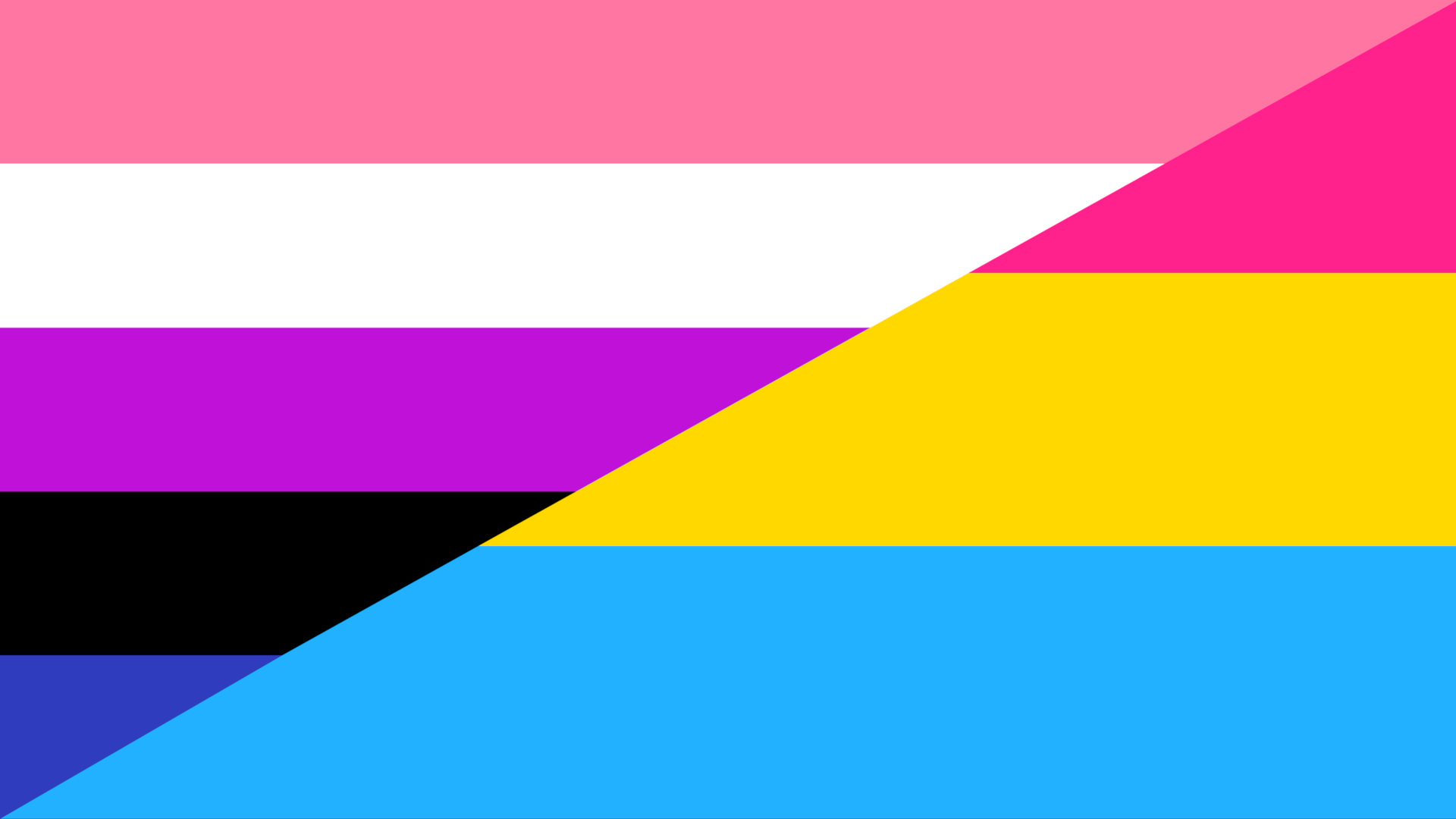
Label the foundation of modern society. Why is labeling yourself or someone so important? Why does it matter so much to someone what my gender or sexuality is? I never really thought about this until recently and the more I think about it the more I question everything. When I was young, I always assumed I was a girl and straight but as I got older and learned more about myself, I learned that no I am not. I learned more about myself. I would describe myself as gender fluid, pansexual and asexual. At the same time labels are not that important to me when come to gender personally but as for sexuality it matter more because I have been with a man for a few years and because of this many people assume I am straight when I tell them I’m pan they seemed confused why I be with a man this irritates me internally because it make me feel like I am not a part of the LGBTQ+ community this way of thinking I have faced more by those in the community then thoughts outside of the community.
Until I started back at college in fall of 2023 when I met the amazing group of people I love dearly I always felt like an outsider I did not feel wanted in the LGBTQ+ community nor the straight people community I felt like I was just drifting in space in a way, this not feeling like I belong the more I go to therapy and work on myself the ,ore I realized this sense of not belonging truly affected me. In the book nonbinary I relate with many of the stories although myself am not nonbinary the questioning of faith and the not feeling like I belong and the questioning of why labeling matters so much. No matter if you feel labels are important to you personally or not, I think things like this should be spoken about more in society, so people like me and many others know they are not alone and feel like they belong somewhere in this strange world we live in.
Have you ever scrolled online and see people confidently declaring their gender and sexuality like they’ve had it figured out since birth? “I’m nonbinary.” “I’m a lesbian.” “I’m pan.” Meanwhile, I’m sitting here wondering, why do I feel like nothing? This question has been bouncing around my head for a while now. But after reading Nonbinary: Memoirs of Gender and Identity, specifically Christopher Soto’s “What Growing Up Punk Taught Me About Being Gender Nonconforming” and Aubri Drake’s “Clothes make the Gender/Queer,” made me realize that maybe this feeling of nothingness isn’t emptiness, but simply uncertainty in a world that demands certainty from everyone.
Soto writes, “I tell my friend who still presents outside the binary that I want to be alive. I want to live. And so this is my gender: a desire to live.” That line hit me like a ton of bricks. For me, identifying as a woman has always been about survival. It’s safer, easier, less questioned. I don’t have to explain myself or fear someone reacting violently because I don’t fit their idea of what a woman “should” be. Soto ties their fear to capitalism and violence because the way safety, livelihood, and even love feel like privileges granted to those who conform. Sometimes I wonder if I’d feel freer to explore my gender if the world wasn’t punishing those who step outside the binary.
Growing up, everyone labeled me a “lesbian” before I could even figure it out on my own. I was the tomboy wearing my dad’s clothes, obsessed with comic books instead of makeup. My mom used to tell me to “act like a lady,” for simply sitting in my own home with my legs open. Then puberty hit, and suddenly I had curves I didn’t ask for. Aubri Drake’s words that “clothes started clinging to my body in all the wrong places… they stopped being a form of expression and instead became material to hide in”described exactly how I felt. I started hiding under oversized clothes because my body no longer felt like mine, but a spectacle for others.
For years, I bounced between labels from bi, lesbian, pan, and now to queer. Each one feeling right for a second and wrong the next. I even dated men exclusively at one point just to prove something, though my attraction to women has always been stronger. Every time I picked a label, I felt like a fraud and that everyone knew I was out of place.
When it comes to gender, being called “masculine” or “feminine” makes me physically recoil. I don’t feel like either. I identify as a woman because it’s practical since it’s what fits easiest in the world’s boxes, but that’s never been the only reason. I’ve briefly thought about identifying as nonbinary, but fear always stops me: fear of losing cis privilege, fear of not being taken seriously, fear of violence. Like Soto, I get what it means to feel “illegitimate” just for wanting to live safely.
That’s why the label queer has been a relief. It’s flexible. It’s fluid. It lets me breathe. I don’t have to get a headache by searching for answers I don’t have yet. My gender and sexuality are personal, evolving, and maybe a little messy, but at the end of the day, that’s ok.
A few months ago, before reading these essays, I went down a rabbit hole on Reddit trying to understand why I felt “genderless.” I remember scrolling for hours through different threads from queer and neurodivergent people describing the same sense of in-betweenness I couldn’t name. One that stood out to me was called “Does anybody else feel genuinely genderless?” on r/NonBinary, more specifically this one quote:
“When I lean more towards masc or femme with my presentation that’s all I feel it is — a presentation. Or really what it actually is is society interpreting my presentation as gendered. Ultimately it’s still just me. I don’t feel more feminine when I wear skirts — but it’s perceived that way.”
When I lean more towards masc or femme with my presentation that’s all I feel it is — a presentation. Or really what it actually is is society interpreting my presentation as gendered. Ultimately it’s still just me. I don’t feel more feminine when I wear skirts — but it’s perceived that way.”
That line felt like someone cracked my brain open and wrote down my thoughts. It echoed everything Soto and Drake described; that gender can feel more like a performance that others interpret than a truth you embody. Re-reading that thread and other ones I mindlessly scrolled actually helped me realize I wasn’t broken for feeling detached from gender. I was just tired of performing one.
I still feel like “nothing,” but I don’t see that as a bad thing anymore. That nothingness feels like freedom; free to move, question, and change without being boxed in. Reading these essays made me realize I’m not alone in that uncertainty. There’s comfort in knowing gender and sexuality don’t have to be solved; they can just evolve. Maybe “nothing” is true freedom. Maybe my gender isn’t nothing — maybe it’s just mine.
As I had read Susan Stryker’s article on trans rage and the comparison of Victor Frankenstein’s unfortunate monster, I found myself following each word closely. I had so rarely seen anyone talk so openly about the pains and sorrows that are hidden about transgender identity. The discussion in class presented an extremely important point on who is allowed to show and vocalize strong negative emotions like rage and pain. As a person of color, as a queer and transgender individual, my permission of showing these emotions has been quite small, but looking further inward I know that there are other reasons I am not one to show these emotions. For my last post I call upon Stryker’s voice of these negative emotions and a monstrous identity, but not for my transgender identity, but one I am coming to terms with existing within me. I open up the physical patchwork body of mine to see inwards, within the darkness I see a cage chained to the ground. Moving closer I can hear the rattling of anger, I peer inside the cage to see a gnarled and patched up figure, teeth unnaturally pointed and sharp objects partially embedded in its body. I instinctively know these objects were brandished weapons with the purpose of subduing and killing this figure, but they have failed. This figure was human once and I can’t help the sadness I feel seeing what has become of them.
“What happened to you?” I ask cautiously.
The pause feels deafening.
“I’d think you’d recognize us, not many come back from the war of trauma unscathed.”
It’s said that what doesn’t kill you makes you stronger, but no one should be forced to be this strong to the point of being caged in fear.
As an echo to the original article, my comparison of monstrous identity in regards to trauma is not one to be used against all who have trauma. This is my sole reclamation of my past and should never be used against individuals who do not wish to do the same. This post will include raw calls to mental health happenings in response to traumatic experiences. Though there will be no details of happenings, there are insinuations of abuse on varying levels.
I’ll focus on my own experience here but I know there are going to be things about my experience that many other queer people can relate to in this regard.
My experience with queerness has never been linear, it has indeed been very queered. It has consistently involved not knowing about a way of being queer and then being introduced to the concept, a moment of reflection and then realizing “oh shit that’s me.” But I’ve also consistently struggled with coming to terms with these new labels and seeing how they fit me.
From the age of 12 to about a month away from turning 21 I had been on a journey of denial, internalization, grief over myself changing and growing, complete secrecy, exploration, etc. etc. about me being bi. I had come out after years of being afraid of myself, but in that time I also developed a yearning for community. When I came back to UMBC after two years of community college I knew that I’d want to seek out my community. Since then my reality as a queer person has shifted so greatly. I feel so liberated. Yet I grieve. I grieve for the ways I have been, not knowing if they are different than who I am now. My sense of self has been questioned. I don’t know if my new state of existing is just blurrier, or if things have just been just out of my sight this entire time and it constantly feels like both. I don’t know how consistent this person who is me is.Continue reading →
In the way gender and sexuality operates in our world, often times they are highly construed and mistaken for each other. Are they related? Yes. But they are still separate things. Because these identities are often mistaken in this way many people have this idea that being transgender is an identity that’s ‘chosen’ to receive some kind of access to heterosexuality and that to be validated as a trans person you need to be engaged in this effort to be on some end of the gender binary only performing gender in ways that are widely accepted in a hyper policed way, this includes heterosexism as it relates to transess. In fact there’s a whole other level of heterosexism that is applied to trans people.
But sexual diversity is just as diverse in the trans community as it is in the cis population. I can only speak deeply about my own experience, and I realize it is but a mere single experience in a sea of many others and I do not speak for other trans people, though I feel like my story is relevant to this topic. My personal experience with my gender identity and sexual identity, has been a long and arduous journey that starts out in the closet as being reluctantly bisexual, often leaning towards my attraction to women. Then I was introduced to concepts of there being more than two genders, and it struck me. There were months of tears, denial, and confusion. Once exposed to different genderqueer, nonbinary, and trans identities that I suddenly felt aligned with I couldn’t go back to a reality where my sexuality was the same in relation to my gender identity ever again. Ultimately this ended up being a positive thing, something freeing, something that just ended up feeling more comfortable. But my initial reaction was fear, uncertainty, and feeling disingenuous because of the way the world saw identities like mine and I reflected that back into the way I saw myself. I still do feel internal conflict, I still get scared that I, in no way, have all of the answers about my identity, but as I come into my gender identity I find that I’m making progress in establishing peace with my bisexuality. It’s as if I didn’t want to identify as bisexual before, something about seeing myself as a ciswoman before I knew about the trans identities that fit me, dating a man really did not sit with me well, it just wasn’t me and it isn’t. I’m finding that being trans and accepting it has essentially worked me into actually being more comfortable about my bisexuality. Now I find new complications in grieving my previously thought of lesbian/queer woman identity, but again I can’t go back, it’s just not me. I am a transmasculine person who is bisexual and with that I am queer and transgender. I think it’s a timeline and identity that defies this heterosexist view of trans people, as different stories and sexual identities of many trans people do. I wanted to provide my own experience as an example of how transness does not equate to gayness. There are certainly many other narratives out there that proclaim trans does not equal gay as well and encourage people inside and outside the LGBT community to realize that there is no one way to be trans or queer and that there is no reason someone can’t be both.
Being a part of a university really showed me the importance of having your own “space.” I mean I always knew that it was nice to feel like you were part of a group of friends or whatever but I didn’t realize the impact and the importance of this. By space I mean a place that you feel safe, valued, heard, welcomed, accepted and so on. Its only in college that I really understood the profound difference it makes in peoples lives to feel included in something or to feel a sense of belonging, even if its only in one small group of people who share your interests. Continue reading →
I went on estrogen almost four months ago. I don’t really pay attention to it much –I had to check to see if that was even right. As someone who is on HRT I think there is a serious gap in the discussion.
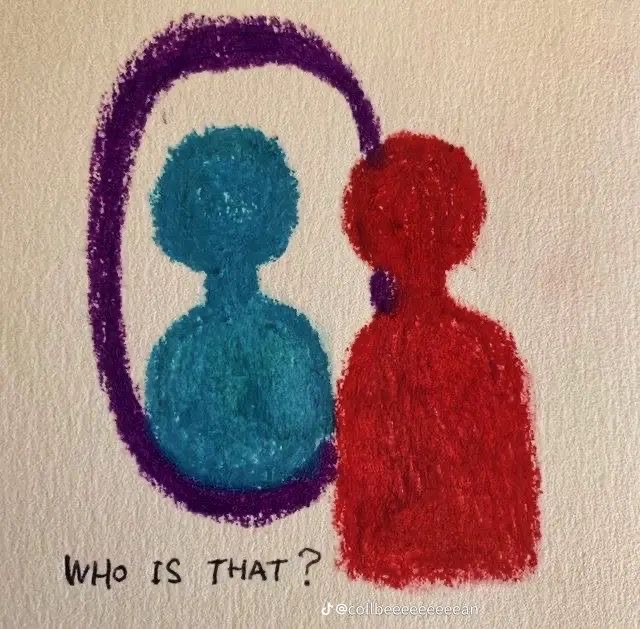
After writing my paper on the argument of the body being a medium, it got me thinking about the question, ‘who am I?’. In most cases, in order for the body to function as a medium of self-expression one need to know who they are in order to know what they are trying to express to others. So in order to express yourself, it is assumed that you know yourself. And of course this got me thinking about how would I answer the question “who am I”?
In my case the question ‘who are you?’ has to be one of the most difficult question for me to answer. Have you ever really looked at yourself and don’t know
really who you are? Like you know who you should be, what people (family, friends, etc,) expects you to be but apart from those expectations, you don’t know who you are? Continue reading →


 In my case the question ‘who are you?’ has to be one of the most difficult question for me to answer. Have you ever really looked at yourself and don’t know
