When the fall semester started, I was determined to go to the gym consistently and start running around my neighborhood. I started doing all this research (Tiktok rabbit holes) on what type of exercising I should do to have my body look a certain way based on my height, weight, and schedule. I looked into Pilates classes, good running shoes, and certain meals to eat.
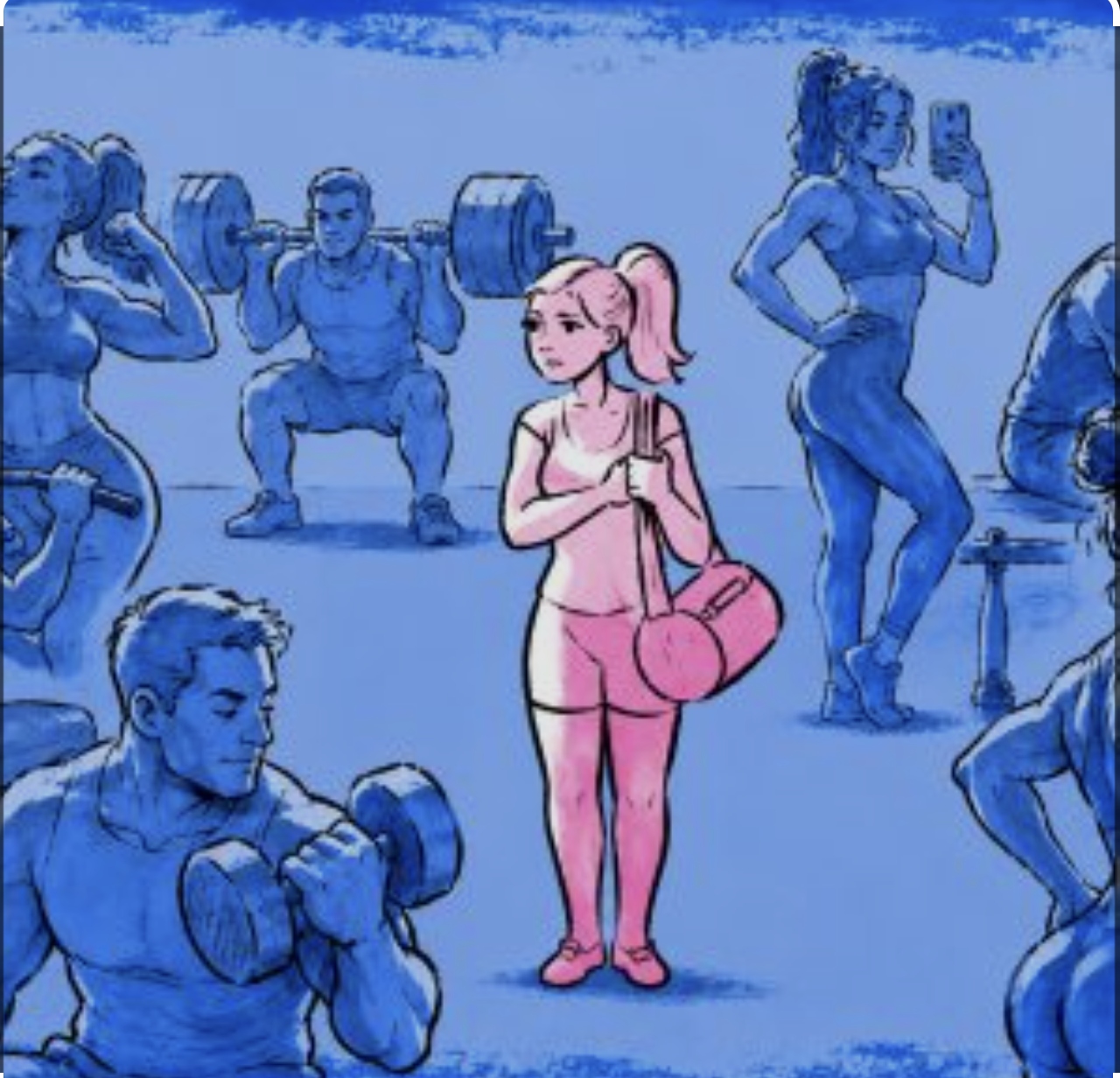
Day 1 came in my 3 split weekly workout schedule, and I was ready. I had a list of exercises to do and a meal plan. However, that morning I started to have a bunch of anxiety. My outfit didn’t look like the cute gym clothes on social media, I had on an old family reunion T-shirt and too small leggings. I had this fear that what if I forgot how to do the exercises properly and someone looks at me and thought I was stupid or could tell that I was new to this. All these thoughts started rushing through my mind to the point where I ended up doing an at- home YouTube workout instead.
Looking back, I realize my anxiety was deeper than just exercising. It was more about how I thought other people would perceive not only my body but how I decided to move it. Social media has created an image of what someone who goes to the gym is supposed to look like, from the clothes they wear to their confidence level with using the equipment. I started comparing myself to that image before I even arrived at the gym.
This experience showed me how culture and societies expectations can shape how people view us and how we view our own bodies. My fear of being judged changed how I experienced my body and my comfortability level of exercising. The gym did not feel like a place to “better myself,” it felt like an award show where everyone was watching me. Fast forward to today, I still do have the fear and overthinking of going to the gym. But rather than not go at all I look on the app to see how busy it is before going. I’m not sure if that’s progress but at least I made it to being in the building.
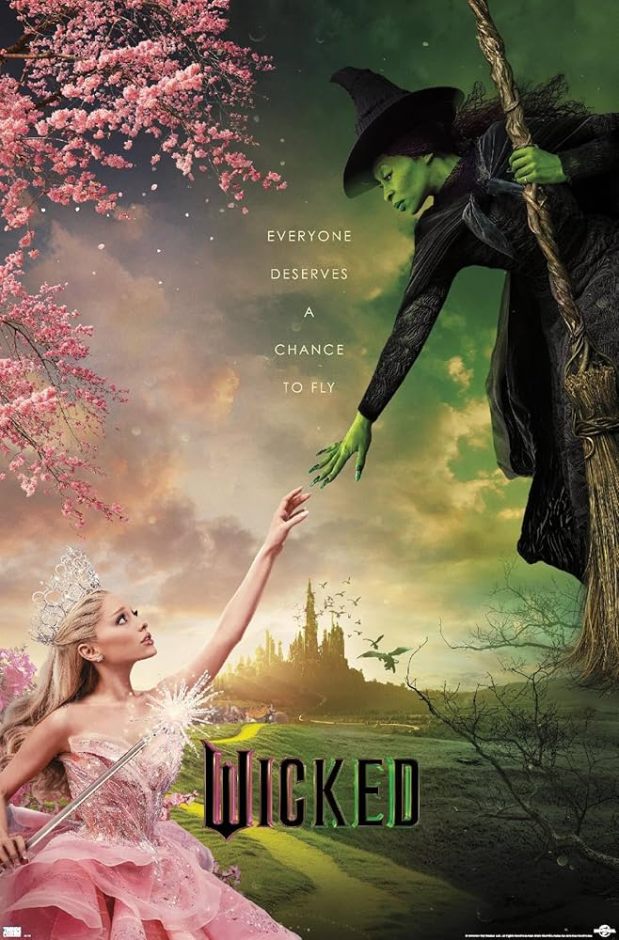
You don’t have to watch Wicked to know its famous line—“No one mourns the Wicked”—which basically means that some people aren’t worth grieving. This kept echoing in my head when I heard that both lead actresses of the Wicked: For Good film recently tested positive for COVID.
According to a recent Guardian article, “Both Grande and Cynthia Erivo tested positive for Covid during the filming of the first movie, temporarily delaying production. Erivo reportedly contracted the virus days before shooting the climactic first-act number Defying Gravity, while Grande tested positive before filming the song “Popular.”
The same article notes that during the current press tour Ariana Grande again tested positive, forcing her to miss several events.
That news made me think of Mia Mingus. In her blog “You Are Not Entitled to Our Deaths”, Mingus challenges the idea that disabled or sick bodies are disposable and that those lives aren’t worth protecting or grieving. After reading this blog and our discussion in class, it made me remember hearing about the Wicked news. It made me realize we’re acting like COVID is just a production hiccup, an inconvenience to filming or press tours, rather than the ongoing threat which is killing and disabling countless people. The fact that both leads got sick, during filming and promotion, yet the media and public reaction centers on delays, missed appearances, and disappointed fans speaks volumes.
There’s something horrifyingly Wicked-like about how illness is framed now. If someone masks, they’re “paranoid.” If they don’t appear for a photoshoot or premiere, fans complain. When someone gets COVID, the conversation is about wasted money on promotion, fan backlash over missed premieres, or travel delays , but rarely about health, recovery, or the toll illness takes. The framing treats sickness as a hiccup, not as human suffering. It treats the sick body as a burden to the show, not as a person in need of care.
“Grande’s positive test was the latest hiccup for the full-court Wicked press blitz that has seen the cast hop continents by the day. Due to flight delays, Grande was unable to make the premiere in Brazil, triggering fan backlash she also addressed on her Instagram.”
That is exactly the kind of abled entitlement Mingus warns about: a culture that assumes certain bodies can and should be sacrificed for convenience. Under this logic, “the show must go on,” regardless of who gets hurt. The Wicked cast situation isn’t just celebrity news, but it’s a reflection of a larger societal pattern where health, disability, and our shared vulnerability are minimized, ignored, or erased entirely.
What’s even worse is how normalized this erasure has become. COVID has become “another thing,” something to power through so cameras and promotions stay on schedule. Workplaces expect people to show up sick. Students are told to push through fevers. Long-term effects are brushed off as “just fatigue.” Public health infrastructure? Largely forgotten. Masks, ventilation, testing are all optional. People who get sick frequently or live with chronic conditions are expected to adapt or be pushed aside.
Mingus doesn’t just name this as negligence, she instead frames it as violence. When we treat care as optional, when we prioritize productivity over people, when we mourn canceled premieres more than lost lives, we are making a statement about whose lives matter. We’re deciding who gets protection, who gets grief, and who doesn’t.
We shouldn’t act like the pandemic is over. We need to stop shrugging when someone gets sick, framing illness as inconvenience, or acting like the only thing that matters is the show going on. Production, entertainment, or convenience is not more important than actual human lives. Because if we care at all about disability justice, about valuing every life, then we can’t pretend the pandemic is done. We have to mourn the sick. We have to fight for care. And we have to stop believing the myth that pushing on by ignoring risk, ignoring illness is normal or acceptable.
Being born female has always felt like a curse to me. Although I do love presenting femininely, girlhood, and feminism, femininity always felt like an objective that I could never, ever reach. Growing up, I was surrounded by ideals of what a “real woman” should look like and act like, but none of them ever felt like me.
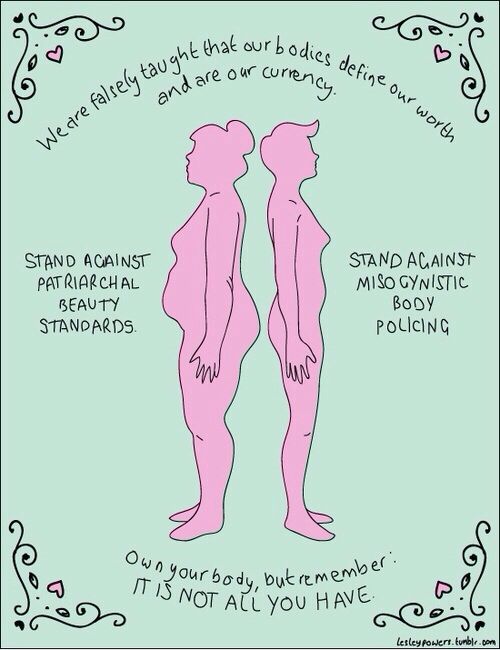
Too often, women & afab people of color, specifically black and brown people, are hyper masculinized by society. Many of us experience gender dysphoria at a young age without even realizing it. In a porn-sick, pedophilic world, we are often told to shave our legs or that we won’t be desirable if we are not petite. We are groomed into believing that compliance with these unrealistic and patriarchal beauty standards is the only way we can be loved or accepted.
This alienation often made me feel like I was a monster, much like how Stryker compares the trans body to Frankenstein’s monster, where both are labeled as “unnatural” creations rejected by society. Even the most natural and feminine part of myself, body hair, was turned into something to be erased. Body hair, a normal sign of maturity, was made to seem masculine, ugly, and unnatural. That made me feel both “not feminine enough” and “not masculine enough,” even as I came to understand myself as genderfluid. I found myself trapped between two conflicting thoughts: one that punished me for lacking male traits, and another that shamed me for not performing femininity “correctly.”
These beauty standards also erase intersectionality, especially when it comes to South Asian bodies. Generations of colonial trauma, famine, and labor have shaped our bodies in ways that defy Eurocentric ideals. Yet we are still told that our features, our curves, our body hair, and our skin are flaws to be fixed. Our oppressors wound us and then teach us to hate the scars it leaves behind.
For me, reclaiming my gender and my body means rejecting those expectations. Like Stryker’s “transgender rage”, I’ve learned that my frustration can become powerful, where I refuse to be molded by standards that were never made for me. My gender exists in the space between what I was told to be and what I choose to become.
“I am an unfortunate and deserted creature, I look around and I have no relation or friend upon earth. These amiable people to whom I go have never seen me and know little of me. I am full of fears, for if I fail there, I am an outcast in the world for ever” (Shelley). The monster does not look at his new acquaintance when he speaks; his eyes remain on the looming glaciers around them, glowing in the moonlight. His words, which linger heavily in the chilled air like their warm breath, are met with silence. The traveller peers at the figure next to them: “flesh torn apart and sewn together again in a shape other than that in which (he) was born” (Stryker). Each carefully selected piece of skin and bone fits together to form a uniquely beautiful, abstract puzzle. They had only just met, and yet, each stitch woven into the bodies of the traveller and the creature was spooled from the same thread- a rope of pain caused from society’s purposeful ostracism.
Finally, the traveller interrupts the comfortable, contemplative stillness.
“Like (you), I am too often perceived as less than fully human due to the means of my embodiment; …my exclusion from human community fuels a deep and abiding rage that I, like (you), direct against the conditions in which I must struggle to exist” (Stryker).
The monster did not have the chance to respond, and the traveller would never hear his response, both robbed of the conversation and solace.
Victor Frankenstein shot his creation- once in the head and once in the heart- leaving the traveller alone again.
To be a muse is to be worthy. To be a muse is to be beautiful and talented, chosen and seen. To be a muse is to be exhilarated and exhausted, honored and objectified, proud and pornified. There cannot be one state of being without the other, so long as there is one being to perceive and one being to be perceived.
In some societies, perhaps, it is possible for a muse to exist without the constant fear and awareness of their own and another’s presence. In patriarchal and sexist cultures, however, the muse faces an internal and external threat of surveillance, and therefore sexualization. “(Patriarchal and sexist) society defines woman as object, as a mere body, and… are in fact frequently regarded by others as objects and mere bodies” (Young, I. “Throwing Like a Girl: A Phenomenology of Feminine Body Comportment Motility and Spatiality,” p. 153-154). For feminine muses, they “learn to live out (their) existence in accordance with the definition that patriarchal culture assigns to (them, and) are physically inhibited, confined, positioned, and objectified” (152). The definition becomes internalized, which then manipulates and forces women into being more feminine- more submissive, docile, small, quiet. “Women often approach a physical engagement with things with timidity, uncertainty, and hesitancy… (They) lack an entire trust in (their) bodies to carry (them to their) aims. There is… a double hesitation here. On the one hand, (women) lack confidence that (they) have the capacity to do what must be done… The other side of this tentativeness is… a fear of getting hurt… (They) often experience (their) bodies as a fragile encumbrance, rather than the medium for the enactment of (their) aims” (143-144). The subordination of feminine beings is at the root of patriarchy, and it grows as more minds and bodies accept the notion that feminine and masculine categories cannot intermingle. The stronger the patriarchy becomes, the more ‘natural’ it seems that feminine bodies are weaker than masculine bodies. In reality, women “have more of a tendency than men to greatly underestimate our bodily capacity,” as well as the relentless pressure of being perceived as a muse, which results in under-performance.
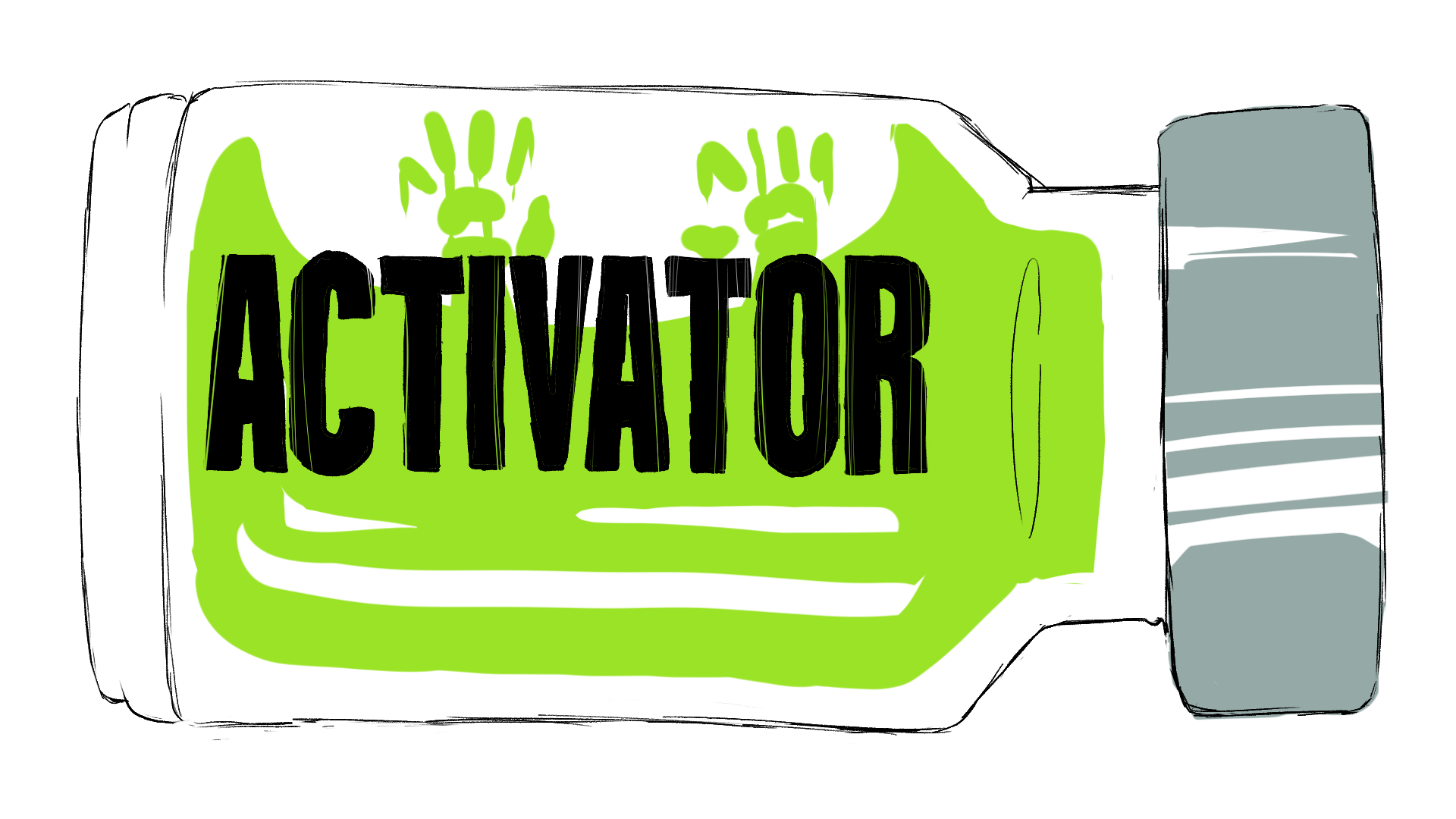
Illustration by me of a vial of “Activator” from the film The Substance with small green hand prints.
The Substance is easily my favorite horror film to come out this year, and probably my favorite film regardless of genre to come out of 2024. It executes common horror tropes beautifully while offering a combination of fresh new ideas that haven’t felt explored in the specific way Coralie Fargeat, the director, addresses them. The film’s plot and general message are also incredibly relevant to politics of Desire and how physical attractiveness is measured among different groups of people.
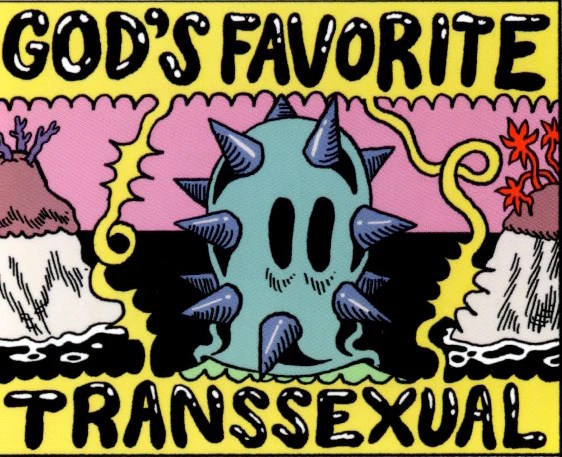
(image description: an illustration of a person with a teal, cactus-like spiky head between two islands on a black ocean against a pink sky. the border, framed in wavy spiked lines, says “GOD’S FAVORITE TRANSSEXUAL” in black bubbly text on a yellow background. this art belongs to Leo Fox, from his trans comic series Boy Island! you can get this image as a sticker at https://store.silversprocket.net/products/gods-favorite-transexual-by-leo-fox :] )
Since before I started medical transition over a year and a half ago, gaining testosterone-linked physical traits through HRT has been a goal of mine. And recently having the ability to “pass” as cisgender has been such a wild ride in a very gender-affirming way (though I still haven’t gotten used to times when I am perceived and treated as cis male in a social context, such as getting pulled in for a strong dap up after finishing a group project).
One thing that I have always been excited about was my “passability” opening up new avenues for me to explore queering my gender presentation. There was always something appealing to me about presenting physically masculine with more body hair and a deeper voice while having the freedom to wear whatever I wanted, like skirts with boots, and feeling confident wearing tight shirts without getting dysphoric about my chest. The physical traits I display are also helpful with decoding patterns of comportment and taking up space that I grew up socialized into as a “girl,” because now instead of fearing gender dysphoria from expressing emotions and being particular about the way my body moves, I feel like I am actively participating in throwing off binary norms, rather than taking up as much space as possible and acting closed off and invulnerable as embodied “masculine” stereotypes often go.
I recognize of course that presenting my gender the queer way I do is something that I have a privilege to do, as I am able to safely be out as transmasculine; I believe not every single trans person should be required to revolutionize trans embodiment and destroy gender norms whenever they can possibly be perceived. No one should be held to that standard, and critiquing those who can find safety within the gender binary is unproductive to the goal of universally embracing trans embodiments.
I believe my medical transition and performed gender, and the euphoria I experience in my trans body, demonstrate Susan Stone’s theory on the transsexual body’s ability to “generate new and unpredictable dissonances which implicate entire spectra of desire” (“The ‘Empire’ Strikes Back”). Her and Judith Butler’s description of the erotic dissonance of the butch lesbian is something I find strong connection to, especially after coming back around to identifying as a lesbian in how inherently queer and “everyone-but-cis-masculinities” my sexuality has been throughout my 8 years of being out. Butch identity and my transmasculine body just feel like they go hand in hand now, and doing what I call “coming home to lesbianism” has been such a euphoric experience for me recently, one that I feel comfortable describing as transsexual gender euphoria.
Ok im pretty self confident. But whenever someone glances at my body my mind gets to racing. I just came back from the mall and of course people looked at me. Girls and guys but especially when guys look at me Im thinking to myself are they going “oh she got a nice body for a slim black girl” ( cuz black women are expected to be thick) are they looking at my arms and going they’re so tiny. Are they picturing me as athletic and active. Are they saying my strides are so graceful .Or just a lazy bum that happens to be slim. I wish I could look at myself and the way it moves from outside my body. What would I think about my bodies look and movement if I was an outsider looking in. Like my conscious floats out and I can see. It’s kinda hard to just observe the body when you’re out in public. I can’t just stand in the middle and watch. But honestly not just me, I wish I could just see in a spiritual way the way we mammals dance through life.
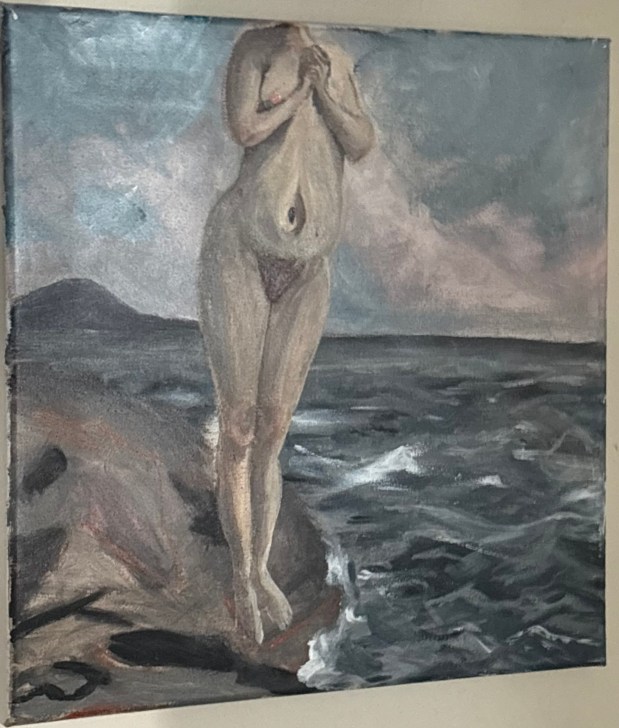
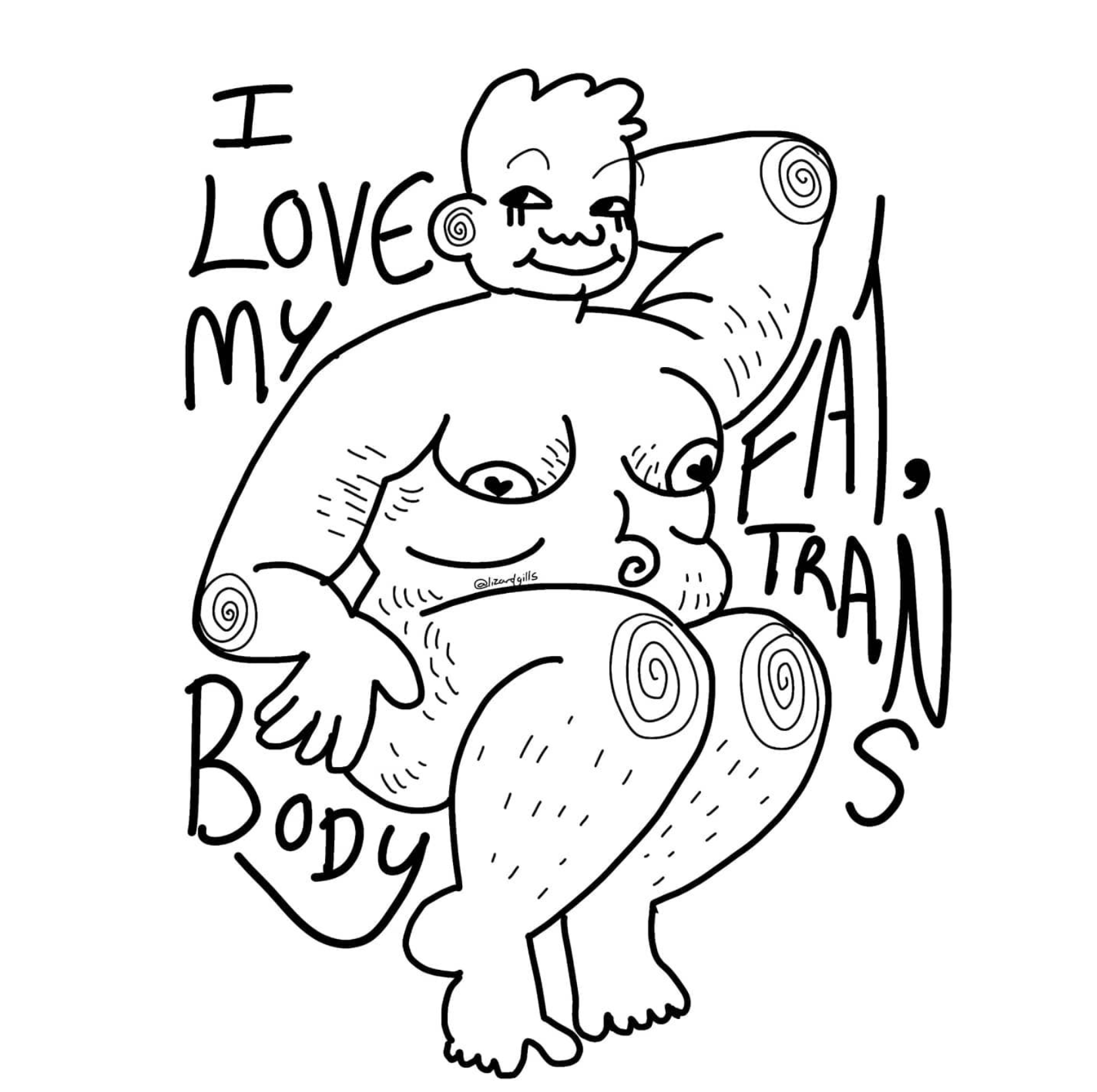
When I think about my transness, one thing that I believe is inherently intertwined with that aspect of my identity is my fatness. I find there to be power in the body. But the combination of being trans and fat, particularly due to the lack of representation of fat bodies in trans spaces, is something that has always bothered me.
It’s one reason I really enjoyed this article (https://medium.com/@sbearbergman/please-come-and-be-fat-cc04ed4d8772) that I found online some years ago. It really spoke to me as someone who struggled to pursue top surgery due to being fat. I had to pay out of pocket for this life changing surgery because the only surgeon in the state that accepted my insurance had a BMI limit; which, if you did not know, BMI is an outdated practice – a BMI limit for top surgery instead shows a lack of effort on the surgeon’s part to learn to work with fat patients, a problem which would be solved with more representation – more patients, more outreach, more effort.
Top surgery was monumental in my journey to loving my body. It saddens me so incredibly much to hear other fat trans folks talking about the lack of representation in our community, because I’ve also seen how much we get talked over by our thin counterparts. Even within the trans community, the lack of representation of fat bodies has lead to many thin trans individuals not understanding the unique struggles that come with being a fat trans person.
I love my fat, trans body, and I want everyone with the same experience to be able to say that.
In terms of bodies I wanted to talk to about both of our subtopics for the past two weeks. Reproductive and labor. Im honestly a little anxious to give birth as a black woman. Even though I’m not a having kids anytime soon lol there’s still that looking anxiety. I plan to be very vocal/opinionated during my pregnancy and birth ( as you all know I already am) and I honestly don’t think I want to have my baby at a hospital. I think I’d like to give birth at home with a midwife who still has a medical license in case something goes wrong. Hospitals are so depressing and I don’t want to give birth to a child in one. But also because there’s still that looming anxiety about if the doctors and nurses will dismiss any concerns of mine.