Are Men “Visual Creatures”?: A Discussion on Porn & Bioessentialism

TW//mentions of SA, porn addiction, objectification

One thing that really stood out to me in Throwing Like a Girl is how Iris Marion Young criticizes bioessentialism, which is the idea that men and women behave a certain way because it’s just “biology”. She shows how people explain things like throwing differences as natural, when they’re really learned through social expectations. It is similar to how people perform worse due to the stereotype threat, which is when minority groups tend to underperform on tests because they believe that they are not capable of performing well, leading to a self-fulfilling prophecy. 

I think that same logic of “inherent” or “biological” behaviors can be applied to how men justify watching porn by saying “men are visual creatures”, which is not based in fact at all. That phrase is so harmful because it makes it seem like objectifying women is unavoidable, instead of something that men are choosing to participate in. 

Read more: Are Men “Visual Creatures”?: A Discussion on Porn & Bioessentialism

Porn is extremely dehumanizing because it turns people, often women, into objects meant to be looked at, not individuals with complex life experiences who have their own agency. Young talks about how women are taught to experience their bodies as something to be watched and judged, rather than as something they fully control. Porn takes that even further by reducing women to their body parts and presenting sex as something women exist to provide. It trains people to see women’s bodies as products rather than as a part of an intimate and sacred human interaction.

The idea that porn allows people to “buy” consent is disturbing on its own as well. Consent in porn is always available and detached from real emotional or physical consequences. Sometimes consent can even be depicted as NOT freely given, and disrespected, as part of r*pe fetishes. Humans were never meant to have instant and unlimited access to sex like this, and pretending that it’s just “natural male sexuality” ignores how artificial and extreme this level of access actually is. The harm doesn’t just affect the person consuming porn, it impacts the women in it, who are often exploted, and women in the modern dating world that have to deal with unrealistic expectations and porn-driven violence and entitlement.

Just like Young argues, bioessentialism isn’t harmless. It is used to excuse behavior that causes real harm by making it seem inevitable, and vanishing accountability for those who are engaging in them. Saying “men are visual creatures” works the same way as saying “girls throw like that”. It hides socialization behind biology.
In Defense Of Juliet

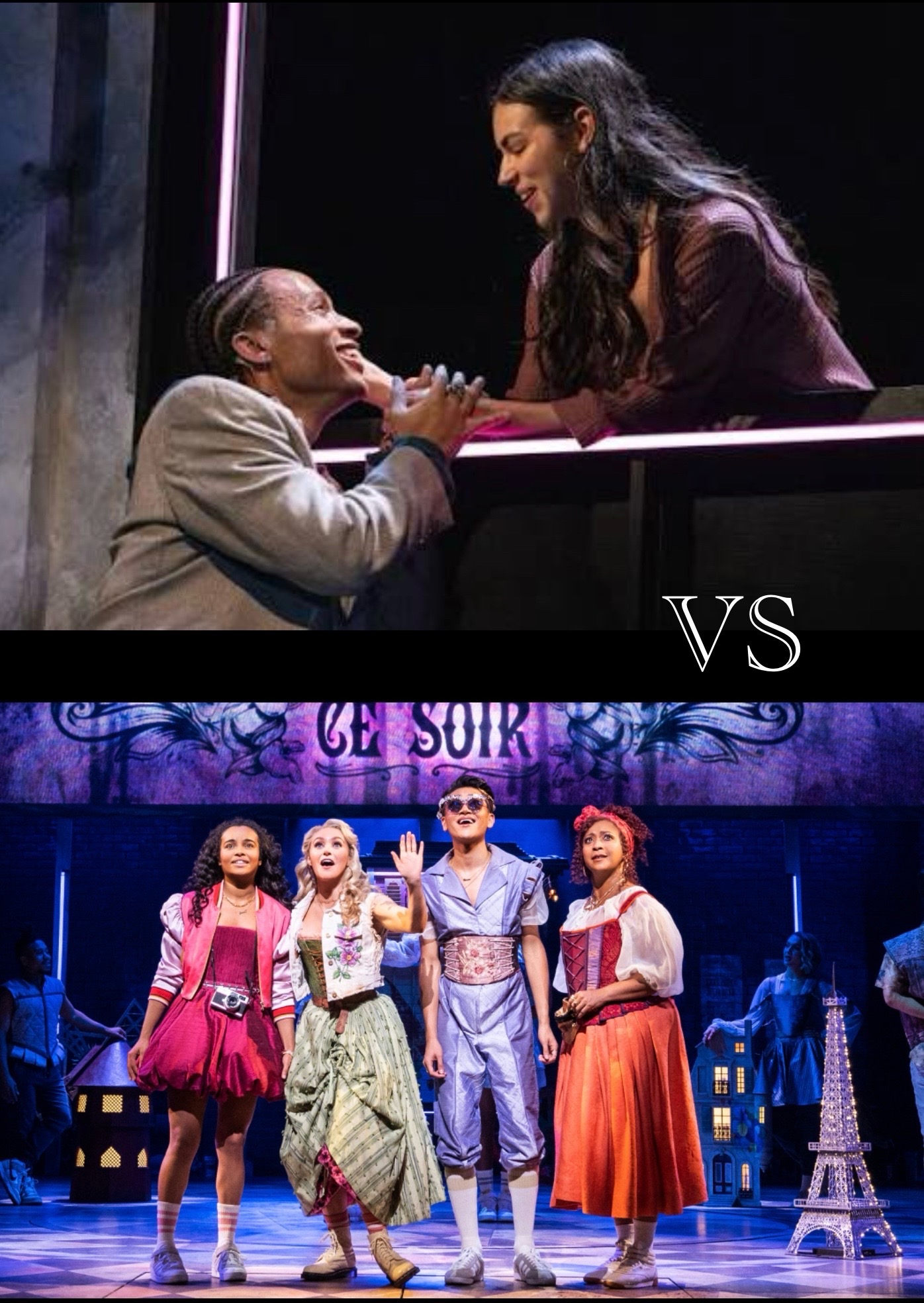
Juliet, from the titular play Romeo and Juliet, has long been seen as a woman stripped of agency. She is seen as a woman who couldn’t stand to live without her beloved Romeo, so she protested the only way she knew how and ended her own life. This is what the new broadway hit &Juliet says as the show follows Shakespeares wife, Anne Hathaway, as she rewrites her story, now starting with Romeo’s death.
For many reasons, I am not a fan of this musical’s take on Juliet’s life. For right now I will stick with this one point. Anne Hathaway ends up making every choice for Juliet. Anne takes Juliet away from her family and political ties and instead takes her on a girls’ trip to go clubbing around Verona. Without realizing it, by having Anne control every new aspect of Juliet’s life they have once again stripped her of her agency.

I do not believe Juliet is stripped of her agency in Shakespeare’s original piece. I actually believe she is the smartest character in the whole play.

Let’s get one thing straight, Juliet always wanted Romeo and her to be married. In fact this diva demanded that Romeo bend the knee when she said “If that they bent of love is honorable, thy purpose marriage” 2.2 150. She knew what she wanted and communicated it clearly to Romeo.


She also knew how fast things were moving, “It is too rash, too unadvised, too sudden” 2.2 125. She wasn’t dumb and in love, she knew that Romeo was moving quickly. The only reason she decided to speed everything up was that her marriage to Paris was to happen any day now.
And finally, with her monologue in act 3 scene 2, she describes how she is desperately awaiting for Romeo. She repeatedly says, “Come, night. Come, Romeo.” 3.2 17. Now, not to get too rounchy, but Juliet is not just waiting around to just sit in the presence of Romeo, she’s waiting to have sex with him once more.
In modern times, this seems more normal to us, but back in Shakespeare’s day, a high-class woman having sex with a man out of marriage was a big deal. So why do it? Because she knows that if she were to get pregnant with Romeo’s child, her parents would have no choice but to ensure Romeo and her got married.

Now let’s talk about the final scene. She wakes up from her sleep to find Romeo and Paris dead. At this point in history, Juliet would’ve had a hard time moving on now that she is a widow and the feud between the two families would’ve only gotten worse. If Juliet hadn’t used her body and life to protest in the face of both the Montagues and Capulets, how many others would’ve died? The feud would’ve continued and Juliet would’ve been outcast from her family. Yes, she missed Romeo, and yes, she partly took her life to be with him. But to say his love was the only reason is to discount all the other factors Juliet was also dealing with.

So no, &Juliet, Juliet isn’t just a love-sick girl who let a man take control over her life. But instead, a smart and witty girl who acted with wisdom.

Thinking about Transmasculine Feminism

Last semester in my Theories of Feminism class I read “The Transfeminist Manifesto” by Emi Koyama. This text spoke out to me as a trans person, and it introduced me to Koyama’s additional work on disability, sex work and intersex advocacy that has greatly increased my knowledge of other parts of the field. However, one thing I noticed throughout the text was the focus specifically on trans women and minimal reference to the experiences of trans men, apart from a couple of paragraphs in the gender-based violence section along the lines of “trans men also have something like this problem, we should also advocate for them.” Koyama herself at the end of the paper points out that while she did have the intention of transfeminine focus due to a higher visibility of injustice within transfeminine experiences, there is more information she could have covered on trans men’s experiences, and invites the reader to think more on the topics she did not discuss (e.g. intersectional analysis, trans men).

I did some Google scholar and library archival research after reading this paper and found out there is indeed not very much overlapping scholarship on feminism and transmasculinity, specifically discussing how feminism applies to – and can be done by – transmasculine folk across the gender and sex spectrums. In response to this deficit I thought, “they should make a transmasculine feminism,” and then remembered that I am in fact someone who has a say in that!

What comes to mind (at least from my perspective) as an avenue to explore transmasculine feminism is the idea of recontextualizing our lived experiences from embodied “feminine,” non-hegemonic-male experiences that feminism applies to. Examples I’ve thought of include socialization growing up, the treatment of our sexed bodies in the medical sphere (spaces commonly designated as “women’s” care), and ongoing experiences with how we are treated based on the gender others perceive us as.

I admit that while some may be comfortable discussing the controversial point of socialization, not all transgender folk may be as willing to critically discuss their socialized experiences in their assigned gender growing up, which could be due to dysphoria that could come from this recollection. While there are perfectly valid reasons for avoiding exploring this vulnerable topic in depth, I would argue that in the process of developing my transmasculine feminist thought thinking about my own girlhood, my medical encounters with my own biology, and how I have been gendered based on appearance, I have become more in tune with how I live gender than I ever have before. This might just be me growing up, but I think embracing the gendered aspects of earlier parts of my life is genuinely so constructive to thinking on how I wish to improve as a person, and more relevantly, as a feminist and activist.

So, from thinking about Koyama’s call to action to include more transmasculine thought on feminism, my personal goal in my GWST academics is to formulate something along the lines of a “Transmasculine Feminist Manifesto.” It feels like a very big task to come up with a personal Big Word for an Academic Thing and then justify to Big Academia why you think that should be a Thing, so I am quite daunted by that, especially considering I’ve been experiencing some intense burnout and for whatever reason have been having more and more of a difficult time putting words to my thoughts. But in the case of arguing for this from an embodied, phenomenological perspective, I suddenly have a lot more faith in my words than I have before, and I am very excited to get into putting research together and synthesizing that with my own life as a transmasculine person.

Something to think about.

At the beginning of the semester, I had no idea what to expect to learn in this class. It took me a little while to get used to thinking about the body in different ways, but I can say that I’m glad I did. From the information I have learned in this class, I’ve been able to look at issues in the world with a different lense, and I think that is so imortant.

Because I’ve learned so much about all of these topics, I’ve actually gotten in some interesting conversations with my mom. Continue reading

The Hawkeye Initiative

Image

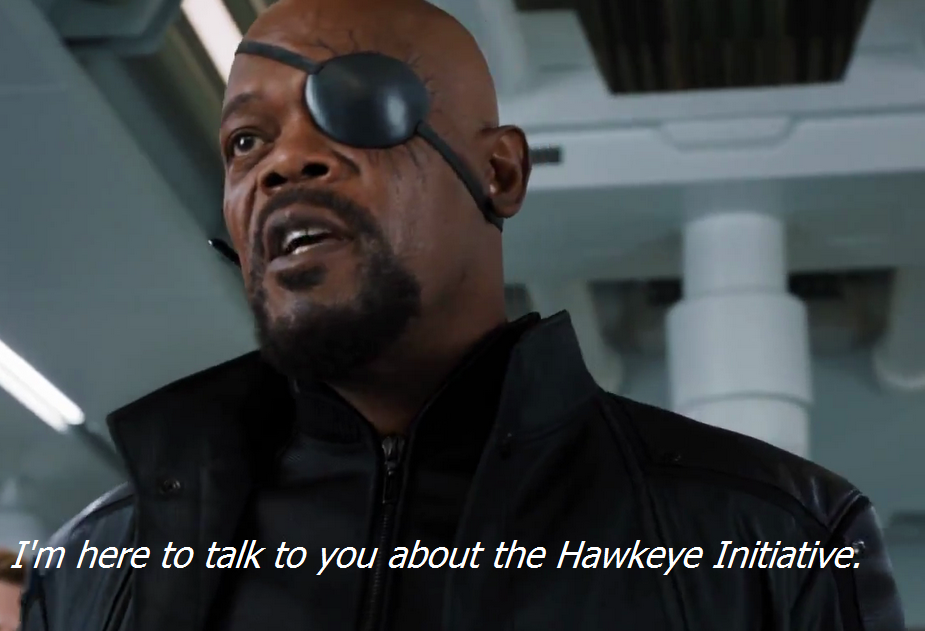
If you’re a Marvel fan – be it comics, movies, or television shows – and you’ve been active on the internet in the past few months, you may have noticed a new feminist phenomenon sweeping through your newsfeeds and dashboards. As you may have already read in this post about comic book women, breasts and bums are often the focus of entire panels and covers. The Hawkeye Initiative takes offense at that, and is fighting back, one illustration at a time.

Continue reading

Long Hair Don’t Care

I have a confession to make.  I do not shave my arm pits.  Hell, I only shave my legs if I’m feeling saucy and have clean sheets because nothing is better than smooth legs in clean sheets.  (That’s a lie, a lot of things are better than that.)

While I like to think of myself as a badass feminist who says fuck you to anyone and everyone who tries to tell me what to do with my body – especially in regards to body hair—I am not.  That’s my second confession.  I wish it was that simple.

I don’t think it’s ever that simple.

Continue reading

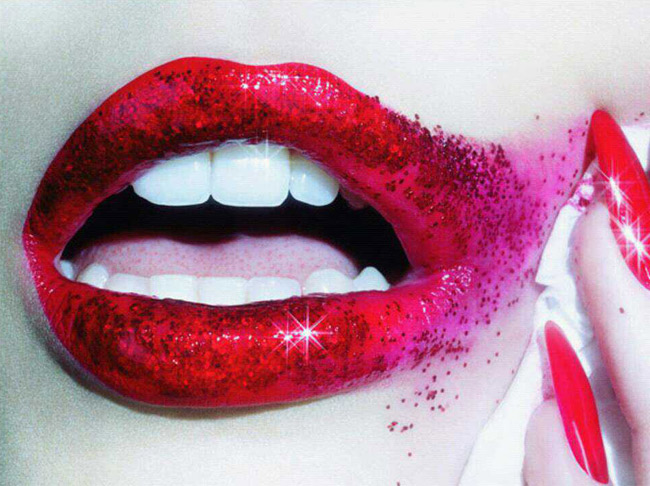
Can I be a feminist and still wear lipstick?

Have any women out there felt a conflict or contradiction between their feminist identity and desire to adorn their bodies? That is, can I shave my legs and simultaneously protest patriarchy? I know of many women (including myself) who have struggled with this and similar questions. In a culture so rampant with images of plucked, primped and worked-out women and men, it’s sometimes hard for me to decide if I want to display my feminist protest on my body or wear pretty clothes, shoes and jewelry.

When I read Gala Darling’s post “Am I A Hypocrite For Professing Radical Self Love While Wearing 5 Inch Heels?” or “Can you call yourself a feminist and still wear lipstick?” I was thrilled to read her take on these very questions. As a woman who blogs about fashion and style and who also boasts a “Radical Self-Love Bootcamp” program, Gala Darling’s work may seem to contradict itself. So she asks the million-dollar question about lipstick and feminism, and raises very good points about bodies, body adornment  and our selves.

Gala points out that when we (women and men alike) display our bodies the way society wants us to, we are rewarded for this behavior. This could be by wearing makeup, stylish clothing, shaving, etc. Gala calls this “beauty” privilege.”  Beauty privilege can be as simple as a smile from the person ringing up your groceries! In a lot of ways it’s easy and comfortable to conform to beauty standards when you can in order to access beauty privilege. Of course, not all bodies have equal access to this privilege. It is overwhelmingly easier for able bodies, thin bodies and white bodies to access beauty privilege. Access to money helps beauty privilege too!

Further on the subject of beauty and feminism Gala explains, “I’ve spent some time recently thinking about “beauty” & trying to reconcile that with truthful feelings about myself. A major & difficult piece of the puzzle is that none of us grew up totally free from societal influence, & so it is almost impossible to separate what we really want from what we think we want…. The place I keep coming back to is that even when I recognise that my ideas of beauty have been passed down to me from society, it doesn’t feel good to me when I choose to deny myself something which provides me with genuine enjoyment….

Gala argues that body adornment is akin to art. People are attracted to aesthetically pleasing objects, whether natural or manufactured, and enjoy being surrounded by them. Of course there is variety in peoples’ tastes, but I think it’s fair to say that most of us like having pretty things around us!

She further notes that “wanting to feel beautiful does not make you a bad feminist or a bad woman. It does not mean that you are being oppressed or that you lack the ability to think for yourself. Wanting to adorn ourselves is natural & normal — very few of us live in houses that are all function & no form, & while we COULD all drive boxy Volvos, the truth is that most of us are attracted to beauty — however we choose to define it.”

Lastly, I found this point quite persuasive: “Some women say that if we wear lipstick, we’re only doing it because society has told us to. I would argue that the woman who tries to buck society by NOT wearing lipstick is just as influenced! No one exists in a vacuum, & almost all of our decisions are effected by external sources.”

I find Gala Darling’s discussion of beauty, bodies and feminism quite persuasive. I like wearing clothes that flatter my shape. I like having smooth legs and putting glittery eyeshadow around my eyes. I love earrings and bracelets. This doesn’t make me less of a feminist, right? What are your thoughts?