
My body hates me
This thought… plagues me
Day in, Day out.
body
Why is a number from the 1800s still deciding how healthy I am?
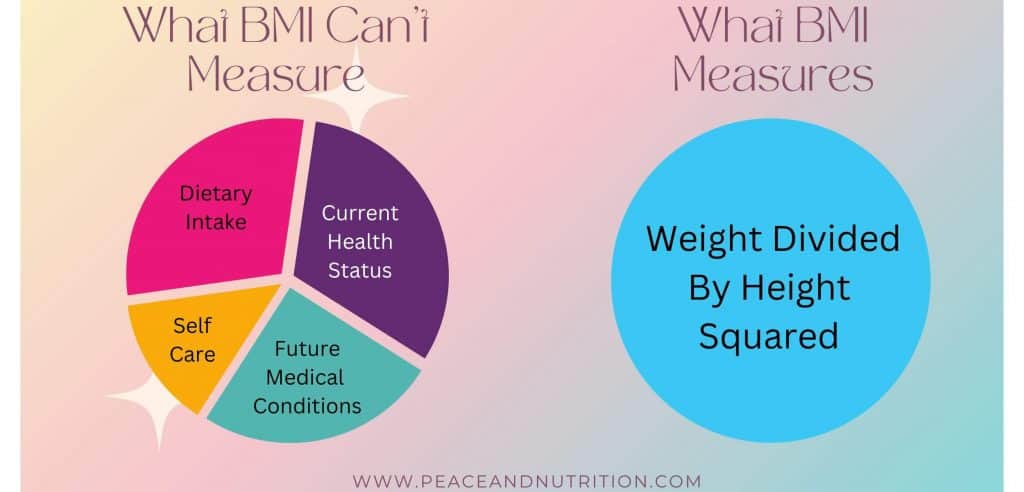
Every doctor’s appointment I’ve ever had starts the same way: shoes off, step on the scale, wait for the number. Then comes the math, height and weight run through a formula, and out pops a category that somehow gets to speak for my whole body before I’ve said a word.
That “formula” is BMI, and what I didn’t know until I started digging into it is that it was never built for this. It came from a Belgian mathematician, not a doctor, who was trying to describe the “average” person across a population. It was never meant to size up one individual. It only really became a go-to health screening tool in the 1970s, which means we’ve been leaning on a very old idea for a very personal question.
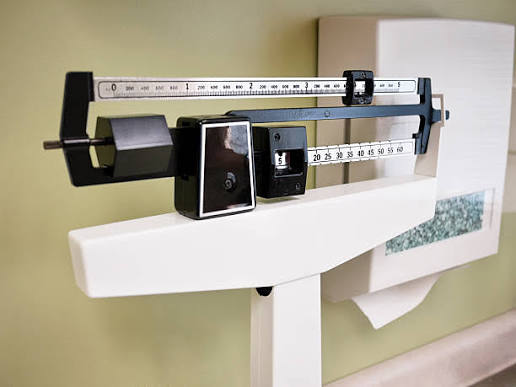
What gets me is everything it can’t see. BMI can’t tell muscle from fat, where weight sits on the body, or how someones heart, blood sugar, or sleep are doing. Someone can land in the “overweight” category with perfect bloodwork while someone in the “normal” range struggles with nobody checking. In 1998, the cutoff for “overweight” was lowered, and millions of Americans were reclassified overnight without a single body changing. I started thinking about BMI as a photo taken from too far away. It’s fine for a crowd, but useless for a face. It gives you the outline but completely skips the person, and then we act like the outline is the whole story.
So why do we keep treating it like a verdict or something thats so final? I think its because a number is easier to read on paper than a person.
And until that changes, a lot of people will keep walking out of appointments feeling measured, but not heard.
Treating fat people as if they should be extinct
I was listening to the Ozempic podcast from the Maintenance Phase and their discussion of the discourse around the drug and the type of language being used around it really illuminated me to an issue that I wasn’t completely aware of. It’s this kind of idea that fat people can never win.
Read more: Treating fat people as if they should be extinctThey try to lose weight and somehow they’re doing it the wrong way. They don’t alter their weight and somehow they’re all lazy and a waste of space. To generalize people like this and to pretend like you know everyone’s situation or motive is ridiculous. For one it frames losing weight as some type of cure all that will make society into a utopia, secondly it really trivializes how hard it can be for someone to lose weight. There’s the issue of accessibility, mental health, and all kind of biological differences people have. And the thing is this sort of fat phobia is highly unlikely to come from a place of concern or worry about health. If that was the case I think people who vape would be called disgusting, dehumanizing names. It comes from a place of hatred for those who don’t fit the norm, and yet it’s so incredibly ironic because most people don’t really fit the norm. Everyone strays from what is considered socially acceptable one way or another, but somehow it just so happens that being fat is a more acceptable target. There was another really interesting point that was brought up in the segment that I think really highlights the lack of care for those trying to lose weight. Because Ozempic and Wegovy are in a shortage right now that means that compounding pharmacies are now allowed to make their own sort of version without FDA oversight. However their version is potentially harmful to humans because it’s using semaglutide sodium, which has not been cleared. Because of the shortage these companies are not legally required to tell people what they are putting in their drugs. This is just a stark example of how the health of fat people are not actually being prioritized, in fact when they try to do the “right thing” and try losing weight they’re actively being poisoned. It just goes to show that again, fat people can’t really win within this society because there are constant set backs. There’s also this sort of notion that fat people are to blame for the shortage of Ozempic, as if most fat people or anyone in general really has easy access to it. I think this blame really takes the focus out of the severity of the issue. There are people who are really depending on this drug, many diabetics are on it just to survive and it isn’t like they have many other safe and viable options. Hopefully the shortage ends soon but in the meantime I really think conversations surrounding Ozempic should be about solutions to making it more accessible to those who need it instead of speculating who is on it and if they’re “taking the easy way out”.

The Gym
Freshman year of college all my friends were men. The majority of them went to the gym regularly and would always talk about their weight. Most of them were trying to gain weight. They would talk about how they are 150 lbs and this is the heaviest they have ever been. They would be taller than me but I would still weigh more. I started telling myself I needed to weigh less than this 6 ft man or I am going to be fat.
Continue readingCan Stereotypes Physically Change the Way Someone Acts?

Subscribe to continue reading
Subscribe to get access to the rest of this post and other subscriber-only content.
The thoughts that divide us
Anywhere in the U.S., you will find that the underpaid, under-benefited jobs are saturated with people of color. Never mind the reasons behind white people being offered the higher-paying and often less physically strenuous positions; the more controllable concern stems from the places where passersby are falling short. The unreasonable expectations placed on workers, particularly workers of color, by the users of their services make it clear that we engage in the receiving of care by service workers in an entitled manner.
Continue readingWhy are spoons so damn expensive?
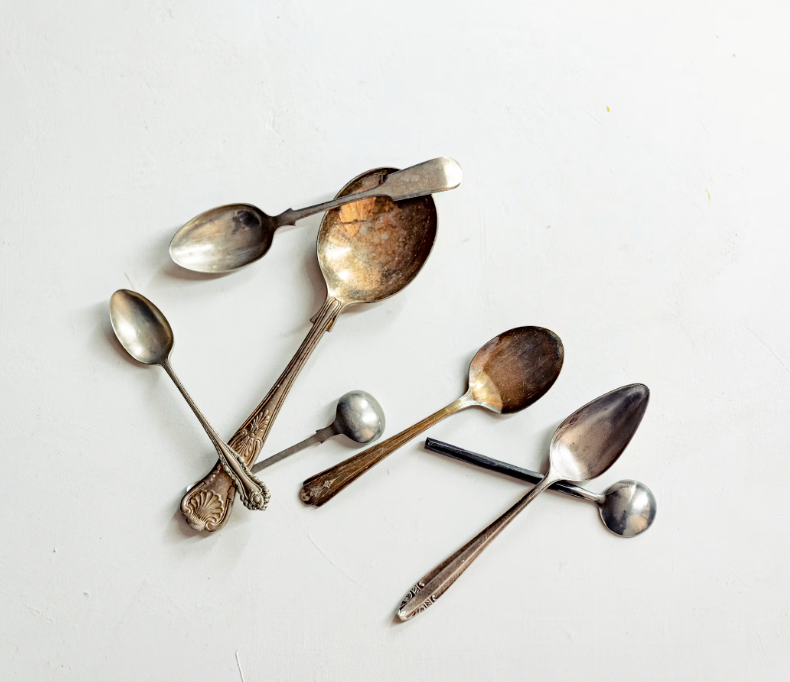
I first heard about “spoon theory” from my mother when I was younger. She had lupus, and hearing “I just don’t have the spoons for that today” wasn’t anything out of the ordinary in the house, it was just another Tuesday. It was the first time I’d heard someone use that example for describing a pretty much invisible currency. I didn’t think about it again for years though, until it was brought up in class, and suddenly, it was linked to the social model of disability.
Cartoonishly Evil, Enormous, Fuck Ass Human Meat Grinder
I heard an interesting thought in class today from one of my peers: disability is (partly) defined by one’s economic usefulness. If you cannot use your body to produce an economic output, then you are considered “disabled”.
This very reasonable sounding peer brought up the example of “gifted” programs in American public schools. These programs championed the success of neurodivergent students, but only with the goal of making them employable.
In a different situation, these students may have been labelled as “special needs”, those who wouldn’t go on to make a boss very happy one day.
Not only was this an acute observation of the economic motives of the public school system as they relate to disability, but it also made me think about economic exploitation of the body in general.
Continue readingAre Men “Visual Creatures”?: A Discussion on Porn & Bioessentialism
TW//mentions of SA, porn addiction, objectification
One thing that really stood out to me in Throwing Like a Girl is how Iris Marion Young criticizes bioessentialism, which is the idea that men and women behave a certain way because it’s just “biology”. She shows how people explain things like throwing differences as natural, when they’re really learned through social expectations. It is similar to how people perform worse due to the stereotype threat, which is when minority groups tend to underperform on tests because they believe that they are not capable of performing well, leading to a self-fulfilling prophecy.
I think that same logic of “inherent” or “biological” behaviors can be applied to how men justify watching porn by saying “men are visual creatures”, which is not based in fact at all. That phrase is so harmful because it makes it seem like objectifying women is unavoidable, instead of something that men are choosing to participate in.
Read more: Are Men “Visual Creatures”?: A Discussion on Porn & BioessentialismPorn is extremely dehumanizing because it turns people, often women, into objects meant to be looked at, not individuals with complex life experiences who have their own agency. Young talks about how women are taught to experience their bodies as something to be watched and judged, rather than as something they fully control. Porn takes that even further by reducing women to their body parts and presenting sex as something women exist to provide. It trains people to see women’s bodies as products rather than as a part of an intimate and sacred human interaction.
The idea that porn allows people to “buy” consent is disturbing on its own as well. Consent in porn is always available and detached from real emotional or physical consequences. Sometimes consent can even be depicted as NOT freely given, and disrespected, as part of r*pe fetishes. Humans were never meant to have instant and unlimited access to sex like this, and pretending that it’s just “natural male sexuality” ignores how artificial and extreme this level of access actually is. The harm doesn’t just affect the person consuming porn, it impacts the women in it, who are often exploted, and women in the modern dating world that have to deal with unrealistic expectations and porn-driven violence and entitlement.
Just like Young argues, bioessentialism isn’t harmless. It is used to excuse behavior that causes real harm by making it seem inevitable, and vanishing accountability for those who are engaging in them. Saying “men are visual creatures” works the same way as saying “girls throw like that”. It hides socialization behind biology.
When My Body Wasn’t My Own
TW: mentions of SA, dissociation
Growing up in a conservative household, I was constantly told to cover up because of men’s “wandering eyes”. I was taught that if I were to be sexually assaulted, it would have been my fault, instead of the person who sexually assaulted me. Out of fear, I obliged, wearing modest clothes throughout my childhood, convinced that I could never be safe. My mother also told me to speak properly, to never talk back to elders or men, and to hold my tounge if I was uncomfortable. In Throwing Like a Girl, Iris Marion Young describes how women move with “inhibited intentionality”, we know we can act, but we feel like we shouldn’t. That was my childhood: constantly silencing and covering myself to make myself more palatable for men. These habits became ingrained in me, because for so long, they were all I knew to do.
Continue reading
