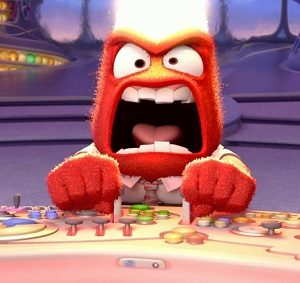
Depicted is the character of “Anger” from the Pixar animated film Inside Out (2015). A short, red, square-shaped character with flams bursting from his head as he screams in rage.
Continue reading
Depicted is the character of “Anger” from the Pixar animated film Inside Out (2015). A short, red, square-shaped character with flams bursting from his head as he screams in rage.
Continue reading
I believe age gaps in Hollywood raise a question that gets rarely asked in reverse. You may hear several reasonings of why a young, heterosexual, woman might want to date an older man. He’s “mature, stable, more established”. If you were to turn the question around, what is the reasoning behind why an older man wants to date or be with a younger woman? When it comes to a man’s side, there’s less need for explanation. It may be given, he may say he loves her, simple. Now it doesn’t have to be interrogated further. This can get especially complicated around marriage and pregnancy in a heteronormative relationship where the physical and social differences between both partners are built into the power dynamic. Yet continuously this issue can get put down, more notably on the internet because they are “both consenting adults”.
You can see this justification in visible patterns for celebrities who have “pretty privilege”. They can exist outside and above this scrutiny. They are free to date women barely out of their teens, and in the past, it could go largely unquestioned. This while there’s a constant quiet expectation that the woman be held to a higher standard than her counterpart. Through a Hollywood lens being with a younger woman lets the older man’s own image become “youthful, playful” by association, his body, his relevance, are refreshed through the woman. Now the label as a “young woman” stop being categorized as young at all. She is now re-contextualized as being the “girlfriend”, which gets rid of the age difference rather than giving a name to it.
Continue reading
This week, one of the works that resonated with me was Young’s Throwing Like A Girl, and I looked back on my childhood. The part about ‘yonder’, the space outside of a girl, hit something different than we touched on in class.
Continue reading
Growing up as an Asian American, I always had a fast metabolism and never weighed above 100 pounds. No matter how much I tried to eat, I could never gain the weight. If I lost any weight for any reason, it was hard to gain it back. Medical professionals would tell me that I needed to “eat a cheeseburger” because my weight was not considered ‘healthy.’ I was not allowed to donate blood because I did not reach the weight minimum. I was tired of being told how ‘weak and small’ I looked, envying anyone with more noticeable curves or physical strength. I refused to take pictures for months, archiving my entire feed on Instagram and hiding my body as much as I could. I was sick of the body I was in. So in 2019, I began to research ways I can transform the way I look as quickly as possible.
Continue readingAffirmations from an unreliable drop out –
I have failed to work with a system that prioritizes productivity over personhood.
I have chosen moving forward over suffering
I will accept myself to spite a value system that does not want acceptance – but always striving for “better”. If I internalize it, that I am always striving for “better”, then I build a comfortable place for the belief that I will never be enough, to rest upon. Instead, I will build space within myself to be less than ideal.
Continue reading
2011 was the year I began distancing. By which I mean, I began a life lived from my twin bed, fueled by goldfish crackers and electrolyte drinks, seldom able to access the outside world. It wasn’t mine to call home anymore.
I was drowning in conditions that these doctors hardly knew about. I had no choice but to become my own doctor, nurse, and historian. More than anything, I became my own community.
The outside world was stolen from me by sickness, uncertainty, and administrative violence – this world was never built for my survival. Such predicaments were met with constant calls to push through – go into the world anyways, risk it all for a “normal” life. They said adapting to it would make me better. It wrecked my body and my mind. Being bedridden was extraordinarily taxing and painful in a way that cannot be understood by those who have not been fully immersed in it in this way, yet. But I am inseparable from my bedroom life, I am made of soft pillows and the world I built among them.
Continue reading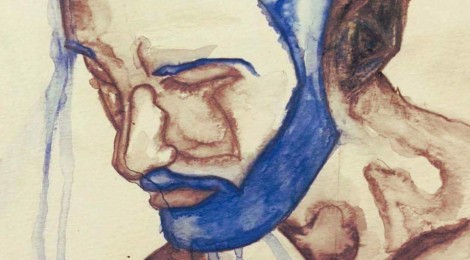
Image Source: http://trauma.blog.yorku.ca/2015/12/south-asian-queer-community-lacks-visibility/ (Artist – Jinesh Patel)
(Content and Trigger Warning: Self Harm, Suicide, Substance Abuse, Emotional Abuse, Intimate Partner Violence, Bullying)
.
.
I often find that mental illness and queerness aren’t addressed properly or constructively when talked about together. So often the public at large would have us believe that queerness is a result of mental illness or that mental illness is the result of queerness exclusively. With this in mind, the queer community will often push back on society’s behavior by talking about the two exclusively from each other, frequently ignoring all the ways mental illness intersect. That’s does not go to say that queerness is the result of mental illness or vice versa at all, but rather it shouldn’t be ignored that many people in the queer community go through both because of the way society has constructed and reacted towards queerness. For example, queerness has often been perceived as a deviant thing, it has historically been punished and worked against in a variety of ways. Continue reading
Image Source: http://www.avclub.com/article/theres-mash-rainbow-road-themes-all-8-mario-karts-206528
I’ll focus on my own experience here but I know there are going to be things about my experience that many other queer people can relate to in this regard.
My experience with queerness has never been linear, it has indeed been very queered. It has consistently involved not knowing about a way of being queer and then being introduced to the concept, a moment of reflection and then realizing “oh shit that’s me.” But I’ve also consistently struggled with coming to terms with these new labels and seeing how they fit me.
From the age of 12 to about a month away from turning 21 I had been on a journey of denial, internalization, grief over myself changing and growing, complete secrecy, exploration, etc. etc. about me being bi. I had come out after years of being afraid of myself, but in that time I also developed a yearning for community. When I came back to UMBC after two years of community college I knew that I’d want to seek out my community. Since then my reality as a queer person has shifted so greatly. I feel so liberated. Yet I grieve. I grieve for the ways I have been, not knowing if they are different than who I am now. My sense of self has been questioned. I don’t know if my new state of existing is just blurrier, or if things have just been just out of my sight this entire time and it constantly feels like both. I don’t know how consistent this person who is me is. Continue reading
At the beginning of the semester, I came across an article titled The Deaf Body in Public Space on my Facebook news feed that was posted by one of my deaf friends. As I read through the article, I found myself nodding in agreement with many of the observations that the author, Rachel Kolb, voiced. Continue reading
 I’m getting tired of hearing that….

