The Strike and the Silent Pressure on Men

The Strike and the Silent Pressure on Men

“The Strike” the documentary about the 2013 California Hunger Strikes, I found to be a very captivating and intriguing watch in class. I personally didn’t know about the strikes until we watched the documentary, but I was personally baffled that this was even able to happen to these men in solitary confinement. Watching the documentary, though, I realized a startling truth… most men in society, in many ways, experience a quieter, emotional version of solitary confinement. The men in “The Strike” were put under horrendous conditions by the California prisons; eventually, when word got around that a planned hunger strike was going to take place, it was easy for many to get behind, really, because when you take away someone’s social interaction and time outside and force them to live the same day over and over again, you’re forced to take action on the only thing you have left, the body. For the men, their bodies were the only thing they had control over, so they found a way to rebel by starving themselves for the betterment of their conditions.

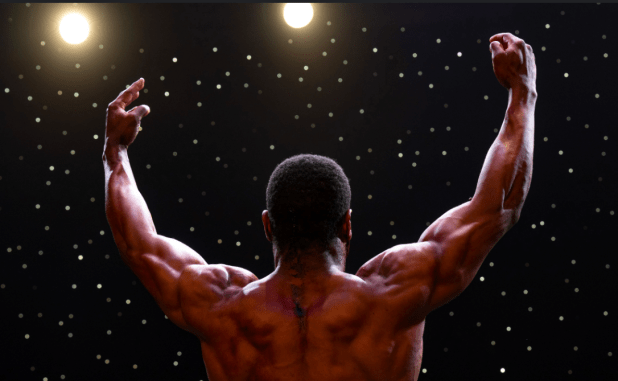
While the conditions aren’t the same by any means, men walking free face a similar imprisonment placed on them by the greater society at large. Even though it’s no longer the 1900s anymore, the stigma of men having to be stronger, masculine figures who do not express emotion and provide for the women and children is very much still alive and well. It’s a quieter, more invisible form of imprisonment; boys can’t cry, can’t ask for help, and don’t talk about what hurts because at the end of the day, even if they do talk about what hurts and cry, they show weakness and failure to be a pillar of strength in society’s eyes. And like the men in “The Strike” the only agency they do have is that of their own bodies, throwing that pent-up emotion in the gym, building muscle, cleaving away the pain of their psyche by tearing the muscle fibers keeping them whole. Becoming what society wants, a strong man who doesn’t show weakness, is what true strength is to society.

The reason I’m able to describe how it is, how these invisible bars keep men inside, is because I am one of those men; a subconscious reason of why I started going to the gym is because I was skinny as a twig in middle school, and I was made fun of for my poor posture and the fact that you could see my rib cage with my shirt off. I couldn’t really vent any of these feelings to anyone; my dad is a stoic person who himself doesn’t really express a lot, unless he’s drunk off his rocker. And my mom, who is the complete opposite of my dad, can’t really understand me, even when I try to convey my anger. I just had to shut up and forget. That was in my early development years, and so into middle and high school, I never really talked much. I had friends, but I was known as a quiet kid. It wasn’t until high school that I started taking serious issue with how I looked and how others viewed me. I wanted them to see me as a strong, dependable person, so I started working out. Not choosing to, but was suffering in silence; this was also the time I realized that I hated myself. I distinctly remember telling my friends that I hated myself, after years of never really talking about how I felt. This was how one friend responded to me, “No, you don’t hate yourself.” After this point, I lost faith in trusting others with how I felt when I started putting all that pain and feeling into running and lifting weights. This is how I’ve been living for years now, not really thinking that anyone could or would want to hear what I truly felt. It’s been put into my head, “Men can’t cry,” and I think a lot of other men would resonate with this feeling or story of myself.

Roughly 75% of deaths by suicide in America, Canada, and the UK are by men, and after years of pent-up emotion, the final state a man has to go to rebel is by taking his own life. I myself have faced thoughts of suicide, but never planned for it; it’s only been up until a few months ago that I was able to confide in really close friends about these past feelings. Nothing really gets me to talk much about a certain topic or subject, but I champion and proudly stand for the mental health of men everywhere, to please go and find help, and to realize that it is ok to cry in this painfully messed-up world. While I’ll probably never go through the trials and tribulations of the men in the California hunger strikes, I can connect to the feeling of rebelling against your own body to make a statement to others and having agency over the one thing you can never lose: your body.

Why me?

Why me?

Why me? I ask myself this question everyday why was I born so sick? Why was a born with these mental and physical struggles? Why do I feel so different like I don’t belong here? Why did I not die a birth? Why did I live instead?

These are things that I ask myself when my depression/ anxiety speak for themselves. I fight them back every day each day goes by it get a bit easier since starting therapy and getting medicine. Even so it still a fight, I for so long was afraid to seek help due to being suicidal I was afraid they would lock me away and throw away the key, like they do to so many others. I had personal connection to this fear my mom had an aunt who was sent away to the mental hospital back in the late 60s, to this day no one has any idea what happen to her once she was sent away no one heard from her or saw her again. This is something that is not just history it still happens to people today, but no one know or speaks about it. This why many people fear asking for help they don’t want to be taken away thrown in a hospital and have all their basic human rights stripped from them.

Solitary confinement is a cruel/inhumane punishment they put not just prisoners through but also those with mental struggles. They say to protect them, but it is to control them this does not help a prisoner reform nor help someone with mental health recover it only make these issues worse. Although has been some improvement but nowhere enough and it only improved for those of certain class and race.

Me Before You: A Tragic Tale of Romance and Assisted Suicide 

When I first watched Me Before You, I felt like my heart was ripped out of my chest. The story follows Louisa “Lou” Clark who becomes the caregiver of Will Traynor, a man who was adventurous before becoming paralyzed after an accident. Will unfortunately faces many challenges both physically and mentally, leading him to choose assisted suicide despite falling in love, and I haven’t been able to stop thinking about this movie ever since. Recently I started to question, if it was romantic, or was it reinforcing the idea that a disabled life isn’t worth living? After reading Nicole Schroeder’s “Dying a ‘Good’ Death: Disability and the Assisted Suicide Debate” from the Disability Visibility Project, I started to see the story through a completely different lens.

Before I fully dive in, I want to fully paint the picture of this movie. Firstly, Will’s parents hire Lou to care for him after his accident two years in an attempt to raise his spirits. Lou’s unapologetic, positive personality slowly breaks through his bitterness, and they form a deep connection. After finding out he plans to go to Swtizerland for assisted suicide, Lou tries her best to change his mind by trying everything from taking him to concerts and a trip out of the country. But in the end, Will does not change his mind even after falling for Lou. The movie paints his choice as noble as a way of reclaiming control over his life and giving Lou a chance to live hers. The final scene shows Lou reading Will’s farewell letter in Paris, smiling through her tears. It’s meant to be bittersweet, but it also raises difficult questions about what “a good death” really means, and whether society offers disabled people real choices about living.

Nicole Schroeder’s essay completely reframes this debate. She argues that the real issue isn’t about whether people have the right to die, but it’s about why so many disabled people feel they need to. She writes, “those of us protesting do not want people to be in needless pain; instead we want resources other than death to alleviate suffering while people are still alive.” That line stuck with me because it exposes how the conversation around assisted suicide often ignores the failures that lead people to that point: lack of access to care, isolation, and social neglect.

In the film, Will isn’t shown receiving much support beyond Lou’s companionship and his personal caretaker, Nathan. Even with wealth, he seems completely alone in a world not built to include him. Schroeder highlights that in a “hyper-capitalist world,” assisted suicide can become a cheaper alternative to improving care and accessibility. It’s haunting to think about how Will’s decision might have been shaped not by genuine choice, but by a culture that sees disability as tragedy especially after losing the hyper-active life he once had. 

One of Schroeder’s most important points is that assisted suicide is often presented as a form of autonomy, when in reality, many disabled people are making choices under pressure. She shares that in Canada, nearly half of those choosing Medical Assistance in Dying (MAID) cite feeling like a burden or experiencing loneliness. That statistic immediately reminded me of Will telling Lou he didn’t want her to give up her life for him. What sounds selfless in a romantic story becomes more complicated when you realize how society teaches disabled people to internalize guilt for simply existing.

The movie’s emotional framing makes Will’s death feel inevitable, even “beautiful,” but Schroeder challenges that idea. She calls out how assisted suicide has “eugenics-centered roots,” meaning that the very systems allowing it have historically viewed disabled lives as less valuable. When I look back at Me Before You now, I can’t unsee this unfortunate pattern that tangles up love, care, and death into a message that equates disability with hopelessness.

When I first watched Me Before You, I can still remember myself tearing up during the beach scene when Will tells Lou that he is still going to Switzerland after she pours her heart out to him. Me and many fans of this movie are still heartbroken over what could’ve blossomed between Will and Lou. But now, I think the real heartbreak isn’t Will’s death….it’s that the story never gives him another option. Schroeder’s essay reminded me that true dignity doesn’t come from the “freedom” to die; it comes from having the support and resources to live fully. The film romanticizes Will’s choice, but if it reflected the realities Schroeder describes like underfunded care systems, social isolation, and ableist messaging, it might look less like empowerment and more like surrender to a world that failed him.

I still love Me Before You for its intensity and emotional honesty, but I see it differently now. It’s not just a love story; it’s also a mirror of how our society defines whose lives are worth fighting for.

Fighting internal battles inside a cage

Fighting internal battles inside a cage

Over the weekend, I watched the film “Magazine Dreams” starring Jonathan Majors. I found it to be a very potent and powerful film, navigating the troubled topics of mental health and toxic masculinity seen in a bodybuilder. I personally think its one of the best films in the past 5 years, masterfully crafted, and the acting of Jonathan Majors was nothing but masterful, 9.5/10 in my opinion. But watching it, I couldn’t help but find parallels in a recent essay we read in class, Roxanne Gay, “My body is a cage of my own making.” Roxanne writes with raw honesty about how her body has become both a site of protection and imprisonment, shaped by trauma, shame, and the desire for safety. Her essay tussles with the views of society on fatness seen as failure and how internalized expectations of beauty and worth can distort the relationship one has with the body. The body seen as a “cage,” is not just physical, it’s psychological and societal, shaped through years of punishment, judgement and self-loathing. Just like Roxanne Gay, Jonathan Majors character, Killian Maddox goes through a similar struggle, like Gay, Killian’s obsession with control over his body will grant him love, recognition, and dignity, it becomes his own form of imprisonment. It’s this desire that turns self-destructive; these hypermasculine ideals reflect societal views on strength, dominance, and visibility, and can warp one’s self-image. It’s this toxic masculinity image that Killian aspires to. It’s the muscle-bound body that Killian builds that becomes his own “cage”; he builds his own prison. I can relate to Killian’s view of wanting to look better and that there is something even above perfection; my family calls me a perfectionist and that nothing is ever really good enough for me, I’ve been working out for 4 years now, and even now I can’t find the satisfactory approval of others; I can’t even find it within myself. I feel as if I have to keep pushing myself with no end in sight; there is no prize to perfection, only the endless pursuit. Ultimately, both works reveal the violence of living in a body that society misreads or refuses to acknowledge fully. Gay’s body is seen as “too much,” and Killian’s body as “not enough.” Both ideas are detrimental and harmful to both, and both end up internalizing this worldview until it ultimately consumes them. Both of these works reveal the battle between the body you create for yourself and the socially defined aspects of it.

The Real Cost of Microaggressions

Constant microaggressions is something that really is a shared experience. My introduction to phenomenology was not that microaggressions takes a large toll. Microaggressions are comments that can be so subtle even I shake it off and disregard it with expression and then internalize it. Whenever I read something in this class, I always find myself reflecting on experiences and realizing how quickly I will “simply” internalize it and not express the discomfort. I put the term simply in quotes because how simple can it be to internalize the feeling of being put in a majority when you are not the same as every person in that majority? For me, the word “simply” in that context is the repeated, chronic discrimination is something that I have had to deal with my entire life. There is never a time when I think about what would be the outcome of this everyday internalized discrimination against myself.

“Perceptual practices can be organized, like bodily movements used to perform various operations, into integrated units that become habitual.”

Alcoff, Linda Martin. “Towards a phenomenology of racial embodiment.”

Alcoff’s article made me critically think about my own and shared experiences with discrimination. In her article, I took away a new perception about microaggressions. I think this shift is because of that “simple” term I mentioned before. Someone in a constant routine usually will start to be able to do those things with so much ease that it becomes automatic. So automatic I never thought about these costs. An emotional performance is put on when faced with microaggressions. An example is suppressing anger. Something you are constantly emotionally performing for is something that takes on the body. That constant suppression can lead to a breakdown and an overwhelming feeling that makes you feel exhausted. Some days there will just be all those performances that take a toll on self-efficacy.

The World Limits My Body and My Body Limits Me

On July 1, 2022, I wrote the following entry:

“Whether I want to admit it or not, my growth is relevant, is obvious…but not when it comes to my body. Kind of. I can’t explain it. I do feel better about myself. I enjoy what I look like…and haven’t used my body as an obstacle or excuse of not trying. But that trauma from being bigger still lingers. What people think of me still stays in the back of my mind, when I get hit on in public it still surprises me…”

Phenomenology teaches us that bodies are not just biological objects but lived experiences, shaping how we perceive, move through, and make meaning of the world. It is the “science of the essence of consciousness.” It is with that then, that we recognize that our Western society has nothing to prepare us for this type of perspective. We are forced to live so physically in our world that we often resort to theories and philosophies to provide cushioning and comfort, but it us that must invoke that change. This is where we feel stuck. The tools and unlimited opportunities but too many fixed mindsets to put it into action. It’s something we feel when we’re 16 and likely what we’ll feel when we’re 60, the outside pressure of constantly separating one’s body from the mind.

What my 16-year-old mind didn’t realize was that there was an exact name for my feeling, an effect of society’s demands: Feminine Motility. How women may move if they must. That’s the feeling you get, anyway. We describe this detached feeling of our body as Ambiguous Transcendence, where we are both separated but bound to our body. The verbal “I can” which ultimately becomes “I can’t” under Inhibited Intentionality, and the Discontinuous Unity, where one severs their capacity in the body from the possibility of the world. At every more we are controlled, questioned, and doubted from something we can’t see but recognize.

It’s an unbelievable reality to merely stumble upon one day, usually in your adolescence. I think that’s the point too, to get you when you’re your most fragile, mentally. It feels damning, but then you get older, and at some point your mind aligns with your physical age and I think that’s what it means to enter adulthood and understand Phenomenology. To recognize that our body is a biological being, but also something that transcends beyond the physical world and our social boundaries. Moving (both emotionally and literally) from childhood to adolescence to adulthood is a painful process, one we can’t understand until we’ve been through it.

Life After Diagnosis

Phenomenology is the study of first-person experiences and sensations that give life more meaning. When we were discussing this topic in class I immediately thought about how much my experience and perspective on my life shifted after my adult autism diagnosis. After the diagnosis I began to look back at my life and pick out moments and traits that, in hindsight made so much sense with me being autistic. But before the diagnosis, were just a confused, muddled mess. I remember thinking back on basically every interaction I had ever had and wondering if I would have reacted differently had I known. They say ignorance is bliss, but in all reality the not knowing led me to become a traumatized, jaded individual. The world isn’t built for autistic folk, and imagine going about your life wondering why you are facing barriers and roadblocks at every turn and not even knowing why. It messes with your sense of self and you begin to think something is deeply wrong with you. I am still having to unlearn that one. Yay for therapy!

Something that you do when you spend your whole life not knowing you’re autistic, is you get really good at masking. I was able to play the part semi-well and be sociable, friendly, and well-mannered. And when I got older I became even better. But when you learn that you are autistic, that mask begins to crack. It crumbles away and you are left with a messy, soupy, puddle of sensory issues, lack of social awareness, and fixations. It’s extremely common for adults who are diagnosed with autism to regress in a lot of their skills once they find out about their diagnosis. After holding themselves together by the seat of their pants their whole lives, their whole world is turned topsy turvy. This is what happened to me. It’s taken me years to reacclimate to my new way of perceiving the world, and myself. Slowly I’ve built myself back up and created a new, stronger identity. Diagnosis saved my life.

to my mind

dear,

it’s been so long since i’ve last written to you.

have you missed me? i’ve missed you. terribly, terribly so. i look in our bathroom mirror (the one that you would let your body draw smiley faces on when the glass fogged from a too-hot shower, remember?) and see you again. we share the same eye-bags and bright, big eyes that are hard to miss. i think that is one of my favorite things about you two.

i wish i could give you a hug right now.

Continue reading

My Invisible Disability

(Trigger Warning: mention of ABA therapy) 

Although I haven’t formally been diagnosed with autism, the understanding is that if you feel as though you have autism you should treat yourself as if you have autism. As the Stevenson article discussed the infantilization of autism erases the existence of autistic adults. But, here I am an autistic adult. I can discuss my experiences with autism. 

I did not have any experience with ABA therapy. At best it seems controversial at worst it looks problematic. As we discussed in class if we have adult autistic representation in the ways of them talking about their experience with ABA therapy and how destructive it can be. Then, this would lead to a capitalist problem, in that, it would lead to the multibillion-dollar industry of ABA therapy to its demise. 

Growing up I would stim, have trouble with eye contact, not understand or be able to read emotions, and was just in general weird. Not to associate negatively with the word weird just like atypical, not a part of the norm, not “normal.” Whatever that means. No one noticed. Maybe I became really good at masking? Later in life, I thought I had ADHD, another invisible disability, this explained the stimming, but not the other symptoms. But, here I am an autistic adult. And I’m confused about what I should do in the future. A diagnosis is much too costly and I don’t know if it would help. I guess I will just be emboldened by community. 

Looking Good and Surviving the Struggle

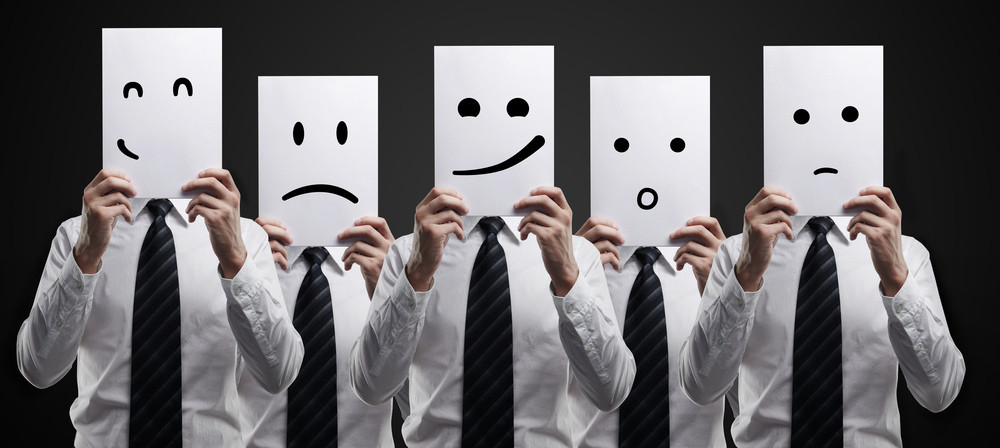
As a Black woman, I feel like I’m always pushing myself to do better whether it’s excelling in school, handling multiple jobs, or meeting life’s demands. But along with all of this, society expects me to stay strong, composed, and, above all, to “look good” no matter the circumstances. “Being Black and Looking Good While Chronically Ill” reminded me of how “looking good” often makes people overlook the emotional struggle behind the polished surface. While I don’t have a chronic illness, I can definitely relate to the pressure of presenting a flawless image for everyone else’s comfort. The burden of “looking good” isn’t just about appearance, it’s about hiding our real selves. We’re expected to show up as perfect versions of ourselves, and anything less risks being judged or dismissed. The emotional toll this takes is real. It’s draining to keep up a facade of strength when, inside, I’m just trying to survive like everyone else. I sometimes wonder: If I let my guard down and show my vulnerable side, will people still see me as capable? Or will they think I’m less valuable because I no longer fit the image they’re comfortable with?

The pressure to always be strong is exhausting. In “You Are Not Entitled to Our Deaths”, the author talks about how society demands marginalized people, especially Black women, to sacrifice their own needs for the comfort of others. This really resonated with me because I’ve felt that exact pressure to hold it all together, no matter how much it costs me. But through these readings, I’m starting to realize that real strength doesn’t mean hiding my true self. It’s about showing both my resilience and vulnerability. Let’s stop pretending to be perfect. True strength lies in embracing both our power and our humanity—because we are enough, exactly as we are. And maybe, just maybe, it’s time to stop pretending for others and start living for ourselves.