Are Men “Visual Creatures”?: A Discussion on Porn & Bioessentialism

TW//mentions of SA, porn addiction, objectification

One thing that really stood out to me in Throwing Like a Girl is how Iris Marion Young criticizes bioessentialism, which is the idea that men and women behave a certain way because it’s just “biology”. She shows how people explain things like throwing differences as natural, when they’re really learned through social expectations. It is similar to how people perform worse due to the stereotype threat, which is when minority groups tend to underperform on tests because they believe that they are not capable of performing well, leading to a self-fulfilling prophecy. 

I think that same logic of “inherent” or “biological” behaviors can be applied to how men justify watching porn by saying “men are visual creatures”, which is not based in fact at all. That phrase is so harmful because it makes it seem like objectifying women is unavoidable, instead of something that men are choosing to participate in. 

Read more: Are Men “Visual Creatures”?: A Discussion on Porn & Bioessentialism

Porn is extremely dehumanizing because it turns people, often women, into objects meant to be looked at, not individuals with complex life experiences who have their own agency. Young talks about how women are taught to experience their bodies as something to be watched and judged, rather than as something they fully control. Porn takes that even further by reducing women to their body parts and presenting sex as something women exist to provide. It trains people to see women’s bodies as products rather than as a part of an intimate and sacred human interaction.

The idea that porn allows people to “buy” consent is disturbing on its own as well. Consent in porn is always available and detached from real emotional or physical consequences. Sometimes consent can even be depicted as NOT freely given, and disrespected, as part of r*pe fetishes. Humans were never meant to have instant and unlimited access to sex like this, and pretending that it’s just “natural male sexuality” ignores how artificial and extreme this level of access actually is. The harm doesn’t just affect the person consuming porn, it impacts the women in it, who are often exploted, and women in the modern dating world that have to deal with unrealistic expectations and porn-driven violence and entitlement.

Just like Young argues, bioessentialism isn’t harmless. It is used to excuse behavior that causes real harm by making it seem inevitable, and vanishing accountability for those who are engaging in them. Saying “men are visual creatures” works the same way as saying “girls throw like that”. It hides socialization behind biology.
Your Disability Is In Your Head

Trigger warnings: mental illness, SA

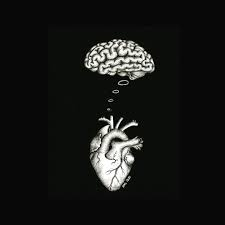
My disability, as I’ve been told by my parents during some of the hardest years of my life, is all in my head. The accumulated and compounded effects of strife in my life that eventually developed into a deep, dark depression- it’s not physically tangible, so how could it have been real?

I have a unique relationship with my disability. The one that I grapple with the most is one that is acquired, not inherited or born into. I have post-traumatic stress disorder, and I am not a war veteran. I am a sexual assault survivor. My disability was acquired through experiencing trauma and then experiencing the more deeply horrific experience of utter social isolation, lack of support, and lack of real mental health resources for someone of my age, specific trauma, and cultural background. I was diagnosed when I was 13, before I realized I have ADHD, depression, and GAD. Most of those are co-morbid.

My relationship with my disability was very much through the lens of the medical model- something is wrong with me, it is my problem to fix, and in the mean time, *some* institutions and people may be willing to accomodate my different needs despite the burden that it is (that I am), but ultimately the onus of responsibility for my disability, for my neurodivergence and its physiological consequences, is on me.

I realized much more recently that this may not be true. This semester, it was reiterated to me in the form of Tom Shakespeare’s reading about the social model of disability. // In our view, it is society which disables […] impaired people. Disability is something imposed on top of our impairments,
by the way we are unnecessarily isolated and excluded from full participation in society. (p. 215)//

I don’t agree with every aspect of this reading, such as how mental disabilities are not acknowledged by the founders/ creaters of the social model. But I do resonate with this new way of thinking- that the structures we live within are not inclusive to all people that live within them. This leads some people to struggle much more than others to get through their days.

I only started truly believing recently that I deserve the accomodations I have. Not because I didn’t believe that I was disabled, but because I saw them as a privilege. But I see it differently now. Not everyone has to deal with what I deal with every day. That doesn’t make them better than me or more normal than me, but it means that their phenomenological experience of this world is not the same. Nobody gets to tell me that my disability isn’t valid when they have never walked in my shoes. Nobody gets to tell me to suck it up and find a way to make it through when I see how so many people are able to do with ease, the things that I struggle and toil to do.

Also, yes, my disability is all in my head, in a literal sense. But that doesn’t mean it’s not real.

What Were You Wearing

“I was seven,
Wearing play clothes,
When he decided,
I was his experiment
I was seven,
Playing in my home,
When he decided to
Claim my innocence”

“I was eight,
Wearing a black shirt,
And pj pants with pink stars
When it all started
I was eight,
In the trusting lap
Of my uncle,
Too young to question,
Too young to debate”

“I was three,
Or possibly five,
When it became,
A monthly encounter,
I think I was three,
Sometimes in a sundress,
Others in pajamas,
When he decided
He had the right to me”

This poem was inspired by an exhibit called What Were You Wearing. The title of the exhibit is a question commonly asked to victims of rape/sexual assault, implying that what happened to them was somehow their own fault. The exhibit proves that clothing is irrelevant when it comes to sexual assault, and that we should stop victim-blaming by asking this question. 

That Day in July

(content warning: sexual assault)

I still remember that day in July. It was at a weird time in my life. I had been back on hormones for a few months now, after having been off for way too long due to a bad combo of adhd and anxiety making my life much harder than it needed to be. Similarly I had been working for the past few months in a grocery store. It was a frustrating job but at the very least it paid me.

Continue reading

My body, not yours.

TRIGGER WARNING: MENTIONS OF RAPE AND SEXUAL ASSAULT.


Throughout my life, I’ve always had a core group of female friends. Of course, some friends have come and gone throughout the years, but my favorite memories with these women has always been nights during which we sit around and have intimate conversations. Last night was one of those nights.

Continue reading

The Hunting Ground: A Summary & Review

WARNING: SEXUAL ASSAULT IN MENTIONED IN THIS BLOG POST. 

Earlier this week on CNN, a documentary illuminating the realities of sexual assault on college campuses was aired. ‘The Hunting Ground’ was a powerful, emotional, and much-needed story that needed to be shared with Americans all across the nation. This documentary was written by the same people who produced ‘The Invisible War’, an expose on women’s sexual assault in the military.  Continue reading

No more ignoring fat bodies [warning: rape]

It seems to me that no one ever thinks about this, or they never want to talk about it. I want to talk about it. I think it needs to be written down, passed around, and heard over and over again until we replace our present beliefs with the truth.

Continue reading

I Know This Pretty (Slutty) Rave Girl…

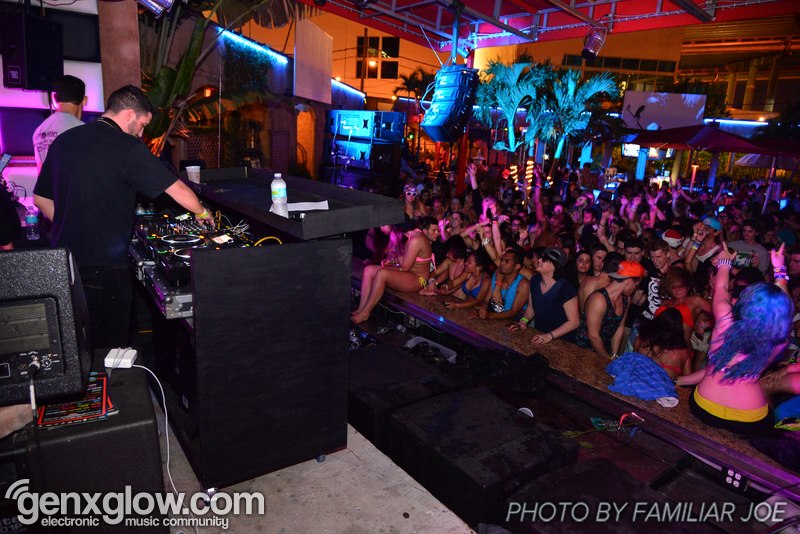
Jamming onstage to Doctor P during Stacked: Miami

Jamming onstage to Doctor P during Stacked: Miami. RIP blue hair.

If you’ve ever heard me talk about my musical interests, you’ll know that I’m a massive basshead. I love everything about the Electronic Dance Music community, from the art of making heartfelt kandi bracelets and the secret handshake used to trade them, to the PLUR (Peace, Love, Unity, and Respect) motto, the flow arts (hula hoop dancing, poi, and flow wand) performances during a show, the ability to walk up to anyone and potentially make a new best friend, to the infectious energy radiating from the crowd. Being introduced to the EDM scene allowed me to express myself with reckless abandon, whether it be through dance, hooping, kandi-making, or interesting costume-like getups. But there’s one thing I don’t love about this community- the amount of slut shaming in response to girls wearing rave outfits that attempt to be both cute and comfortable.

TW: Sexual assault, death mention, slut shaming, drug mention, rape culture

Continue reading