Work and Worth: A Journey

As a college student, I’m constantly juggling classes, assignments, and part-time jobs, and I often feel like I’m being pulled in a million directions. It’s exhausting, and I sometimes find it hard to keep up with everything. Beyond my studies, I want to be there for my friends and family, but it often feels like I’m barely keeping my head above water. Lately, I’ve been thinking a lot about how work and health are connected, especially as I prepare to step into the workforce. The transition to independence is daunting, and one of the biggest challenges I face is figuring out how to take care of myself amid all the chaos. Unfortunately, essential topics like nutrition, stress management, and work-life balance are rarely taught, leaving me to navigate them on my own.Reflecting on the history of labor in the United States, I realize that the fight for workers rights has been long and difficult. Over the years, labor movements have battled for fair wages, reasonable hours, and safer working conditions, paving the way for healthier workplaces today. But after reading “Made by the Work: A Century of Laboring Bodies in the United States” by Ed Slavishak, my perspective on the human cost of labor has shifted profoundly. Slavishak dives deep into the harrowing experiences of early 20th-century workers. It’s hard to fathom that laborers in steel mills and coal mines faced daily dangers and grueling conditions, with their bodies treated like mere tools for productivity. One statistic that struck me was that over 25,000 workers died every year from workplace accidents. That number is staggering and heartbreaking. It hits close to home for me because it makes me think about how easy it is to overlook the sacrifices of those who came before us, who were seen as expendable and pushed to their physical limits until they broke.

Sitting in my cozy dorm room, surrounded by textbooks and my laptop, I feel a mix of privilege and guilt. I belong to a generation that, for the most part, doesn’t have to face such dire conditions. It’s easy to take that for granted, especially when I’m so consumed with my own struggles. While my working environment is much safer, I can’t help but feel frustrated by how companies historically handled safety or neglected it entirely. They placed the burden of safety on workers, insisting that “the best safety device was a careful worker” (p. 152). That mindset is infuriating because it shifts the blame onto the very people who had little control over their situations.As Slavishak points out, corporate safety campaigns “shifted responsibility to avoid the costs of updating machinery or improving ventilation” (p. 152). This is maddening. It reminds me of the pressures I face in college. I often feel that I’m expected to power through exhaustion or even illness just to meet deadlines. I think about how many workers today might still feel that same pressure to sacrifice their well-being for the sake of productivity.Learning about unions and workers’ compensation laws has given me a profound respect for those who fought for workers’ rights. They understood that workers deserved to be valued for more than just their output, advocating for crucial things like life insurance and compensation for injuries. Slavishak notes how the insurance department of the Amalgamated Association of Iron, Steel, and Tin Workers directly asked its members, “What are your chances of living twenty more years? Can you afford to tempt fate?” (p. 153). That question resonates with me. It makes me think about the importance of community and looking out for one another in college. We’re not just isolated individuals scrambling to succeed; we’re part of a network that can uplift and advocate for one another. As I navigate my college journey and prepare for the future, I’m reminded that the fight for dignity in the workplace is far from over. It’s not just about securing a job; it’s about creating a work culture that values us as whole people, not just for our productivity. Reflecting on the struggles of past workers fills me with a sense of responsibility to carry their lessons into my own life. Balancing everything can feel overwhelming at times, but I know that by supporting each other, we can work toward a future where every worker is treated with respect not just for their labor, but for their humanity.

N.A.D – No Apparent Distress

TW: Abortion, Pregnancy Loss, Ectopic Pregnancy

June 2022 – After being on the birth control implant, Nexplanon, for 7 years I decided to have the implant removed. I wanted to give my body a break and be able to regulate my hormones and cycles naturally. I could not take the constant anxiety attacks and overall poor mental health caused by the high dose of continuous hormones being released into my body. Once removed, I never felt so clear headed or so relaxed. It felt as if a storm of clouds around my head just dissipated and my cycle returned to normal. I felt as though I had a new outlook on my body and the way it is supposed to be. 

July 2022 – It is mid July and I am driving down 95 heading to Baltimore. I feel a strange tingling and pulling sensation in my lower abdomen. I have never felt this before, it was such an unusual feeling that I made sure to take a mental note. Subconsciously, I already knew. A week passes, my cycle never comes. One evening, enjoying time with my partner at the kitchen counter; I casually slip into the conversation, “I think I’m pregnant.” He looks at me, totally unfazed, “I think you are too.” he says. The next morning, the test is positive. Neither of us are at a stage of life to raise a child. Only two other people are made aware of the situation, his sister and my best friend. The abortion is scheduled for mid August.

August 2022 – It is the evening before the procedure. I am terrified but I have planned to stay at my partner’s house where he and his sister can help me recover in secret. We order food and enjoy the evening as usual, there is nothing out of the ordinary. Throughout the day I had some light brownish spotting, not uncommon for a pregnancy. Right before bed I decided to pee one last time. This time there was one small drop of bright red blood in the brown. This does get my attention but I shrug it off. 

I jolt awake at almost 2:00 am on the dot in unbelievable pain. I stumble to the bathroom in the darkness and I flip the light on. I am hemorrhaging blood and the pain is indescribable. Instinctively I know something is very wrong. At this point the pain is so bad I crawl back to the bedroom to wake my partner.  He stirs, I say, “Something is really wrong, wake your sister. We have to go to the ER.” He goes to get his sister, a veteran shock trauma nurse and chief of hospital operations. I am barely conscious on the floor, bleeding, sweating, and in extreme pain. She says, “I think you may be having a miscarriage.”. I respond, “What if it is ectopic?”. I have never been pregnant before but I knew this was something much more dire. 

After struggling to even be able to stand, my partner and I finally arrive at the ER at 3:00 am. He is basically carrying me through the door, hospital security quickly gets me a wheelchair and I begin to violently vomit at the check in desk. I explain to them I am pregnant and something is seriously wrong. I am taken to a treatment room for IV fluids, my veins were so shallow the nurses could not hit a vein. I begin drifting in and out of consciousness as the nurses are stabbing me over and over and shouting at me to stay awake. Once the IV is placed I am left alone in a chair off to the side. I begged for somewhere to just lie down, even the floor, as sitting straight up was extremely painful. Denied. The IV bag is empty, back to the wheelchair in the hallway. 

8 hours of what felt like being stabbed over and over by a dull serrated knife pass. The minutes felt like years. Pain meds, denied. At 11:00 am, I am given a room with a bed, it would be another hour before pain meds. Finally, relief. An internal ultrasound is performed, the results inconclusive. The doctor comes in to discuss the results, the results are inconclusive and discusses the possibility of an ectopic or a miscarriage with a fallopian cyst. There is too much “sludge” in my uterus to be sure. She pushes to send me home with mifepristone and misoprostol. I refuse, I am not leaving this hospital without surgical intervention. A second ultrasound is performed with a specialist. Results, inconclusive and exploratory surgery is recommended; the surgery is scheduled for 5:00 pm. 

14 hours since check in and I am on my way up to the OR. I am terrified and crying. Everything goes black. I wake up and I am told the surgery was successful. However, I am told that my tube was extremely close to rupturing and had it been any longer it could have been fatal. Discharge: 7:00 pm, 16 hours since check in. My partner drives us home, he never left. The beginning of recovery starts. 

March 2023 – I log into MyChart, the hospital database which includes medical records. Just out of curiosity I decide to read the medical documentation from my ER visit and surgery. There, on my intake notes under patient condition, reads in all caps “N.A.D”, no apparent distress. I am horrified. 

Women in medical settings already have their symptoms dismissed or minimized, pregnant women especially. Our symptoms are written off as “just being a woman” or pregnant women being labeled as “dramatic” or “overreacting”. What could have happened if N.A.D had not been placed on my chart? Could I have gotten the help I needed sooner? Would I have had to suffer for as long as I did with a critical condition? To this day, I still have not mentally recovered from this experience. For pregnant women in the ER, vomiting, loss of consciousness, hemorrhaging, loss of full mobility, and extreme lethargy are considered N.A.D. This is the sad reality for many women who seek medical care. Even when you are on the verge of dying you are considered to be in no apparent distress.

The Body at Work

“That the body plays a central role in work is perhaps an obvious statement, yet it is easy to lose sight of human labor in a capitalist system centered on service, global outsourcing, and automated assembly…laboring bodies experience ailments and annoyances that are often hidden because they are experienced in isolation” – Ed Slavishak

When the worker is asked
To complete the task,
The body slaves away
For a measly pay.

In the big blue store
With the bright blue vests,
17 year old
Ken Kaneki rests.

School then work,
Day and night,
Week after week,
He does everything “right”.

He’s the star employee,
The best on the team,
But what does that
Truly mean?

His feet are aching,
He can barely walk,
But yet to every customer
He must talk.

Work through the pain,
Keep up your pace,
And never ever
Let your smile leave your face.

7 miles a day,
He walks across the store.
Pulling carts, stocking cases,
And watching the door.

Up on the ladders,
With boxes half his size,
His balance unsteady,
And dust in his eyes.

Down on the floor scrubbing,
He’s on his knees.
His body is screaming
“Help me please!!”

Work through the pain,
Keep up your pace,
And never ever
Let your smile leave your face.

Now in the present,
His joints are weak.
And every now and then,
The future looks pretty bleak.

Countless hours spent
To prove your worth,
But where’s that “family” now,
When you are hurt?

You are replaceable
Like a cog in a machine,
And in the end,
Your efforts were unseen.

4 years in a place
That worked him to death
And now his sanity
Is all he has left.

With the job of 6
And the pay of 1,
After 4 years
He’s glad to be done.

But when he looks down
At his physical form,
He can plainly see
That it is worn.

His body shows signs
Of labor intensive times,
And he bears the scars of physical labor.

Now that he’s free,
He can clearly see
That the odds were never in his favor.

He must push on
In his tired state,
He must succeed
Before it’s “too late”.

Okay to Drive

Being the youngest person in the company AND being specifically requested by the CEO to attend a conference on the other side of the country sounds impressive. It sounds like a dream. You get to experience the freedom of traveling and staying in a hotel alone. You get to meet dozens of scientists and researchers who are all amazed that someone so young could be trusted as one of only two people to help run a corporate workshop. On top of all of this, you get to carpool with a coworker who has really interesting insights into your field of study. Everything is perfect. Until the group dinner.

Ah, group dinners. They say they’re optional but you know the truth. If you don’t go and interact with the rest of the people from the conference, you look bad. And being the youngest person, there’s no blending into the group. You would stick out like a sore thumb if you didn’t go. So you do it anyway, even though your social battery is way below zero from an almost 12 hour work day. Good for you!

All is going well until you start to notice that the coworker who you were carpooling with is drinking a lot. No one is stopping him. Hell, they’re drinking too. As the night progresses, he gets drunker and drunker. But he’s probably fine, right? He couldn’t be that drunk, right? He wouldn’t do that knowing full well he is responsible for driving you back to the hotel, right? RIGHT? You try to dismiss your worries, so you don’t notice how bad it is. At the end of the dinner, another one of your coworkers asks to ride with you and the man who had been drinking. She had had a couple drinks too. Plus, she probably noticed he wasn’t 100% and didn’t want to leave you alone with him. You get to the car and realize how bad it is. He’s yelling and stumbling around. “Should we Uber?” you whisper to your female coworker. “Maybe,” she replies. But it’s too late. You three are already getting in the car. “Are you sure you’re okay to drive?” the less drunk coworker says. “Yeah yeah yeah I’m fine,” the drunker one responds. And off you go for the longest drive of your life. What should have been a 10 minute drive was 30 minutes because he kept making wrong turns. He was turning around to talk to your coworker in the backseat half the time, not even thinking to look at the road. The car was swerving between lanes as he yelled at her that he didn’t need directions. All the while you are sitting silently in the front seat, holding back the tears welling up in your eyes, trying to put on a smile so no one knows how terrified you are so be the most sober one in a car of the coworkers who were supposed to keep you safe across the country from anyone you knew or could call.

Why didn’t you say anything? Why didn’t you take an Uber? Why didn’t you say you were uncomfortable? Why didn’t you show them that you were upset and that it wasn’t okay? Why did you feel like you were obligated to ride with him in the first place? 

Maybe because you were afraid of how they would view you for going against them. You were afraid of embarrassing them for letting this happen. You didn’t want them to feel guilty. You didn’t want to seem like a burden for having standards that are too high. You didn’t want to be known as the kid who dealt with the drunk coworkers. You didn’t want to have to face them the next day with them thinking you were judging them. All these reasons and more are why you got in that car and risked your life. This is the kind of emotional labor that you take on being a young intern. Constantly second guessing yourself and kicking yourself for messing up social interactions. Trying to manage everyone’s emotions and their perception of you. All of that bracing and anticipation and anxiety waiting for those imagined criticisms (Beck 4). Your coworkers probably would have understood if you had decided to take an Uber. But on the off chance that they didn’t, you decided to put your life in danger. When will you unlearn this, and will it be too late?

Beck, Julie. “The Concept Creep of ‘Emotional Labor.’” The Atlantic, 26 Nov. 2018, ht://www.thcatlantic.com/family/acchive/2018/11/arlie-hochschild-bousework-isat-ensotional-Labor/5766371.

My Experience with Gendered Autism

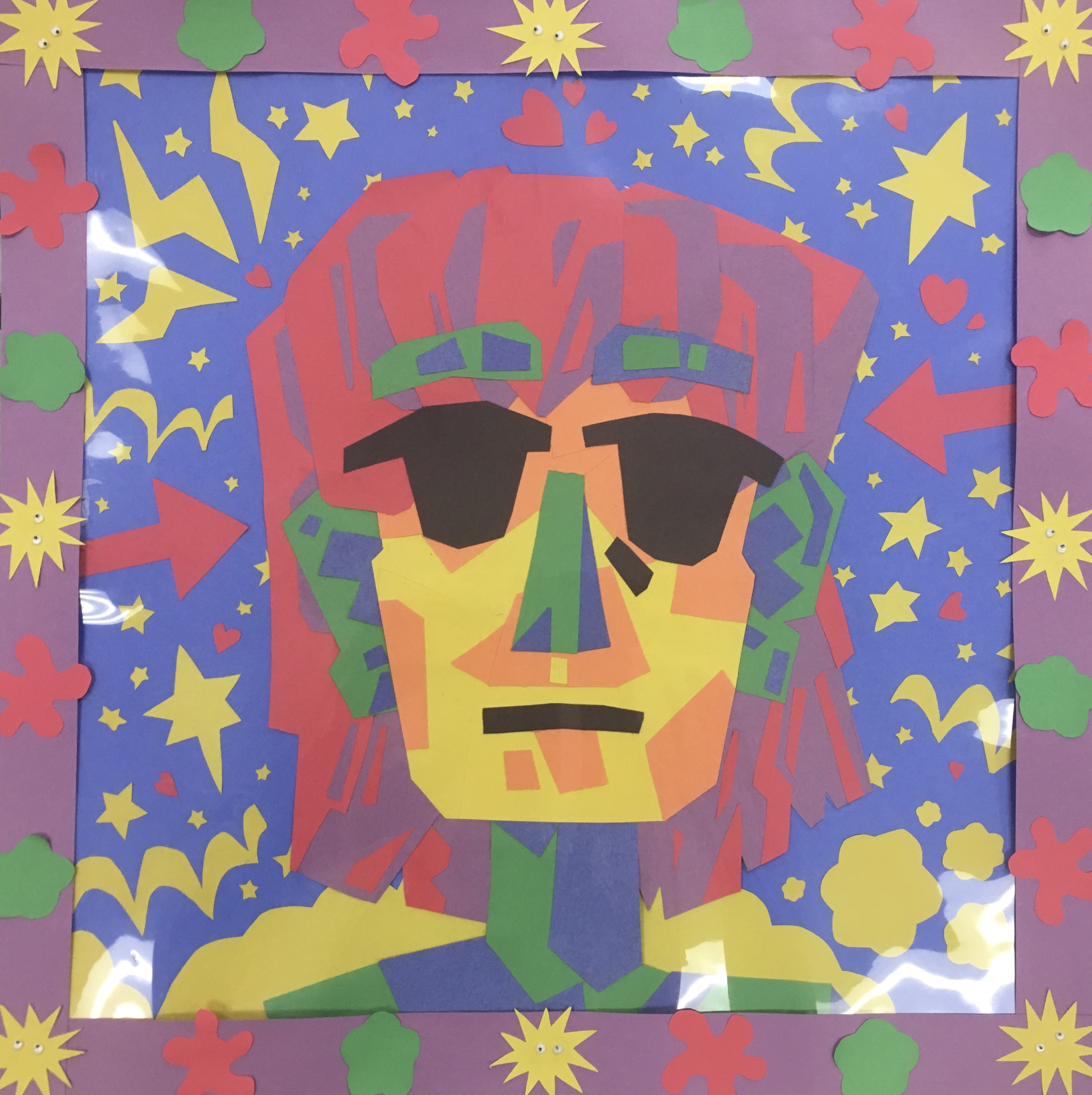
(“SHAPES AND COLORS,” a colorful, self-portrait stylized construction paper collage piece I created centered around masking.)

Growing up it was incredibly obvious I was on the autism spectrum. I was very rule-following and smart at school, getting described as “demonstrative” by preschool teachers (who calls a four year old that word?), but was very sensitive about minor things like the texture of lotion or potatoes or certain fabrics, or toys being organized differently from the way I wanted them, or frustration with not being correctly understood. While no diagnosis is the same, these are signs of being on the spectrum, and at three years old when my mom talked to a friend who was a psychologist she posited that I might be autistic. 

But when I went to get evaluated, four year old me was denied an official autism diagnosis. Then I was denied again at age seven, and instead put under the label of Sensory Processing Disorder. I finally got the Autism Spectrum Disorder diagnosis at age 12 (a year after also getting diagnosed with anxiety and depression). I also found out that in the years before the DSM-5, I was on the part of the spectrum that would have been denoted Asperger’s Syndrome, but luckily I got the diagnosis too late to become attached to that term and was educated of its problematic origins. 

Looking back on my history of diagnoses, I always wondered why despite it being obvious with all my quirks growing up I was over and over again refused a clear answer. But learning about gender and disability studies/justice in the last couple years, it has become apparent why: I grew up a girl. 

I was very lucky to have the privilege of parents that let me express myself whatever way I wanted as a kid, and I did exactly that in my special interest of dinosaurs, which were gendered as a “boy” thing. But I realize that I was still unable to escape the social part of socialization: Specifically, the experience of girlhood (as I have understood from mine and others) that involved making yourself and your problems smaller, while boys around the same age were allowed to be loud and take up space. 

This difference was especially present when looking at the differences between ways that autistic cisgender boys expressed their traits without much dramatic behavioral intervention or judgement from other kids, such as verbal or physical expressions of stimulation. Meanwhile, if a young girl was perceived to be “different” in the way they behaved, they faced more bullying and ostracizing than boys might. So as I grew up into the American school system as a girl, I learned that I would face more unspoken social consequence for expressing my traits, and thus felt more pressured to mask. And as these traits went unexpressed, from classrooms to doctor’s offices, they too went undiagnosed.

Finding out that this experience I had growing up was validated through the study of how disability is embodied differently across genders and social standards (as Shakespeare implies, there is no accurate one-size-fits-all model of disability), I felt quite vindicated honestly. Even after transitioning and finding community with other transgender autistic people, I can still see this difference in how traits are expressed due to assigned-at-birth-gender socialization. I worry that I may seem annoying at times for making this intersection of my identities my “personality,” but with how much I’ve come to terms with how it has affected my entire life I cannot really deny its stake in the person I’ve grown up to be.

Over it

“The duties that are expected of you, but go unnoticed” is a quote that has been replaying in my head constantly these past few weeks. It hits home because of the reality of my mental bandwidth being a form of  labor. Emotional labor went unnoticed by myself and those around me needing this labor from me. Julie Beck’s concept of emotional labor in her article, Concept Creep, has made me reflect on the countless times I have unknowingly experienced this form of labor, causing me to question how I add onto the load of others emotional labor ? or do I appreciate more visible types of work and labor ?  

Emotional labor encompasses the unseen and often unacknowledged efforts that individuals often ignore. In my own experiences working in retail and hospitality, I have been responsible for such labor regularly, even though it might not have been in the job description.For instance, as a sales associate in retail, I would greet customers with a smile and ask, “Did you find everything okay?” that would have me engaging in small talk through the transaction or getting talked over and the customer just asking me how much? Though this may seem like a simple interaction, it involved managing my emotions to appear friendly and approachable, regardless of how I was feeling internally. There were also times when I found myself laughing at a customer’s unfunny joke while working at a sports bar, simply to maintain a positive atmosphere. These interactions, though small, added up to a significant emotional toll over my 8 hour shift 

On top of this, emotional labor often blends into physical tasks that fall through the cracks. An example that comes to mind is when I was living with roommates here at college. If someone removed the trash bag but didn’t replace it, I would end up doing it. Even though I wasn’t assigned this specific duty, I knew if I didn’t replace it, no one else would.Or I notice that the house has changed in appearance when I get home from a three-month trip to college. In my absence, my brother has been left to handle all home responsibilities, and he has done his best. However, the distinction is obvious. It serves as yet another illustration of how invisible work can accumulate when there aren’t enough hands to divide the workload. I can see how the tasks fall unevenly without me present, and the mental and physical labor I usually provide is not accounted for until I return.These duties may not seem like much individually, but together they reflect the often invisible labor that many workers perform daily. Emotional labor may not be part of a job description, but it remains an essential component of many jobs, ensuring that workplaces function smoothly, customers are satisfied, and tasks are completed even when no one is watching.

Honestly I’m just over it.

Reproductive + Emotional Labor = Wishing I was a Boy

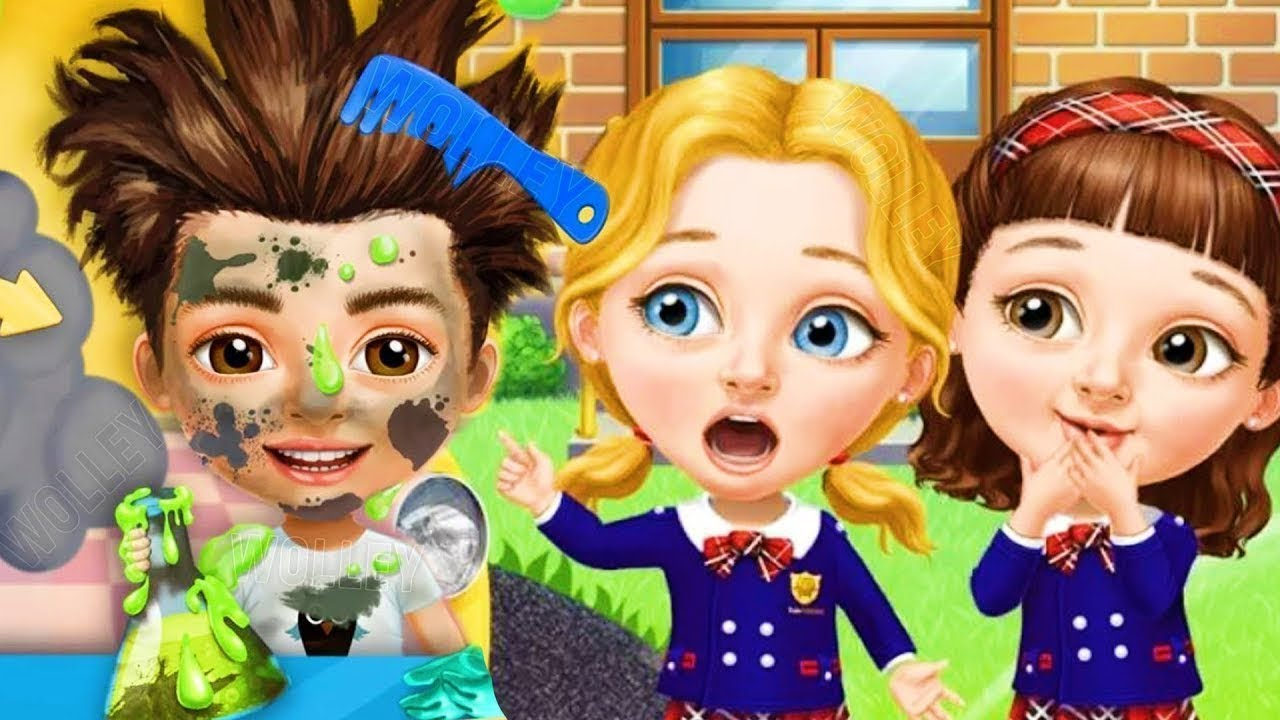
(Image of a boy who looks dirty while doing science while two girls who look clean are surprised and giggle) – Crazy picture by the way

I grew up as a big sister. This role consisted of my unpaid labor, such as housework and childcare. In my house lived my single mom who worked 12+ hours a day and my little sister that is 5 years younger than me. Growing up, my friends never wanted to come over because my mom would ask us to clean the house and I was never in a position to say no. At other friends’ houses, it was always to clean up after ourselves which I especially didn’t mind doing. But one day, I realized that boys my age were rarely given this responsibility.

It feels so dumb to think that I was so upset about cleaning, but the extent of unequal treatment I felt still persists today. I saw my male classmates running around outside while the girls stayed behind and pushed in our chairs, put our stuff away, and followed directions. I saw my friends’ brothers run to play video games right after a meal while my friends and I would scrape our plates and at least put them in the sink. I saw my male cousins never once offer to do dishes, and my aunt always accepted that she would after spending hours cooking a dinner that she didn’t even eat. 

On top of that, my parents have always expected me, as the big sister, to understand why they hate each other. My divorced parents put me in the middle of their ‘friendly communication’ for 15 years. I’ve heard whining from both sides about how awful and unreasonable the other is being, and I am supposed to give advice and agree. When I ignore it, they feel bad but continue a few hours later. It’s a loop I’ve been stuck in that gets better until it doesn’t (and trust me, I’ve tried EVERYTHING).

All the emotional and reproductive labor I have done in my life makes me wish I was born a boy (I’m delighted to think that all of the mental anguish I’ve been through could be resolved if so). Although it’s an unrealistic thought, it lets me imagine what could’ve been, without my life’s pervasive reproductive and emotional labor. I wish I was a boy without a care in the world, who could eat mud pies and play with worms. Instead, I had to be clean and calm which has defined my past.

Hidden disabilities tend to stay hidden (TW!! mental health, issues with healthcare, descriptions of dissociation, family issues, brief mention of fatphobia)

I’ve spent the majority of my life disabled, but no one would ever know it. Except, maybe, if the way I twist and writhe around trying to soothe my pain has been a bother to you. Maybe my dead stares and sudden confusion about what is happening around me have been weird to you. But would these even be clocked as me being someone who is disabled, or just as someone who is a nuisance to those around me?

Read more: Hidden disabilities tend to stay hidden (TW!! mental health, issues with healthcare, descriptions of dissociation, family issues, brief mention of fatphobia)

I had horrible back pain as a kid. Doctors eventually took me seriously and said that I, a 13-year-old, would have to undergo major surgery to correct a 50+ degree curvature of my spine. This is done so with metal rods and screws put into my back. Yes, I can usually feel them.

Did this help the pain though? Absolutely not. The amount of time I have suffered with debilitating chronic pain and all the doctors and specialists I’ve seen have had no success in relieving my pain.

Would people know it? Absolutely not. My parents raised me to shut my mouth and deal with it. To push on no matter how bad it hurt. So I did, and I did, and I did. Dear god, my body is so sad about that.

Years go by, each adding new things. Your insane muscle tension from your surgery is causing you severe migraines? Sorry hun, good luck, and take some Tylenol (that’s hilarious) You’ve had weird severe migraines your whole life too?? We aren’t really gonna look into that at all actually. Your retina is detached, and you need to have surgery to insert a scleral buckle in your eye to reattach it but we also have no clue what caused it so good luck. You’re autoimmune. You have fibromyalgia, you have rheumatoid arthritis. Oh, this medicine isn’t helping your pain??? Wow, that’s weird. Let’s raise your dose (spoiler alert: that won’t help either). It hurts, but it’s invisible. No one knows. But it brings me shame. I hate telling people I have physical limitations, especially as a fat person. People usually give me that once over, like yeah. sureeee. you’re just a lazy bitch. So guess what I do!!! Exactly what my parents raised me to do. Fuck it hurts.

Did I mention these are only the physical ones?

Plethora of mental illnesses I could list on and on, but I’ll focus on the most stigmatized one. I struggle so badly with dissociative identity disorder (DID). Yes. I am ACTUALLY diagnosed. TikTok has absolutely just taken DID and ran with it. So much fake-claiming etc etc etc. I hate telling people I’m a system, I always feel insane and stupid and like I’m lying!! Really though, I can’t make up how terrifying and debilitating it is. I can’t make up how it feels to wake up and realize we are driving and to not have a single clue where we’re going or that we even left the house. I can’t describe how hard it is to deal with the episodes of no escape. I stay trapped, only heavily emotional parts fronting. Scout is causing us to only feel like a vessel. Nothing is real, you’re not real, this is a dream. Max is angry and we need him to not lash out, Ace is hysterically crying, Remy is having insane sensory overload, and Shiloh and Sadie are scared and are having flashbacks, triggering Ace to be hysterical again. Others are desperately trying to help, but get so drained and dissociative. Minutes. Hours. Days. I don’t really ever know how much time passes. I never know who I am. My brain literally feels like it’s buzzing with how much we switch and how much people are opinionated and talking over one another. We have meltdowns picking out clothes, music, makeup, ANYTHING because it is so hard to satisfy everyone and if someone is upset, Max will front and be mean. We don’t want that. Anxiety. Who can front? No one. Everyone is so burnt out. The body is tired. What the fuck do we do?

I keep my mouth shut.

So how do I take care of myself if no one really tends to know the extent of the shit I deal with?

I don’t.

My parents raised me to shut my mouth and deal with it. To push on no matter how bad it hurt. So I did, and I did, and I did.

Dear god, my body, and my mind, is so fucked because of that.

New and Confused

To give a bit of background, I moved to the USA from Ghana to a brand new community 7 years ago, I was pretty bummed out about moving here not only because I was leaving moving for the fourth time in 6 years but because I was stepping into a culture very different from my own with different norms and expectations. Growing up in Ghana, I understood gender roles in a certain way. Men did this and women did that, everything felt clearly defined. Moving to America, it became clear that the roles didn’t need to be so rigid and limiting to work.

In the new community, gender roles weren’t as straightforward. I saw many women in leadership positions at high-valued jobs that didn’t have to do with cooking, cleaning, and things as such, and men were involved in things I’d always associated with women. t felt like everyone could wear different hats, and it really made me start to question what I had grown up believing about what men and women “should” do. It wasn’t a simple adjustment either, not like going to the optometrist and getting a new pair of lenses after your old pair doesn’t cut it anymore. It took me time to realize how deeply those ideas had been embedded in me.

I couldn’t shake the feeling that maybe if I had stayed in Ghana, my views on gender roles wouldn’t have changed as much. Back there, no one questioned these things. They were just the way things were. In the new space, I was confronted with a different reality, one where gender wasn’t always tied to a specific set of expectations. It was like learning to see the world differently, and just like when my vision was blurry, I needed time to adjust.

I learned through all of this, though, that support makes all the difference. My family members, mostly my sister help me understand and navigate the cultural differences along with my schoolwork. Now, I’m still figuring it out, both my attention span and my understanding of gender roles. I know that with the support of my family and friends, I can keep learning and growing. Moving to a new place didn’t just change where I lived, it changed how I see the world and myself. And for that, I can say that I’m grateful

Reality Check

In terms of bodies I wanted to talk to about both of our subtopics for the past two weeks. Reproductive and labor. Im honestly a little anxious to give birth as a black woman. Even though I’m not a having kids anytime soon lol there’s still that looking anxiety. I plan to be very vocal/opinionated during my pregnancy and birth ( as you all know I already am) and I honestly don’t think I want to have my baby at a hospital. I think I’d like to give birth at home with a midwife who still has a medical license in case something goes wrong. Hospitals are so depressing and I don’t want to give birth to a child in one. But also because there’s still that looming anxiety about if the doctors and nurses will dismiss any concerns of mine.

Continue reading