
Who am I?
I,
I’m my thoughts,
My dreams,
My aspirations.
I’m my name,
My looks,
My imagination.
That’s what I see,
When I stare,
Into my reflection.
My reflection,
Ripples in the river of life,
The shallow,
Shallow river of life.
To the world,
I am my reflection:
I am only what the world sees,
Only what the world decides I am.
My body is but a vessel;
Why must the world ignore me,
But acknowledge the vessel?!
Books, merely objects
Are still judged
By only their covers,
So who am I to demand
They not judge me
By only what they can see.
The inside of a book
Is where the value lies
But most people don’t bother;
It’s easier to judge
From the outside
My body is a part of me,
It embodies my soul
My personality,
But it is not all I am.
I am not my scars,
My disability,
I am me,
A completely separate entity.
I, Me,
Not just what you see
aging bodies
My Mom (& her BMI)
Keto,
Maybe that’ll help
Paleo,
Couldn’t hurt to try
So many failed attempts
To lower her BMI
How can I tell her,
That a number
It doesn’t define her!
The scale, the scale
What does it say?
FAT, it says
But in numbers,
It judges.
Why must we care
What a metal box
Has to say?!
Why do we care
About the numbers
At the end of the day?!
The world says
Those numbers matter
The world says
Those numbers decide
They have more say
Than we do,
In our own lives
It shatters my heart
The look on her face
As we snack on chocolates
While she eats ice chips
Sugar-free,
Fat-free,
And low-carb
That’s her life
My BMI,
That number
It’s way too high
UGH
How can I tell her
That number is futile
Tell me now,
Does the BMI know
Of the babies
You’ve born?!
Does the BMI know
Of the PPD
You’ve overthrown?!
A number cannot measure beauty
So why,
Why does it bring tears to your eyes?
A number cannot measure beauty
So why,
Why must the matter
Overwhelm your mind?
I tell you you’re perfect;
But my words
They are fruitless,
It is only numbers
That get through to you,
The same numbers,
That judge you
Reproductive bodies and Disabilities in Different Cultures
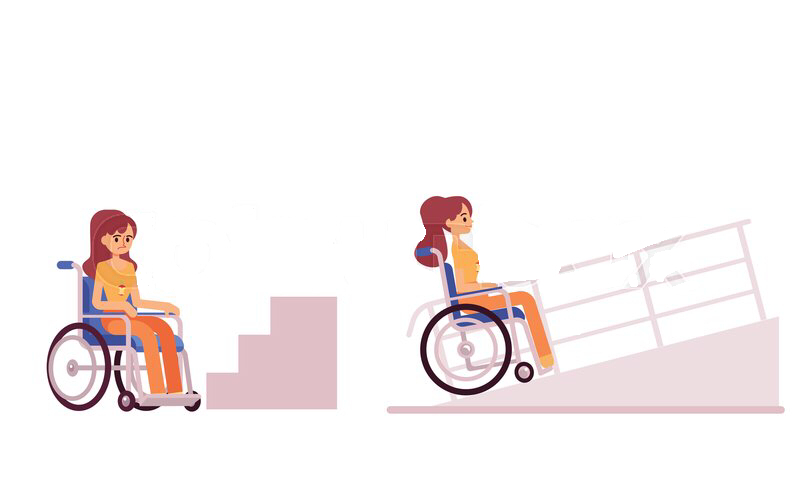
According to many cultures around the world, It is a woman’s “duty” to reproduce. In fact, many people believe that our sole purpose here on earth is to pop out kids and try to populate this planet. This view doesn’t even consider if the woman – who has to carry and deliver the baby – even wants kids in the first place. And If a woman chooses not to be a mother, she is not doing her “duty.” Like duty by said who? God? Not everyone believes in an eternal being with infinite power. It’s even concerning how some people wholly ignore how much work goes into having a child; all the sacrifices and attention to detail that a woman needs to have in order to deliver a healthy baby. I remember having a friend from Dubai who told me that the culture there in Dubai is very patriarchal, and it is the men who do most of the decision-making in the family. The woman is just his “wife.” His job is to look after the woman and her kids, and her job is to do housework and take care of the kids. This kind of thinking is a very traditional way to view gender roles. It is how cavemen view gender roles, where the men are tasked with hunting, and the women are to pick berries and take care of children. However, we can all agree that this view is outdated and it views women as if they are physically disabled, thus an “almighty” man is needed in all families to guide them and fill in the gaps that woman is unable to fill.
Drawing some examples from Baynton’s Disability and the Justification of Inequality in American History and the film Aftershock, women have been viewed as being physically disabled, at least that’s how Baynton wants us to understand them. He argues that a patriarchal society – like the one we have in America – views women as weaker, emotional, irrational, and thus inferior to men. This reasoning can explain why women are paid less than men despite taking on similar positions. This belief that women are irrational is the reason why women in some areas of the middle east are not allowed to drive or in some cases pick their lovers. This is a social disability that needs intervention because it can be crippling to the advancement and well-being of a lot of women in patriarchal societies.
Can I Throw Myself a 75th Birthday Party at a Retirement Home When I Am in My 30s?


Ok, let me clarify: I want to throw the party for myself and my husband, and he just turned 40. So it’s perhaps just a more extreme version of the “over the hill party” that was so ubiquitous for my parents and their friends. I was old enough to be in attendance and remember it well.
My husband just experienced the loss of his father and has been watching a family video of his father’s 40th huge “over the hill party.” My own father’s 40th birthday party came as a surprise. It included an enormous floating Garfield balloon that came home with us and spectrally floated up and down the staircase late at night for weeks. Neither father ever had any other large birthday party, but 40 was such a cultural boundary crossing when it occurred to them, that it was marked with satire, commiseration and almost as many family and friends as you would have at a wedding or a wake.
Happy (?) Birthday
I hate birthdays – mine, in particular. It’s just a reminder that I’m getting older – that another year of my time on this earth has passed. And you definitely don’t feel any different than the day before (my grandmother ALWAYS asks me that). Continue reading


