Eating Disorder has always been my best friend. I was 12 when I met her, 15 when I dropped her, 17 when I met a new version of her, 18 when we become basically one person, 20 when I grew distant, and 22 when she came back into my life as the worst version of a person I could ever meet. Almost 23 and we’ve had so much history together it’s hard to get rid of her completely. She’s blessed me but also ruined me and I hate her but I love her at the same time. I never experienced “fat” until I was 18 but I was always different. Growing up everyone hated me so I internalized it and became my biggest hater. I couldn’t change my eye shape, or the ethnic food my mom packed for lunch, or the fact that I was “awkward” in a bad way, but I could change how much I weighed.
I’ve been many weights in my life and the social interactions I’ve had at each one would be enough to send a very mentally unstable person over. 110- I look like I’m dying. I need to eat more. I’m doing it for attention. No one is going to be sexually attracted to me. I’m a child. 135- I look so healthy. I’m too skinny. I have no ass. My body is perfect. 150- I’m fat-skinny. All men want to fuck me. I’m a threat to other women. I hate how I look. I’m too skinny. 170- I look hispanic. I’m greedy. I’m fat. I’m ugly. I need to lose weight. I have a fat ass. 190- I am obese.
My boss used to tell me that he preferred when I “had more weight”. My ex boyfriend told me he would leave me if I ever weight more than 140 pounds. All the women on the internet want a fat butt and a small waist. My doctor tells me that 150 pounds is overweight. I was pregnant and hated my baby because I gained 10 pounds in the first couple weeks. Why is it so okay for society to tell me how much weight I should be.
A decade later and my best friend is still around. She haunts me but comforts me when I need her. When I hate myself I run to her crying to change me. When I love myself she’s in my ear saying I need to change. When I say to other people the words she tells me they have a different opinion. I’m skinny. I need to lose weight. I love myself but I shouldn’t. Back and forth back and forth I know what my best friend wants me to look like and I know what society wants me to be but I’m the one that has to live with this fuck ass best friend forever because she will never leave.
Who am I? I, I’m my thoughts, My dreams, My aspirations. I’m my name, My looks, My imagination. That’s what I see, When I stare, Into my reflection.
My reflection, Ripples in the river of life, The shallow, Shallow river of life. To the world, I am my reflection: I am only what the world sees, Only what the world decides I am. My body is but a vessel; Why must the world ignore me, But acknowledge the vessel?!
Books, merely objects Are still judged By only their covers, So who am I to demand They not judge me By only what they can see. The inside of a book Is where the value lies But most people don’t bother; It’s easier to judge From the outside
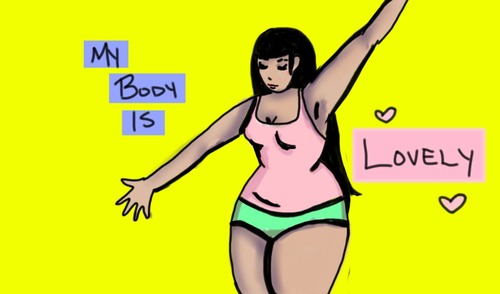
My body is a part of me, It embodies my soul My personality, But it is not all I am. I am not my scars, My disability, I am me, A completely separate entity. I, Me, Not just what you see
trigger warnings: body dysmorphia, suicide, mentions of disordered eating, illness
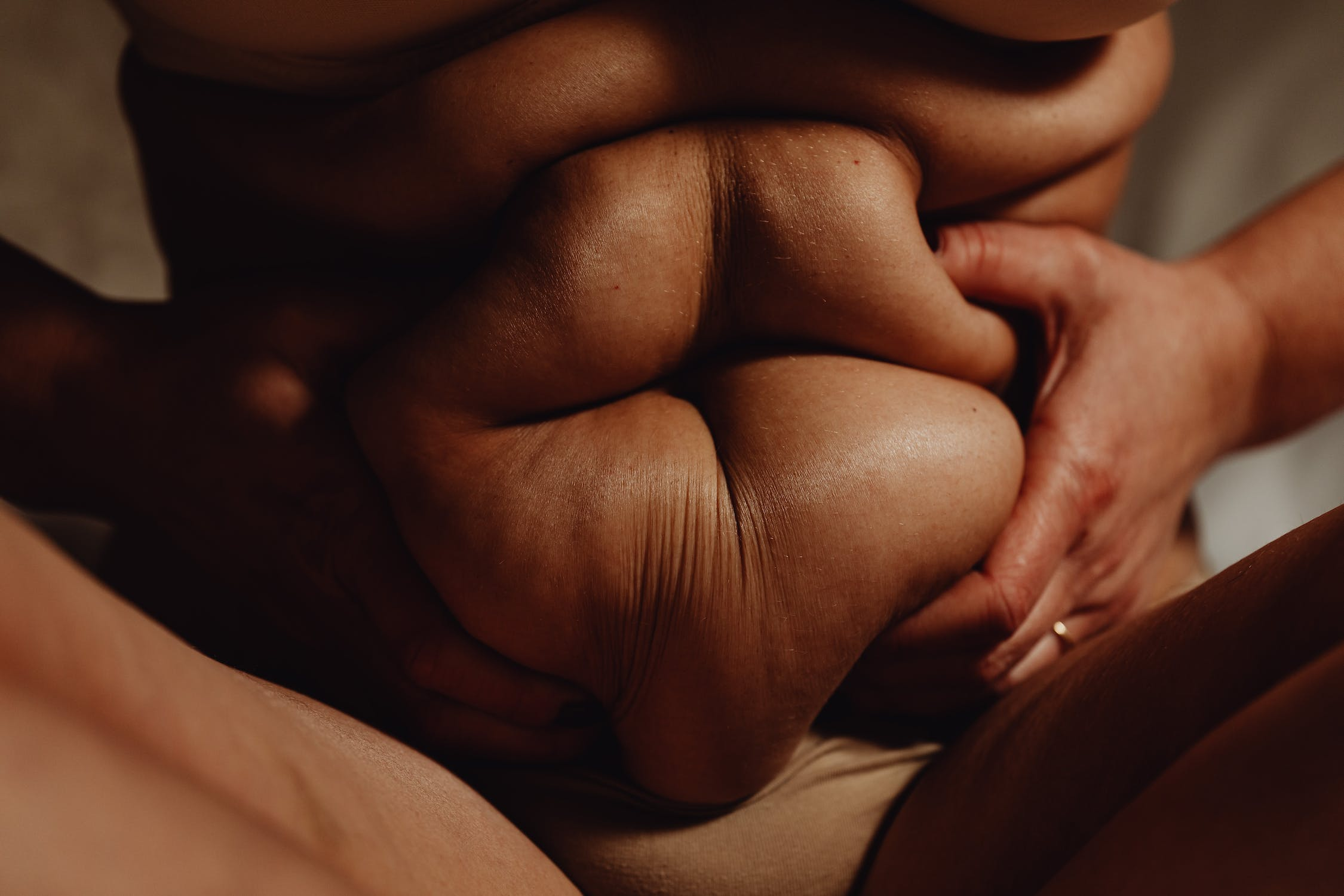
If you remember what your body looks like, I think you’re one of the lucky ones. If you don’t, then I’m not so glad this is what we have in common. Coming from an older West Indian family, my body was always a discussion. No matter how many soccer practices I showed up to, salads I ate, nor how well I did in P.E. class, whenever an aunt approached me it was always “You’ve gotten bigger!” Even throughout my adulthood my body has gotten bigger. I know I’m big, but I wish they knew that I didn’t need to be reminded every second of my life.
I think it’s important to note that I wasn’t always fat, but I still struggled with food and dieting at a young age. Having to deal with cholesterol issues during elementary school was the start of my long, relentless relationship with food. I remember sitting in the doctor’s office with my uncle, his eyes glazed over, listening to every word my pediatrician said. My relationship with food not only originates in this moment, but also with my family’s history of heart disease, diabetes, and many other debilitating diseases. By the time I reached high school, my uncle had a coronary angioplasty, stent insertion, triple bypass heart surgery, and several other surgeries for various kinds of cancer. He never wanted me to suffer like he did.
For as long as I can remember, my uncle micro-managed everything that graced my plate. There were even times we fought at the dinner table so he could see whatever takeout I’d brought home. The stress of bringing home any form of food that he would scrutinize started to transfer into other aspects of my life. In middle school I discovered how uncomfortable it made me feel to eat in public spaces. In high school I even went as far as to become the library aide so I could escape the daunting task of consuming food in the adolescent-filled cafeteria and tried my best to retreat back to the library every lunch break. The library was my safe haven, a place of structure for the moments where I felt the most vulnerable. This is still a habit I have today, I always look for security.
It wasn’t until my senior year of high school that I started my first romantic relationship. He was beautiful, smart, and even had a piercing on one ear that was the jackpot of my teenage girl fantasies. Being with him was the first time someone told me I was pretty. For someone that had only dreamed of having a boyfriend, that meant the world to me. I naively thought that feeling would last forever. As the pandemic raged on, and quarantine forced us into our isolated nests, there became an evident strain on our relationship. Still, we continued to stay with each other. I never noticed when his demeanor changed or that I couldn’t fit into half of my jeans anymore, or even that I was getting bigger than him. I made a huge mistake. You know that horrible mistake people make when they get lost in a relationship because they already have constant bodily validation? Yeah, that one. I gained the “happy weight”, I let myself go. People hate happy weight because being fat makes you feel empty and alone after a relationship. Nobody thinks that you’re attractive anymore and it feels like now there’s this huge responsibility that you have to get back to when you were skinnier. I fucked up.
Coming out of that relationship I became extremely depressed. I moved back in with my family, back to a space I never felt secure in. Endless nights spent scrolling through Tinder, a space where your body is always being perceived, felt completely invalidating. I was a completely different person. And I didn’t feel that way because I had loved and learned valuable lessons about navigating relationships, but it was because I was fat. Everytime I looked into the mirror, a devil appeared on my shoulder pointing out every flaw on my now monstrous body. It’s like my ego had turned against me.
I didn’t want to live in my body anymore. I thought I was nothing without the comfort of another person telling me I was good enough. I can’t say that I never feel that way today, but I’ve worked on it. I’m not about to go on a spiel about how much it matters to love yourself, nor about how self-love is a journey and not a destination… but would love really be worth it if it meant that I had to be skinny, athletic, or fit any of the aesthetic qualities guys on dating apps wanted? Probably not. But I want to be better, because I know that the moments in between these feelings of doubt and despair are much more important than these superficial views of my body. Though, how I never saw myself changing is still a phenomena to me.
In the end, I’m still trying to upward spiral out of this feeling called body dysmorphia.
Fashion – and by extension, clothing – is created for skinny people.
Our world is built on the assumption that everyone is a certain size (that size being small) and that while some variety is allowable, the range of “acceptable” is even smaller than the jeans they expect us to fit into. Social media influencers flood their pages with images of them in a variety of outfits made by a variety of fashion sponsors, but the question posed here is simple: is the “Look” actually cute, or do we just view smaller bodies as more pleasing?
A recent TikTok trend involves users taking photos of fashion influencers and celebrities and styling themselves in similar outfits to try to answer this question. One note on this: While I have purposefully chosen a video of someone who is not skinny doing this challenge, I also found a lot of videos made by users who could be argued are skinny themselves, just not as skinny as an 18-year-old runway model.
The commonly-reached conclusion most creators have come to is two-fold. First, that the outfits themselves are often excruciatingly basic and boring. They lack color, interesting silhouettes and texture. The majority of these outfits are a pair of jeans or athletic pants and a t-shirt or sweatshirt – the sort of outfit that is typically classified as athleisure or “going to the grocery store.” The people wearing them look good, certainly, but they are not breaking new ground in the realm of fashion and won’t be found on the runways of New York fashion week. The commentary on these photos typically ignores the lack of originality, or even fails to notice it; the comments sections are flooded with people praising them for their beauty and their outfits.
Second, these outfits only look good because the person wearing them is skinny. When placed on a larger body they often look absurd. It’s worth noting that the absurdity is created largely because the challenger is not modifying the outfit or silhouette to more aesthetically suit their body type, as one would typically do when actually buying clothes or creating outfits for themselves; they are purposefully taking the outfit in its original form and simply scaling it up, precisely like modern-day jeans manufacturers. This conclusion only serves to enhance the first one: if the outfit itself is boring or even straight-up bad, why are we applauding anyone for wearing it?
The answer I, and many TikTok users, have come to is that skinny bodies are put on a pedestal of beauty. They are seen as the original, the default, and the gold-standard. They are afforded privilege that larger bodies are denied. They are given beauty labels that are unattainable for those around them, and in some cases like this, may also be completely inaccurate. Even worse, skinny bodies are also seen as the standard in medicine, which can leave massive gaps and inadequate care for those in larger bodies.
Beauty is in the eye of the beholder, of course, and I’m not here to reach any conclusions for you on whether or not you think these influencers and their outfits are pretty, but I would have you start to ask yourself this question every time you see yet another model wearing the same thing your dad wears to mow the lawn: Is it a fit, or are they just skinny?
In almost all of the video games I play, especially role-playing games (rpg) and action adventure games, there are almost no fat people. Even in games where you can create your own character, there are very limited options. But, these fat bodies are still rather “fit.” They’re just big and beefy if they’re male or big and curvy if they’re female. While these bodies do deviate a little from idealized Western bodies, they are still acceptable. In other words, they are larger bodies that “normal” people could still find attractive. In addition, most games that have fat people in them, like The Sims and Saints Row IV, cast those characters, as ugly and/or comical. In all of these cases, fatness is not something to be desired.Continue reading →
My brother and I were driving to school on Friday last week and on the radio they were talking about Obesity. Obesity is a huge problem in the United States of America. More than one-third (35.7 percent) of adults are considered to be obese. More than 1 in 20 (6.3 percent) have extreme obesity. Almost 3 in 4 men (74 percent) are considered to be overweight or obese. These are just numbers and there is more to it than that. But we cannot ignore the amount of health problems that comes with obesity.
So apparently right now some companies are trying things out to reduce the level of obesity in America. I heard them talk on the radio about how companies are considering taxing and also reducing the sugar quantity in all these soft drinks or beverages, in order to get people not to buy it as much and also drop a couple of pounds.
In my opinion, while these sound like interesting methods to cut down the obesity level in America, I just don’t think they would really be effective. Like how much tax are you really going to be allowed to put on something like soda to get people who really want it not to buy it? Maybe reducing the sugar quantity might help, but I feel as though a lot of people might be angered by this.
The reading about manscaping got me thinking about the role that bodies play in the gay community, specifically fat and hairy bodies. They completely determine where you are and who you associate with. This especially apparent in gay dating apps, which, for better or for worse, have become a very important part of gay culture. Continue reading →
At some point in my life I was 325lbs of pure fat. This was a result of me eating too much (having a sweet tooth and loving junk food) and not working out, I did not have any health conditions that caused me to be fat. Something as little as climbing up the stairs to get to my room, would get me breathing heavily and sweating. Looking myself in the mirror was always very difficult because my man-boobs and love-handles would irritate and make me feel uncomfortable. I remember all the insults I received from some of my family members, peers, and even strangers about my weight. Some of them were being hateful and bullies, but most of them were actually just trying to help/motivate me to lose weight. It didn’t matter if they had good or bad intentions, I was always sensitive about my weight.
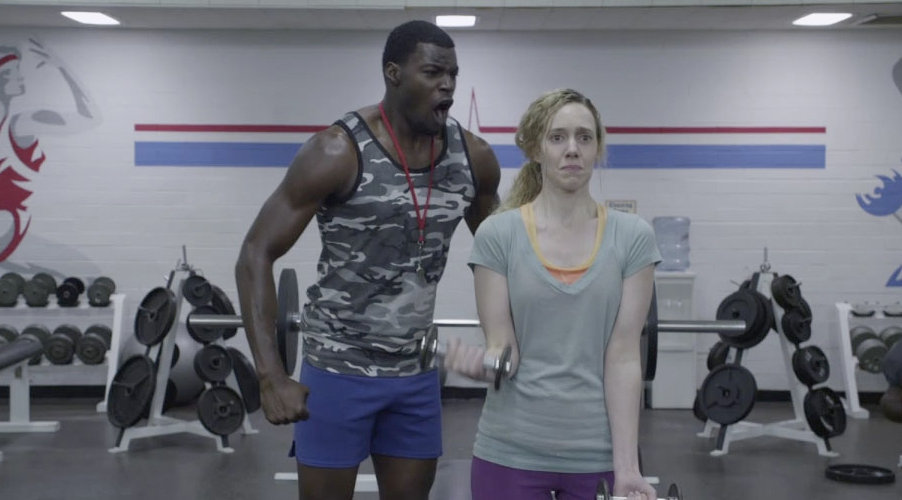
I felt like I needed “Warning: Fat Girl Working Out” on a t-shirt when I started working out at my new gym.I stood outside the gym door going back and forth about whether or not I should go through with my workout plan. I have always had insecurities about my weight. I was overweight the majority of my life and have dealt with it day by day, but it wasn’t until I studied abroad in the United Kingdom that I really noticed how “big” I was. I had gone back and forth about going to the gym weeks in advance. I was already here so why not walk into the gym, what is the worst that could happen?