
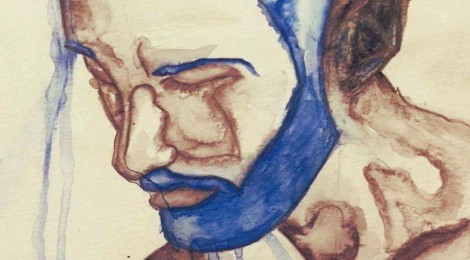
Queer Brokenness: Intersection with Mental Illness

feature-470x260

Image Source: http://trauma.blog.yorku.ca/2015/12/south-asian-queer-community-lacks-visibility/  (Artist – Jinesh Patel)

(Content and Trigger Warning: Self Harm, Suicide, Substance Abuse, Emotional Abuse, Intimate Partner Violence, Bullying)

.

.

I often find that mental illness and queerness aren’t addressed properly or constructively when talked about together. So often the public at large would have us believe that queerness is a result of mental illness or that mental illness is the result of queerness exclusively. With this in mind, the queer community will often push back on society’s behavior by talking about the two exclusively from each other, frequently ignoring all the ways mental illness intersect. That’s does not go to say that queerness is the result of mental illness or vice versa at all, but rather it shouldn’t be ignored that many people in the queer community go through both because of the way society has constructed and reacted towards queerness. For example, queerness has often been perceived as a deviant thing, it has historically been punished and worked against in a variety of ways. Continue reading

What does an Immigrant Look Like?

What does an Immigrant Look Like?

After the 2016 General Election in the United States, the tensions between two economically distinct economies have started to rise in the public consciousness. In effect, the perception of minorities, impairments, and any deviation from the cis white heterosexual agenda has been challenged in terms of their acceptance within an American ecosystem and structure.

lopeza20150902_low

Continue reading

Can you see my oppression?

For a couple of weeks, I have noticed something that has been circling my life, that something is oppression. Continue reading

Balancing Happiness With Acceptance

Every child, for the most part, growing up, regardless of race, religion, ethnicity, social hierarchy, or where they are raised, are wished success, wealth, and health from their parental units. Only in the F-ed up situations, where the parents are really scummy people, do they not want the best for their offspring, or their adopts. But focusing primarily on the “good parents” or the parents who desire to see their children succeed, it is a unanimous trait to want a better life for their children versus the life that they had. This becomes possible through sacrifice, determination, and patience. With all of this being said, it is a responsibility for the child to achieve so much because of  what their parents are giving up in order for them to accomplish the dreams they have for themselves and the dreams that the parents have for them. Continue reading