
Growing up my grandma always commented on my body saying oh you need to lose that stomach fat, your belly is getting big , and where did all this weight come from. When I was younger I always thought why is she saying this to me I’m only 7 and I like my body I’m just having fun. I grew irritable when she would pat my stomach and say you need to lose this. I started sucking in my stomach to make it skinnier and flat so my body looked “right”. Her saying this to me so young caused me to believe I shouldn’t have any stomach fat even if I wasn’t what people would consider a bigger girl. Now as I am older I still suck in my stomach with out realizing until someone says something or I reach a relaxed state showing the effect her words have add on me after years of hearing the same thing. A student in class said the same thing about her family member mentioning her body when they would see her and it made me think of my grandmother doing the same to me. Maybe one day I will ask her why she always comments on my stomach and why she is so obsessed with losing her own stomach fat when to me it looks like a healthy normal body.
Read more: Why do I have to lose weight?beauty standards
Confessions of a Monstrous Girl
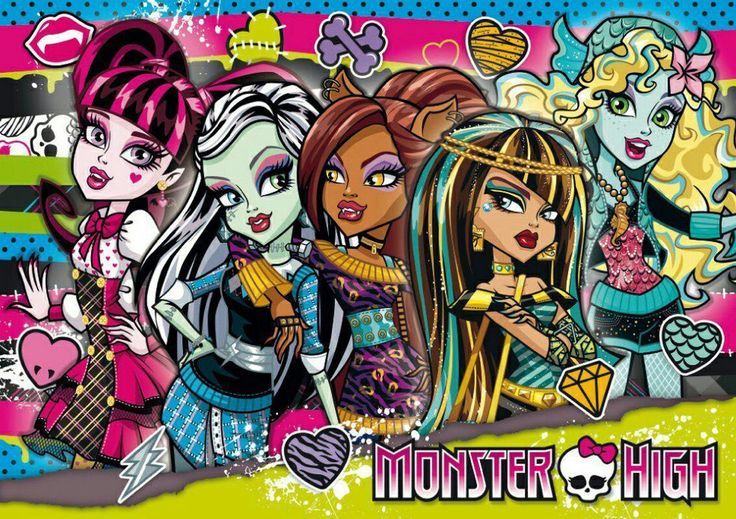
I was completely infatuated with the Monster High franchise growing up. Bed sheets, pajamas, shoes—whatever it was, I probably had it. My parents never quite understood the whys or hows, and neither did I until I reached young adulthood and still found myself rewatching the movies for comfort.
I think part of me has always been drawn to the idea of something different, such as monsters themselves. There was something surprisingly comforting about characters that were so incredibly different from each other. Whether they had fangs, stitches, or scales, they still were able to exist wholly as themselves without those differences diminishing their existence. They had friends, lovers, and full lives. They could exist without having to conform to someone else’s expectations. Looking back now, I realize my attachment to Monster High was more than just the fashion and interesting stories. I saw something in these characters I desperately wanted for myself: to accept and embrace every bit of myself, monster and all.
Read More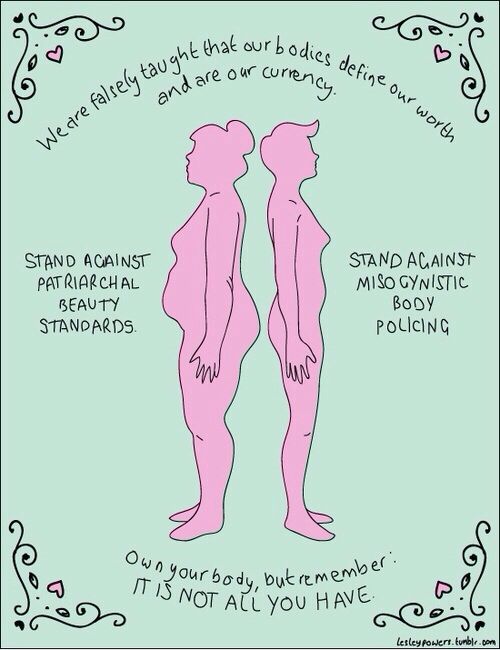
Femininity, Fluidity, & Faloodas
Being born female has always felt like a curse to me. Although I do love presenting femininely, girlhood, and feminism, femininity always felt like an objective that I could never, ever reach. Growing up, I was surrounded by ideals of what a “real woman” should look like and act like, but none of them ever felt like me.
Read more: Femininity, Fluidity, & FaloodasToo often, women & afab people of color, specifically black and brown people, are hyper masculinized by society. Many of us experience gender dysphoria at a young age without even realizing it. In a porn-sick, pedophilic world, we are often told to shave our legs or that we won’t be desirable if we are not petite. We are groomed into believing that compliance with these unrealistic and patriarchal beauty standards is the only way we can be loved or accepted.
This alienation often made me feel like I was a monster, much like how Stryker compares the trans body to Frankenstein’s monster, where both are labeled as “unnatural” creations rejected by society. Even the most natural and feminine part of myself, body hair, was turned into something to be erased. Body hair, a normal sign of maturity, was made to seem masculine, ugly, and unnatural. That made me feel both “not feminine enough” and “not masculine enough,” even as I came to understand myself as genderfluid. I found myself trapped between two conflicting thoughts: one that punished me for lacking male traits, and another that shamed me for not performing femininity “correctly.”
These beauty standards also erase intersectionality, especially when it comes to South Asian bodies. Generations of colonial trauma, famine, and labor have shaped our bodies in ways that defy Eurocentric ideals. Yet we are still told that our features, our curves, our body hair, and our skin are flaws to be fixed. Our oppressors wound us and then teach us to hate the scars it leaves behind.
For me, reclaiming my gender and my body means rejecting those expectations. Like Stryker’s “transgender rage”, I’ve learned that my frustration can become powerful, where I refuse to be molded by standards that were never made for me. My gender exists in the space between what I was told to be and what I choose to become.

Stillness and Solace

Victor Frankenstein’s monster stands before the fellow traveller, towering above them.
Read more: Stillness and Solace“I am an unfortunate and deserted creature, I look around and I have no relation or friend upon earth. These amiable people to whom I go have never seen me and know little of me. I am full of fears, for if I fail there, I am an outcast in the world for ever” (Shelley). The monster does not look at his new acquaintance when he speaks; his eyes remain on the looming glaciers around them, glowing in the moonlight. His words, which linger heavily in the chilled air like their warm breath, are met with silence. The traveller peers at the figure next to them: “flesh torn apart and sewn together again in a shape other than that in which (he) was born” (Stryker). Each carefully selected piece of skin and bone fits together to form a uniquely beautiful, abstract puzzle. They had only just met, and yet, each stitch woven into the bodies of the traveller and the creature was spooled from the same thread- a rope of pain caused from society’s purposeful ostracism.
Finally, the traveller interrupts the comfortable, contemplative stillness.
“Like (you), I am too often perceived as less than fully human due to the means of my embodiment; …my exclusion from human community fuels a deep and abiding rage that I, like (you), direct against the conditions in which I must struggle to exist” (Stryker).
The monster did not have the chance to respond, and the traveller would never hear his response, both robbed of the conversation and solace.
Victor Frankenstein shot his creation- once in the head and once in the heart- leaving the traveller alone again.
When My Body Wasn’t My Own
TW: mentions of SA, dissociation
Growing up in a conservative household, I was constantly told to cover up because of men’s “wandering eyes”. I was taught that if I were to be sexually assaulted, it would have been my fault, instead of the person who sexually assaulted me. Out of fear, I obliged, wearing modest clothes throughout my childhood, convinced that I could never be safe. My mother also told me to speak properly, to never talk back to elders or men, and to hold my tounge if I was uncomfortable. In Throwing Like a Girl, Iris Marion Young describes how women move with “inhibited intentionality”, we know we can act, but we feel like we shouldn’t. That was my childhood: constantly silencing and covering myself to make myself more palatable for men. These habits became ingrained in me, because for so long, they were all I knew to do.
Continue reading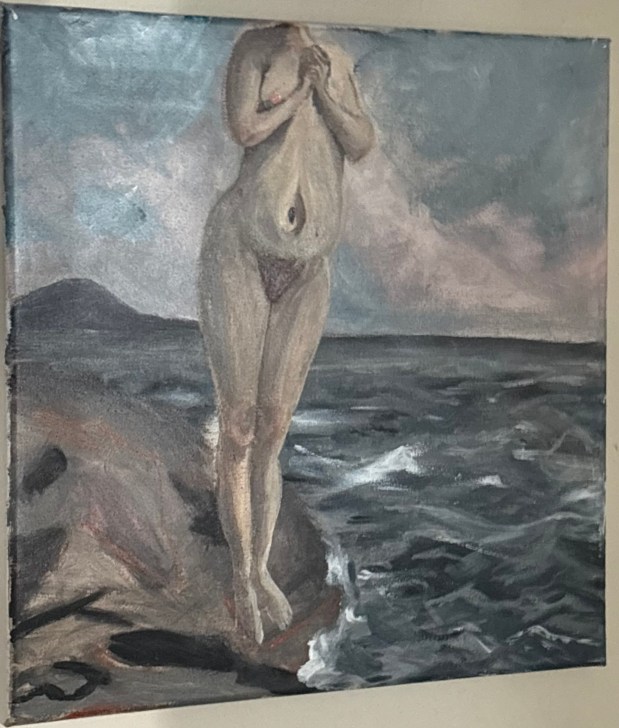
The Muse’s Misfortune
The Muse’s Misfortune
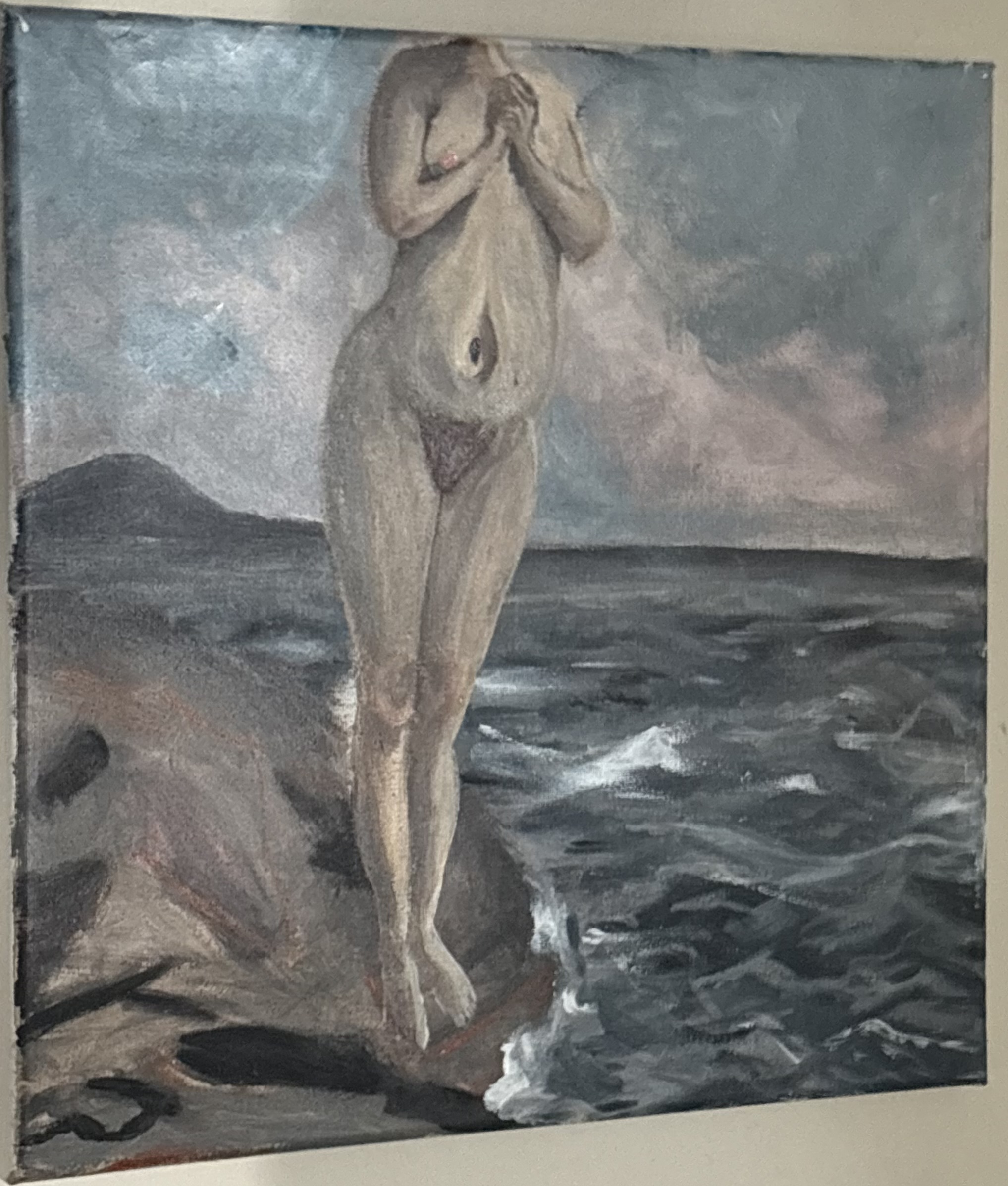
To be a muse is to be worthy. To be a muse is to be beautiful and talented, chosen and seen. To be a muse is to be exhilarated and exhausted, honored and objectified, proud and pornified. There cannot be one state of being without the other, so long as there is one being to perceive and one being to be perceived.
Read more: The Muse’s MisfortuneIn some societies, perhaps, it is possible for a muse to exist without the constant fear and awareness of their own and another’s presence. In patriarchal and sexist cultures, however, the muse faces an internal and external threat of surveillance, and therefore sexualization. “(Patriarchal and sexist) society defines woman as object, as a mere body, and… are in fact frequently regarded by others as objects and mere bodies” (Young, I. “Throwing Like a Girl: A Phenomenology of Feminine Body Comportment Motility and Spatiality,” p. 153-154). For feminine muses, they “learn to live out (their) existence in accordance with the definition that patriarchal culture assigns to (them, and) are physically inhibited, confined, positioned, and objectified” (152). The definition becomes internalized, which then manipulates and forces women into being more feminine- more submissive, docile, small, quiet. “Women often approach a physical engagement with things with timidity, uncertainty, and hesitancy… (They) lack an entire trust in (their) bodies to carry (them to their) aims. There is… a double hesitation here. On the one hand, (women) lack confidence that (they) have the capacity to do what must be done… The other side of this tentativeness is… a fear of getting hurt… (They) often experience (their) bodies as a fragile encumbrance, rather than the medium for the enactment of (their) aims” (143-144). The subordination of feminine beings is at the root of patriarchy, and it grows as more minds and bodies accept the notion that feminine and masculine categories cannot intermingle. The stronger the patriarchy becomes, the more ‘natural’ it seems that feminine bodies are weaker than masculine bodies. In reality, women “have more of a tendency than men to greatly underestimate our bodily capacity,” as well as the relentless pressure of being perceived as a muse, which results in under-performance.
Pretty for a demographic, but not for society
“You’re pretty for a Black girl!”
It’s a phrase that many Black women have unfortunately heard at some point in their lives. But what does it mean? Does it mean that the bar is lower for attractiveness among Black women? Does it mean you’re surprised that you find a Black woman attractive? Do you not believe Black women could be apart of the beauty standard?
Continue readingMy Reflection
Who am I?
I,
I’m my thoughts,
My dreams,
My aspirations.
I’m my name,
My looks,
My imagination.
That’s what I see,
When I stare,
Into my reflection.
My reflection,
Ripples in the river of life,
The shallow,
Shallow river of life.
To the world,
I am my reflection:
I am only what the world sees,
Only what the world decides I am.
My body is but a vessel;
Why must the world ignore me,
But acknowledge the vessel?!
Books, merely objects
Are still judged
By only their covers,
So who am I to demand
They not judge me
By only what they can see.
The inside of a book
Is where the value lies
But most people don’t bother;
It’s easier to judge
From the outside
My body is a part of me,
It embodies my soul
My personality,
But it is not all I am.
I am not my scars,
My disability,
I am me,
A completely separate entity.
I, Me,
Not just what you see
My Mom (& her BMI)
Keto,
Maybe that’ll help
Paleo,
Couldn’t hurt to try
So many failed attempts
To lower her BMI
How can I tell her,
That a number
It doesn’t define her!
The scale, the scale
What does it say?
FAT, it says
But in numbers,
It judges.
Why must we care
What a metal box
Has to say?!
Why do we care
About the numbers
At the end of the day?!
The world says
Those numbers matter
The world says
Those numbers decide
They have more say
Than we do,
In our own lives
It shatters my heart
The look on her face
As we snack on chocolates
While she eats ice chips
Sugar-free,
Fat-free,
And low-carb
That’s her life
My BMI,
That number
It’s way too high
UGH
How can I tell her
That number is futile
Tell me now,
Does the BMI know
Of the babies
You’ve born?!
Does the BMI know
Of the PPD
You’ve overthrown?!
A number cannot measure beauty
So why,
Why does it bring tears to your eyes?
A number cannot measure beauty
So why,
Why must the matter
Overwhelm your mind?
I tell you you’re perfect;
But my words
They are fruitless,
It is only numbers
That get through to you,
The same numbers,
That judge you
If you self-sabotage, clap your hands *clap clap*

If someone complimented me, they obviously didn’t mean it. It was a social experiment, a tease, some witty inside joke I wasn’t a part of. Especially if it was a male, they wanted to express their male dominance because they’re insecure about their masculinity. I’m a ‘mere object’. They wanted something from me. They have an ulterior motive, with a million strings attached. These are some of the subconscious thoughts that run through my head when I am complimented for something. The sheer audacity of feeling good from someone’s compliment felt narcissistic. I’d honestly rather be criticized. I had to humble myself.
In Citizen by Claudia Ranken, she writes about how “the physical carriage hauls more than its weight”, in other words how our bodies hold more weight than what is shown on the scale. The weight means trauma and experiences we gained through being a conscious, breathing being. Growing up, I was always taught that if anyone had done a nice favor for me or complimented me, they wanted something. I kept this ideology in the back of my head, like a sticky note I would reference each time I interacted with someone. Over time, I amassed a couple hundred of these notes which eventually turned into a know-it-all heavy weight I lugged around when navigating the real world. “Cute outfit!” a stranger said. “Nice try.” I would think to myself. “You’re not getting into my head that easily.” “You’re so pretty!” Another would exclaim. “Lies.” I thought again. I knew how pathetic I was. I wasn’t conventionally attractive. The phenomenon of having this toxic belief ingrained in my brain destroyed every ounce of self-confidence and feelings of worthiness I had throughout my childhood. It was hard for me to sustain relationships with my friends without these thoughts creeping into my mind because why would they want to waste their time with someone like me? Did they want something? Are they playing the long game?
Eighteen years later, I still have an internal debate whenever I receive a compliment or even a simple praise. The guidebook is etched deep within my brain, so it’ll take quite some time to reverse its effects, but I’ve learned to accept these thoughts and let them free. My friends are friends with me because they value who I am and appreciate my presence, not because they have a secret agenda (unless they do…just kidding). People give and receive compliments because they genuinely had a reason to. So, when someone compliments you on your drip, take it with pride! Make an effort to throw one back. Spread the love!
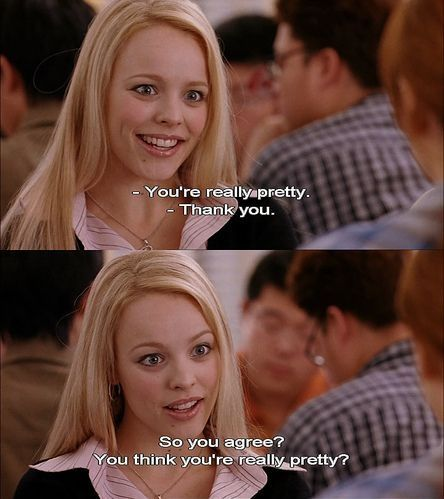
Kat: Thank You
Regina: So you agree? You think you’re really pretty?

