When Will the Ouroboros Run Out of Body-Length to Eat?

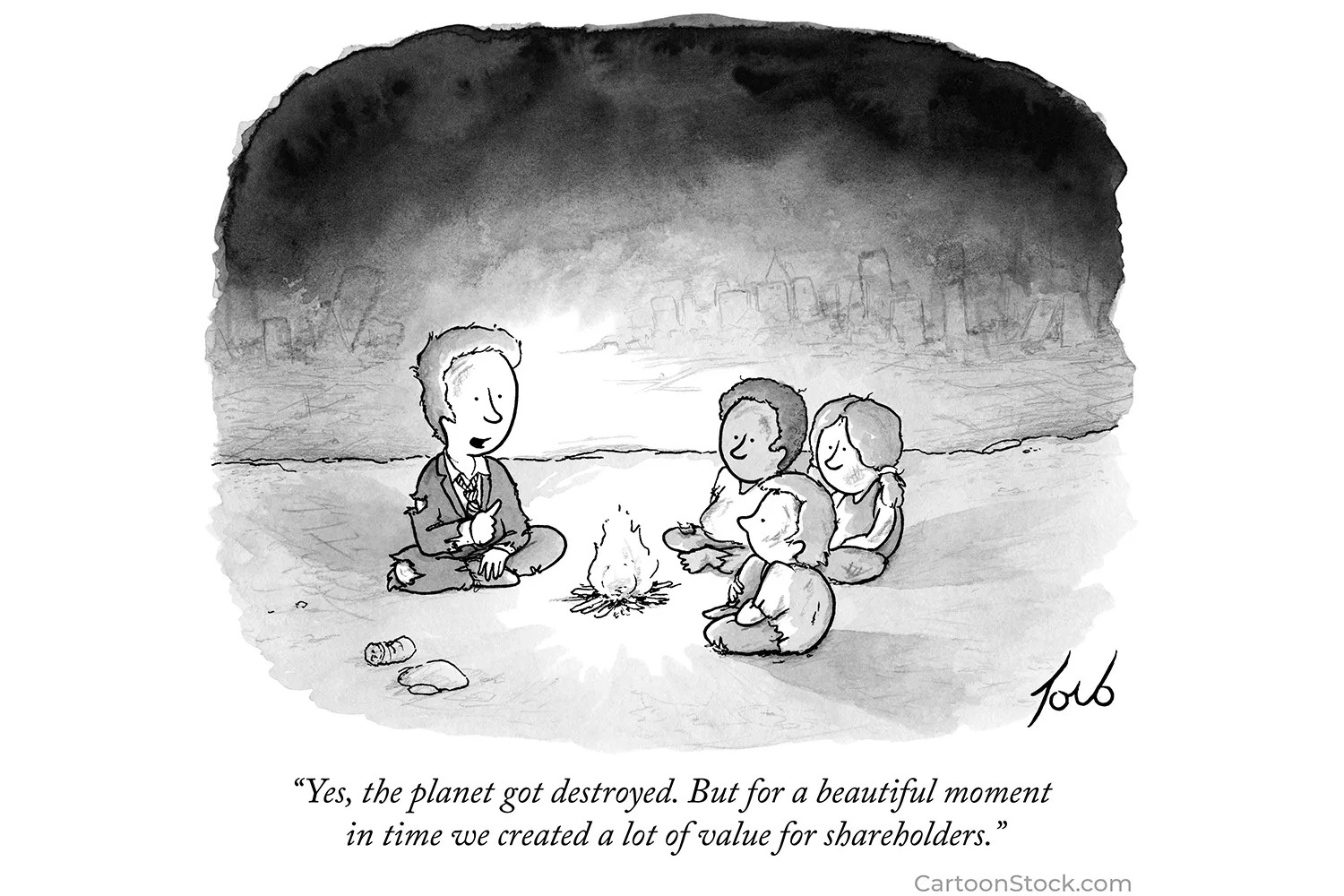
Our system postures itself as a beneficial ouroboros; one is led to believe in the presence of infinite resources fit for infinite consumption, yet one can look beyond this façade and see that individuals who rank power and profit above all else have been devouring those deemed unimportant or undesirable. Within the false notion of never-ending resources, one can see a paradox in which abundant resources suddenly become scarce when those outside of a particular group request them. It has been declared that our society cannot have free healthcare, clean air, timely cures for devastating conditions, affordable housing, public health measures, food for hungry children, or the absence of war because it is too expensive or difficult.

Beyond this excuse, one can see that the most likely reason for withholding and denying is that many of these protestors’ demands would not generate sufficient profit for the right companies, nor would the outcomes conform to the prejudiced worldview that has kept the systemic divide alive and well for centuries. As such, numerous causes do not receive attention until a problem becomes so impossible to ignore, so popular, that one may wring profit and control out of it. We produce reusable straws at the detriment of many disabled people, greenwash products made by grossly underpaid workers, and tout ‘personal carbon footprints’ in an unwalkable society, yet the majority of polluters are allowed to continue.

How loud must one be in order to be heard by those in a nearly soundproof box? How visible to be seen through the frosted glass wall that surrounds us? There is a highway barrier between the suffering and the indifferent, built by those who seek profit and power. Even in the places where this barrier crumbles, one is conditioned, either through excess exposure that rots one’s ability to fully see the magnitude of it all or dismissive falsities meant to cloud one’s perception, to see one’s suffering and look away. Those in the figuratively often-less-dangerous slow lane are told that those stuck in the fast lane are to blame for the highway, for its traffic and danger, forgetting that we are all trying to safely reach the same destination while those who built this system fly overhead.

Is it worker exploitation, or just high expectations?

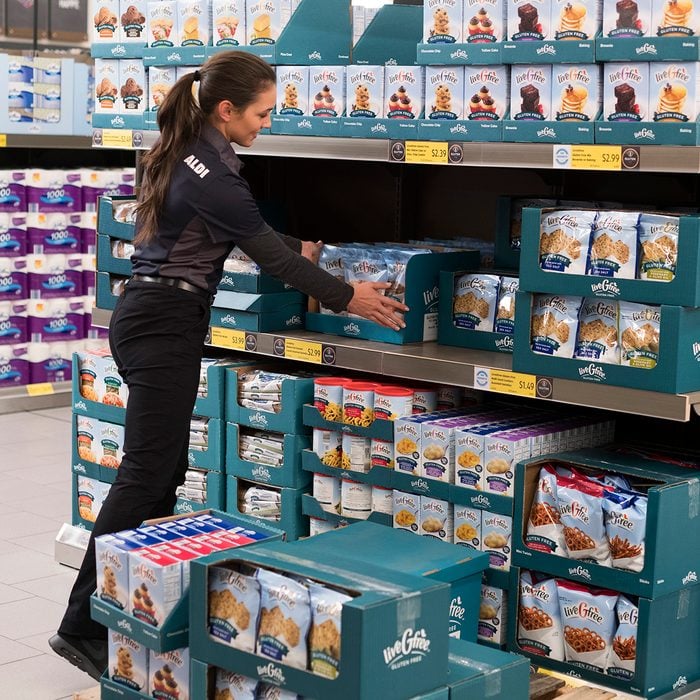
Stock photo of an Aldi worker placing boxes on the shelves with a smile.

I worked at Aldi for nearly two years before disability and injury forced me to quit, and take on several non-physical part-time jobs instead. Aldi runs on an extremely robust high-efficiency model that is designed to eke out every ounce of labor every worker has for every minute they are on the clock in order to keep their costs low and the customer’s costs low. In order for Aldi to be profitable, they must be exploitative.

Many Aldi employees will refute this statement because “Aldi pays more than minimum wage!” And yes, they pay just barely enough to be competitive in the local market they are located in – but only if you are comparing them to other grocery stores. The reality of the Aldi model is the job requirements are more in line with working at a warehouse, and warehouses on average pay quite a bit more than grocery stores as the understanding is that it is a difficult physical job.

Many customers also fail to understand how difficult the Aldi job is. The most common complaint we heard as employees was how lazy we were for getting to sit. This quote from querysprout best explains my feeling on that topic, “Letting cashiers sit down – it’s actually not a comfort thing (employees have described the work at Aldi as “backbreaking”), but rather, the company found employees could scan faster if they were seated.” We as customers praise and stand in awe of the Aldi model that allows us to get basic grocery goods for so cheap because they leave the goods in boxes, how revolutionary! In the next breath we complain that there’s never an employee around to ask questions to – the reason being Aldi staffs the bare minimum of employees at any given time to, again, maximize efficiency.

One of the most interesting facets in Aldi’s worker exploitation is how thoroughly prepared they are for worker injury. The job is intensely physical, the training for the physical tasks is minimal, and the expectation for worker speed and production is through the roof. It’s a breeding ground for serious injury, and the reality I knew working there was anyone who worked as a stocker was injured at least once in a year period. If they lasted more than a year, they typically were hurt at least once a year. I knew several people who had worked there for many years and all of them had received reparative surgery, or desperately needed it.

Aldi has a robust worker’s compensation insurance system, and it’s clear that they fork over a lot of cash for it. (I’ve had worker comp claims at other employers that were much less streamlined, in comparison.) Aldi will happily plan for you to be injured, pay for your recovery and for a short time out if needed, and then expects you to be back on the workhorse as soon as possible. Restrictions are heavily discouraged, though they do, of course, abide by them reluctantly when required to.

What happens if you just can’t come back to work right away? Scalia v. Aldi (2012) is an interesting case in which one employee was booted off of worker’s comp for taking too long to heal, and then promptly fired because she hadn’t worked in 12 months. The employee claimed that her firing was retaliatory for her injury on the job. (She didn’t win, which is hardly a surprise in the U.S.) The reasoning behind the decision came down to Aldi’s extensive policies around termination, worker’s comp, and time out, that enough logic loopholes existed in their policies that had existed before this termination to make it “not retaliatory,” though apparently only in a neutral sense.

What does that mean for you as a consumer, and for Aldi? Well, Aldi has absolutely abysmal employee turnover, akin to the rates of fast food industries. They are a ship with a mild leak that has been patched over and over with mixed success, and only time will tell if their model is truly successful in the long run. For you, I recommend asking yourself when you walk into an Aldi: Do the employees actually look happy, or do they look exhausted? Can you even find an employee?

The Downside of Bodily Capital & the Fight for Ownership

Just two days ago Emily Ratajkowski, a well known model, released an article about the complicated struggle of owning her own image. Simply put she brought to light the downsides of bodily capital, specifically as a current day model, and the complicated nature of seeing photographers and alike use her image for their own gain and without her knowledge.

Continue reading
Bodies in Motion

Bodies in Motion

This is my last semester of college and I am now going to transition from being a body in academia to a body in the workforce. This is a terrifying new concept because I honestly never became comfortable in academia and now I get to go be uncomfortable in a whole new arena.  Continue reading

The Relationship to Labor in Sex Work

13138797_10154183177669252_4861835646042662914_n

When we speak about laboring bodies in class I am instantly aware that my relationship to labor is vastly different than that of my classmates. While I have worked in retail, food service, and other odd jobs, the majority of my work experience has been in sex work. I want to flesh out some of these differences, specifically in my experiences of being a stripper for the past four years. Continue reading

I love my fuzz

IMG_0110

Hello! I am a mammal!

I have never particularly enjoyed shaving. Growing up, its importance was never stressed. In fact, my mom would tell me she was happy it was winter because it meant she didn’t have to shave — the impression I got was that she didn’t really like to do it, herself. When I was a preteen, she bought me razors and shaving gel, but didn’t pressure me to use them, and shaving didn’t seem to be a rite of passage among my peers, the way buying a bra was. I was in no rush to do it myself.  Continue reading

#treatyoself.

“Treat yo self” was started by Parks and Recreation (the best show ever) but has evolved into a larger cultural trend. It’s a widely used hashtag on instagram and twitter. The idea behind treat yo self on the show is one day a year, two of the characters treat themselves to all the shopping, spa treatments, and other pamperings they want, without shame or regret for the price or excess. While it’s a fun (and funny) plotline of one episode, it’s also a strangely poignant idea.

Continue reading

A Thanksgiving Reflection.

Not too long ago, I became extremely aware of the food I put into my body. This isn’t to say I started a diet, or that I am eating healthier as a result of this awareness — or that my eating habits have changed at all. But maybe a year ago, I realized that I eat animals and other things that come from their bodies, and it started to make me sick.

Continue reading

Don’t Censor the Bush/The Politics of Pubes

Today I want to talk about pubes.

For many people, deciding how to groom their pubic hair is an issue fraught with anxiety, and women in particular are bombarded with images of completely smooth, hairless thighs and bikini lines that we are supposed to emulate and admire. We’re told to shave it, pluck it, wax it, sculpt it—it doesn’t really matter what method we use, as long as we’re rid of our unsightly hair. This standard is so pervasive that women’s pubic hair is now widely slandered as unhygienic (patently false), barbaric, and, above all, pornographic.

*pics of pubes after the cut* Continue reading