No One Mourns the Sick: The Wicked Myth That the Pandemic Is ‘Over’

No One Mourns the Sick: The Wicked Myth That the Pandemic Is ‘Over’

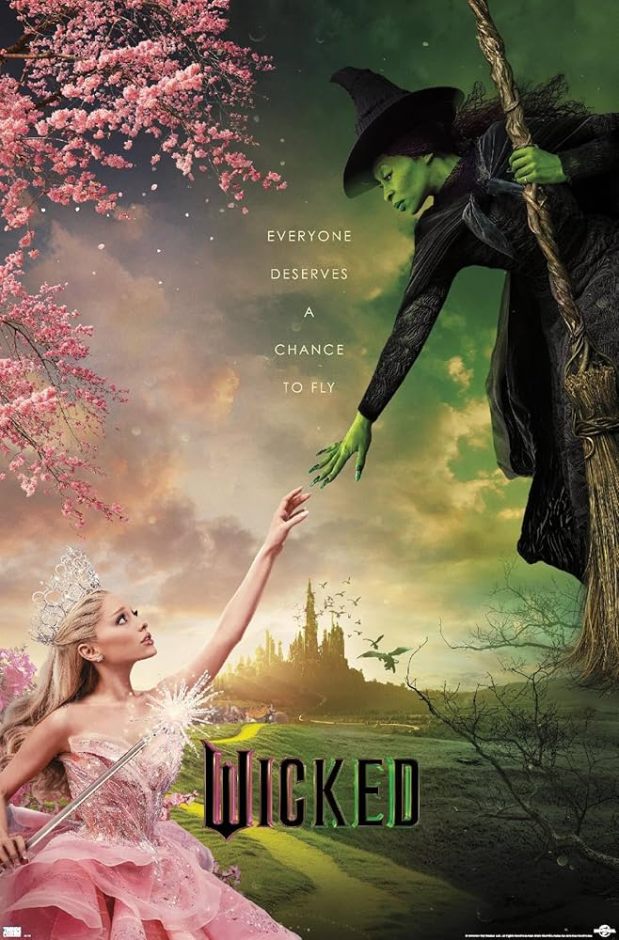
According to a recent Guardian article, “Both Grande and Cynthia Erivo tested positive for Covid during the filming of the first movie, temporarily delaying production. Erivo reportedly contracted the virus days before shooting the climactic first-act number Defying Gravity, while Grande tested positive before filming the song “Popular.”

There’s something horrifyingly Wicked-like about how illness is framed now. If someone masks, they’re “paranoid.” If they don’t appear for a photoshoot or premiere, fans complain. When someone gets COVID, the conversation is about wasted money on promotion, fan backlash over missed premieres, or travel delays , but  rarely about health, recovery, or the toll illness takes. The framing treats sickness as a hiccup, not as human suffering. It treats the sick body as a burden to the show, not as a person in need of care.

“Grande’s positive test was the latest hiccup for the full-court Wicked press blitz that has seen the cast hop continents by the day. Due to flight delays, Grande was unable to make the premiere in Brazil, triggering fan backlash she also addressed on her Instagram.”

That is exactly the kind of abled entitlement Mingus warns about: a culture that assumes certain bodies can and should be sacrificed for convenience. Under this logic, “the show must go on,” regardless of who gets hurt. The Wicked cast situation isn’t just celebrity news, but it’s a reflection of a larger societal pattern where health, disability, and our shared vulnerability are minimized, ignored, or erased entirely.

What’s even worse is how normalized this erasure has become. COVID has become “another thing,” something to power through so cameras and promotions stay on schedule. Workplaces expect people to show up sick. Students are told to push through fevers. Long-term effects are brushed off as “just fatigue.” Public health infrastructure? Largely forgotten. Masks, ventilation, testing are all optional. People who get sick frequently or live with chronic conditions are expected to adapt or be pushed aside.

Mingus doesn’t just name this as negligence, she instead frames it as violence. When we treat care as optional, when we prioritize productivity over people, when we mourn canceled premieres more than lost lives, we are making a statement about whose lives matter. We’re deciding who gets protection, who gets grief, and who doesn’t.

What Were You Wearing

“I was seven,
Wearing play clothes,
When he decided,
I was his experiment
I was seven,
Playing in my home,
When he decided to
Claim my innocence”

“I was eight,
Wearing a black shirt,
And pj pants with pink stars
When it all started
I was eight,
In the trusting lap
Of my uncle,
Too young to question,
Too young to debate”

“I was three,
Or possibly five,
When it became,
A monthly encounter,
I think I was three,
Sometimes in a sundress,
Others in pajamas,
When he decided
He had the right to me”

This poem was inspired by an exhibit called What Were You Wearing. The title of the exhibit is a question commonly asked to victims of rape/sexual assault, implying that what happened to them was somehow their own fault. The exhibit proves that clothing is irrelevant when it comes to sexual assault, and that we should stop victim-blaming by asking this question. 

untitled thoughts

Floating Steven Universe GIF - Find & Share on GIPHY
steven universe drifts away into a canopy of yellow stars and a pink and blue sky

Lately, I’ve been realizing just how challenging it is to recognize my own harmful habits and ways of thinking, interrupt them, and embark on a healing process.  Although something like this has happened several times in the past, it only took a few deadlines and assignments to launch me into a spiral of over-analysis, self-criticism, anxiety, avoidance, and distraction.  All the while, I felt powerless to stop this process, and I really hate that!  

You see, what I had been struggling with up to that point was a couple papers, a presentation, replying to emails, doing weekly readings and assignments; all pretty mundane tasks, but ones that can feel like mountains with impossible summits some weeks.  Even so, as I start to slip and fall behind, one part of my brain reassures myself that I’ll catch up on everything “over the weekend,” no problem, without the need to ask for help or communicate in any way.  Another part is already recognizing the warning signs, pointing out my flaws, and criticizing myself on where I need to do better.  The most destructive side deals with all this noise by shutting down completely. Sleeping in until 3pm, skipping meals and classes, being anxious to leave my room, neglecting self-care, and raking up my screen-time on Genshin to do nothing but avoid, avoid, avoid, avoid has indicated there is a bit more than academic stress below the surface.   

Continue reading

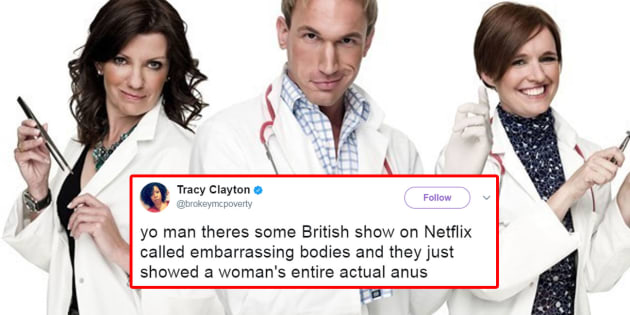
Should You Binge-Watch Embarrassing Bodies?

Image result for embarrassing bodies tweetsCircus Water Act


Netflix now carries the British series: Embarrassing Bodies, a show about three doctors who travel through Britain, opening pop-up clinics for passersby seeking cures for a wide array of ailments or deformities.  The show documents one-on-one consults, large group Q and A sessions on specific health-related topics (these are often set in schools, pubs, or other common public gathering places), street interviews on topics such as “baldness” or “boobs” and exhibits set up outside the medical tents where people can learn more about the inner workings of the body.  All of these interventions are designed to make people less worried about their bodies, while setting up expectations about what is “normal” versus what requires medical intervention.

It is hard to think of an American equivalent of this show, though there have been other international spin-offs: Wikipedia lists Embarrassing Bodies Down Under, Dit is mijn lijf (This is my body) in the Netherlands and the strikingly named  Я соромлюсь свого тіла (“I’m ashamed of my body”) in the Ukraine.

Continue reading

Disability and Media

To start off, I would like to say… I love Netflix and mostly recently have been watching a series that I think you all should see.

It is called 3%, I do not want to give too much away but think Hunger Games + Portuguese and you got the right idea. In the show, 97% of the population lives in scums and poverty but if you get registered, at the age of 20 years old, you can go through a process called “The Process” (shocking right?) to see if you are the special 3% that gets to live in the island that has everything you can ever dream of, called The Offshore.

All the characters have their own special thing about them but the one that stood out to me was Fernando, would is played by an actor named Michel Gomes (Here is his Instagram, if you are curious).

Want to know why Fernando stood out to me…. I’ll tell you why… Continue reading

“I Liked Your Hair Better Straight”

tumblr_n7r6vgKPpR1t6dcj7o1_500.jpgI’m getting tired of hearing that….

Continue reading

What if Videogames are Hell?

While wandering through the internet recently, I discovered a Youtube series called Epic NPC Man. In this series, the main character is an NPC (Non-Player Character) and we are seeing things that are normal in a fantasy videogame, but from a different perspective. As I was watching this, the realization that this character is capable of independent thought and reflection was forced to do scripted things slowly dawned on me. As this happened, I began wondering if this was Hell?

Continue reading

Video Games, Representation, and Disability: What is Empowerment?

As a person who is considered disabled in mainstream American society, video games have become a way for me to escape feelings of marginalization and feel powerful. More specifically, Western role-playing video games that allow the player to design what their character will look like, as well as the specific attributes they will have, are a very effective escape from the marginalization I often feel as a woman of color who is considered disabled. The player character also becomes very physically and politically powerful over the course of the game and has a significant amount of control over the world around them, contributing to my feelings of empowerment.

Continue reading

Things We’re All Too Young to Know

I read a lot of fanfiction. (Like, a lot.) I even write some. For those who aren’t familiar with the phenomenon, it can seem a strange and alien landscape. Some authors and actors welcome it, others revile it, but most would rather not know what their characters get up to in their readers’ and viewers’ heads. There’s even fanfiction written about real people—even if they’re in an alternate universe where magic works and the boys in that one band are firefighters or werewolves instead.

One fanfic trope that fascinates me and is particularly relevant to this class is that of mpreg, or male pregnancy. Continue reading

Disability in the media

A few class periods we talked about disability in the media and one person mentioned the show Switched at Birth. That show is actually one of my favorite television series. Although I am a cinematic arts major, I never really have time to keep up with shows or stay updated with the latest reality shows. Most of what I watch is game shows and Netflix binges. When I found Switched at Birth I was pleasantly surprised in the way the creators incorporated disabilities into the show with not only the main characters but with the supporting characters as well. Continue reading