Have you ever scrolled online and see people confidently declaring their gender and sexuality like they’ve had it figured out since birth? “I’m nonbinary.” “I’m a lesbian.” “I’m pan.” Meanwhile, I’m sitting here wondering, why do I feel like nothing? This question has been bouncing around my head for a while now. But after reading Nonbinary: Memoirs of Gender and Identity, specifically Christopher Soto’s “What Growing Up Punk Taught Me About Being Gender Nonconforming” and Aubri Drake’s “Clothes make the Gender/Queer,” made me realize that maybe this feeling of nothingness isn’t emptiness, but simply uncertainty in a world that demands certainty from everyone.
Soto writes, “I tell my friend who still presents outside the binary that I want to be alive. I want to live. And so this is my gender: a desire to live.” That line hit me like a ton of bricks. For me, identifying as a woman has always been about survival. It’s safer, easier, less questioned. I don’t have to explain myself or fear someone reacting violently because I don’t fit their idea of what a woman “should” be. Soto ties their fear to capitalism and violence because the way safety, livelihood, and even love feel like privileges granted to those who conform. Sometimes I wonder if I’d feel freer to explore my gender if the world wasn’t punishing those who step outside the binary.
Growing up, everyone labeled me a “lesbian” before I could even figure it out on my own. I was the tomboy wearing my dad’s clothes, obsessed with comic books instead of makeup. My mom used to tell me to “act like a lady,” for simply sitting in my own home with my legs open. Then puberty hit, and suddenly I had curves I didn’t ask for. Aubri Drake’s words that “clothes started clinging to my body in all the wrong places… they stopped being a form of expression and instead became material to hide in”described exactly how I felt. I started hiding under oversized clothes because my body no longer felt like mine, but a spectacle for others.
For years, I bounced between labels from bi, lesbian, pan, and now to queer. Each one feeling right for a second and wrong the next. I even dated men exclusively at one point just to prove something, though my attraction to women has always been stronger. Every time I picked a label, I felt like a fraud and that everyone knew I was out of place.
When it comes to gender, being called “masculine” or “feminine” makes me physically recoil. I don’t feel like either. I identify as a woman because it’s practical since it’s what fits easiest in the world’s boxes, but that’s never been the only reason. I’ve briefly thought about identifying as nonbinary, but fear always stops me: fear of losing cis privilege, fear of not being taken seriously, fear of violence. Like Soto, I get what it means to feel “illegitimate” just for wanting to live safely.
That’s why the label queer has been a relief. It’s flexible. It’s fluid. It lets me breathe. I don’t have to get a headache by searching for answers I don’t have yet. My gender and sexuality are personal, evolving, and maybe a little messy, but at the end of the day, that’s ok.
A few months ago, before reading these essays, I went down a rabbit hole on Reddit trying to understand why I felt “genderless.” I remember scrolling for hours through different threads from queer and neurodivergent people describing the same sense of in-betweenness I couldn’t name. One that stood out to me was called “Does anybody else feel genuinely genderless?” on r/NonBinary, more specifically this one quote:
“When I lean more towards masc or femme with my presentation that’s all I feel it is — a presentation. Or really what it actually is is society interpreting my presentation as gendered. Ultimately it’s still just me. I don’t feel more feminine when I wear skirts — but it’s perceived that way.”
When I lean more towards masc or femme with my presentation that’s all I feel it is — a presentation. Or really what it actually is is society interpreting my presentation as gendered. Ultimately it’s still just me. I don’t feel more feminine when I wear skirts — but it’s perceived that way.”
That line felt like someone cracked my brain open and wrote down my thoughts. It echoed everything Soto and Drake described; that gender can feel more like a performance that others interpret than a truth you embody. Re-reading that thread and other ones I mindlessly scrolled actually helped me realize I wasn’t broken for feeling detached from gender. I was just tired of performing one.
I still feel like “nothing,” but I don’t see that as a bad thing anymore. That nothingness feels like freedom; free to move, question, and change without being boxed in. Reading these essays made me realize I’m not alone in that uncertainty. There’s comfort in knowing gender and sexuality don’t have to be solved; they can just evolve. Maybe “nothing” is true freedom. Maybe my gender isn’t nothing — maybe it’s just mine.
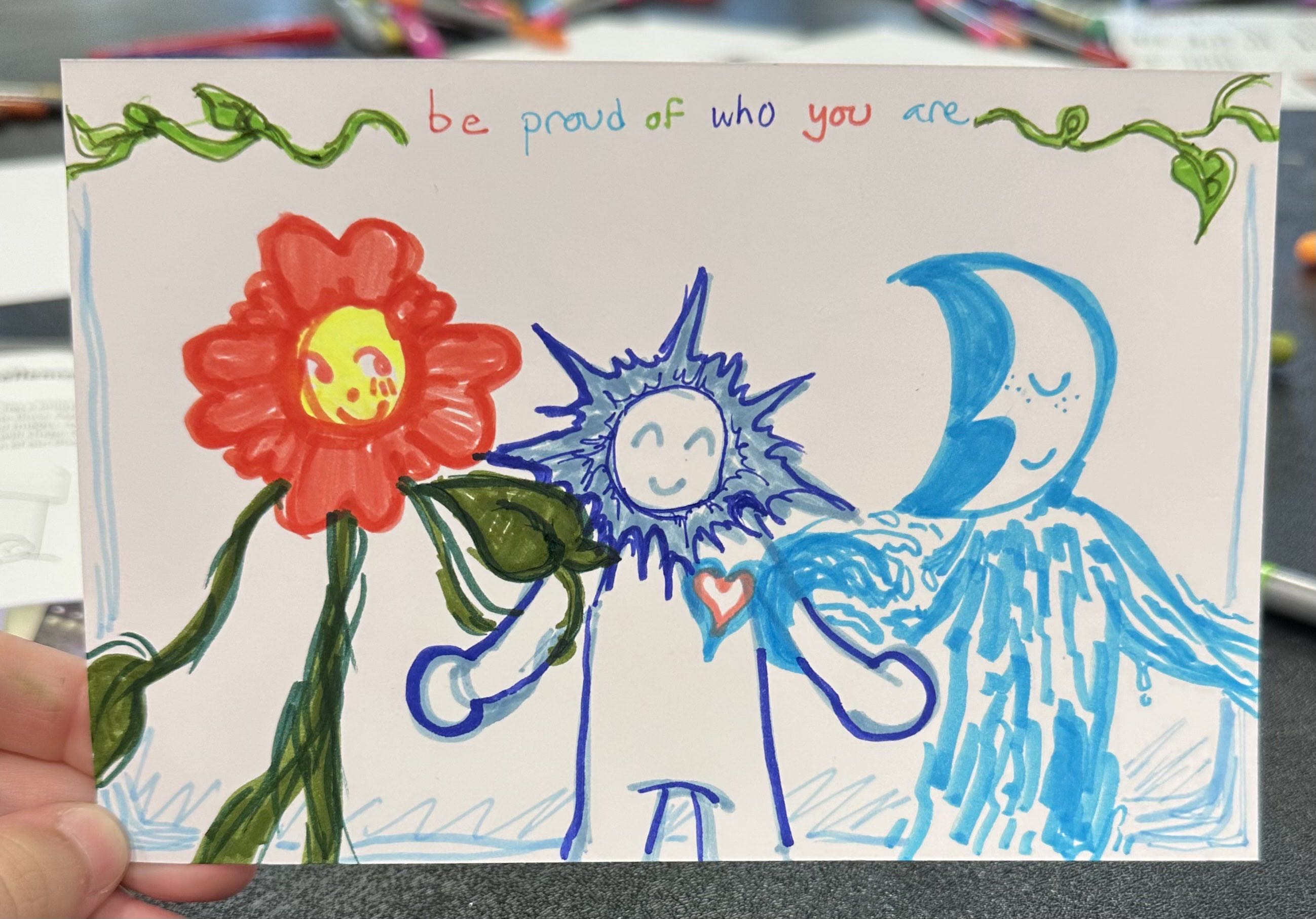
A quick notecard drawing I did at the UMBC Community Art Project.
“The flesh is inscribed with meaning both from ourselves with our consent and by others against our will.” Kosut & Moore, Introduction: Not Just the Reflexive Reflex.
In times when my community is the center of media, I feel like an ant being scorched alive under the microscopic lens of a snot-nosed child. Why, in my own habitat, must I smell my burning flesh? It’s not as if mine or my neighboring hills have done anything to incite such a cruel fate. Still, man believes himself to invade and reign supreme over bodies he views as ‘other’.
Growing up in a small town is difficult because you know everybody and everybody knows you. Being divergent from those who surround you, the burden of being seen feels suffocating; you’re not really sure what people think until they say something to indicate how they feel about people like you.
Twice now have I received a call from my dad following cases of gun violence in which the shooter – or someone personally involved with the shooter – identified as transgender. First, he’d sent me a text saying to call him when I had a minute. He’d preface the call with “now I’m not saying this to scare you, but” before updating me on the latest crass life-threatening narrative spun about my community and subsequently spread like wildfire among people who haven’t known how it feels to live with intrinsic fear laced in their veins. And although it was coming from a place of love, he told me this time to “be selective of who I tell”; as if that is something I needed to be told, as if telling me to keep my identity a secret isn’t painful no matter the place it comes from.
Michael Foucault’s Docile Bodies describe “a body that is docile may be subjected, used, transformed, and improved”. The modality of control is an uninterrupted coercion, and technicians of discipline become dominating. Where there is power, however, there is always resistance.
What does self-preservation in the face of tyranny look like? Under the scrutiny of everyone’s eyes, I feel like I’m expected to shrink, to slink quietly back into stealth and hide an integral part of myself. The fighting part of me refuses to go unnoticed and I yearn to get irrevocably intertwined in activism, to bloom into a symbol of hope. My pride will never get ripped away from me. I will not be a docile body.
Claudia Rankine, author of Citizen, poses a question that stings like alcohol on a raw wound; “How difficult is it for one body to feel the injustice wheeled at another? Are the tensions, the recognitions, the disappointments, and the failures that exploded in the riots too foreign?” Are minority groups viewed as so far removed and alienated from ‘typical’ society that we are seen not as human, but as beast? When the very structure designed to serve you strips you of your rights, your protections and defenses, and discusses rescinding your amendments, the answer is an aggressive, spit-in-your-face “YES”.
My ribs hurt as I am typing this blog post. Don’t worry, I’m fine, my current binder is just a bit too small for me. I try to only wear it two times a week, generally, and for less than six hours or so at a time. It’s not ideal, but I’m making it work until I am able to get a new one.
Now, why haven’t I gotten a new one yet? Well, let me introduce you to what it is like buying a binder as a mid-to-plus-sized disabled person.
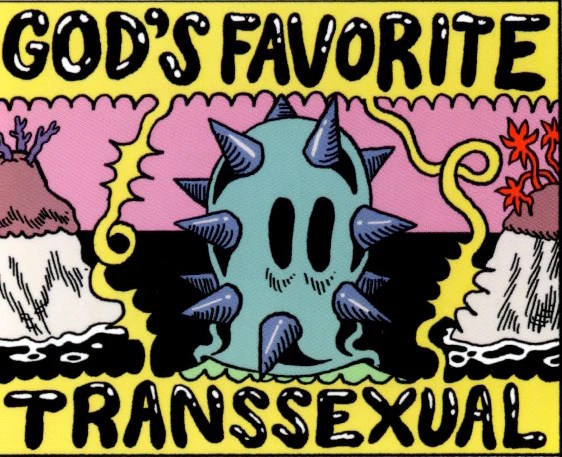
(image description: an illustration of a person with a teal, cactus-like spiky head between two islands on a black ocean against a pink sky. the border, framed in wavy spiked lines, says “GOD’S FAVORITE TRANSSEXUAL” in black bubbly text on a yellow background. this art belongs to Leo Fox, from his trans comic series Boy Island! you can get this image as a sticker at https://store.silversprocket.net/products/gods-favorite-transexual-by-leo-fox :] )
Since before I started medical transition over a year and a half ago, gaining testosterone-linked physical traits through HRT has been a goal of mine. And recently having the ability to “pass” as cisgender has been such a wild ride in a very gender-affirming way (though I still haven’t gotten used to times when I am perceived and treated as cis male in a social context, such as getting pulled in for a strong dap up after finishing a group project).
One thing that I have always been excited about was my “passability” opening up new avenues for me to explore queering my gender presentation. There was always something appealing to me about presenting physically masculine with more body hair and a deeper voice while having the freedom to wear whatever I wanted, like skirts with boots, and feeling confident wearing tight shirts without getting dysphoric about my chest. The physical traits I display are also helpful with decoding patterns of comportment and taking up space that I grew up socialized into as a “girl,” because now instead of fearing gender dysphoria from expressing emotions and being particular about the way my body moves, I feel like I am actively participating in throwing off binary norms, rather than taking up as much space as possible and acting closed off and invulnerable as embodied “masculine” stereotypes often go.
I recognize of course that presenting my gender the queer way I do is something that I have a privilege to do, as I am able to safely be out as transmasculine; I believe not every single trans person should be required to revolutionize trans embodiment and destroy gender norms whenever they can possibly be perceived. No one should be held to that standard, and critiquing those who can find safety within the gender binary is unproductive to the goal of universally embracing trans embodiments.
I believe my medical transition and performed gender, and the euphoria I experience in my trans body, demonstrate Susan Stone’s theory on the transsexual body’s ability to “generate new and unpredictable dissonances which implicate entire spectra of desire” (“The ‘Empire’ Strikes Back”). Her and Judith Butler’s description of the erotic dissonance of the butch lesbian is something I find strong connection to, especially after coming back around to identifying as a lesbian in how inherently queer and “everyone-but-cis-masculinities” my sexuality has been throughout my 8 years of being out. Butch identity and my transmasculine body just feel like they go hand in hand now, and doing what I call “coming home to lesbianism” has been such a euphoric experience for me recently, one that I feel comfortable describing as transsexual gender euphoria.
CONTENT WARNING: THIS POST CONTAINS DETAIED DESCRIPTIONS OF INTERNALIZED TRANSPHOBIA & INTENTIONAL MISGENDERING
“Transsexual embodiment, like the embodiment of the monster, places its subject in an unassimilable, antagonistic, queer relationship to a Nature in which it must nevertheless exist.” – Susan Stryker
A human is born A life has begun Is it a boy or a girl? You must pick one
“It’s a girl!” they exclaim, Teeming with joy. But what if that human Is really a boy?
“Sit like a lady” they say, Your knees must touch; “Just put on the dress” they said, “Stop making a fuss.”
Tomboy! Tomboy! Tomboy! It’s all she hears. Losing her femininity Is something she fears.
Fear of losing the attention, The praise and the love, So she puts on clothes That fit her like a glove.
She grows her hair out Year after year, Because deep inside her Is the fear
That one day they’ll call her A tomboy again, And she’ll lose her femininity Before she really can
Grapple with the fact That she’s not a girl, And that this gender façade Makes her want to hurl.
Until age fifteen, She puts on an act, Until she knows For a fact
That this act No longer works. Inside her, This feeling lurks.
But he knows his body Will never conform To social ideals And so he’s torn.
Does he put in the effort To be seen? (And what does that Even mean?)
It means he struggles Day in and out, And his mind Is filled with doubt.
Transness is beautiful, Transness is great; But as a trans man, I’m filled with hate.
I’m tired of keeping quiet With nowhere to speak up, I’ve hereby decided I don’t give a fuck.
Political correctness Gets you nowhere in life; I’m not a poster child, I don’t determine what’s right.
I’m allowed to be human, I’m allowed to make mistakes. I’m now living my life, And I refuse to wait.
As a cisgender woman, I’ve grown up aware that my body fits the societal norms laid out for me. From an early age, I was taught that my body should look and act a certain way, especially in sports. While I’ve had access to opportunities and acceptance in athletic spaces, I’ve come to understand that this isn’t the reality for everyone. Transgender athletes—especially transgender women—face barriers that often seem impossible to overcome.
In the article, “Beyond Physiology: Embodied Experience, Embodied Advantage,” Torres et al. delve into the challenges transgender athletes face. They show how discussions about their participation in sports are often reduced to debates about physiology, particularly for transgender women. These athletes are often subjected to scrutiny about their bodies, which overshadows their identities. The article highlights not only the social and political hurdles they encounter but also the privilege cisgender athletes like myself often take for granted.
Reflecting on my own experience as a cisgender woman in athletics, I realize how much privilege I carry. My body is rarely questioned or scrutinized in sports; it is accepted without hesitation. I’ve been able to compete without worrying about being excluded or misgendered. In contrast, transgender women often have to fight for the right to compete—against opponents and, more often, against institutions that marginalize them.
This constant fight can take a toll, and creates mental and emotional barriers. It’s not a question of whether they can succeed in sports but whether they’ll even be allowed to try. Recognizing my privilege as someone whose body aligns with societal expectations reminds me of the need to advocate for more inclusive spaces in sports, where everyone has a chance to thrive without fear or discrimination.
Last semester in my Theories of Feminism class I read “The Transfeminist Manifesto” by Emi Koyama. This text spoke out to me as a trans person, and it introduced me to Koyama’s additional work on disability, sex work and intersex advocacy that has greatly increased my knowledge of other parts of the field. However, one thing I noticed throughout the text was the focus specifically on trans women and minimal reference to the experiences of trans men, apart from a couple of paragraphs in the gender-based violence section along the lines of “trans men also have something like this problem, we should also advocate for them.” Koyama herself at the end of the paper points out that while she did have the intention of transfeminine focus due to a higher visibility of injustice within transfeminine experiences, there is more information she could have covered on trans men’s experiences, and invites the reader to think more on the topics she did not discuss (e.g. intersectional analysis, trans men).
I did some Google scholar and library archival research after reading this paper and found out there is indeed not very much overlapping scholarship on feminism and transmasculinity, specifically discussing how feminism applies to – and can be done by – transmasculine folk across the gender and sex spectrums. In response to this deficit I thought, “they should make a transmasculine feminism,” and then remembered that I am in fact someone who has a say in that!
What comes to mind (at least from my perspective) as an avenue to explore transmasculine feminism is the idea of recontextualizing our lived experiences from embodied “feminine,” non-hegemonic-male experiences that feminism applies to. Examples I’ve thought of include socialization growing up, the treatment of our sexed bodies in the medical sphere (spaces commonly designated as “women’s” care), and ongoing experiences with how we are treated based on the gender others perceive us as.
I admit that while some may be comfortable discussing the controversial point of socialization, not all transgender folk may be as willing to critically discuss their socialized experiences in their assigned gender growing up, which could be due to dysphoria that could come from this recollection. While there are perfectly valid reasons for avoiding exploring this vulnerable topic in depth, I would argue that in the process of developing my transmasculine feminist thought thinking about my own girlhood, my medical encounters with my own biology, and how I have been gendered based on appearance, I have become more in tune with how I live gender than I ever have before. This might just be me growing up, but I think embracing the gendered aspects of earlier parts of my life is genuinely so constructive to thinking on how I wish to improve as a person, and more relevantly, as a feminist and activist.
So, from thinking about Koyama’s call to action to include more transmasculine thought on feminism, my personal goal in my GWST academics is to formulate something along the lines of a “Transmasculine Feminist Manifesto.” It feels like a very big task to come up with a personal Big Word for an Academic Thing and then justify to Big Academia why you think that should be a Thing, so I am quite daunted by that, especially considering I’ve been experiencing some intense burnout and for whatever reason have been having more and more of a difficult time putting words to my thoughts. But in the case of arguing for this from an embodied, phenomenological perspective, I suddenly have a lot more faith in my words than I have before, and I am very excited to get into putting research together and synthesizing that with my own life as a transmasculine person.
There’s a problem with anti-trans activists trying to deny gender-affirming care to someone diagnosed as autistic. While it isn’t impossible to receive gender-affirming healthcare with an autism diagnosis, some people have reported issues with being denied on the idea that autistic people do not know their own mind or bodies.
This is becoming a concerning issue when you have to either choose to be autistic or choose to be transgender. I do not mean that you have to choose which one to identify with, as I consider myself to be both, I mean in accessing healthcare. There’s been a trend between transgender people having to choose between gender-affirming care or mental healthcare. James Pisani has noticed an issue where trans people sign up for insurance with good transition care, but terrible healthcare. While it wasn’t discussed in the article I read, when it comes to making a choice, you face mental health issues either way. If you choose good transition care, you get more gender euphoria, you face less personal and public issues regarding how you present yourself, even if it’s at the cost of mental health care and autism support. Say you aren’t the majority of people who made the previous choice, and you instead sacrifice gender-affirming care for mental healthcare. Even if you have the best mental healthcare possible, you will still face the dysphoria or other issues that come from being trans. Being transgender is already a toll on mental health (for most people, I think).
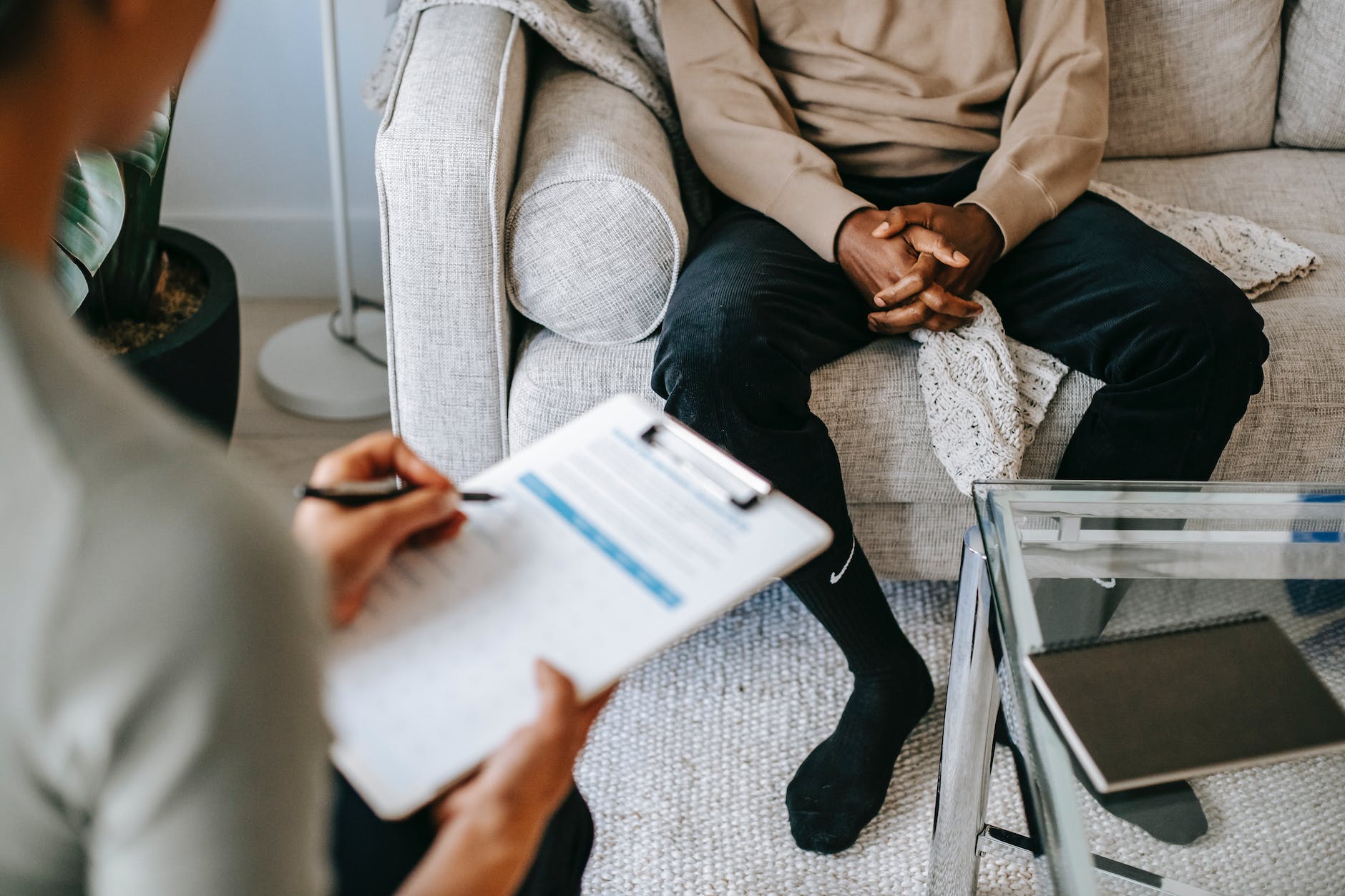
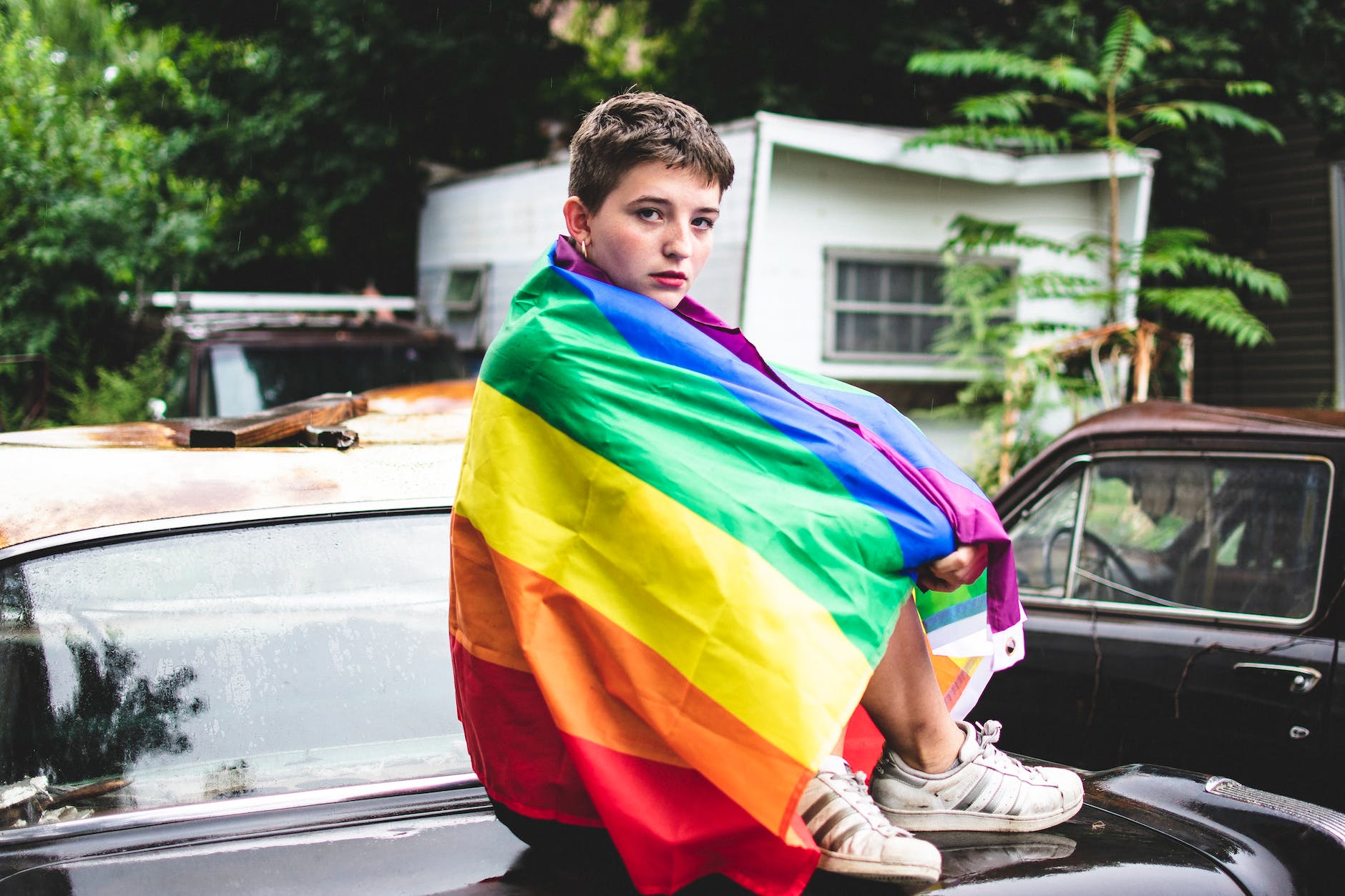
A slider image, with one side showing someone in therapy or similar location with another person holding a clipboard (This is meant to represent choosing healthcare). The other image is someone sitting on top of a car, wrapped inside a rainbow flag (meant to represent choosing transgender care).
Moving on, there’s already been a consistent problem in trying to deny trans identity for a long time. Especially when it become regarded as a “trend”, instead of wider visibility that made people consider their own idea. This exact thing occurs with autism, where some people see the rise in autism diagnoses and consider it to be a trend, rather than the fact they were always autistic and just never had the knowledge or resources to know beforehand.
Correlation between being gender-diverse and being autistic is still under-research. Some researchers, and myself, think that when someone identifies as genderqueer or autistic/ND in some way, that they are less concerned with fitting into society, and are more willing to consider their identity.
I want to wrap this up by the idea that although there’s an overlap in being genderqueer and autistic, that doesn’t mean either should be taken less seriously. I think there needs to be a pushback against the idea that autistic people are incapable of understanding themselves. Thank you for your time 🙂
As an afab nonbinary person who feels most comfortable dressing in “feminine” clothes, I am often misgendered by others. I don’t really mind being perceived as a girl by strangers, personally– I am lucky enough to not experience dysphoria, but I do still want to be visibly genderweird so that other queer people know I’m friend shaped. That doesn’t mean I like being misgendered though, obviously. Like everyone still has to use they/them pronouns for me, but I can’t beam that into strangers’ brains telepathically (yet) so it is what it is.
If you were curious, a few of my favorite ways to describe my gender are “girl adjacent,” “girly girl but there’s something definitely wrong with me,” and “oh you know, just, like, the color pink.” One could accurately say that I have a relationship with girlhood in the same way that the toons in Roger Rabbit have a relationship with the laws of physics. That is, it’s only there when it’s fun or funny– which brings us, finally, to the real topic of this blog post. I misgender myself a lot for the purpose of comedy, and I am definitely not the only trans person I know who does this. And oh boy is it funny. Cis people just can’t be on our level, sorry.
My mind was wandering the other day, as it usually does, about what the difference is between why a hero is accepted for their differences and why a freak/monster/alien/other is not. It came from reading a research article by Susan Stryker titled “My Words to Victor Frankenstein Above The Village of Chamounix.” Stryker raises points about the negative social implications expressed toward people who have a different gender identity that is not their assigned-at-birth identity. Stryker likens society’s feelings about it to how the Frankenstein “monster” was treated. Continue reading →