
I was 12 years old when I first experienced aversion to my family’s concept of gender. It was fall 2019, and I was staying with family in New York City for a weekend. I have a clear memory of being in the shower when my older cousin walked into the bathroom to get something. I don’t remember what I said to her, but I must’ve expressed the extreme discomfort I felt at the time, because I remember her responding with something like “we have all the same parts. Why does it matter?” I just wanted to have some privacy during the 10 or so minutes I was in the bathroom, but apparently it was okay for my cousin to come because we were both girls, because “we have the same parts”. I didn’t know it at the time, but this was the start of my years-long critique of my family’s version of womanhood.
Continue readinggender norms
Did the Parents of Our Hominin Ancestors Proclaim Clothing to be Unnatural?
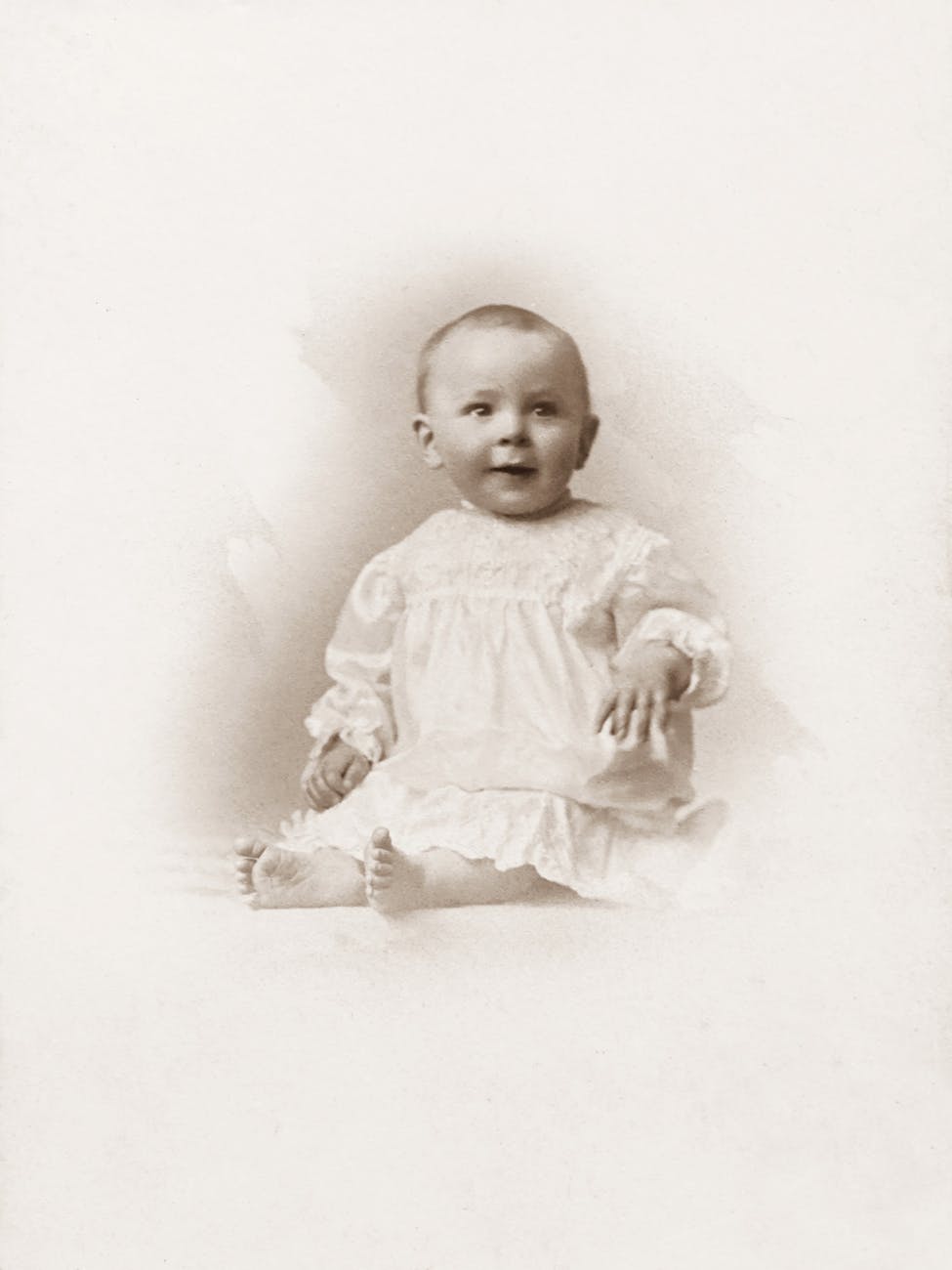
Throughout various abhorrent efforts to dehumanize any given particular group, the question of what is deemed ‘natural’ has often been present. The concept of ‘naturalness’ is made to be synonymous with ‘goodness,’ ‘correctness,’ and any term that denotes a certain level of social acceptability or praise. Yet, the definition of ‘natural’ does not indicate some infallible or permanently held state of being. Rather, it is an ever-changing term, constantly adjusting to new norms and technologies as our society changes.
Continue ReadingWhen My Body Wasn’t My Own
TW: mentions of SA, dissociation
Growing up in a conservative household, I was constantly told to cover up because of men’s “wandering eyes”. I was taught that if I were to be sexually assaulted, it would have been my fault, instead of the person who sexually assaulted me. Out of fear, I obliged, wearing modest clothes throughout my childhood, convinced that I could never be safe. My mother also told me to speak properly, to never talk back to elders or men, and to hold my tounge if I was uncomfortable. In Throwing Like a Girl, Iris Marion Young describes how women move with “inhibited intentionality”, we know we can act, but we feel like we shouldn’t. That was my childhood: constantly silencing and covering myself to make myself more palatable for men. These habits became ingrained in me, because for so long, they were all I knew to do.
Continue readingPeach fuzz

I don’t need to be seen
I ask Google is it possible to disappear into myself
If you could choose one superpower what would it be?
Invisibility
Without a doubt.
I feel invisible anyway
Continue readingChildhood Gender Norms
Many people have better views on gender stereotypes, but obviously we know better than to not categorize people. Growing up in a traditional immigrant household the gender norms are even more distinct. I was told to not do sports, and only do activities that were more “feminine”. I believe that while stereotypical views about gender norms are deeply embedded in our society, they often begin from childhood.
Continue readingEmbracing Suppression: Gender Stereotypes & My Experience as a Trans Person
There’s a struggle at the very heart of my experience as a trans person. The struggle of trying to navigate a society that heavily reinforces the gender binary in ways that most cis people don’t even think about, while also trying to do away with this outdated notion. A prevailing notion on how one does gender is through their performance. Our appearance & the way we use our body signify to others what gender we are. There is nothing in one’s very nature that makes her a girl, it is how she’s been taught a girl looks & behaves that determines her performance as such. I’ve discussed gender in the abstract, but how does it apply to me? How do I experience gender? Well, I am a demigirl, an identity within the non-binary umbrella where I am a girl, but also partially outside the gender binary. Despite this, in circumstances where I have to interact with mostly cishet people, I desire, but do not achieve, to present as femme as possible, to only be seen as a girl, as I don’t trust the general society to grasp that nuance. If someone even for a fraction of a second thinks that I’m a guy, it’ll create gender dysphoria. So if I’m basically trying to present as a girl, this in a way could be perpetuating the gender binary, by erasing the non-binary aspect of my identity in my presentation. But then how does one present as non-binary? There is a misconception that non-binary inherently means androgynous, because you are neither a boy nor a girl, you must not lean towards looking like either. This just creates a gender trinary, which I feel like is only an improvement from the gender binary in superficial ways. It allows for the expansion of gender in so far as it doesn’t mess with the existing structure too much. In other words, as long as it doesn’t challenge the patriarchy. But then, how do I do my part in transforming society such that the general notions of gender match how diverse it actually is? The only satisfactory answer I’ve been able to come up with is for others to be educated about the nuances of gender. After all, I don’t feel that same pressure in queer, especially trans, spaces. In those circumstances I know I’m around people who have the same or similar enough experience & knowledge of gender that I don’t feel obligated to live up to gendered pressures that are thrust upon me. When I’d go visit my ex-boyfriend, or my ex-girlfriend before that, who are both trans, I knew it wouldn’t matter if I didn’t feel up to looking as femme as I could manage, as they’d still see me as the gender I am. So through my experience with other trans people I know it is possible to live in a society that doesn’t require strict adherence to gendered stereotypes. But I can’t really give a presentation on gender to every passerby on the street, so all I can really do is wait, & until then, hope I’m seen as a girl.
Continue reading
The Resting Bitch Face
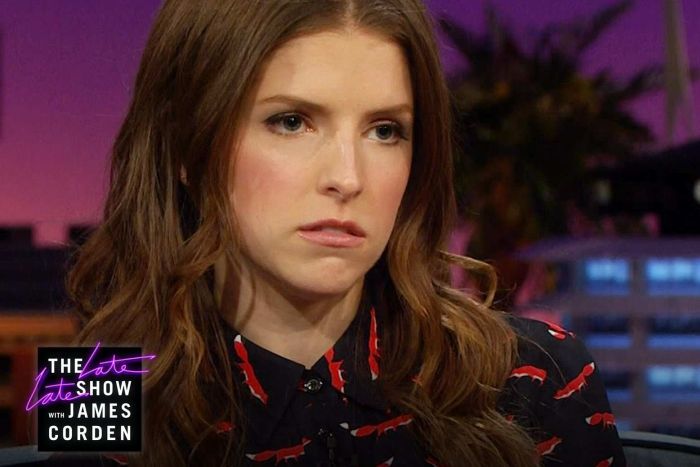 In a poem titled “Ode to My Bitch Face” Olivia Gatwood theorizes about some reasons why women have resting bitch face or R.B.F. She says that some are born with it, to some it is a defense mechanism they put up every day, and to some it is a “safe zone.” The resting bitch face according to Urban Dictionary is “a person, usually a girl, who naturally looks mean when her face is expressionless, without meaning to” and “A bitchy alternative to the usual blank look most people have. This is a condition affecting the facial muscles, suffered by millions of women worldwide. People suffering from bitchy resting face (BRF) have the tendency look hostile and/or judgmental at rest.” Continue reading
Gender Policing of Halloween Bodies
For Halloween this year my girlfriend and I decided to go as Shaggy and Velma. While looking for clothes in a thrift store, my girlfriend started playing with the idea of going as a sexy Velma. Going along with it I suggested I go as a sexy Shaggy as well. Continue reading
Everyone Else Wants a Dick in My Mouth (In which society takes one glance at my body and assume they know my whole life)
A few months ago when eating lunch with friends, one of my friends offhandedly commented that ‘men must love [me]’. I realized that she was referring to my ability to fit a large amount of food in my mouth, and assuming that I would use this ability to give great blowjobs (something I have no interest in doing). This got me thinking.

