Twintuition

Growing up with a twin brother taught me more than I would like to know about emotional labor. From my first memories of us growing up together, I knew that the expectations I was held to were quite different from those that my brother was held to. I was expected to be the picture of emotional maturity. Conflict resolution, good communication, and empathy was something that was supposed to be built in. My brother was merely expected to be a boy. The worst part about the expectation of performing emotional labor is that it goes largely unnoticed and unvalued.

When I was a child, maybe 7 or 8, my twin brother and I would fight relentlessly. I would come to hang out with him and his friends, and the argument would usually start of by him declaring that he did not want me there because I was a girl. I would defend myself and my ability to hang with the boys, and eventually he would give in. This was not the end of the emotional torment. Once it was decided that I was allowed to stay, my brother would do anything he could to belittle me, whether that was emotionally or physically, many times both. Sometimes I would ignore and play nice, and sometimes I would snap back. Snapping back never worked. The fight would escalate with my attempts to defend myself. It always came down to the fact that he was bigger than me or meaner than me.

When I had finally had enough and went to my parents for help, I got the same answer most of the time: “Don’t take it personally, boys will be boys. Either don’t hang out with them or suck it up and go back in.” Here is where the imbalance lied. I was always expected to do one of two things. My first option was to go back into the room and diffuse the situation, either by apologizing or by pretending like nothing happened. My second option was to stop hanging out with my brother and spend the rest of the day alone, thinking about what had just occurred. Either way, I was expected to perform emotional labor while no emotional labor was ever expected of my brother.

You would think that being expected to perform emotional labor since childhood would make one better at communicating in emotionally charged situations. For me at least, it did the opposite. I have spent so long prioritizing the diffusion of social situations that I seem to have forgotten how to advocate for myself. Instead of assertively communicating when someone has hurt me or I want something different than someone else, I freeze or avoid, which ultimately makes the situation worlds worse than if I just stood up for myself. Emotional labor is something that should be taught with equity and highly valued, not something that is expected of someone because of who they are. When emotional labor is expected rather than taught and respected, it can quickly become a source of massive trauma.

What about the “right-to-live?”

I remember when Jahi McMath died—for the second time. 

Senior year of high school, I came across an article about Jahi McMath, a 13-year-old Black girl who was declared brain dead after her tonsils were removed. It was Jahi’s first surgery, and she was scared. She didn’t want to go through with it, but her mom convinced her it would make her life easier (Jahi had sleep apnea, and removing her enlarged tonsils was intended to help). After speaking with the doctor, Jahi consented to the surgery, and she was fine for about an hour afterwards.

Jahi’s blood vessels were unusually close to the surface of her throat; the doctor had noted this in his chart for her, but the post-op staff was unaware. So when Jahi started coughing up blood, they didn’t see it as the alarm that it was, although Jahi’s family did. They repeatedly raised the alarms for her, but no one listened until her heart stopped.

Jahi was declared brain dead; her brain had stopped functioning due to the massive blood loss. In California, brain death is legal death. But Jahi’s family didn’t accept that. Her mother, Nailah, was convinced Jahi was still alive; Jahi responded to some stimuli and questions. Nailah asked Jahi if she wanted to be taken off life support, and Jahi said no through physical movements her mother taught her.

In the long legal battle that followed, Nailah and her family were forced to flee the state with Jahi under threat of legal action and jail time. Nailah’s insistence that Jahi was alive, and refusal to take her off life support, violated California’s medical ethics, so they went to New Jersey, where families can reject the notion of brain death on religious grounds—Nailah technically “kidnapped” Jahi to do this. There, Jahi had at-home around-the-clock medical support from nurses and doctors who were willing to lose their medical license or be shunned from the medical community; the doctors that treated Jahi were treated as quacks by the medical community. In the view of the community at large, you cannot treat a body that is already dead, and although Jahi’s body was not dead, her brain technically was. The California hospital where Jahi had been declared dead consistently disavowed the McMath family’s efforts and actively disparaged them for “desecrating a body.” But they were wrong.

With consistent care, and rogue researchers willing to look into her case, Jahi was able to exhibit signs of life, brainwave activity, and even underwent puberty. In 2017, a neurologist at UCLA independently confirmed that Jahi was no longer “brain dead.”

Jahi died—for the final time—in June of 2018, not even six months after the New Yorker article was published due to internal bleeding from abdominal complications. Despite overwhelming evidence, the hospital that issued Jahi’s death certificate refused to ever accept Jahi’s recovery and overturn her death certificate.

In 2020, I, much like Jahi, was preparing to go into surgery to get my tonsils removed for sleep apnea, just as she had been. Her name haunted the back of my mind in the days counting down to my surgery, but I, just like Jahi, spoke with my surgeon and asked him how many times he had done the surgery, what the risks were, how long he had been a surgeon. I had the insight that a 20-year-old had and a 13-year-old didn’t, but we were in the beginning of a pandemic, in the middle of the shutdown, and my mom wasn’t even allowed in the waiting room with me. Though I was nearly certain I would be fine (my surgeon routinely did much more complex and precise surgeries, like removing tumors that had grown into the blood vessels of the throat), I was alone when I frantically pulled the anesthesiologist aside and had to shamefully admit that I had been taking quinine pills until yesterday morning, a stupid superstition I had bought into as a way to stave off a Covid infection.

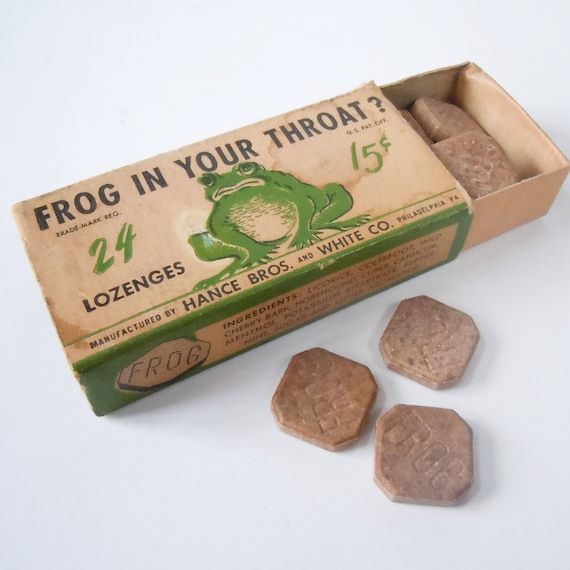
Quinine, for those unaware, is an herbal supplement that used to be used as a “cure all” back in the days of the Black Plague and the Spanish Flu. It didn’t work back then, but I’m a big believer in the placebo effect, and I needed to take something to put my mind at ease. One of the side effects of quinine—that I didn’t know until the morning before my surgery when I actually read the bottle—is that it can thin your blood. This makes you a higher risk for surgery; you’re more likely to bleed uncontrollably because the blood is much harder to coagulate. The bottle said to stop taking quinine two weeks before surgery. Feeling like I was going to cry, and possibly even about to die, I waited anxiously to be taken back and prayed that I would wake up afterwards.

Obviously, I did, or I wouldn’t be writing this right now. But I’m aware how lucky I was, and am. Jahi’s case is in direct opposition to Terry Schiavo’s: Terry Schiavo was a White woman declared brain dead who the hospital refused to stop treating, whereas Jahi was falsely declared brain dead and refused further treatment. Jahi’s family noticed this too; they knew if Jahi had been White, she would have likely received the attention she needed, and even if she had still been declared brain dead, her family’s choices would have been respected. Having come after both of them, and being light-skinned myself, I know my family would have had the respect and space they needed to make whatever decision for me they felt was right if my surgery had gone wrong.

Still, it haunts me; Jahi’s story is barely told outside of fringe medical pieces, but Terry Schiavo’s is well-known enough to be casually referenced in feminist writings. Who gets the right-to-live? Who is allowed to die? Why are our bodies’ needs and wishes ignored depending on the kind of body we inhabit? I hope Jahi is resting peacefully now, but I carry the anger and fear of what was allowed to happen to her.

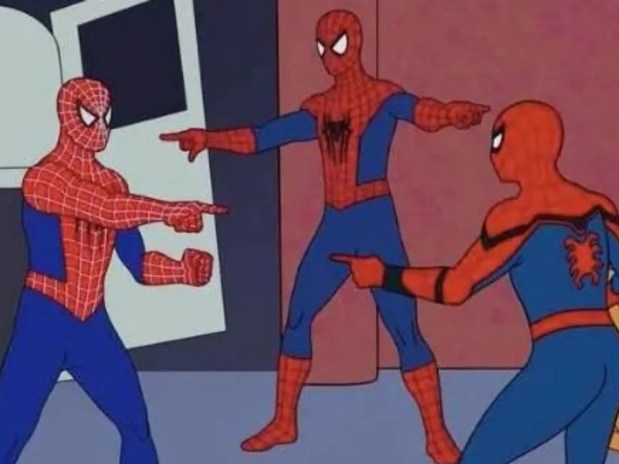
“You’re Really Good At Taking Everyone’s Sh!t”

“You’re Really Good At Taking Everyone’s Sh!t”

Whose Fault Is It?

Emotional labor is the act of “regulating or managing emotional expressions with others as part of one’s professional work role”. For the context of this blog post, I will also be referencing emotional work as well, which is the role people use in any social context.
RANT: Every post, YouTube video, and link that I looked at typically focused on the emphasis of how women have been the brute focus of emotional work and often, labor. WHAT ABOUT THE MEN?!
BLOG: Ideally, men have been the focus, but in our current generation, I am starting to wonder if men are becoming the scapegoat for blame. There are good and bad things to this, but I can only share my experiences. From growing up in a household as an adopted child to working in hospitality at some of the best hotels in the Houston area, to coming home and being expected to “clean up everyone else’s shit” (one of my ex’s fathers literally told me this and suggested I work for some type of plumbing company) to experiencing my own version of emotional labor is…exhausting. As a recommendation, if you’re dealing with being the emotional laborer of your family or workplace, I suggest counseling, good friends, hobbies, and money.
Now that I have your attention, the emphasis on emotional labor during this period of the class was for women. Honestly, I love that. Often, the strongest women in my life have carried the emotional labor of EVERYONE in the family. My Grandmother (capital G, because she truly is a G), and my Aunt (who raised me, God bless her soul) have not only raised multiple members of the family but have guided others and influenced people for generations to come. I can endlessly explain what they have done for everyone, including my impaired brother (this falls into the disability category of the past few weeks, but I decided to not go in-depth with these issues and instead focus on emotional labor…anyway) My Grandmother has done amazing things as a widowed woman, and when my grandfather was alive, what I recall of him, he was a remarkable man, veteran, and overall generally good person. In order for him to be that he needed to have an even stronger woman there to not only support him, but to motivate and guide him. We so often focus on a certain gender, but I think its vital to focus and include everyone because we cannot physically do it all on our own – even if social media suggests that we do.
When it comes to emotional labor for myself, as an older male, I grew up with the family vibe of “you want it? Do it yourself” This mindset has its own version of toxic masculinity and it worked for a time, but as I have grown older and started practicing gratitude, meditation, and fitness, I have learned that kindness is the key to growing. However, that is also the curse of being easily manipulated and being the scapegoat out of a lack of emotion – if you allow yourself to be. When working as a hotel supervisor, I found myself taking on the emotional verbal abuse of people that travelled so far and attempted to check in, but one minor inconvenience (Well…one time there was a major inconvenience, we sold out and by the time they got there…the people didn’t have a room… and they were diamond members which is equivalent to being a traveling version of Karen) set them over the top, and I had to apologize profusely, make up for their issues by giving them a free nights stay at another hotel, etc… all while keeping a smile on my face. So dumb, but it was vital in learning how to maneuver around people when they are angry and teaching myself how to stay calm in the face of disappointment. That’s an invaluable trait and lessons/memories that I am grateful for.
I don’t know, I am a believer in the idea that everything happens for a reason. Maybe I should allow myself to be the gatekeeper of my own “shit”, to be more selfish and selfless at the same time, and to lack the attempt to understand everything and everyone around me but I cant do that shrug. In essence, I think all of us must have some type of role in emotional labor, but please, don’t forget to take care of your mental, physical, and financial well-being. Your family, friends, and pets will thank you for it. (I will always choose to be kind and thank you to all of the people in my life, wouldn’t be me without YOU).

Upward Spiraling Out of My Body Dysmorphia

Image by Karolina Grabowska on Pexels.com

trigger warnings: body dysmorphia, suicide, mentions of disordered eating, illness

If you remember what your body looks like, I think you’re one of the lucky ones. If you don’t, then I’m not so glad this is what we have in common. Coming from an older West Indian family, my body was always a discussion. No matter how many soccer practices I showed up to, salads I ate, nor how well I did in P.E. class, whenever an aunt approached me it was always “You’ve gotten bigger!” Even throughout my adulthood my body has gotten bigger. I know I’m big, but I wish they knew that I didn’t need to be reminded every second of my life.  

I think it’s important to note that I wasn’t always fat, but I still struggled with food and dieting at a young age. Having to deal with cholesterol issues during elementary school was the start of my long, relentless relationship with food. I remember sitting in the doctor’s office with my uncle, his eyes glazed over, listening to every word my pediatrician said. My relationship with food not only originates in this moment, but also with my family’s history of heart disease, diabetes, and many other debilitating diseases. By the time I reached high school, my uncle had a coronary angioplasty, stent insertion, triple bypass heart surgery, and several other surgeries for various kinds of cancer. He never wanted me to suffer like he did.  

For as long as I can remember, my uncle micro-managed everything that graced my plate. There were even times we fought at the dinner table so he could see whatever takeout I’d brought home. The stress of bringing home any form of food that he would scrutinize started to transfer into other aspects of my life. In middle school I discovered how uncomfortable it made me feel to eat in public spaces. In high school I even went as far as to become the library aide so I could escape the daunting task of consuming food in the adolescent-filled cafeteria and tried my best to retreat back to the library every lunch break. The library was my safe haven, a place of structure for the moments where I felt the most vulnerable. This is still a habit I have today, I always look for security.

It wasn’t until my senior year of high school that I started my first romantic relationship. He was beautiful, smart, and even had a piercing on one ear that was the jackpot of my teenage girl fantasies. Being with him was the first time someone told me I was pretty. For someone that had only dreamed of having a boyfriend, that meant the world to me. I naively thought that feeling would last forever. As the pandemic raged on, and quarantine forced us into our isolated nests, there became an evident strain on our relationship. Still, we continued to stay with each other. I never noticed when his demeanor changed or that I couldn’t fit into half of my jeans anymore, or even that I was getting bigger than him. I made a huge mistake. You know that horrible mistake people make when they get lost in a relationship because they already have constant bodily validation? Yeah, that one. I gained the “happy weight”, I let myself go. People hate happy weight because being fat makes you feel empty and alone after a relationship. Nobody thinks that you’re attractive anymore and it feels like now there’s this huge responsibility that you have to get back to when you were skinnier. I fucked up.

Coming out of that relationship I became extremely depressed. I moved back in with my family, back to a space I never felt secure in. Endless nights spent scrolling through Tinder, a space where your body is always being perceived, felt completely invalidating. I was a completely different person. And I didn’t feel that way because I had loved and learned valuable lessons about navigating relationships, but it was because I was fat. Everytime I looked into the mirror, a devil appeared on my shoulder pointing out every flaw on my now monstrous body. It’s like my ego had turned against me. 

I didn’t want to live in my body anymore. I thought I was nothing without the comfort of another person telling me I was good enough. I can’t say that I never feel that way today, but I’ve worked on it. I’m not about to go on a spiel about how much it matters to love yourself, nor about how self-love is a journey and not a destination… but would love really be worth it if it meant that I had to be skinny, athletic, or fit any of the aesthetic qualities guys on dating apps wanted? Probably not. But I want to be better, because I know that the moments in between these feelings of doubt and despair are much more important than these superficial views of my body. Though, how I never saw myself changing is still a phenomena to me.

In the end, I’m still trying to upward spiral out of this feeling called body dysmorphia.

Can I Throw Myself a 75th Birthday Party at a Retirement Home When I Am in My 30s?

image 0

Ok, let me clarify: I want to throw the party for myself and my husband, and he just turned 40.  So it’s perhaps just a more extreme version of the “over the hill party” that was so ubiquitous for my parents and their friends.  I was old enough to be in attendance and remember it well.

My husband just experienced the loss of his father and has been watching a family video of his father’s 40th huge “over the hill party.”  My own father’s 40th birthday party came as a surprise.  It included an enormous floating Garfield balloon that came home with us and spectrally floated up and down the staircase late at night for weeks.   Neither father ever had any other large birthday party, but 40 was such a cultural boundary crossing when it occurred to them, that it was marked with satire, commiseration and almost as many family and friends as you would have at a wedding or a wake.

Continue reading

Queer Brokenness: Intersection with Mental Illness

feature-470x260

Image Source: http://trauma.blog.yorku.ca/2015/12/south-asian-queer-community-lacks-visibility/  (Artist – Jinesh Patel)

(Content and Trigger Warning: Self Harm, Suicide, Substance Abuse, Emotional Abuse, Intimate Partner Violence, Bullying)

.

.

I often find that mental illness and queerness aren’t addressed properly or constructively when talked about together. So often the public at large would have us believe that queerness is a result of mental illness or that mental illness is the result of queerness exclusively. With this in mind, the queer community will often push back on society’s behavior by talking about the two exclusively from each other, frequently ignoring all the ways mental illness intersect. That’s does not go to say that queerness is the result of mental illness or vice versa at all, but rather it shouldn’t be ignored that many people in the queer community go through both because of the way society has constructed and reacted towards queerness. For example, queerness has often been perceived as a deviant thing, it has historically been punished and worked against in a variety of ways. Continue reading

But I like this show mom!

toddler-tantrumsAs a 90’s baby I look back at the old cartoons and listen to old hits, reminiscing the good ole days. I joke around with the children at my job, telling them how the best shows were on cartoon network . I expressed that my favorite shows were the Power Puff Girls, Courage the Cowardly Dog, Dexter laboratory , and other hit TV series.
As I continued to share my stories, one kid goes “I like Loud House”. Of course I did not know what he was talking about , but another child replies ” It’s that Gay show! My father said I cannot watch it”. Then it clicked. I remember this being a controversial topic on Facebook before the shows premier. The show contains a married, biracial , Gay, male couple that has a child.

In this blog I will explain what makes this show inappropriate .

Point #1  It goes against the social norm : How dare you show a child who is the product of the american dream two men together! That’s absurd ! How dare we show children that there is more to life than just mommy and daddy. Boys cannot be feminine ! They must be rough. If my child see’s this he will not be the man I want him to be! (sarcasm)

Point #2 STICK WITH YOUR OWN RACE! :  How dare we promote outside our race ! ( Sarcasm)

Point #3 THIS GOES AGAINST OUR RELIGIOUS BELIEFS ! :  who cares.

Point #4  How can you reproduce if your gay : Well if there’s a will there’s a way……. who cares

At the end of the day no one said you had to be gay, but just respect them as humans. The world must embrace change!  Whose to say your way of living is right!? If anything I see it as this, we are letting people finally be themselves. Many people have been killed, have been shunned, have killed themselves,or have had something tragic done to them because they were considered ” not normal” ( Much like blacks were considered way back when but I shall not go there 😀  ). Now we have same sex marriages, Tv shows, Gay parenting, etc! All of these things that were considered abnormal are now part of our norm and should be! At the end of the day we are people. Accept it!


Spank Me, Daddy!

Content warning: spanking, physical punishment, parenting

When it comes to parenting, there is perhaps no concept more divisive than the use of spanking as a form of punishment.  From conversations with my peers, I have heard a wide variety of opinions on the matter, from what classifies as spanking to whether or not corporal punishment should be administered to children at all. Based on my experiences, those who were spanked as children view the act as an entirely normal part of childhood and even commend their parents use of corporal punishment, while those who were not spanked cannot imagine why someone would put their hands on their child in order to teach a lesson. Continue reading

Grief never ends… but it changes

Grief never ends… but it changes

My father passed away a few years ago. I have never felt such grief as I did when I received the phone call. It was early in the morning and I was still sleeping. I awoke to the vibrating phone and saw that it was my Mom. I thought to myself, “she never calls this early. something must be wrong.” I could hear her sorrow through the receiver. Continue reading