The Muse’s Misfortune

The Muse’s Misfortune

The Muse’s Misfortune 

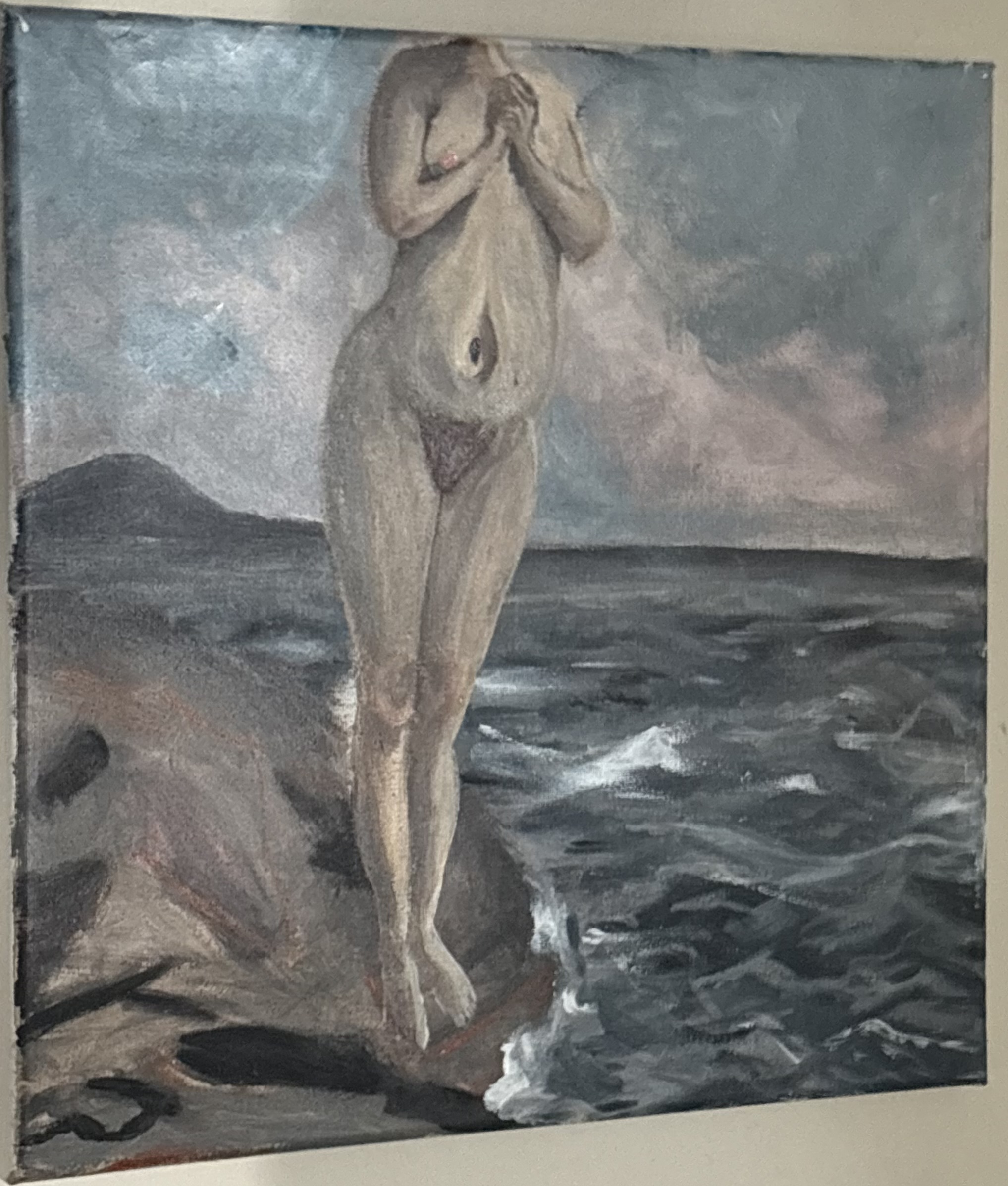
To be a muse is to be worthy. To be a muse is to be beautiful and talented, chosen and seen. To be a muse is to be exhilarated and exhausted, honored and objectified, proud and pornified. There cannot be one state of being without the other, so long as there is one being to perceive and one being to be perceived.

Read more: The Muse’s Misfortune

In some societies, perhaps, it is possible for a muse to exist without the constant fear and awareness of their own and another’s presence. In patriarchal and sexist cultures, however, the muse faces an internal and external threat of surveillance, and therefore sexualization. “(Patriarchal and sexist) society defines woman as object, as a mere body, and… are in fact frequently regarded by others as objects and mere bodies” (Young, I. “Throwing Like a Girl: A Phenomenology of Feminine Body Comportment Motility and Spatiality,” p. 153-154). For feminine muses, they “learn to live out (their) existence in accordance with the definition that patriarchal culture assigns to (them, and) are physically inhibited, confined, positioned, and objectified” (152). The definition becomes internalized, which then manipulates and forces women into being more feminine- more submissive, docile, small, quiet. “Women often approach a physical engagement with things with timidity, uncertainty, and hesitancy… (They) lack an entire trust in (their) bodies to carry (them to their) aims. There is… a double hesitation here. On the one hand, (women) lack confidence that (they) have the capacity to do what must be done… The other side of this tentativeness is… a fear of getting hurt… (They) often experience (their) bodies as a fragile encumbrance, rather than the medium for the enactment of (their) aims” (143-144). The subordination of feminine beings is at the root of patriarchy, and it grows as more minds and bodies accept the notion that feminine and masculine categories cannot intermingle. The stronger the patriarchy becomes, the more ‘natural’ it seems that feminine bodies are weaker than masculine bodies. In reality, women “have more of a tendency than men to greatly underestimate our bodily capacity,” as well as the relentless pressure of being perceived as a muse, which results in under-performance.

What Lies Behind a RBF

Little did I know when coming into college how many opinions were really out there regarding my resting face. Who knew that there’d be so many comments and concerns about me when I thought I was simply going about my day-to-day life?

I never thought much about the way that I looked while walking around, minding my own business in public spaces, but apparently, I don’t look as content as I may feel. I remember walking to Potomac Hall, where I lived during my freshman year at UMBC, when an employee from True Grits said, “Having a bad day?” I can’t exactly recall what I said or how the situation occurred, but I believe he followed with “You look mad.” This, of course, caught me completely off guard, and I’ve been aware ever since of how I come off in public spaces.

Truthfully, it bothers me most when my friends mention times that they’ve seen me out and about, unsure of whether I was doing alright or not. I also have a tendency to be ‘in the zone’ when walking about, so not only do I accidentally ignore my friends, but I do so with a certified ‘RBF.’ I always feel terrible and apologize, but times like these can’t help but make me laugh, as I know that my friends can see right through the RBF.

This ties into concepts from Iris Marion Young’s “Throwing Like a Girl: A Phenomenology of Feminine Body Comportment, Motility, and Spatiality,” and how women’s lives are often associated with confinement and enclosure. To those in public spaces who don’t know me personally, it’s probably easy for them to assume that I’m the closed-off, keep-to-myself type. Men may be quicker to assume from looking at my face that I’m not as happy as I actually am. So much is assumed about women based solely on their looks. While women certainly have a whole lot to be angry about, we don’t necessarily aim to visualize our feelings as we go about life on a daily basis.

I wish I could give myself a lobotomy

This is gonna be a word salad but it’s actually crazy navigating this world as a person with anger issues, bpd, anemia and autism. I know, girl pick a struggle. To give you a little glimpse into my life. Being anemic is weird. As stated in class, people only think disabilities you can see are valid. And don’t get me wrong if I’m being honest I don’t consider being anemic disabling but maybe I don’t consider it disabling because of that subconscious bias as well. As someone with anemia one thing I do ( as well as others) is when I get up too fast my vision gets fuzzy like I’m seeing circles and static and I have to lean over and sit sometimes even lay down. One could argue that that is disabling. And I could see why because that affects me when I’m working (as a receptionist I’ve had to do that sometimes) when I’m at a conference or meeting or babysitting just anything in life.

Read more: I wish I could give myself a lobotomy

Don’t get me started on having bpd- I sorry un-medicated and untreated bpd. And yes you guessed it ( that is because of finding a psychiatrist and therapist that will take our parent’s insurance). It affects every aspect of my life as well but especially my relationships with other human beings. People think they are accepting and “woke” until your friend goes off and becomes satans right hand man in an argument and then 25 minutes later is like “bro remember this lmfaooooo” like NOTHING happened. I’ve lost friends over it. And I’m not okay with it. I’m not. I’m not gonna sit here and lie to you guys and be like it’s whatever it’s there loss. No my feelings are hurt and I wish I didn’t have this in my brain. It’s almost kinda debilitating. But idk it feels wrong to call it debilitating because that feels reserved for things like schizophrenia, Down syndrome, paralysis etc… I wish I could just take a pick and fix my brain and be normal. Yes I said it. Don’t believe these people- having mental illnesses is not normal and that’s okay. It’s not a bad word.

Read more: I wish I could give myself a lobotomy

And to TOP IT ALL OFF god just had to make me neurodivergent as the final touch. Everyone in my family is neurodivergent. From my mom to my dad to me and my little sister. Shit we think the dog is too 💀. But it’s so crazy cuz the reason my parents (mainly my dad) never had anything done about it was because not just because they didn’t have the money, but also the community they’re in. It’s already bad enough society is so 👀 about being autistic and then you have the black community which is like worse towards people who are different. For lots of black people who have autism/neurodivergent or physical disabilities, our first and main bullies are the people who look like us, talk like us, dress like us, worship like us. It’s so alienating. Don’t worry it’s gotten better because of the newer generations but it’s just like damn can we catch a break . It’s a good thing this is not an on paper assignment cuz there’d be tears stains all along the page😹.

What Were You Wearing

“I was seven,
Wearing play clothes,
When he decided,
I was his experiment
I was seven,
Playing in my home,
When he decided to
Claim my innocence”

“I was eight,
Wearing a black shirt,
And pj pants with pink stars
When it all started
I was eight,
In the trusting lap
Of my uncle,
Too young to question,
Too young to debate”

“I was three,
Or possibly five,
When it became,
A monthly encounter,
I think I was three,
Sometimes in a sundress,
Others in pajamas,
When he decided
He had the right to me”

This poem was inspired by an exhibit called What Were You Wearing. The title of the exhibit is a question commonly asked to victims of rape/sexual assault, implying that what happened to them was somehow their own fault. The exhibit proves that clothing is irrelevant when it comes to sexual assault, and that we should stop victim-blaming by asking this question. 

My Fused Violin, My Musical Body

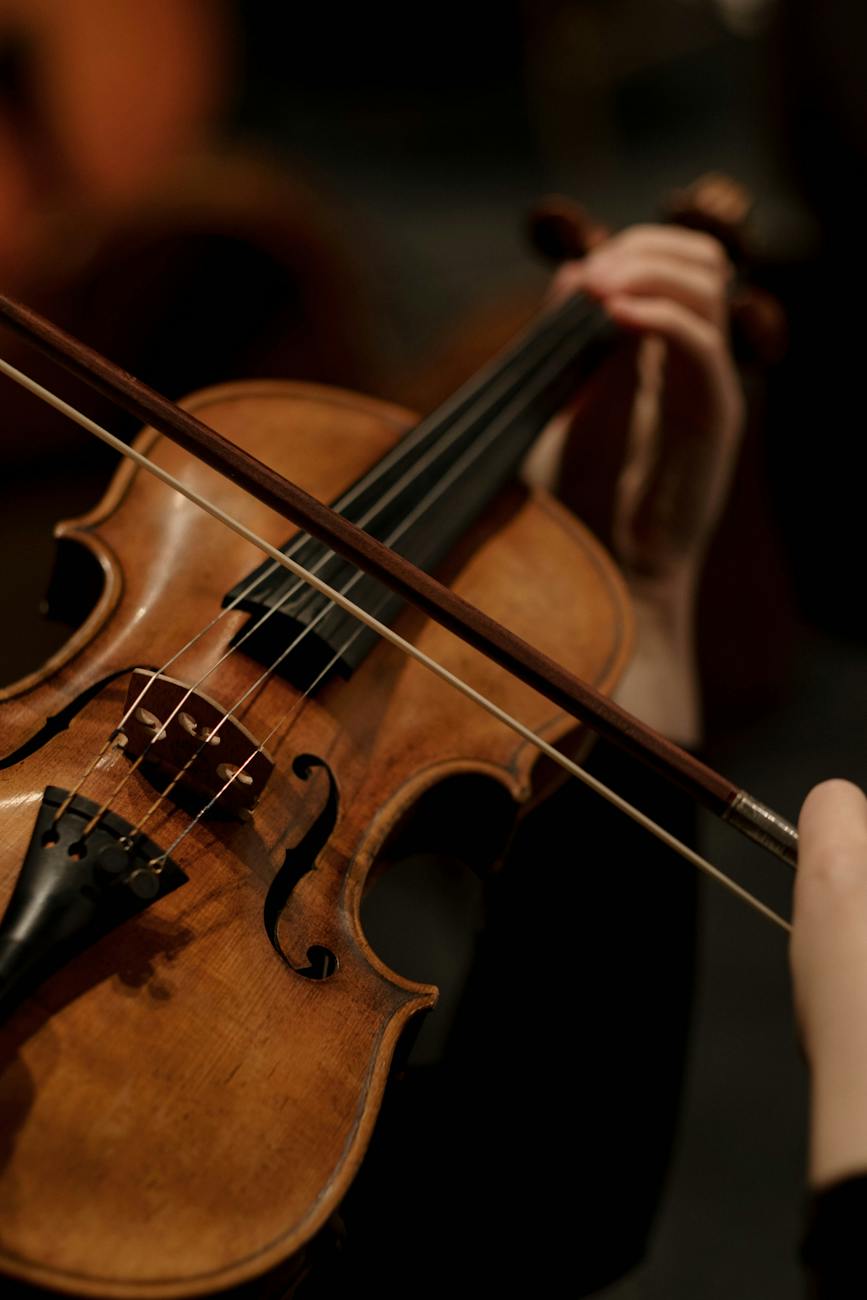
Music has always been my way of expression, whether it be through an instrument, a song I sing, or even a dance. Music became a part of my body. Music has always been there for me when I needed to be creative, when I needed to think. As I’m writing this I’m listening to music. Since elementary school I have been enveloped in the love of music. I started to learn how to play violin. My teacher was such a passionate person when it came to teaching music. I think that’s why I began to fall in love more with my music. She always motivated us to keep supporting music and to never let it fade from our hearts. My mom loved hearing me play, she was also in love with music. Her hearing me practice made her joyful that her daughter was carrying on the musical tradition. She was in chorus when she lived in her village and she always came back with awards and trophies because of how beautiful her voice is. My mom’s voice is amazing, she always brings me comfort when she sings to me, I think that also fueled my passion for music. Throughout elementary school, to middle school where I became first chair in my orchestra class, to high-school, the violin was my best friend, my safe space.

When I played my violin, it blurred out all the noise, the voices, the creaking sounds of that music room. I felt my hands connect with my bow, my chinrest melt into the violin. The bow grazing against the string and my fingers pressed on the fingerboard of the violin, creating such beautiful music. I never really told anyone about how connected I am about my violin until this class. I wouldn’t let anyone touch it unless it was the Lashof violin manager repairing my bridge and my strings. When I was sad, I could play my heart out with such balance and heavy energy. When I was happy I would be so quick with my bowing hand and my finger placement. I had the ability to hear a song and mimic it on my violin after two minutes of hearing the song. I would catch every vibrato, every rest, every pitch change. Music was in me, music became me.

When we spoke about music embodiment, the first thing I could think of was my connection to my instruments that I have learned to play over the years. Violin, guitar, bass, cello, and etc. I feel like my parents gave me that musical gene. My dad played trumpet and trombone when he was younger, my mom was so good with her vocal skills, and because of them I became the connection to them for music to live on. I miss playing sometimes since I have not much time to play or take a course in music. But I still play my violin when I am home on break. I still play for myself, my parents here and there. I played for my grandma who also played when she was younger, and she passed, but that’s how I connect to her.

Music is so freeing. I can’t explain how much music saved my life. It saved my body. Music has the power to do so much to a person. Music can move people, it can cause so many different emotions. It can bring different people together. It can help you think. It can help you breathe. It can help you remember your loved ones who aren’t there anymore. It can even create so many memories. Even those who are unable to hear, are able to find music vibrations so powerful. I love music, with all my heart I do. I don’t know where I would be without it in my life. I probably wouldn’t have been able to write this blog post right now without it. As a musician, music is something so powerful, for those who play instruments as well I know you would understand how indescribable music can be. I feel like those who even listen to music understand it too. Music, whether it is being played, being created, being heard, it will always have some sort of embodiment to that person. I would never regret my choice in trying to play the violin, because it wouldn’t have brought me here, where I am able to share my story of how music embodies me.

Photo by cottonbro studio on Pexels.com

My Reflection

Who am I?
I,
I’m my thoughts,
My dreams,
My aspirations.
I’m my name,
My looks,
My imagination.
That’s what I see,
When I stare,
Into my reflection.

My reflection,
Ripples in the river of life,
The shallow,
Shallow river of life.
To the world,
I am my reflection:
I am only what the world sees,
Only what the world decides I am.
My body is but a vessel;
Why must the world ignore me,
But acknowledge the vessel?!

Books, merely objects
Are still judged 
By only their covers,
So who am I to demand
They not judge me
By only what they can see.
The inside of a book
Is where the value lies
But most people don’t bother;
It’s easier to judge
From the outside

My body is a part of me,
It embodies my soul
My personality,
But it is not all I am.
I am not my scars,
My disability,
I am me,
A completely separate entity.
I, Me,
Not just what you see

My Mom (& her BMI)

Keto,
Maybe that’ll help
Paleo,
Couldn’t hurt to try
So many failed attempts
To lower her BMI
How can I tell her, 
That a number 
It doesn’t define her!

The scale, the scale
What does it say?
FAT, it says 
But in numbers, 
It judges.
Why must we care 
What a metal box 
Has to say?!
Why do we care
About the numbers
At the end of the day?!
The world says
Those numbers matter
The world says
Those numbers decide 
They have more say
Than we do,
In our own lives

It shatters my heart
The look on her face
As we snack on chocolates 
While she eats ice chips
Sugar-free,
Fat-free,
And low-carb
That’s her life

My BMI, 
That number
It’s way too high
UGH
How can I tell her
That number is futile
Tell me now,
Does the BMI know
Of the babies 
You’ve born?!
Does the BMI know 
Of the PPD 
You’ve overthrown?!

A number cannot measure beauty
So why,
Why does it bring tears to your eyes?
A number cannot measure beauty
So why,
Why must the matter 
Overwhelm your mind?
I tell you you’re perfect;
But my words
They are fruitless,
It is only numbers
That get through to you,
The same numbers,
That judge you

Let me make my silly little choices, and you can make yours.

Let me make my silly little choices, and you can make yours.

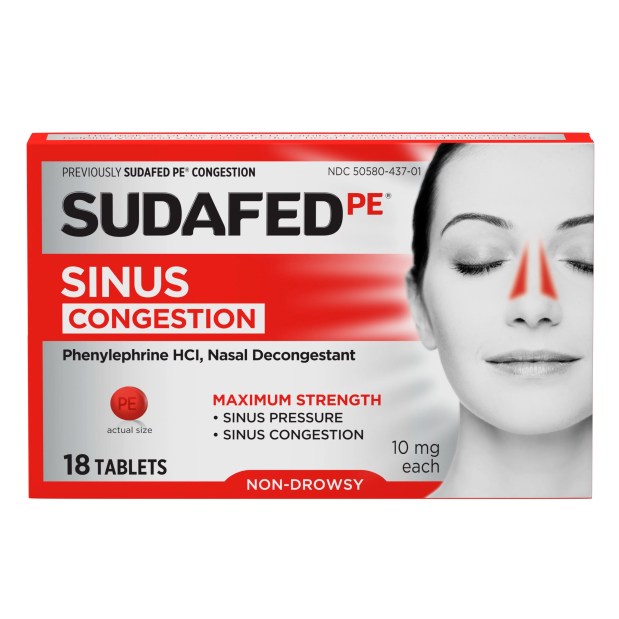
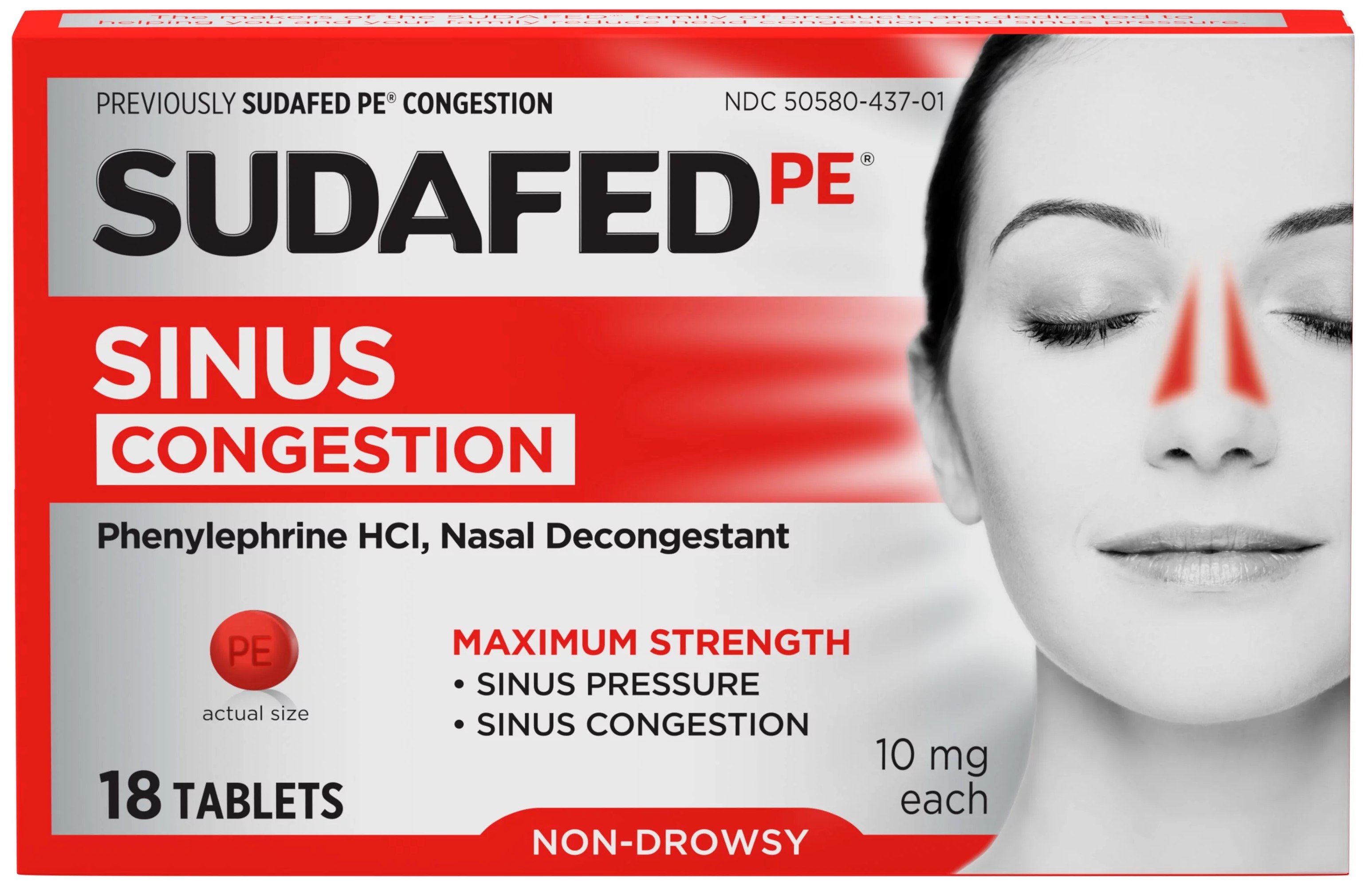
Front cover of the Sudafed PE OTC box.

Recently, an FDA panel announced that Sudafed PE and other decongestants are, essentially, ineffective. Since this announcement, I’ve seen countless articles pop up on my Google News feed about removing Sudafed PE, Mucinex, and Benadryl from the shelves. The argument to remove the medicines is that we shouldn’t be selling ineffective products–but are they really ineffective? An argument can be made that these are exceptionally effective placebos (sugar pills/ineffective medicine).

The placebo effect is well documented; even when a patient knows they are taking a placebo, sometimes just taking a pill helps to trick the body into the desired effect. Bodies and minds are weird, and whatever works, works. Even if Sudafed and its relatives are little more than placebos, I think they should be allowed to stay on the shelves. After all, the placebo effect can reduce symptoms by up to 50%, and that’s more than enough to convince me.

For all the many ailments I have–visible and invisible, temporary and chronic–very few have effective and fast solutions. There is no Xanax for depression, no Zofran for migraines, but there is Sudafed for a stuffy nose. Maybe it’s silly to continue to take something that has been proven not to work, but I swear I feel my sinuses clear up minutes after taking Sudafed. It allows me to get a restful sleep instead of battling with the correct sleeping position that allows me to breathe.

With the lack of effective medications available for a variety of illnesses, I am frustrated by the attempt to remove existing medications instead of putting new ones on the market. While I am not necessarily a fan of being stuffed full of pills, I like having the hope that maybe there is an accessible medication out there that will work for me. When the number of approved medications is even further limited, frustrated and exhausted people like me turn to home remedies and endless concoctions of honey, sea salt, herbs, and usually get roped into the wellness industry once or twice.

If Sudafed doesn’t work for general populace, there is nothing I can do about it. But whether it’s the placebo effect at work or there really is some merit to Sudafed, let me decide how to spend my money. Taking Sudafed off the shelves leaves me one less remedy for a restful night–and when I’m combating so many other ailments for a moment of peace, this tiny relief is a huge victory for me. Leave the silly little pill on the silly little shelf and let me make my silly little choice; you are free to pass it in the aisle if you wish, but leave some for me.

What about the “right-to-live?”

I remember when Jahi McMath died—for the second time. 

Senior year of high school, I came across an article about Jahi McMath, a 13-year-old Black girl who was declared brain dead after her tonsils were removed. It was Jahi’s first surgery, and she was scared. She didn’t want to go through with it, but her mom convinced her it would make her life easier (Jahi had sleep apnea, and removing her enlarged tonsils was intended to help). After speaking with the doctor, Jahi consented to the surgery, and she was fine for about an hour afterwards.

Jahi’s blood vessels were unusually close to the surface of her throat; the doctor had noted this in his chart for her, but the post-op staff was unaware. So when Jahi started coughing up blood, they didn’t see it as the alarm that it was, although Jahi’s family did. They repeatedly raised the alarms for her, but no one listened until her heart stopped.

Jahi was declared brain dead; her brain had stopped functioning due to the massive blood loss. In California, brain death is legal death. But Jahi’s family didn’t accept that. Her mother, Nailah, was convinced Jahi was still alive; Jahi responded to some stimuli and questions. Nailah asked Jahi if she wanted to be taken off life support, and Jahi said no through physical movements her mother taught her.

In the long legal battle that followed, Nailah and her family were forced to flee the state with Jahi under threat of legal action and jail time. Nailah’s insistence that Jahi was alive, and refusal to take her off life support, violated California’s medical ethics, so they went to New Jersey, where families can reject the notion of brain death on religious grounds—Nailah technically “kidnapped” Jahi to do this. There, Jahi had at-home around-the-clock medical support from nurses and doctors who were willing to lose their medical license or be shunned from the medical community; the doctors that treated Jahi were treated as quacks by the medical community. In the view of the community at large, you cannot treat a body that is already dead, and although Jahi’s body was not dead, her brain technically was. The California hospital where Jahi had been declared dead consistently disavowed the McMath family’s efforts and actively disparaged them for “desecrating a body.” But they were wrong.

With consistent care, and rogue researchers willing to look into her case, Jahi was able to exhibit signs of life, brainwave activity, and even underwent puberty. In 2017, a neurologist at UCLA independently confirmed that Jahi was no longer “brain dead.”

Jahi died—for the final time—in June of 2018, not even six months after the New Yorker article was published due to internal bleeding from abdominal complications. Despite overwhelming evidence, the hospital that issued Jahi’s death certificate refused to ever accept Jahi’s recovery and overturn her death certificate.

In 2020, I, much like Jahi, was preparing to go into surgery to get my tonsils removed for sleep apnea, just as she had been. Her name haunted the back of my mind in the days counting down to my surgery, but I, just like Jahi, spoke with my surgeon and asked him how many times he had done the surgery, what the risks were, how long he had been a surgeon. I had the insight that a 20-year-old had and a 13-year-old didn’t, but we were in the beginning of a pandemic, in the middle of the shutdown, and my mom wasn’t even allowed in the waiting room with me. Though I was nearly certain I would be fine (my surgeon routinely did much more complex and precise surgeries, like removing tumors that had grown into the blood vessels of the throat), I was alone when I frantically pulled the anesthesiologist aside and had to shamefully admit that I had been taking quinine pills until yesterday morning, a stupid superstition I had bought into as a way to stave off a Covid infection.

Quinine, for those unaware, is an herbal supplement that used to be used as a “cure all” back in the days of the Black Plague and the Spanish Flu. It didn’t work back then, but I’m a big believer in the placebo effect, and I needed to take something to put my mind at ease. One of the side effects of quinine—that I didn’t know until the morning before my surgery when I actually read the bottle—is that it can thin your blood. This makes you a higher risk for surgery; you’re more likely to bleed uncontrollably because the blood is much harder to coagulate. The bottle said to stop taking quinine two weeks before surgery. Feeling like I was going to cry, and possibly even about to die, I waited anxiously to be taken back and prayed that I would wake up afterwards.

Obviously, I did, or I wouldn’t be writing this right now. But I’m aware how lucky I was, and am. Jahi’s case is in direct opposition to Terry Schiavo’s: Terry Schiavo was a White woman declared brain dead who the hospital refused to stop treating, whereas Jahi was falsely declared brain dead and refused further treatment. Jahi’s family noticed this too; they knew if Jahi had been White, she would have likely received the attention she needed, and even if she had still been declared brain dead, her family’s choices would have been respected. Having come after both of them, and being light-skinned myself, I know my family would have had the respect and space they needed to make whatever decision for me they felt was right if my surgery had gone wrong.

Still, it haunts me; Jahi’s story is barely told outside of fringe medical pieces, but Terry Schiavo’s is well-known enough to be casually referenced in feminist writings. Who gets the right-to-live? Who is allowed to die? Why are our bodies’ needs and wishes ignored depending on the kind of body we inhabit? I hope Jahi is resting peacefully now, but I carry the anger and fear of what was allowed to happen to her.

What It Means to have a female body

*disclaimer this blog is very gendered, not everyone that is a woman has a vagina and uterus, but in our society being a woman entails living in a misogynistic world*

So, what is a female body? Well, the answer depends on who you ask. In my opinion, being female means that you are powerful and capable of anything. However, Feminist theory and some sociologists have been arguing for the equality of what a body is. Unfortunately, that idea is not widely understood.

History and Religion

 It is very common for the female body to be seen as a disgusting vessel that’s only use is to carry children. Religion has helped with holding on to that definition of what a female body is. Max Weber, a German sociologist, touched on this subject. He described how priests ruled in favor of chastity. This continued the sexualization of bodies, especially for women. Before that sex was commonly seen as a ritual, exploring and celebrating bodies, but with that change of religious power came shame and scrutiny. Even to this day, women are expected to stay “pure” and a virgin. Saving themselves for marriage, or they will become labeled a “slut”. Because of how the female body functions, women have been seen as dirty and lesser than men. 

Wards of the State

In 2022, being a woman means living in a world that belongs 60 years in the past. In the United States, the overturning of Roe v. Wade has created a world where it is unsafe to have a female body. This overturn of this very important Supreme Court case turned back time. Throughout history, having a female body meant being controlled by men. Whether it be financially, politically, or even physically. In their book “Flesh and Bone in Social Science” Mary Kosut and Lisa Jean Moore discuss how the female body doesn’t belong to us. With the overturning of Roe v. Wade, women do not have the right to abortions, birth control, or their bodies. It creates an unsafe world full of fear to be a woman.

On the other hand 

If you ask someone with knowledge of feminist theory, they will completely disagree with the historical definition of what it means to be female. It is said in our society that men are stronger than women, both intellectually and physically. But that just isn’t true. 

Feminists like to flaunt the faces of misogynists that the female body have a higher pain tolerance then men. And honestly who can blame them. Being in a female body means being told all day every day that you are just not good enough, and that shame can turn into vengeance against the patriarchy. And as I go to marches and protests, knowing for myself, what it is like to be a female.

dsvfssdnfl

Menstruation and cramps are bonds between women throughout all of society. Though cramps are not normal, studies have shown that some cramps are more painful than heart attacks, and that it is powerful that we as women can live our lives with that.