Me Before You: A Tragic Tale of Romance and Assisted Suicide 

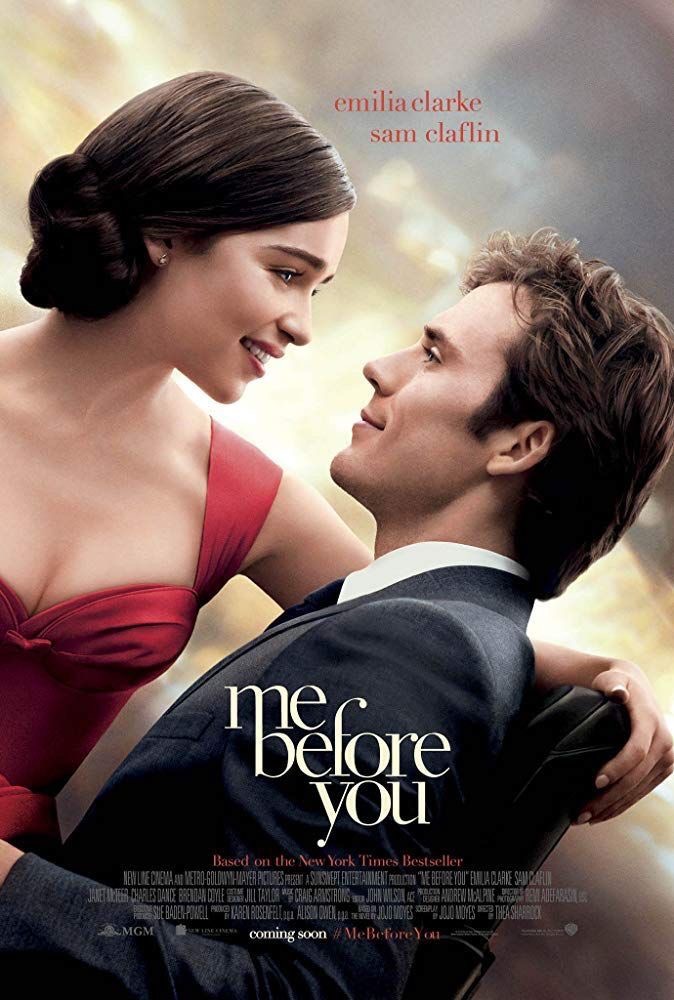
When I first watched Me Before You, I felt like my heart was ripped out of my chest. The story follows Louisa “Lou” Clark who becomes the caregiver of Will Traynor, a man who was adventurous before becoming paralyzed after an accident. Will unfortunately faces many challenges both physically and mentally, leading him to choose assisted suicide despite falling in love, and I haven’t been able to stop thinking about this movie ever since. Recently I started to question, if it was romantic, or was it reinforcing the idea that a disabled life isn’t worth living? After reading Nicole Schroeder’s “Dying a ‘Good’ Death: Disability and the Assisted Suicide Debate” from the Disability Visibility Project, I started to see the story through a completely different lens.

Before I fully dive in, I want to fully paint the picture of this movie. Firstly, Will’s parents hire Lou to care for him after his accident two years in an attempt to raise his spirits. Lou’s unapologetic, positive personality slowly breaks through his bitterness, and they form a deep connection. After finding out he plans to go to Swtizerland for assisted suicide, Lou tries her best to change his mind by trying everything from taking him to concerts and a trip out of the country. But in the end, Will does not change his mind even after falling for Lou. The movie paints his choice as noble as a way of reclaiming control over his life and giving Lou a chance to live hers. The final scene shows Lou reading Will’s farewell letter in Paris, smiling through her tears. It’s meant to be bittersweet, but it also raises difficult questions about what “a good death” really means, and whether society offers disabled people real choices about living.

Nicole Schroeder’s essay completely reframes this debate. She argues that the real issue isn’t about whether people have the right to die, but it’s about why so many disabled people feel they need to. She writes, “those of us protesting do not want people to be in needless pain; instead we want resources other than death to alleviate suffering while people are still alive.” That line stuck with me because it exposes how the conversation around assisted suicide often ignores the failures that lead people to that point: lack of access to care, isolation, and social neglect.

In the film, Will isn’t shown receiving much support beyond Lou’s companionship and his personal caretaker, Nathan. Even with wealth, he seems completely alone in a world not built to include him. Schroeder highlights that in a “hyper-capitalist world,” assisted suicide can become a cheaper alternative to improving care and accessibility. It’s haunting to think about how Will’s decision might have been shaped not by genuine choice, but by a culture that sees disability as tragedy especially after losing the hyper-active life he once had. 

One of Schroeder’s most important points is that assisted suicide is often presented as a form of autonomy, when in reality, many disabled people are making choices under pressure. She shares that in Canada, nearly half of those choosing Medical Assistance in Dying (MAID) cite feeling like a burden or experiencing loneliness. That statistic immediately reminded me of Will telling Lou he didn’t want her to give up her life for him. What sounds selfless in a romantic story becomes more complicated when you realize how society teaches disabled people to internalize guilt for simply existing.

The movie’s emotional framing makes Will’s death feel inevitable, even “beautiful,” but Schroeder challenges that idea. She calls out how assisted suicide has “eugenics-centered roots,” meaning that the very systems allowing it have historically viewed disabled lives as less valuable. When I look back at Me Before You now, I can’t unsee this unfortunate pattern that tangles up love, care, and death into a message that equates disability with hopelessness.

When I first watched Me Before You, I can still remember myself tearing up during the beach scene when Will tells Lou that he is still going to Switzerland after she pours her heart out to him. Me and many fans of this movie are still heartbroken over what could’ve blossomed between Will and Lou. But now, I think the real heartbreak isn’t Will’s death….it’s that the story never gives him another option. Schroeder’s essay reminded me that true dignity doesn’t come from the “freedom” to die; it comes from having the support and resources to live fully. The film romanticizes Will’s choice, but if it reflected the realities Schroeder describes like underfunded care systems, social isolation, and ableist messaging, it might look less like empowerment and more like surrender to a world that failed him.

I still love Me Before You for its intensity and emotional honesty, but I see it differently now. It’s not just a love story; it’s also a mirror of how our society defines whose lives are worth fighting for.
Being in Pain in Public

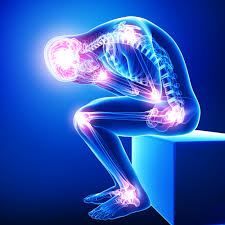
A person where “pain spots” are highlighted.
The joints, head, back, etc.

Lately, I have been having trouble with back pain and have always struggled with sporadic headaches and migraines at times. As I have been taking this course I have been paying more attention to how I feel in my body or, in this case, how I hide or joke about how I feel.

It Hurts So Good! Hot Sauce Review

It Hurts So Good! Hot Sauce Review

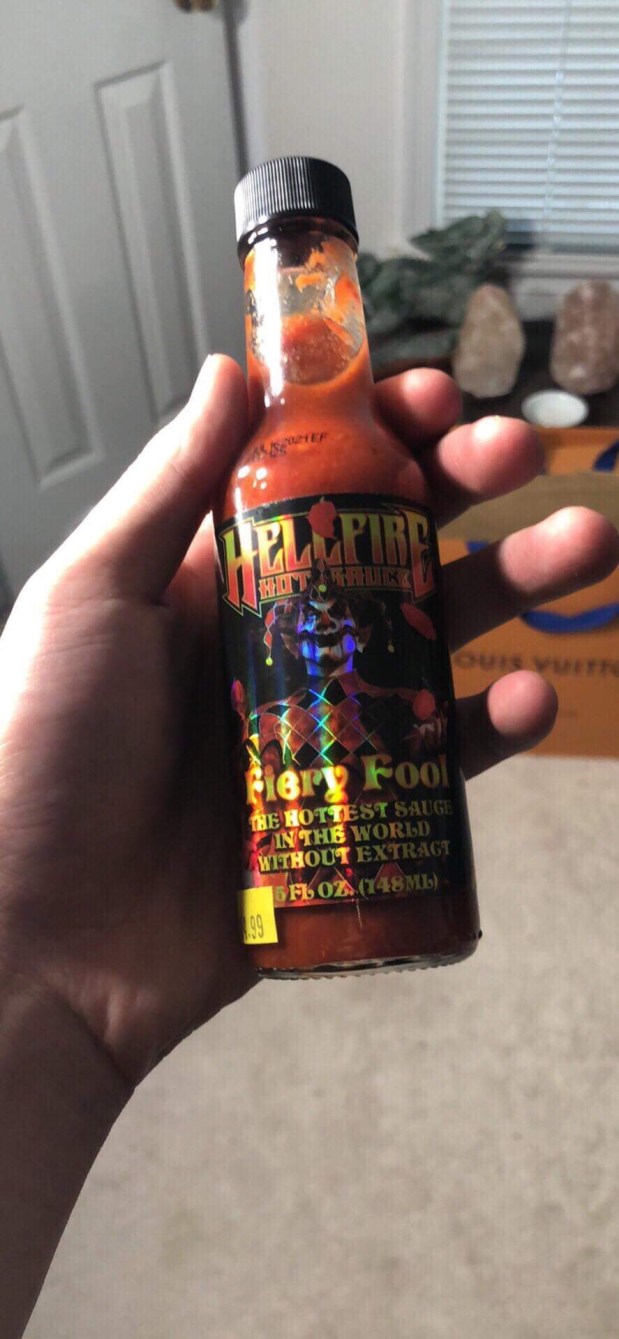
This past weekend, I was strolling through the mall when I saw a particular bottle of a menacing seeming liquid at some store that I can not now remember. The image upfront was a glittery yet jittery image of a clown that is smiling yet looks bloody and angry. His name was the “Fiery Fool”. And he was quite an interesting addition to the Hellfire Hot Sauce brand.

In an air of competitiveness, this brand claims that this was “THE HOTTEST SAUCE IN THE WORLD WITHOUT EXTRACT”! At first I brushed it off as more exaggerated marketing to the extreme but then I realized that I had just heard about this phenomenon in a recent Gender Studies class. I bought this at $14.99 but for the low low price of $14, you too can feel the pain.

And you better believe that you will feel the pain. In fact, after trying a few small drops, I was in agony. It was like eating liquid lava. And this is coming from somebody that normally puts half a bottle of regular hot sauce on anything. Was this an example of the “extreme culture” that Mary Kosut was talking about? I believe so. According to her analysis, “extreme bodies engage in practices and regimes that push beyond the mundane or acceptable”. Although this might seem tame in comparison to the examples she mentions such as body suspension, this fire sauce that burns you inside was definitely not mundane. And it was definitely not exactly societally acceptable either. Of the 5 friends I asked, none of them wanted to try it. Even just the labeling scared them away. Spicy foods and spiciness definitely can relate to her definition of extreme as challenging to “the body’s limits and borders”.

But why would anybody choose such a life of burning and crying? Kosut can answer. Extreme experiences, in her view, are “uniquely carnal and sensate”. They represent our feelings and maybe even our motivations “to take charge of one’s life and body, and to defy comfort zones”. There is pleasure in the struggle and the pain. On a more scientifical level, research has shown that spicy foods elicit the release of dopamine and endorphins, making us happier even when the pain seems unbearable, confirming this as true. Personally, even though I felt like I was going to die, it was a good type of pain. I might have died but I felt like I achieved something by taking the sauce and I could die happily…

In my view and in the view of Kosut, there is a reason why these extreme products are so highly marketable in an extreme kind of way. “They purport to offer an embodied experience that involves intense engagement of the senses that is beyond ordinary.” After experiencing this hot sauce, as it really was an experience, I know that that is the kind of experience I would pay for. This hot sauce appeals to society in this way and it doesn’t bluff.

I would urge anyone to try this hot sauce. If you would like to try some, you could ask me as well!!!

On Pain Meds and Brain Meds

I get the impression that most people don’t put much thought into over the counter medication. Other than the warnings on the bottle about not taking more than a certain number in a certain amount of time, these drugs are considered “safe”. You take them when you have a symptom to relieve, you stop when it goes away. It wasn’t until I started taking prescription medication for my mental illness that I realized how much I take OTC meds for granted.

When I first started taking medication one of my friends looked up as much information on my meds as he could find. One of the things he looked for is other things I could and could not take at the same time. And one of the things on the no-no list was NSAIDs.

Continue reading

Number 1 excitement

I struggle to type (I’m a great typist, 88 wpm, not to brag or anything) that I suffer from chronic illness.  I have an idiopathic immune system “issue” that makes my body more susceptible to bacterial/viral infections.  Despite being more wordy, for whatever reason, that’s a lot easier for me to type.  So basically, I get sick. A lot.

Continue reading

I was invisible, but I am not that girl anymore

I have to write once more for this blog for my grade. I’m highly motivated by grades, so despite feeling as though I have nothing to say, here I am, typing. I thought maybe I’d write about how we adjust to our unique bodily abnormalities (I don’t love this word, but I’m at a loss for another). I thought about sharing my husband’s experience of processing the bodies of fallen soldiers in Iraq and Afghanistan, the forced emotional detachment he took on as body after body found its way on a table before him, waiting to be readied to head home in a plain wooden box, back to the states and no doubt a family that would never recover their loss. I thought about sharing the moment my friend, whose son died an hour after birth, told me she can’t bear to hold sleeping babies because it feels too much like holding a dead baby, and how that statement, so matter-of-fact for her, knocked the wind out of me and ripped a hole in my heart for her, right beside the one that grew as her belly swelled with the baby we both knew wouldn’t survive. Somehow, none of these felt like things I wanted to share. And as I stared at the screen, thinking, “I have nothing to say,” I recalled (with the help of some online diary entries) a time in my life when I had the reverse problem: so, so much to say, and no one to listen. And I knew. Despite how very little (very, very little) I want to share this story about myself, I need to. I owe it to my own slow recovery, the future of my children, and the potential readers who’ve maybe been here too. So, here we go.

*Deep breath* *Deep breath*

I don’t generally ascribe labels to myself (they are relentlessly negative), but most people who know feel comfortable placing “emotional” over my picture. It’s a fair assessment. As long as I can remember, I’ve been an emotional girl/woman. I cry a lot, sometimes for justified reasons (see above), sometimes because I’m easily overwhelmed by emotions. I hurt a lot, and for me, emotional pain is easily manifested physically. In times I’ve had my heart broken, I have felt an ache in my chest that made it hard to breathe. It is this essential truth about me that led me down the path of self-injury. And this truth that kept me under its weight for over 10 years. If you need a trigger warning, consider yourself warned. There won’t be images, but this will probably hurt.  Continue reading

The limits of pain; the creation of a unique desire

My back hurts. Every day, all the time. For the last five or so years, I have shifted in my seat every few seconds, taken the elevator to the second floor. I have declined invitations to go hiking or biking, trips I normally would have jumped at the opportunity to participate in. Sitting and standing and lying down are mostly unbearable, which really sucks, because those are pretty much the basic three positions my body can be in.

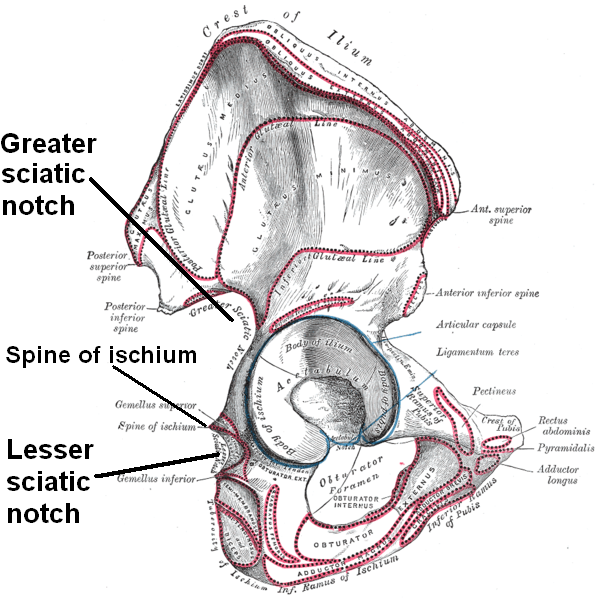
Sciatic_notches

Ouch.

Continue reading