When Will the Ouroboros Run Out of Body-Length to Eat?

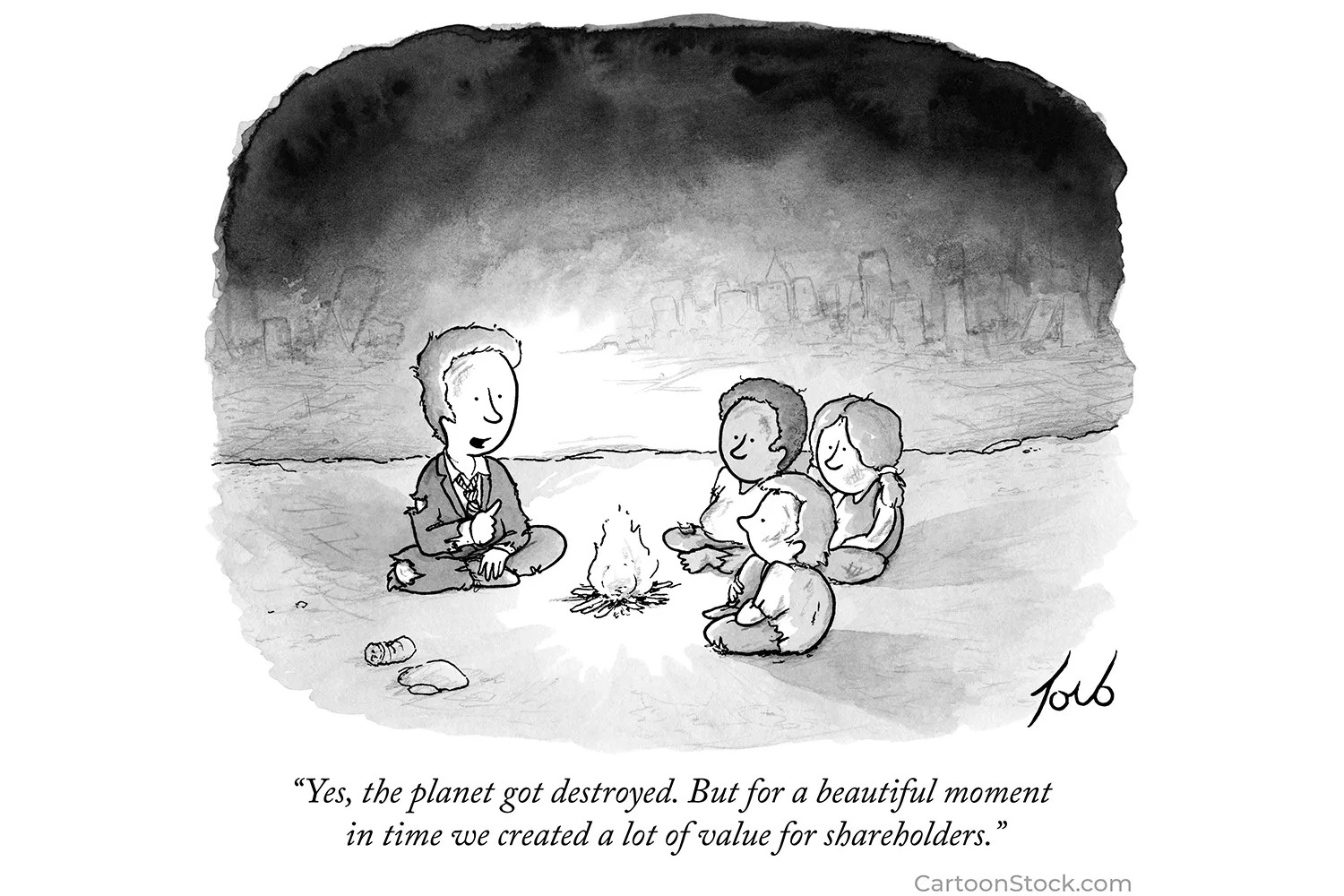
Our system postures itself as a beneficial ouroboros; one is led to believe in the presence of infinite resources fit for infinite consumption, yet one can look beyond this façade and see that individuals who rank power and profit above all else have been devouring those deemed unimportant or undesirable. Within the false notion of never-ending resources, one can see a paradox in which abundant resources suddenly become scarce when those outside of a particular group request them. It has been declared that our society cannot have free healthcare, clean air, timely cures for devastating conditions, affordable housing, public health measures, food for hungry children, or the absence of war because it is too expensive or difficult.

Beyond this excuse, one can see that the most likely reason for withholding and denying is that many of these protestors’ demands would not generate sufficient profit for the right companies, nor would the outcomes conform to the prejudiced worldview that has kept the systemic divide alive and well for centuries. As such, numerous causes do not receive attention until a problem becomes so impossible to ignore, so popular, that one may wring profit and control out of it. We produce reusable straws at the detriment of many disabled people, greenwash products made by grossly underpaid workers, and tout ‘personal carbon footprints’ in an unwalkable society, yet the majority of polluters are allowed to continue.

How loud must one be in order to be heard by those in a nearly soundproof box? How visible to be seen through the frosted glass wall that surrounds us? There is a highway barrier between the suffering and the indifferent, built by those who seek profit and power. Even in the places where this barrier crumbles, one is conditioned, either through excess exposure that rots one’s ability to fully see the magnitude of it all or dismissive falsities meant to cloud one’s perception, to see one’s suffering and look away. Those in the figuratively often-less-dangerous slow lane are told that those stuck in the fast lane are to blame for the highway, for its traffic and danger, forgetting that we are all trying to safely reach the same destination while those who built this system fly overhead.

A Modicum of Power, Respect, and Autonomy

Within the strictly imposed, purposeful, and artificially manufactured hierarchy of our society, the term ‘power’ consists of numerous meanings. The first definition that most think of is how, in many settings, power is about dominance, control, authority, and oppression. It is a matter of commanding people how to act, what to look like, and where to place one’s body. This is presumably the type of power that most incites the oppressor or the privileged to fear any semblance of gain from oppressed groups, as one’s acquisition of power is identified as something that only happens at the detriment of another’s. It is as though some are terrified that they will be unable to impart shame, terror, disdain, or indifference if those they subject to such tools of oppression and control have enough power to refute their efforts. When someone places themselves wherever they choose, exists in a body that defies social norms, or performs actions that are implicitly or explicitly forbidden without politely carrying the emotional or cognitive burdens for others’ comfort, the power dynamic experiences a significant shift.

Perhaps this view of power, as if it is a finite resource, is why our society so carefully enforces arbitrary rules and prioritizes those who can embody them. One can see this when Roxanne Gay is shouted at by a stranger who feels entitled to comment on her body, when civil rights protesters are subjected to horrific violence for challenging atrocious laws and attitudes, when the demands of disabled protestors to attend the activities of everyday life are ignored, and when incarcerated people are forced into appalling conditions. The same message applies: if we cannot control every aspect of your physical being, we will at least attempt to control our view or knowledge of your presence. 

In parallel, power can be regained by the supposedly powerless in many ways, such as when one reclaims one’s autonomy and refuses to accept, either internally or externally, the disrespect one has been bestowed. What is power, if not the presence of respect? What is power, if not autonomy over oneself, and even over others? Power is in the ability to go on with one’s day without being harassed and criticized; it is in the circumstances that allow one to move about the world freely, without social or physical barriers; and it is wholly anchored in the presumedly simple concept of peacefully living one’s life however one chooses. Why should one not have the opportunity and ability to determine one’s own life as much as possible in one’s circumstances, with as few barriers as possible? One should further ask oneself, why is seeking oppressive power over others normative and incentivized, yet the simple request of wanting to be seen and treated as human is consistently dismissed as grossly idealistic?

Stillness and Solace

Stillness and Solace

Victor Frankenstein’s monster stands before the fellow traveller, towering above them.

Read more: Stillness and Solace

“I am an unfortunate and deserted creature, I look around and I have no relation or friend upon earth. These amiable people to whom I go have never seen me and know little of me. I am full of fears, for if I fail there, I am an outcast in the world for ever” (Shelley).  The monster does not look at his new acquaintance when he speaks; his eyes remain on the looming glaciers around them, glowing in the moonlight. His words, which linger heavily in the chilled air like their warm breath, are met with silence. The traveller peers at the figure next to them: “flesh torn apart and sewn together again in a shape other than that in which (he) was born” (Stryker). Each carefully selected piece of skin and bone fits together to form a uniquely beautiful, abstract puzzle. They had only just met, and yet, each stitch woven into the bodies of the traveller and the creature was spooled from the same thread- a rope of pain caused from society’s purposeful ostracism.

Finally, the traveller interrupts the comfortable, contemplative stillness. 

“Like (you), I am too often perceived as less than fully human due to the means of my embodiment; …my exclusion from human community fuels a deep and abiding rage that I, like (you), direct against the conditions in which I must struggle to exist” (Stryker). 

The monster did not have the chance to respond, and the traveller would never hear his response, both robbed of the conversation and solace.

Victor Frankenstein shot his creation- once in the head and once in the heart- leaving the traveller alone again.

Beyond Labels

Label the foundation of modern society. Why is labeling yourself or someone so important? Why does it matter so much to someone what my gender or sexuality is? I never really thought about this until recently and the more I think about it the more I question everything. When I was young, I always assumed I was a girl and straight but as I got older and learned more about myself, I learned that no I am not. I learned more about myself. I would describe myself as gender fluid, pansexual and asexual. At the same time labels are not that important to me when come to gender personally but as for sexuality it matter more because I have been with a man for a few years and because of this many people assume I am straight when I tell them I’m pan they seemed confused why I be with a man this irritates me internally because it make me feel like I am not a part of the LGBTQ+ community this way of thinking I have faced more by those in the community then thoughts outside of the community.

Until I started back at college in fall of 2023 when I met the amazing group of people I love dearly I always felt like an outsider I did not feel wanted in the LGBTQ+ community nor the straight people community I felt like I was just drifting in space in a way, this not feeling like I belong the more I go to therapy and work on myself the ,ore I realized this sense of not belonging truly affected me. In the book nonbinary I relate with many of the stories although myself am not nonbinary the questioning of faith and the not feeling like I belong and the questioning of why labeling matters so much. No matter if you feel labels are important to you personally or not, I think things like this should be spoken about more in society, so people like me and many others know they are not alone and feel like they belong somewhere in this strange world we live in.

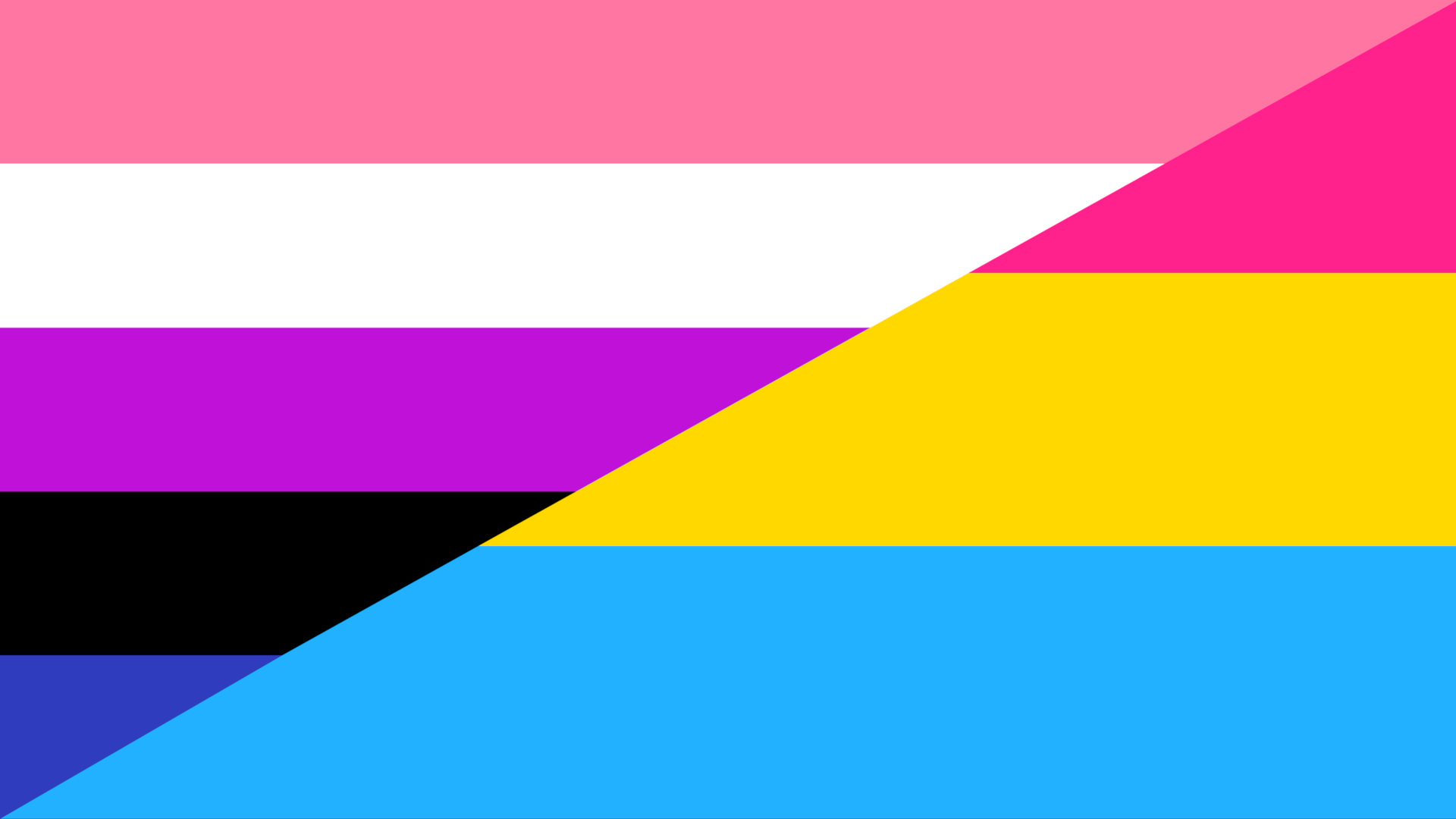
Pansexual and Genderfluid flag.
Let me make my silly little choices, and you can make yours.

Let me make my silly little choices, and you can make yours.

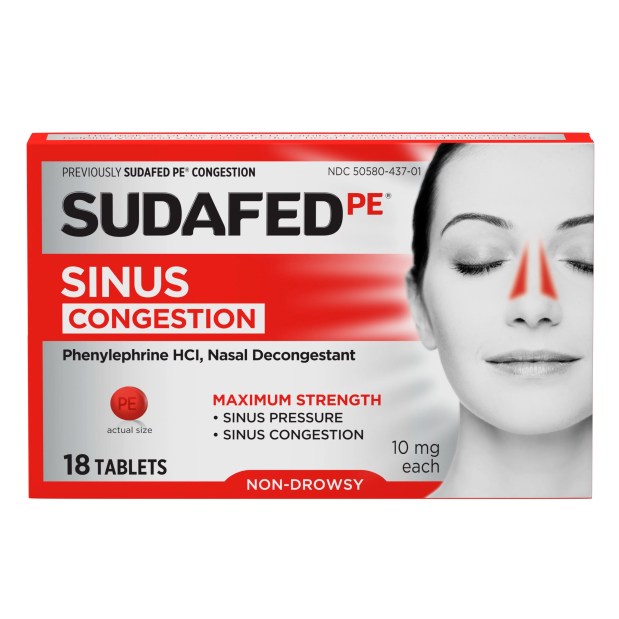
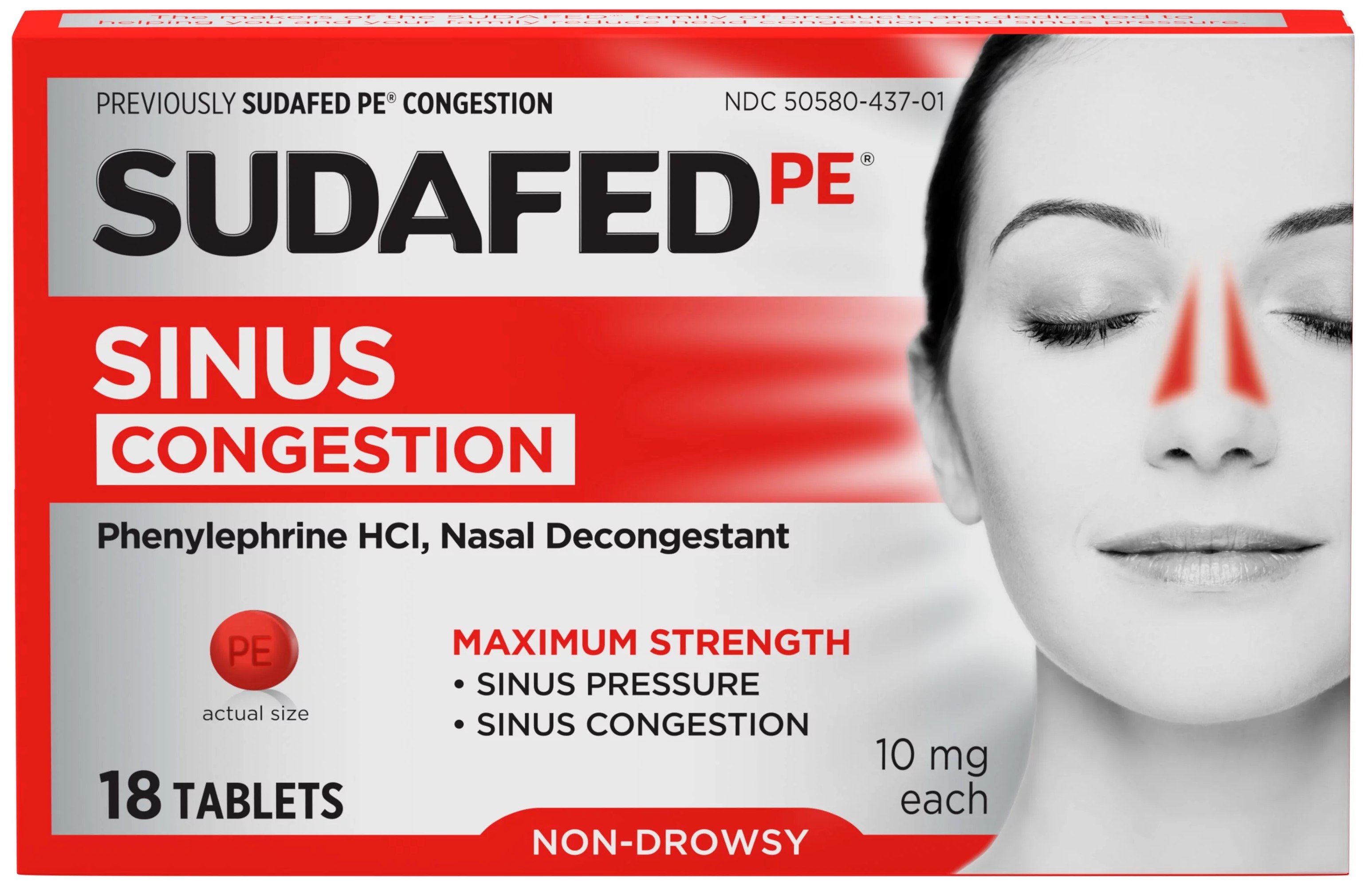
Front cover of the Sudafed PE OTC box.

Recently, an FDA panel announced that Sudafed PE and other decongestants are, essentially, ineffective. Since this announcement, I’ve seen countless articles pop up on my Google News feed about removing Sudafed PE, Mucinex, and Benadryl from the shelves. The argument to remove the medicines is that we shouldn’t be selling ineffective products–but are they really ineffective? An argument can be made that these are exceptionally effective placebos (sugar pills/ineffective medicine).

The placebo effect is well documented; even when a patient knows they are taking a placebo, sometimes just taking a pill helps to trick the body into the desired effect. Bodies and minds are weird, and whatever works, works. Even if Sudafed and its relatives are little more than placebos, I think they should be allowed to stay on the shelves. After all, the placebo effect can reduce symptoms by up to 50%, and that’s more than enough to convince me.

For all the many ailments I have–visible and invisible, temporary and chronic–very few have effective and fast solutions. There is no Xanax for depression, no Zofran for migraines, but there is Sudafed for a stuffy nose. Maybe it’s silly to continue to take something that has been proven not to work, but I swear I feel my sinuses clear up minutes after taking Sudafed. It allows me to get a restful sleep instead of battling with the correct sleeping position that allows me to breathe.

With the lack of effective medications available for a variety of illnesses, I am frustrated by the attempt to remove existing medications instead of putting new ones on the market. While I am not necessarily a fan of being stuffed full of pills, I like having the hope that maybe there is an accessible medication out there that will work for me. When the number of approved medications is even further limited, frustrated and exhausted people like me turn to home remedies and endless concoctions of honey, sea salt, herbs, and usually get roped into the wellness industry once or twice.

If Sudafed doesn’t work for general populace, there is nothing I can do about it. But whether it’s the placebo effect at work or there really is some merit to Sudafed, let me decide how to spend my money. Taking Sudafed off the shelves leaves me one less remedy for a restful night–and when I’m combating so many other ailments for a moment of peace, this tiny relief is a huge victory for me. Leave the silly little pill on the silly little shelf and let me make my silly little choice; you are free to pass it in the aisle if you wish, but leave some for me.

The Downside of Bodily Capital & the Fight for Ownership

Just two days ago Emily Ratajkowski, a well known model, released an article about the complicated struggle of owning her own image. Simply put she brought to light the downsides of bodily capital, specifically as a current day model, and the complicated nature of seeing photographers and alike use her image for their own gain and without her knowledge.

Continue reading

What do I look like? Superhero vs. Monster

My mind was wandering the other day, as it usually does, about what the difference is between why a hero is accepted for their differences and why a freak/monster/alien/other is not. It came from reading a research article by Susan Stryker titled “My Words to Victor Frankenstein Above The Village of Chamounix.” Stryker raises points about the negative social implications expressed toward people who have a different gender identity that is not their assigned-at-birth identity. Stryker likens society’s feelings about it to how the Frankenstein “monster” was treated. Continue reading

The Resting Bitch Face

The Resting Bitch Face

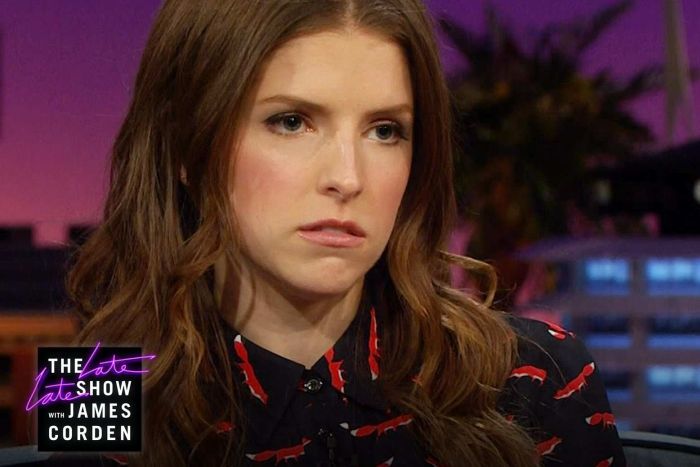
akIn a poem titled “Ode to My Bitch Face” Olivia Gatwood theorizes about some reasons why women have resting bitch face or R.B.F. She says that some are born with it, to some it is a defense mechanism they put up every day, and to some it is a “safe zone.” The resting bitch face according to Urban Dictionary is “a person, usually a girl, who naturally looks mean when her face is expressionless, without meaning to” and “A bitchy alternative to the usual blank look most people have. This is a condition affecting the facial muscles, suffered by millions of women worldwide. People suffering from bitchy resting face (BRF) have the tendency look hostile and/or judgmental at rest.” Continue reading

What if Videogames are Hell?

While wandering through the internet recently, I discovered a Youtube series called Epic NPC Man. In this series, the main character is an NPC (Non-Player Character) and we are seeing things that are normal in a fantasy videogame, but from a different perspective. As I was watching this, the realization that this character is capable of independent thought and reflection was forced to do scripted things slowly dawned on me. As this happened, I began wondering if this was Hell?

Continue reading

A for effort?

My brother and I were driving to school on Friday last week and on the radio they were talking about Obesity. Obesity is a huge problem in the United States of America. More than one-third (35.7 percent) of adults are considered to be obese. More than 1 in 20 (6.3 percent) have extreme obesity. Almost 3 in 4 men (74 percent) are considered to be overweight or obese. These are just numbers and there is more to it than that. But we cannot ignore the amount of health problems that comes with obesity.

So apparently right now some companies are trying things out to reduce the level of obesity in America. I heard them talk on the radio about how companies are considering taxing and also reducing the sugar quantity in all these soft drinks or beverages, in order to get people not to buy it as much and also drop a couple of pounds.

In my opinion, while these sound like interesting methods to cut down the obesity level in America, I just don’t think they would really be effective. Like how much tax are you really going to be allowed to put on something like soda to get people who really want it not to buy it? Maybe reducing the sugar quantity might help, but I feel as though a lot of people might be angered by this.