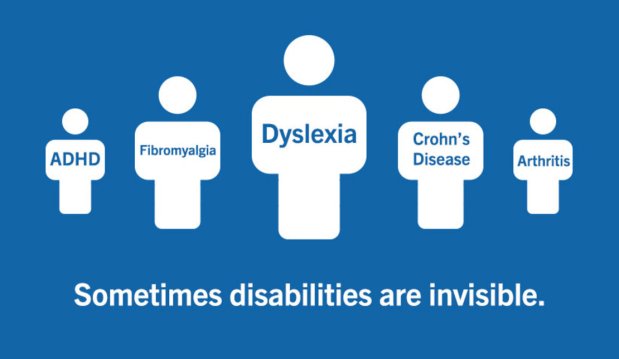
ng disabled in any contact in a non disability friendly society is hard. I would be classified as having a disability that is not visual. I have learning issues and was born with medical issues to the point of needing a liver transplant at the age of 2 and needing my spleen removed in 11th grade in 2013. This is not visible but due to these health issues I have always been behind my grade level. As for many if not all people who have any type of disability, people tend to give you “pity” or praise for doing the simplistic things. Although most times it is people trying to be nice it is dehumanizing and hurts/irritates me and many others. The documentary we watched is nice being able to have somewhere to go where you can be yourself since when you are disabled you are often not allowed to have the same things or experiences the same thing as a “normal” person. As for myself not having a visible disability I was not shield from these opportunities but at same time this is complicated because it was not as noticeable I was not offered the help I needed when I was young would never really get much help until I was in my late 20s when I had advocated for myself it even still I feel I am not completely diagnosed therefore do not get all the help I need but i have unfortunately accepted I will never be able to truly know what it like not to struggle so much intellectually, mentally or physically.
Even with my accepts of my situation I think it is important to unite together to change things for the better for the next generation, like how they did in the video the civil right activist and black panthers helped those in the disability rights movement because they both had a goal in common of wanting to be treated equal and treated like human bringing and not monsters who are less then.
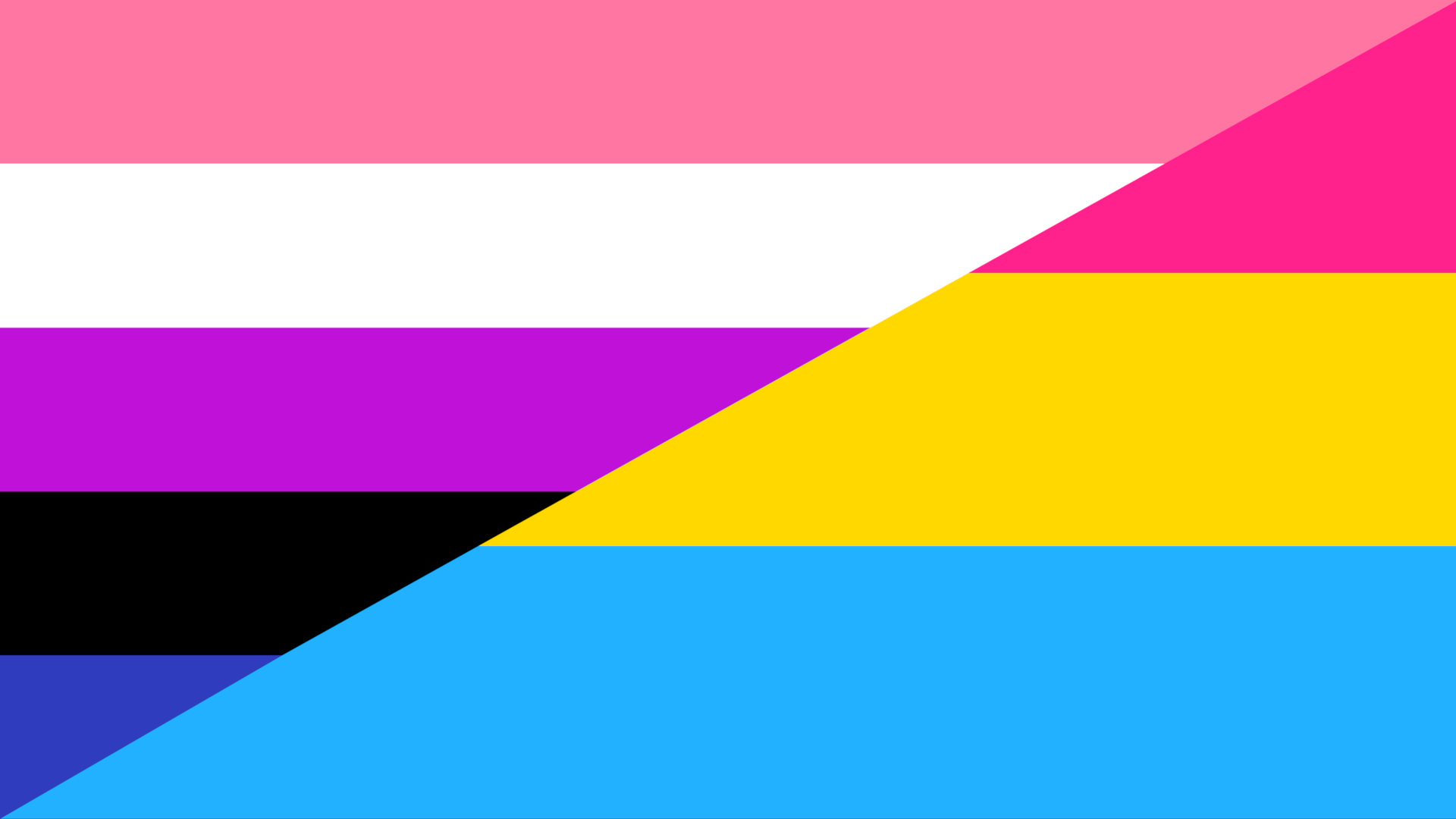
Label the foundation of modern society. Why is labeling yourself or someone so important? Why does it matter so much to someone what my gender or sexuality is? I never really thought about this until recently and the more I think about it the more I question everything. When I was young, I always assumed I was a girl and straight but as I got older and learned more about myself, I learned that no I am not. I learned more about myself. I would describe myself as gender fluid, pansexual and asexual. At the same time labels are not that important to me when come to gender personally but as for sexuality it matter more because I have been with a man for a few years and because of this many people assume I am straight when I tell them I’m pan they seemed confused why I be with a man this irritates me internally because it make me feel like I am not a part of the LGBTQ+ community this way of thinking I have faced more by those in the community then thoughts outside of the community.
Until I started back at college in fall of 2023 when I met the amazing group of people I love dearly I always felt like an outsider I did not feel wanted in the LGBTQ+ community nor the straight people community I felt like I was just drifting in space in a way, this not feeling like I belong the more I go to therapy and work on myself the ,ore I realized this sense of not belonging truly affected me. In the book nonbinary I relate with many of the stories although myself am not nonbinary the questioning of faith and the not feeling like I belong and the questioning of why labeling matters so much. No matter if you feel labels are important to you personally or not, I think things like this should be spoken about more in society, so people like me and many others know they are not alone and feel like they belong somewhere in this strange world we live in.
Have you ever scrolled online and see people confidently declaring their gender and sexuality like they’ve had it figured out since birth? “I’m nonbinary.” “I’m a lesbian.” “I’m pan.” Meanwhile, I’m sitting here wondering, why do I feel like nothing? This question has been bouncing around my head for a while now. But after reading Nonbinary: Memoirs of Gender and Identity, specifically Christopher Soto’s “What Growing Up Punk Taught Me About Being Gender Nonconforming” and Aubri Drake’s “Clothes make the Gender/Queer,” made me realize that maybe this feeling of nothingness isn’t emptiness, but simply uncertainty in a world that demands certainty from everyone.
Soto writes, “I tell my friend who still presents outside the binary that I want to be alive. I want to live. And so this is my gender: a desire to live.” That line hit me like a ton of bricks. For me, identifying as a woman has always been about survival. It’s safer, easier, less questioned. I don’t have to explain myself or fear someone reacting violently because I don’t fit their idea of what a woman “should” be. Soto ties their fear to capitalism and violence because the way safety, livelihood, and even love feel like privileges granted to those who conform. Sometimes I wonder if I’d feel freer to explore my gender if the world wasn’t punishing those who step outside the binary.
Growing up, everyone labeled me a “lesbian” before I could even figure it out on my own. I was the tomboy wearing my dad’s clothes, obsessed with comic books instead of makeup. My mom used to tell me to “act like a lady,” for simply sitting in my own home with my legs open. Then puberty hit, and suddenly I had curves I didn’t ask for. Aubri Drake’s words that “clothes started clinging to my body in all the wrong places… they stopped being a form of expression and instead became material to hide in”described exactly how I felt. I started hiding under oversized clothes because my body no longer felt like mine, but a spectacle for others.
For years, I bounced between labels from bi, lesbian, pan, and now to queer. Each one feeling right for a second and wrong the next. I even dated men exclusively at one point just to prove something, though my attraction to women has always been stronger. Every time I picked a label, I felt like a fraud and that everyone knew I was out of place.
When it comes to gender, being called “masculine” or “feminine” makes me physically recoil. I don’t feel like either. I identify as a woman because it’s practical since it’s what fits easiest in the world’s boxes, but that’s never been the only reason. I’ve briefly thought about identifying as nonbinary, but fear always stops me: fear of losing cis privilege, fear of not being taken seriously, fear of violence. Like Soto, I get what it means to feel “illegitimate” just for wanting to live safely.
That’s why the label queer has been a relief. It’s flexible. It’s fluid. It lets me breathe. I don’t have to get a headache by searching for answers I don’t have yet. My gender and sexuality are personal, evolving, and maybe a little messy, but at the end of the day, that’s ok.
A few months ago, before reading these essays, I went down a rabbit hole on Reddit trying to understand why I felt “genderless.” I remember scrolling for hours through different threads from queer and neurodivergent people describing the same sense of in-betweenness I couldn’t name. One that stood out to me was called “Does anybody else feel genuinely genderless?” on r/NonBinary, more specifically this one quote:
“When I lean more towards masc or femme with my presentation that’s all I feel it is — a presentation. Or really what it actually is is society interpreting my presentation as gendered. Ultimately it’s still just me. I don’t feel more feminine when I wear skirts — but it’s perceived that way.”
When I lean more towards masc or femme with my presentation that’s all I feel it is — a presentation. Or really what it actually is is society interpreting my presentation as gendered. Ultimately it’s still just me. I don’t feel more feminine when I wear skirts — but it’s perceived that way.”
That line felt like someone cracked my brain open and wrote down my thoughts. It echoed everything Soto and Drake described; that gender can feel more like a performance that others interpret than a truth you embody. Re-reading that thread and other ones I mindlessly scrolled actually helped me realize I wasn’t broken for feeling detached from gender. I was just tired of performing one.
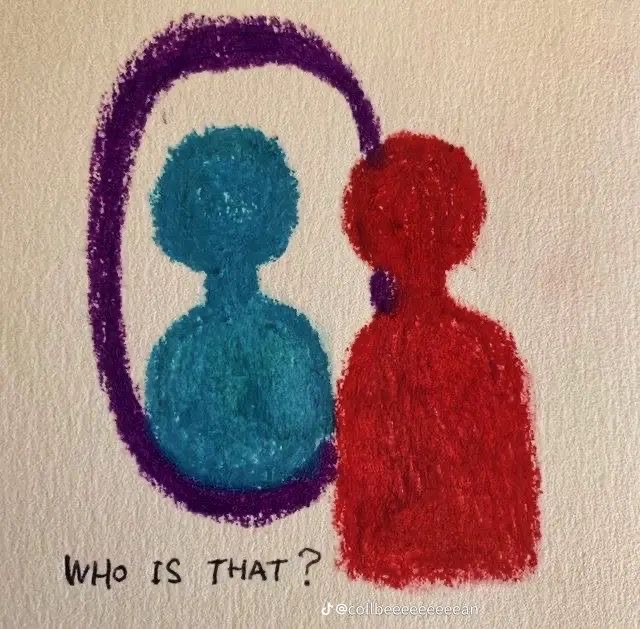
I still feel like “nothing,” but I don’t see that as a bad thing anymore. That nothingness feels like freedom; free to move, question, and change without being boxed in. Reading these essays made me realize I’m not alone in that uncertainty. There’s comfort in knowing gender and sexuality don’t have to be solved; they can just evolve. Maybe “nothing” is true freedom. Maybe my gender isn’t nothing — maybe it’s just mine.
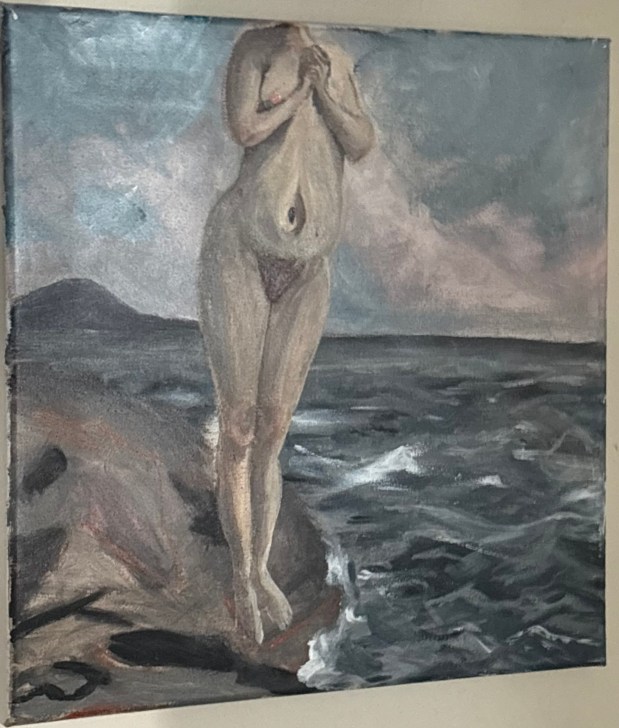
To be a muse is to be worthy. To be a muse is to be beautiful and talented, chosen and seen. To be a muse is to be exhilarated and exhausted, honored and objectified, proud and pornified. There cannot be one state of being without the other, so long as there is one being to perceive and one being to be perceived.
In some societies, perhaps, it is possible for a muse to exist without the constant fear and awareness of their own and another’s presence. In patriarchal and sexist cultures, however, the muse faces an internal and external threat of surveillance, and therefore sexualization. “(Patriarchal and sexist) society defines woman as object, as a mere body, and… are in fact frequently regarded by others as objects and mere bodies” (Young, I. “Throwing Like a Girl: A Phenomenology of Feminine Body Comportment Motility and Spatiality,” p. 153-154). For feminine muses, they “learn to live out (their) existence in accordance with the definition that patriarchal culture assigns to (them, and) are physically inhibited, confined, positioned, and objectified” (152). The definition becomes internalized, which then manipulates and forces women into being more feminine- more submissive, docile, small, quiet. “Women often approach a physical engagement with things with timidity, uncertainty, and hesitancy… (They) lack an entire trust in (their) bodies to carry (them to their) aims. There is… a double hesitation here. On the one hand, (women) lack confidence that (they) have the capacity to do what must be done… The other side of this tentativeness is… a fear of getting hurt… (They) often experience (their) bodies as a fragile encumbrance, rather than the medium for the enactment of (their) aims” (143-144). The subordination of feminine beings is at the root of patriarchy, and it grows as more minds and bodies accept the notion that feminine and masculine categories cannot intermingle. The stronger the patriarchy becomes, the more ‘natural’ it seems that feminine bodies are weaker than masculine bodies. In reality, women “have more of a tendency than men to greatly underestimate our bodily capacity,” as well as the relentless pressure of being perceived as a muse, which results in under-performance.
As a cisgender woman, I’ve grown up aware that my body fits the societal norms laid out for me. From an early age, I was taught that my body should look and act a certain way, especially in sports. While I’ve had access to opportunities and acceptance in athletic spaces, I’ve come to understand that this isn’t the reality for everyone. Transgender athletes—especially transgender women—face barriers that often seem impossible to overcome.
In the article, “Beyond Physiology: Embodied Experience, Embodied Advantage,” Torres et al. delve into the challenges transgender athletes face. They show how discussions about their participation in sports are often reduced to debates about physiology, particularly for transgender women. These athletes are often subjected to scrutiny about their bodies, which overshadows their identities. The article highlights not only the social and political hurdles they encounter but also the privilege cisgender athletes like myself often take for granted.
Reflecting on my own experience as a cisgender woman in athletics, I realize how much privilege I carry. My body is rarely questioned or scrutinized in sports; it is accepted without hesitation. I’ve been able to compete without worrying about being excluded or misgendered. In contrast, transgender women often have to fight for the right to compete—against opponents and, more often, against institutions that marginalize them.
This constant fight can take a toll, and creates mental and emotional barriers. It’s not a question of whether they can succeed in sports but whether they’ll even be allowed to try. Recognizing my privilege as someone whose body aligns with societal expectations reminds me of the need to advocate for more inclusive spaces in sports, where everyone has a chance to thrive without fear or discrimination.
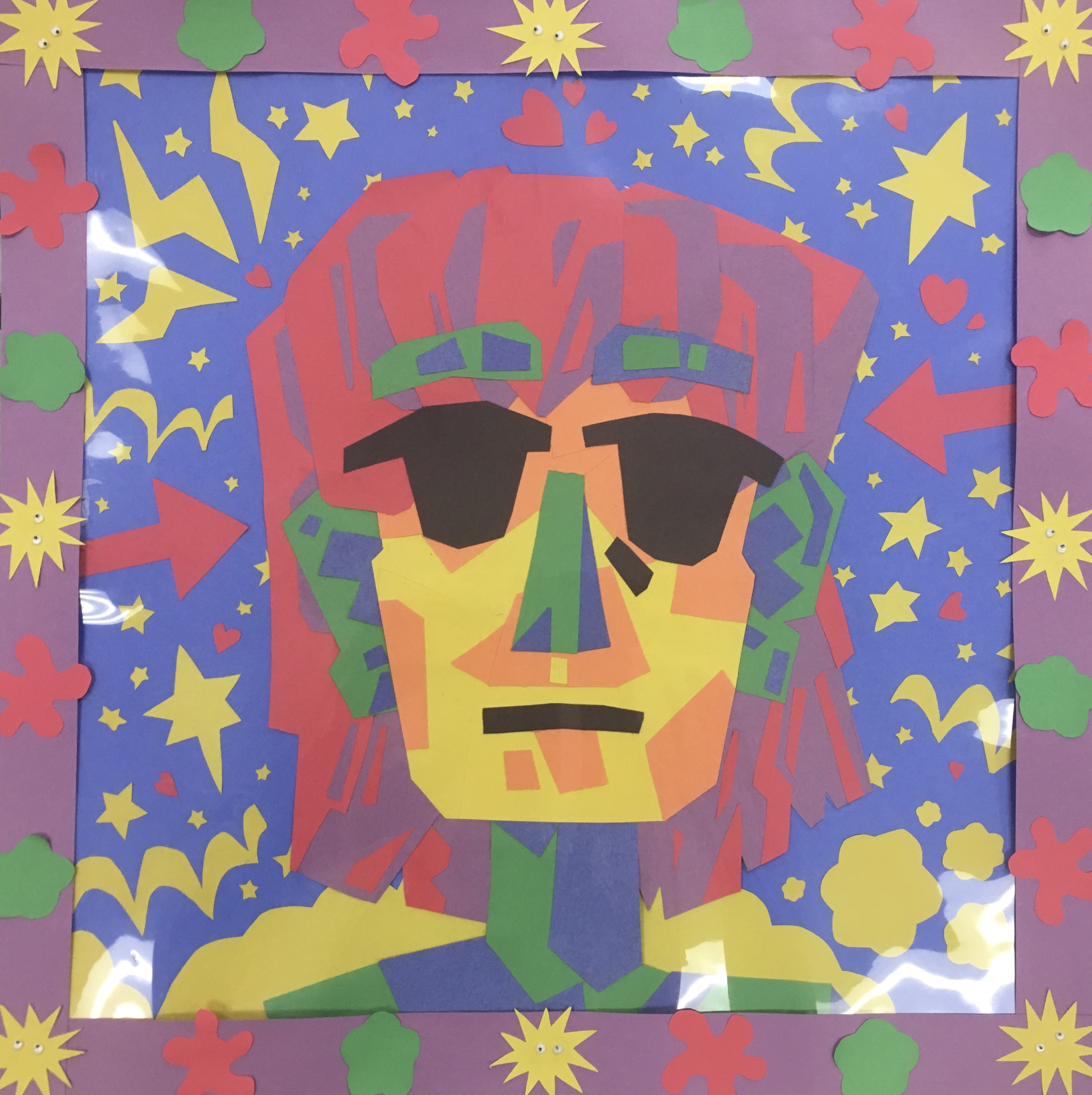
(“SHAPES AND COLORS,” a colorful, self-portrait stylized construction paper collage piece I created centered around masking.)
Growing up it was incredibly obvious I was on the autism spectrum. I was very rule-following and smart at school, getting described as “demonstrative” by preschool teachers (who calls a four year old that word?), but was very sensitive about minor things like the texture of lotion or potatoes or certain fabrics, or toys being organized differently from the way I wanted them, or frustration with not being correctly understood. While no diagnosis is the same, these are signs of being on the spectrum, and at three years old when my mom talked to a friend who was a psychologist she posited that I might be autistic.
But when I went to get evaluated, four year old me was denied an official autism diagnosis. Then I was denied again at age seven, and instead put under the label of Sensory Processing Disorder. I finally got the Autism Spectrum Disorder diagnosis at age 12 (a year after also getting diagnosed with anxiety and depression). I also found out that in the years before the DSM-5, I was on the part of the spectrum that would have been denoted Asperger’s Syndrome, but luckily I got the diagnosis too late to become attached to that term and was educated of its problematic origins.
Looking back on my history of diagnoses, I always wondered why despite it being obvious with all my quirks growing up I was over and over again refused a clear answer. But learning about gender and disability studies/justice in the last couple years, it has become apparent why: I grew up a girl.
I was very lucky to have the privilege of parents that let me express myself whatever way I wanted as a kid, and I did exactly that in my special interest of dinosaurs, which were gendered as a “boy” thing. But I realize that I was still unable to escape the social part of socialization: Specifically, the experience of girlhood (as I have understood from mine and others) that involved making yourself and your problems smaller, while boys around the same age were allowed to be loud and take up space.
This difference was especially present when looking at the differences between ways that autistic cisgender boys expressed their traits without much dramatic behavioral intervention or judgement from other kids, such as verbal or physical expressions of stimulation. Meanwhile, if a young girl was perceived to be “different” in the way they behaved, they faced more bullying and ostracizing than boys might. So as I grew up into the American school system as a girl, I learned that I would face more unspoken social consequence for expressing my traits, and thus felt more pressured to mask. And as these traits went unexpressed, from classrooms to doctor’s offices, they too went undiagnosed.
Finding out that this experience I had growing up was validated through the study of how disability is embodied differently across genders and social standards (as Shakespeare implies, there is no accurate one-size-fits-all model of disability), I felt quite vindicated honestly. Even after transitioning and finding community with other transgender autistic people, I can still see this difference in how traits are expressed due to assigned-at-birth-gender socialization. I worry that I may seem annoying at times for making this intersection of my identities my “personality,” but with how much I’ve come to terms with how it has affected my entire life I cannot really deny its stake in the person I’ve grown up to be.
Last semester in my Theories of Feminism class I read “The Transfeminist Manifesto” by Emi Koyama. This text spoke out to me as a trans person, and it introduced me to Koyama’s additional work on disability, sex work and intersex advocacy that has greatly increased my knowledge of other parts of the field. However, one thing I noticed throughout the text was the focus specifically on trans women and minimal reference to the experiences of trans men, apart from a couple of paragraphs in the gender-based violence section along the lines of “trans men also have something like this problem, we should also advocate for them.” Koyama herself at the end of the paper points out that while she did have the intention of transfeminine focus due to a higher visibility of injustice within transfeminine experiences, there is more information she could have covered on trans men’s experiences, and invites the reader to think more on the topics she did not discuss (e.g. intersectional analysis, trans men).
I did some Google scholar and library archival research after reading this paper and found out there is indeed not very much overlapping scholarship on feminism and transmasculinity, specifically discussing how feminism applies to – and can be done by – transmasculine folk across the gender and sex spectrums. In response to this deficit I thought, “they should make a transmasculine feminism,” and then remembered that I am in fact someone who has a say in that!
What comes to mind (at least from my perspective) as an avenue to explore transmasculine feminism is the idea of recontextualizing our lived experiences from embodied “feminine,” non-hegemonic-male experiences that feminism applies to. Examples I’ve thought of include socialization growing up, the treatment of our sexed bodies in the medical sphere (spaces commonly designated as “women’s” care), and ongoing experiences with how we are treated based on the gender others perceive us as.
I admit that while some may be comfortable discussing the controversial point of socialization, not all transgender folk may be as willing to critically discuss their socialized experiences in their assigned gender growing up, which could be due to dysphoria that could come from this recollection. While there are perfectly valid reasons for avoiding exploring this vulnerable topic in depth, I would argue that in the process of developing my transmasculine feminist thought thinking about my own girlhood, my medical encounters with my own biology, and how I have been gendered based on appearance, I have become more in tune with how I live gender than I ever have before. This might just be me growing up, but I think embracing the gendered aspects of earlier parts of my life is genuinely so constructive to thinking on how I wish to improve as a person, and more relevantly, as a feminist and activist.
So, from thinking about Koyama’s call to action to include more transmasculine thought on feminism, my personal goal in my GWST academics is to formulate something along the lines of a “Transmasculine Feminist Manifesto.” It feels like a very big task to come up with a personal Big Word for an Academic Thing and then justify to Big Academia why you think that should be a Thing, so I am quite daunted by that, especially considering I’ve been experiencing some intense burnout and for whatever reason have been having more and more of a difficult time putting words to my thoughts. But in the case of arguing for this from an embodied, phenomenological perspective, I suddenly have a lot more faith in my words than I have before, and I am very excited to get into putting research together and synthesizing that with my own life as a transmasculine person.
This week, one of the works that resonated with me was Young’s Throwing Like A Girl, and I looked back on my childhood. The part about ‘yonder’, the space outside of a girl, hit something different than we touched on in class.
In my ASL lecture this week, we learned the sign for “signing” – a backward twirling of the fingers, sort of. It looks a lot like you’re winding yarn towards you. After our instructor demonstrated the sign and the class followed suit, he turned and wrote on the board.
gender differences woman male
He pointed to “male” and repeated the sign as he had signed it before: rapidly moving his fingers in clean circles, with his hands pointing directly at one another and his palms facing the floor. He then pointed to “woman” and began to sign a variation on this – he tilted his hands so that his fingers were in more of a triangle and angled his hands forward so his palms were facing the class. This time, rather than rolling his wrists to spin his hands, he moved his arms using his elbows. If the “male” sign was a gallop, this was a prance.
He paused and turned back to the board. He added “gay” following woman and “lesbian” following man –
gender differences woman/gay male/lesbian
– and repeated his demonstration, while shaking his head and implying “No, not me!” for the “woman/gay” sign and “See, this one!” for the “male/lesbian” one – he put women and gay men in the same bucket, and men and lesbians in another.
I wasn’t sure what to make of this – no other sign we’d learned had been gendered in any way. I’m still not entirely sure what he meant, it’s somewhat difficult to Google ASL questions – I’ll have to ask next week.
It reminded me, though, of the embodiment of “feminine” and “masculine” we discussed, and how they apply to queer people – as well as how that embodiment is perceived by others. It reminded me of how women are expected and conditioned to use their bodies, as opposed to men. The “woman” sign was dainty and cumbersome, the “male” sign was fluid and practical. I was very conscious of his reaction as well – how awful would it be if he used the “woman” version of “signing”? How humiliating.
In class, we were learning about experience, about phenomenology. I understood that with our experiences we add in our senses (taste, touch, sight, hearing). I was honestly stumped on what I could talk about. I know that I have many different experience as a woman. But then I started to think about a specific place that made me feel safe…
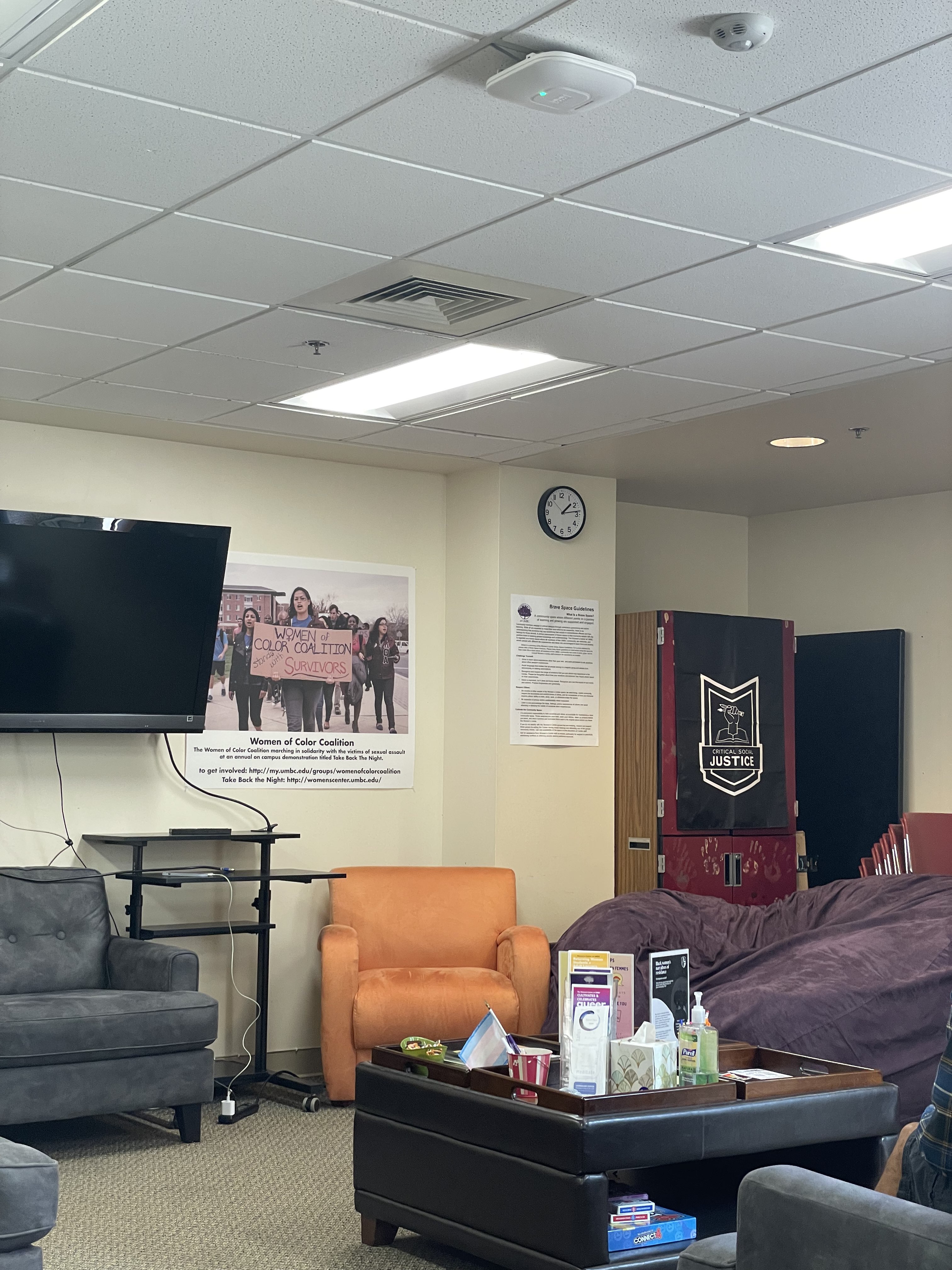
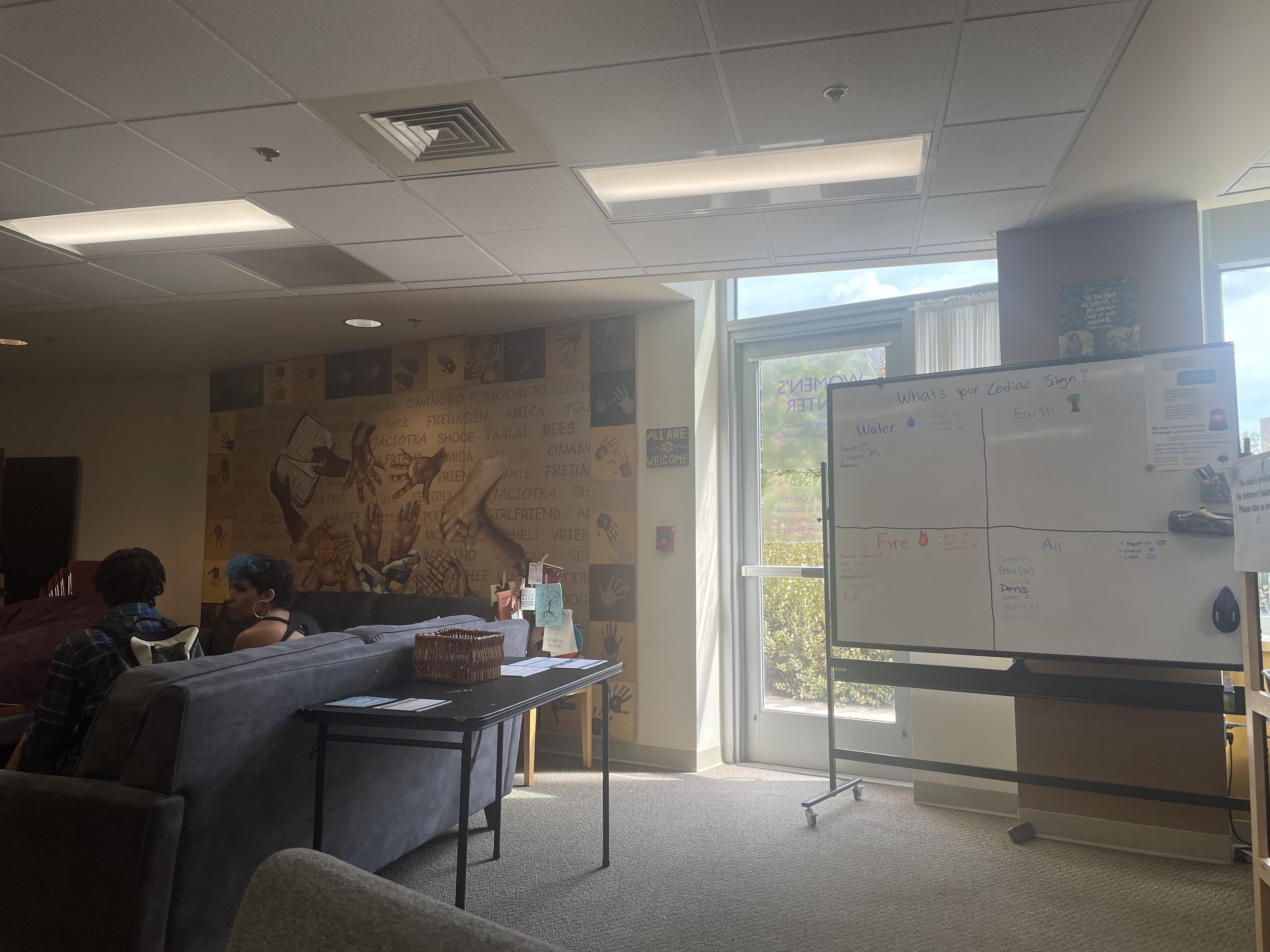
As a woman, I feel the constant stress of my body. But I’m not just any woman, I am a brown woman. The pressures of having to keep my grades up or being the perfect brown daughter who lives up to her parent’s expectations. Where would I go to decompress my feelings of doubt and anxiety? Where could I go to make the world go slow for a moment of peace and quiet? The Women’s Center. A home away from home. I can imagine the structure of the room as my safe space. You enter a room filled with posters of colorful affirmations, handouts of mental health awareness. Seeing the names and faces of those who work in the center makes it all that encompassing. I am always greeted with a welcoming smile by the wonderful staff who are ready to care for you. I see a prayer room for those who have no place to go, another for mothers to feed their children. I look to my right and see the many forms of aid. Did you get your period? Take a tampon or pad. As many as you need because your body, your UTERUS, is cared for in this center. Are you sexually active? Go ahead and take some condoms for protection because no one wants any STDs. Coziness is an understatement as you walk further into their center. The round table, to sit and do work or to relax while playing with a fidget toy from the fidget bowl. The hugging of many bookshelves enriched with stories of colored women, LGBTQ+ personas finding themselves, and in those books, a voice that comforts you. A “You are not alone” “You are accepted for who you are” here and there is what you’ll find. Towards the back of the room, soft couches for you to sit down and relax your aching womanly body. My curvy body type just melting away into the cushion, holding me and letting me rest. Are you hungry? Take a bag of chips from the food shelves. No one’s going to judge how you eat or how much. You won’t be judged for being a skinny to thick body type. Every woman is welcome here at the center. I was always scared to enter this environment not knowing that it was so peaceful.
Why didn’t I take the risk of pushing that door open my freshman year? Maybe it was the fear of other women judging me because they felt it was their own space. Was it was the unknown territory that frightened me to my core? Or my shyness because of the people who worked there could see me grabbing feminine products. But now, it has become my home, my safe place for the rest of my college experience. Of course there are other places I consider my home, sometimes it’s not even places. It’s people. My boyfriend is my home, my comfort. He makes me feel imperfectly perfect. But then I begin to wonder, What about men? Where are their safe places? Do they not have a safe space because it’s uncommon? I wonder these things when I walk into the center. Of course men are welcome inside the center, but maybe men are intimidated by the space. I feel like they are intimated by those bold lettered words above the entrance of the door. Maybe they feel like they would be judged for walking in and taking their own time to decompress. I started to think about the people I met in the center, the conversations I’ve had. There was one girl, I’ll call her M, she had Nigerian parents, we had a 20 minute conversation about the freedoms being a woman in college. We talked about relationships, how her parents wanted her to date her own ethnicity. She wished her parents allowed her to do anything. But just because she was a girl, she wasn’t able to go out, even past her driveway. I honestly am happy that I had parents who trusted me even though I was young developing woman in a very dangerous world. She too had came to the center to clear her head. That was the first time in a while that I had been confident enough to start a conversation with a stranger. But being in that environment helped me bring out my extroverted side. I also think it was just the fact that I am able to talk so comfortably to women. I would encourage any woman to go there for any needs they desire. Whether it be to get a tampon or pad, or a place to relax. I hope that anyone who reads this knows that there are places to go when you are feeling down to no energy. So don’t be shy, don’t be afraid to step into that center, you won’t regret it 🙂