When Will the Ouroboros Run Out of Body-Length to Eat?

Our system postures itself as a beneficial ouroboros; one is led to believe in the presence of infinite resources fit for infinite consumption, yet one can look beyond this façade and see that individuals who rank power and profit above all else have been devouring those deemed unimportant or undesirable. Within the false notion of never-ending resources, one can see a paradox in which abundant resources suddenly become scarce when those outside of a particular group request them. It has been declared that our society cannot have free healthcare, clean air, timely cures for devastating conditions, affordable housing, public health measures, food for hungry children, or the absence of war because it is too expensive or difficult.

Beyond this excuse, one can see that the most likely reason for withholding and denying is that many of these protestors’ demands would not generate sufficient profit for the right companies, nor would the outcomes conform to the prejudiced worldview that has kept the systemic divide alive and well for centuries. As such, numerous causes do not receive attention until a problem becomes so impossible to ignore, so popular, that one may wring profit and control out of it. We produce reusable straws at the detriment of many disabled people, greenwash products made by grossly underpaid workers, and tout ‘personal carbon footprints’ in an unwalkable society, yet the majority of polluters are allowed to continue.

How loud must one be in order to be heard by those in a nearly soundproof box? How visible to be seen through the frosted glass wall that surrounds us? There is a highway barrier between the suffering and the indifferent, built by those who seek profit and power. Even in the places where this barrier crumbles, one is conditioned, either through excess exposure that rots one’s ability to fully see the magnitude of it all or dismissive falsities meant to cloud one’s perception, to see one’s suffering and look away. Those in the figuratively often-less-dangerous slow lane are told that those stuck in the fast lane are to blame for the highway, for its traffic and danger, forgetting that we are all trying to safely reach the same destination while those who built this system fly overhead.

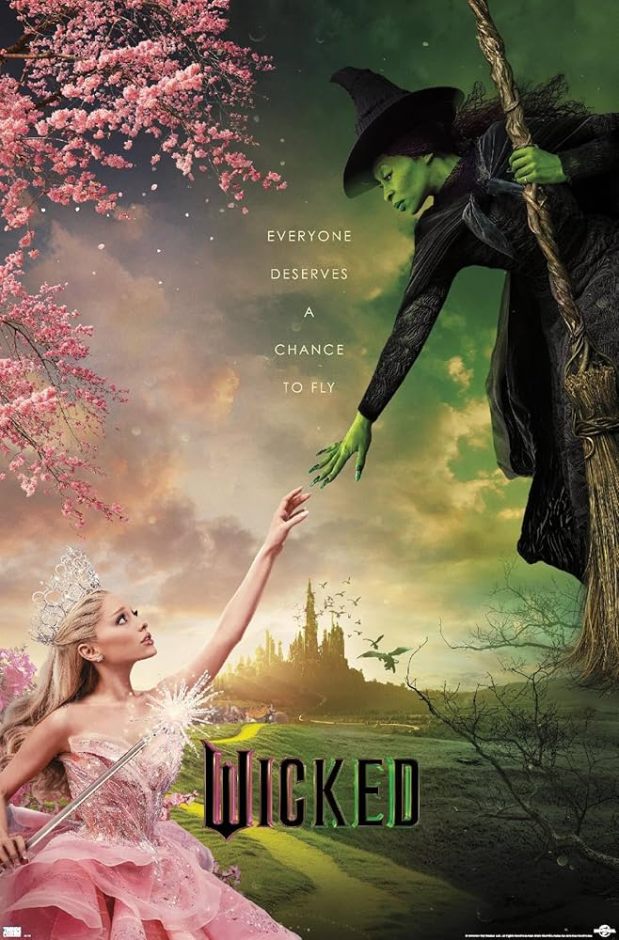
No One Mourns the Sick: The Wicked Myth That the Pandemic Is ‘Over’

No One Mourns the Sick: The Wicked Myth That the Pandemic Is ‘Over’

According to a recent Guardian article, “Both Grande and Cynthia Erivo tested positive for Covid during the filming of the first movie, temporarily delaying production. Erivo reportedly contracted the virus days before shooting the climactic first-act number Defying Gravity, while Grande tested positive before filming the song “Popular.”

There’s something horrifyingly Wicked-like about how illness is framed now. If someone masks, they’re “paranoid.” If they don’t appear for a photoshoot or premiere, fans complain. When someone gets COVID, the conversation is about wasted money on promotion, fan backlash over missed premieres, or travel delays , but  rarely about health, recovery, or the toll illness takes. The framing treats sickness as a hiccup, not as human suffering. It treats the sick body as a burden to the show, not as a person in need of care.

“Grande’s positive test was the latest hiccup for the full-court Wicked press blitz that has seen the cast hop continents by the day. Due to flight delays, Grande was unable to make the premiere in Brazil, triggering fan backlash she also addressed on her Instagram.”

That is exactly the kind of abled entitlement Mingus warns about: a culture that assumes certain bodies can and should be sacrificed for convenience. Under this logic, “the show must go on,” regardless of who gets hurt. The Wicked cast situation isn’t just celebrity news, but it’s a reflection of a larger societal pattern where health, disability, and our shared vulnerability are minimized, ignored, or erased entirely.

What’s even worse is how normalized this erasure has become. COVID has become “another thing,” something to power through so cameras and promotions stay on schedule. Workplaces expect people to show up sick. Students are told to push through fevers. Long-term effects are brushed off as “just fatigue.” Public health infrastructure? Largely forgotten. Masks, ventilation, testing are all optional. People who get sick frequently or live with chronic conditions are expected to adapt or be pushed aside.

Mingus doesn’t just name this as negligence, she instead frames it as violence. When we treat care as optional, when we prioritize productivity over people, when we mourn canceled premieres more than lost lives, we are making a statement about whose lives matter. We’re deciding who gets protection, who gets grief, and who doesn’t.

Is A Pandemic Ever Over?

When we think about a pandemic, our mind will often wander towards the state and federal declaration of a state of emergency. But if the disease is still around, why do we treat as if it’s over when the funding is pulled?

During the height of COVID, most took precautions. Not only for those who are abled, but especially for our loved ones who were most vulnerable. This can include those who are immunocompromised, those of older age, and people with chronic illnesses that would make it hard to overcome not only the symptoms of COVID, but their bodies’ ability to fight the disease. We saw people wearing masks, face coverings, and being extra aware of how close we are to others. From the height of the pandemic, we also started to really think about how diseases can spread and how to prevent the spread.

After all we have learned about slowing the spread of disease with technology, like vaccines, we are still willing to take a chance today. We found it crucial to protect the non-abled bodies, but once the government tells us that it is no longer a “current issue,” we should move past all those policies that were put in place to keep us safe. In reality, we can now understand that the government has no interest in equity in public health.

We see it in accessibility. We have our close-knit communities that gather with no care for those same people in their communities, who could face serious consequences if they were to be put into an environment where they could be exposed. In “You Are Not Entitled to Our Deaths: COVID, Abled Supremacy & Interdependence,” Mia Mingus highlights the stigma around basic safety measures that would help aid the entire public rather than just those of abled-bodies. I could even go on to connect this to those data centers being built that are exposing vulnerable communities to an excessive amount of pollutants that have already given some of the populations diseases like COPD. These populations have no means of just leaving that area to be safe. In the past, we have shed light on the importance of reducing the environmental pollutants for the greater good of public health, but still, governments still accept companies to build high-energy consuming data centers for financial and political gain just like in Memphis where Elon Musk’s data centers have been brought in.

I watched this video, “We Went to the Town Elon Musk Is Poisoning” about the Colossus by Elon Musk’s xAI a while back, and thought about the video during our class discussion when we talked about different communities with COVID that are impacted by the disregard for basic safety measures. Improving our environment has always been the talk, but in policy, we often times see our environment being pushed to the limit.

Let me make my silly little choices, and you can make yours.

Let me make my silly little choices, and you can make yours.

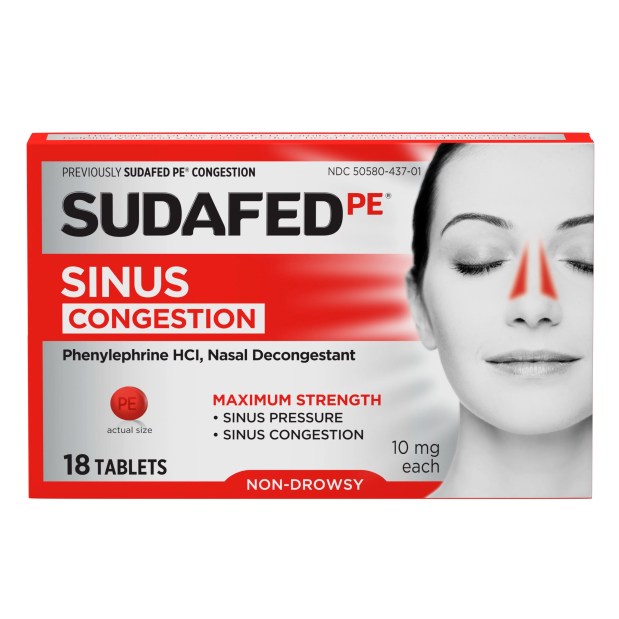
Front cover of the Sudafed PE OTC box.

Recently, an FDA panel announced that Sudafed PE and other decongestants are, essentially, ineffective. Since this announcement, I’ve seen countless articles pop up on my Google News feed about removing Sudafed PE, Mucinex, and Benadryl from the shelves. The argument to remove the medicines is that we shouldn’t be selling ineffective products–but are they really ineffective? An argument can be made that these are exceptionally effective placebos (sugar pills/ineffective medicine).

The placebo effect is well documented; even when a patient knows they are taking a placebo, sometimes just taking a pill helps to trick the body into the desired effect. Bodies and minds are weird, and whatever works, works. Even if Sudafed and its relatives are little more than placebos, I think they should be allowed to stay on the shelves. After all, the placebo effect can reduce symptoms by up to 50%, and that’s more than enough to convince me.

For all the many ailments I have–visible and invisible, temporary and chronic–very few have effective and fast solutions. There is no Xanax for depression, no Zofran for migraines, but there is Sudafed for a stuffy nose. Maybe it’s silly to continue to take something that has been proven not to work, but I swear I feel my sinuses clear up minutes after taking Sudafed. It allows me to get a restful sleep instead of battling with the correct sleeping position that allows me to breathe.

With the lack of effective medications available for a variety of illnesses, I am frustrated by the attempt to remove existing medications instead of putting new ones on the market. While I am not necessarily a fan of being stuffed full of pills, I like having the hope that maybe there is an accessible medication out there that will work for me. When the number of approved medications is even further limited, frustrated and exhausted people like me turn to home remedies and endless concoctions of honey, sea salt, herbs, and usually get roped into the wellness industry once or twice.

If Sudafed doesn’t work for general populace, there is nothing I can do about it. But whether it’s the placebo effect at work or there really is some merit to Sudafed, let me decide how to spend my money. Taking Sudafed off the shelves leaves me one less remedy for a restful night–and when I’m combating so many other ailments for a moment of peace, this tiny relief is a huge victory for me. Leave the silly little pill on the silly little shelf and let me make my silly little choice; you are free to pass it in the aisle if you wish, but leave some for me.

What about the “right-to-live?”

I remember when Jahi McMath died—for the second time. 

Senior year of high school, I came across an article about Jahi McMath, a 13-year-old Black girl who was declared brain dead after her tonsils were removed. It was Jahi’s first surgery, and she was scared. She didn’t want to go through with it, but her mom convinced her it would make her life easier (Jahi had sleep apnea, and removing her enlarged tonsils was intended to help). After speaking with the doctor, Jahi consented to the surgery, and she was fine for about an hour afterwards.

Jahi’s blood vessels were unusually close to the surface of her throat; the doctor had noted this in his chart for her, but the post-op staff was unaware. So when Jahi started coughing up blood, they didn’t see it as the alarm that it was, although Jahi’s family did. They repeatedly raised the alarms for her, but no one listened until her heart stopped.

Jahi was declared brain dead; her brain had stopped functioning due to the massive blood loss. In California, brain death is legal death. But Jahi’s family didn’t accept that. Her mother, Nailah, was convinced Jahi was still alive; Jahi responded to some stimuli and questions. Nailah asked Jahi if she wanted to be taken off life support, and Jahi said no through physical movements her mother taught her.

In the long legal battle that followed, Nailah and her family were forced to flee the state with Jahi under threat of legal action and jail time. Nailah’s insistence that Jahi was alive, and refusal to take her off life support, violated California’s medical ethics, so they went to New Jersey, where families can reject the notion of brain death on religious grounds—Nailah technically “kidnapped” Jahi to do this. There, Jahi had at-home around-the-clock medical support from nurses and doctors who were willing to lose their medical license or be shunned from the medical community; the doctors that treated Jahi were treated as quacks by the medical community. In the view of the community at large, you cannot treat a body that is already dead, and although Jahi’s body was not dead, her brain technically was. The California hospital where Jahi had been declared dead consistently disavowed the McMath family’s efforts and actively disparaged them for “desecrating a body.” But they were wrong.

With consistent care, and rogue researchers willing to look into her case, Jahi was able to exhibit signs of life, brainwave activity, and even underwent puberty. In 2017, a neurologist at UCLA independently confirmed that Jahi was no longer “brain dead.”

Jahi died—for the final time—in June of 2018, not even six months after the New Yorker article was published due to internal bleeding from abdominal complications. Despite overwhelming evidence, the hospital that issued Jahi’s death certificate refused to ever accept Jahi’s recovery and overturn her death certificate.

In 2020, I, much like Jahi, was preparing to go into surgery to get my tonsils removed for sleep apnea, just as she had been. Her name haunted the back of my mind in the days counting down to my surgery, but I, just like Jahi, spoke with my surgeon and asked him how many times he had done the surgery, what the risks were, how long he had been a surgeon. I had the insight that a 20-year-old had and a 13-year-old didn’t, but we were in the beginning of a pandemic, in the middle of the shutdown, and my mom wasn’t even allowed in the waiting room with me. Though I was nearly certain I would be fine (my surgeon routinely did much more complex and precise surgeries, like removing tumors that had grown into the blood vessels of the throat), I was alone when I frantically pulled the anesthesiologist aside and had to shamefully admit that I had been taking quinine pills until yesterday morning, a stupid superstition I had bought into as a way to stave off a Covid infection.

Quinine, for those unaware, is an herbal supplement that used to be used as a “cure all” back in the days of the Black Plague and the Spanish Flu. It didn’t work back then, but I’m a big believer in the placebo effect, and I needed to take something to put my mind at ease. One of the side effects of quinine—that I didn’t know until the morning before my surgery when I actually read the bottle—is that it can thin your blood. This makes you a higher risk for surgery; you’re more likely to bleed uncontrollably because the blood is much harder to coagulate. The bottle said to stop taking quinine two weeks before surgery. Feeling like I was going to cry, and possibly even about to die, I waited anxiously to be taken back and prayed that I would wake up afterwards.

Obviously, I did, or I wouldn’t be writing this right now. But I’m aware how lucky I was, and am. Jahi’s case is in direct opposition to Terry Schiavo’s: Terry Schiavo was a White woman declared brain dead who the hospital refused to stop treating, whereas Jahi was falsely declared brain dead and refused further treatment. Jahi’s family noticed this too; they knew if Jahi had been White, she would have likely received the attention she needed, and even if she had still been declared brain dead, her family’s choices would have been respected. Having come after both of them, and being light-skinned myself, I know my family would have had the respect and space they needed to make whatever decision for me they felt was right if my surgery had gone wrong.

Still, it haunts me; Jahi’s story is barely told outside of fringe medical pieces, but Terry Schiavo’s is well-known enough to be casually referenced in feminist writings. Who gets the right-to-live? Who is allowed to die? Why are our bodies’ needs and wishes ignored depending on the kind of body we inhabit? I hope Jahi is resting peacefully now, but I carry the anger and fear of what was allowed to happen to her.

Excerpts from my investigation into disability on campus

The following is a series of excerpts for an article that I wrote for The Retriever that was published on Wednesday. (Below is from my original draft, some changes have been made in the final version for newspaper formatting.) If these tidbits interest you, you can find the whole article in print on campus now!

UMBC, I have a challenge for you.

Administration, Student Disability Services, and Facilities all tout the campus accessible routes map as the end-all, be-all solution for disabled students navigating campus. My challenge for you is this:

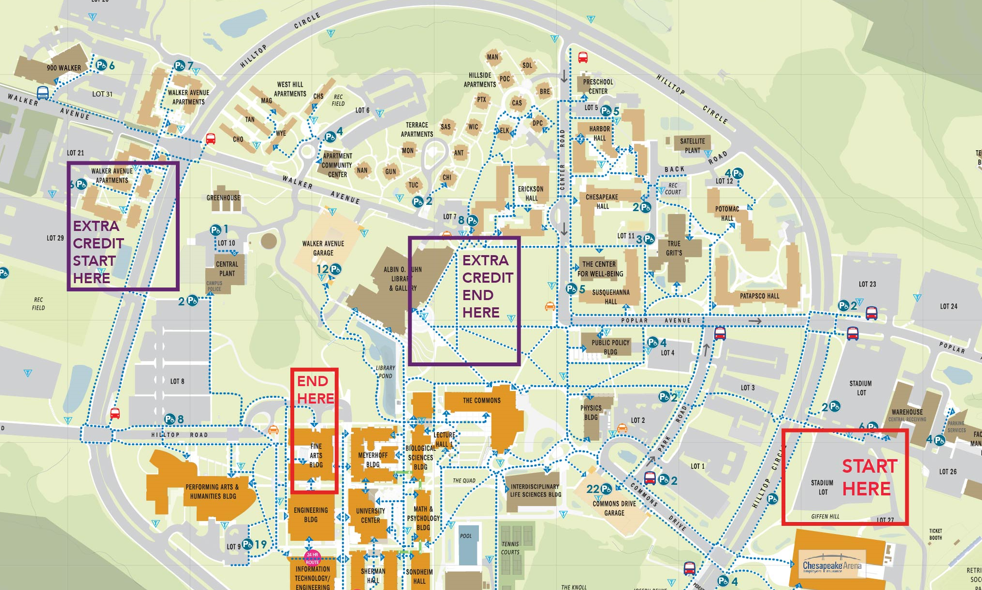
Make your way to the stadium lot, and then walk to the Fine Arts Building using only routes labeled as accessible. You are not allowed to use stairs, though you may use the short cuts available through buildings via elevators.  (The elevator short cuts are labeled on the map below.) For extra credit, start at the top of the hill near the Walker Apartments and go to the library.

I have marked the destinations for you below. The full map is available here: https://about.umbc.edu/files/2021/09/2021-UMBC-accessible-routes-map.pdf

A map of the UMBC campus.  The original overlay is a set of dotted lines indicating accessible routes.  A second overlay has been added demarcating "start here" and "end here" routes of particular difficulty.

While you are walking, focus in on your body. Ask yourself: What would this walk be like if my calves were screaming in pain? What if I struggled with balance and were prone to tripping on uneven surfaces and could fall?  What if I were using a walker right now? What about a non-motorized wheelchair?

What about crutches, or a lower-limb cast? When you arrive at your destination, take a note of the time. How long did it take you compared to using the stairs? Did you have to use a new route compared to your ordinary routine?


It was disclosed to me by several students that after they met all of the (stringent and privilege-laden) requirements to receive an accommodation appointment with SDS, they are told they will be unable to get the accommodations they need. In addition, it has also been reported to me that these meetings are often negative in nature with the student seeking accommodations being met with derision and/or hostility for their accommodation requests. One student, who wishes to remain anonymous, reported being “refused note-taking assistance because they needed to ‘learn how to take notes themselves,’” as well as being refused alternative text formatting as that is up to the teacher and “they cannot do anything about it.” The student accurately pointed out that both of these accommodations are among the published list on the SDS website. Another anonymous student trying to receive accommodations was told, “I know migraines can hurt sometimes but that doesn’t mean you can miss class.”

Many of the interactions that were shared with me have a common thread that is heard all too often by the disabled community: “You’re just not trying hard enough” or “It can’t be that bad”. The implications that we are lazy, that we haven’t developed strategies to succeed in our classes, or that we are somehow exaggerating our health problems are not only outdated ways of thinking about disability but are also extremely harmful.  The reality of our lives is that it frequently is “that bad,” and that we wouldn’t be asking UMBC for help if we hadn’t already exhausted all of the resources available to us as individuals.  To hear these words from the people put in place to help us succeed is equivalent to lifting us up only to kick us back down. UMBC is not the only institution in Maryland struggling with this problem, as this article (https://www.jhunewsletter.com/article/2021/08/disability-isnt-taken-seriously- at-hopkins) written by a graduate student at Johns Hopkins details out. Laurel Maury was awarded accommodations by JHU but found that her professors refused to use them (even under threat of legal action) and some went as far as to bully her for having them. Maury’s struggle echoes many of the sentiments that have been expressed to me by current UMBC students.


To my fellow disabled students: You are not alone, you have a voice, and your voice deserves to be heard.

How Covid Destroyed My Family’s Life

I am an immigrant but I came to America at a young age. When my family first came everything was great. Back home my parents owned their own business and they were doing pretty well. They had built a house from scratch with land they bought and I was daddy’s little girl. I got whatever I wanted and my closets were decorated with dresses of all sorts of colors in the rainbow. My sister and I went to a private school and we had our own taxi take us back and forth. Needless to say, I was living in a fairy tale, so I thought America would be no different.

At first everything was fine, then suddenly my life around me started to turn into a nightmare. My father became more and more distant and soon very scarce in my life. The man I had seen every day of my life was now a stranger to me. My parents divorced and my mom had to start from rock bottom. There were moments where we slept in her car, and had no home. My mother would scrape up everything she had just to get us food and sometimes there wouldn’t be enough for herself. She worked as a Certified Nursing Assistant and that took such a toll on her body that she ended up having to go into surgery to remove masses from her stomach. She worked at this job for 10+ years and made less than 25,000 dollars a year. But during all this, she made sure my sister and I had a good life.

When I started college, she went back to college and got her Nursing Degree. About 5 months before Covid hit she officially became licensed as a Registered Nurse. She called me on the phone so proud of herself saying how we were going to finally be able to do the things other families get to do like go on vacation. All her dreams had turn to reality, and again, like before her life suddenly turned into nightmare. Her job failed to give her PPD, leaving her at the mercy of covid, and unfortunately she caught it. Immediately we knew something was wrong. Her symptoms became more severe over time and she was not able to work anymore. The woman I had seen go through so much was defeated by a virus that no one was taking seriously. As I went to sleep I could hear her cry in her room because of all the pain.

During that time she talked about very bad things and it worried my sister and I for her safety. No matter which doctor she went to everyone would say it was all in her head. Or that she is old. She went through more than 8 doctors during quarantine and none of them would listen to her. As a black woman she felt betrayed by the health care system. I thought about this when we had discussed in class the issues with the health care system.

My family is back at square one. My mother had plans that she may never be able to fulfill, and I now have no motivation or hope for the world. I find it hard now to take school seriously because seeing everything my mother went through, will any of this ever be worth it? The stress, the anxiety, the late nights, not knowing what kind of job you will get when graduate college, the debt all seems like such a high price to pay when you might just end up exactly where you began.

The Unspoken Truth about Working Out

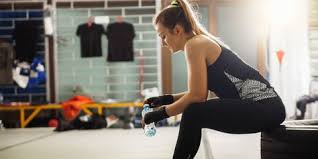
Girl feeling defeated at the gym.

Image from: https://www.netdoctor.co.uk/healthy-living/fitness/a26637/unhealthy-relationship-with-exercise/

Growing up as an Asian American, I always had a fast metabolism and never weighed above 100 pounds. No matter how much I tried to eat, I could never gain the weight. If I lost any weight for any reason, it was hard to gain it back. Medical professionals would tell me that I needed to “eat a cheeseburger” because my weight was not considered ‘healthy.’ I was not allowed to donate blood because I did not reach the weight minimum. I was tired of being told how ‘weak and small’ I looked, envying anyone with more noticeable curves or physical strength. I refused to take pictures for months, archiving my entire feed on Instagram and hiding my body as much as I could. I was sick of the body I was in. So in 2019, I began to research ways I can transform the way I look as quickly as possible. 

Continue reading

When Failure is Radical.

Affirmations from an unreliable drop out

I have failed to work with a system that prioritizes productivity over personhood.

I have chosen moving forward over suffering

I will accept myself to spite a value system that does not want acceptance – but always striving for “better”. If I internalize it, that I am always striving for “better”, then I build a comfortable place for the belief that I will never be enough, to rest upon. Instead, I will build space within myself to be less than ideal. 

Continue reading

Bedroom.

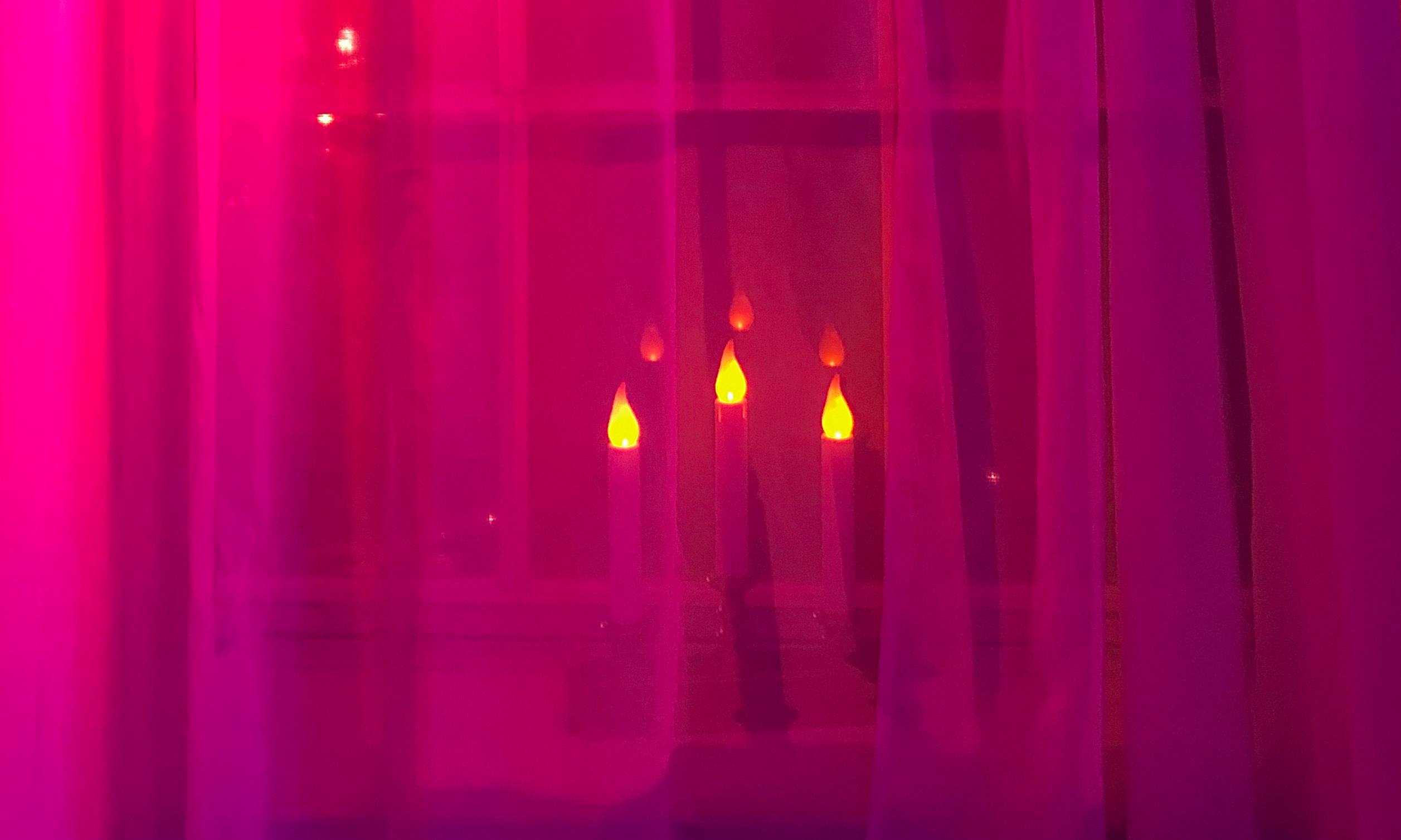
A view from my bed [ID: Hazy photograph of a window illuminated by vibrant red and purple lighting. In the center there is an electric candelabra sitting on the window sill, slightly obscured by sheer curtains.]

2011 was the year I began distancing. By which I mean, I began a life lived from my twin bed, fueled by goldfish crackers and electrolyte drinks, seldom able to access the outside world. It wasn’t mine to call home anymore.

I was drowning in conditions that these doctors hardly knew about. I had no choice but to become my own doctor, nurse, and historian. More than anything, I became my own community.

The outside world was stolen from me by sickness, uncertainty, and administrative violence – this world was never built for my survival. Such predicaments were met with constant calls to push through – go into the world anyways, risk it all for a “normal” life. They said adapting to it would make me better. It wrecked my body and my mind. Being bedridden was extraordinarily taxing and painful in a way that cannot be understood by those who have not been fully immersed in it in this way, yet. But I am inseparable from my bedroom life, I am made of soft pillows and the world I built among them. 

Continue reading