United in Anger and the AIDS movement taught me important lessons about civil disobedience. One of the most powerful lines in the film was when an individual with AIDS said that they may not be able to fight the disease, but they can fight the system. “As long as I can physically function and physically fight, that’s what I’m going to do” (United in Anger). These words in the film inspire me to become more active in politics. In high school, I was passionate about politics… but COVID-19 slowly sucked the life out of me and I lost my drive. United in Anger reminded me that change can be possible, and also informed me about the ways in which movements can be organized and successful. I found one person’s motto impactful- they said that if you act up, you get impact. This encapsulates how making “the powers at be” uncomfortable, you can “interfere” with “business as usual.” I really appreciate the weight behind these words.
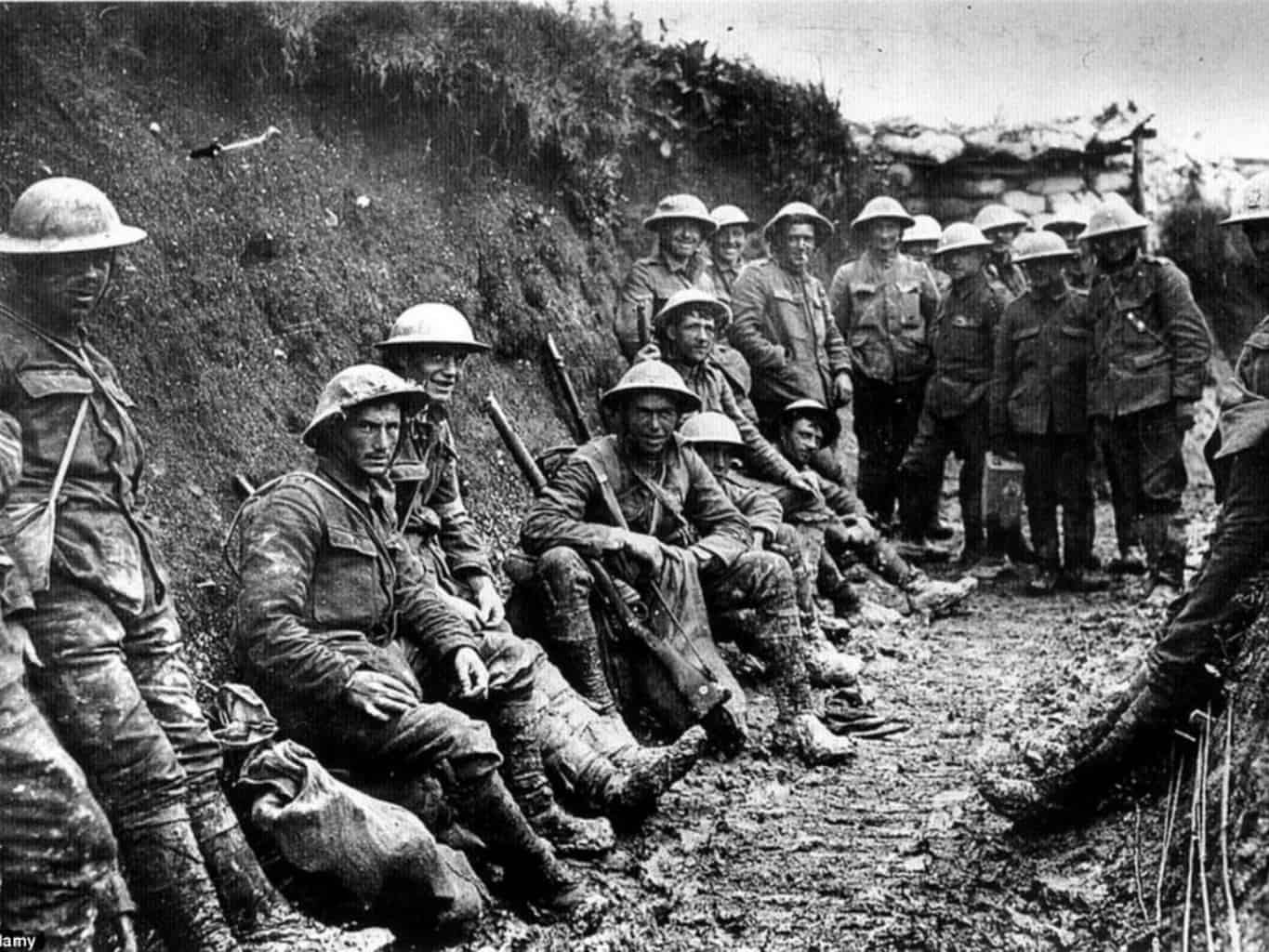
It was also interesting to learn about how ACT UP was “sculpting” the narrative in the media by putting locals in all areas of the country to give their perspective. ACT UP did not want the media to continue using “specific language” to describe people with AIDS, so they represented themselves. There was an individual in the film that compared being impacted by AIDS to being in “the trenches,” because the “war is only happening to those in the trenches” and no one else knows (or is paying attention to) what is happening. ACT UP also used affinity groups to strengthen its community. This reminds me of my peer support group and makes me realize how important it is to gather with like-minded people who have been through similar struggles.
It was disgusting, disheartening, and shocking (at least to me; I had little prior knowledge of the fight for AIDS care) to learn that there were propositions to have those with AIDS quarantined or get tattoos in order to identify themselves. This is obviously reminiscent of the treatment of individuals who were Jewish, of color, queer, or with disabilities by the Nazis. Unfortunately, there are traces of this bigotry and ideology throughout the United States.
When I first watched Me Before You, I felt like my heart was ripped out of my chest. The story follows Louisa “Lou” Clark who becomes the caregiver of Will Traynor, a man who was adventurous before becoming paralyzed after an accident. Will unfortunately faces many challenges both physically and mentally, leading him to choose assisted suicide despite falling in love, and I haven’t been able to stop thinking about this movie ever since. Recently I started to question, if it was romantic, or was it reinforcing the idea that a disabled life isn’t worth living? After reading Nicole Schroeder’s “Dying a ‘Good’ Death: Disability and the Assisted Suicide Debate” from the Disability Visibility Project, I started to see the story through a completely different lens.
Before I fully dive in, I want to fully paint the picture of this movie. Firstly, Will’s parents hire Lou to care for him after his accident two years in an attempt to raise his spirits. Lou’s unapologetic, positive personality slowly breaks through his bitterness, and they form a deep connection. After finding out he plans to go to Swtizerland for assisted suicide, Lou tries her best to change his mind by trying everything from taking him to concerts and a trip out of the country. But in the end, Will does not change his mind even after falling for Lou. The movie paints his choice as noble as a way of reclaiming control over his life and giving Lou a chance to live hers. The final scene shows Lou reading Will’s farewell letter in Paris, smiling through her tears. It’s meant to be bittersweet, but it also raises difficult questions about what “a good death” really means, and whether society offers disabled people real choices about living.
Nicole Schroeder’s essay completely reframes this debate. She argues that the real issue isn’t about whether people have the right to die, but it’s about why so many disabled people feel they need to. She writes, “those of us protesting do not want people to be in needless pain; instead we want resources other than death to alleviate suffering while people are still alive.” That line stuck with me because it exposes how the conversation around assisted suicide often ignores the failures that lead people to that point: lack of access to care, isolation, and social neglect.
In the film, Will isn’t shown receiving much support beyond Lou’s companionship and his personal caretaker, Nathan. Even with wealth, he seems completely alone in a world not built to include him. Schroeder highlights that in a “hyper-capitalist world,” assisted suicide can become a cheaper alternative to improving care and accessibility. It’s haunting to think about how Will’s decision might have been shaped not by genuine choice, but by a culture that sees disability as tragedy especially after losing the hyper-active life he once had.
One of Schroeder’s most important points is that assisted suicide is often presented as a form of autonomy, when in reality, many disabled people are making choices under pressure. She shares that in Canada, nearly half of those choosing Medical Assistance in Dying (MAID) cite feeling like a burden or experiencing loneliness. That statistic immediately reminded me of Will telling Lou he didn’t want her to give up her life for him. What sounds selfless in a romantic story becomes more complicated when you realize how society teaches disabled people to internalize guilt for simply existing.
The movie’s emotional framing makes Will’s death feel inevitable, even “beautiful,” but Schroeder challenges that idea. She calls out how assisted suicide has “eugenics-centered roots,” meaning that the very systems allowing it have historically viewed disabled lives as less valuable. When I look back at Me Before You now, I can’t unsee this unfortunate pattern that tangles up love, care, and death into a message that equates disability with hopelessness.
When I first watched Me Before You, I can still remember myself tearing up during the beach scene when Will tells Lou that he is still going to Switzerland after she pours her heart out to him. Me and many fans of this movie are still heartbroken over what could’ve blossomed between Will and Lou. But now, I think the real heartbreak isn’t Will’s death….it’s that the story never gives him another option. Schroeder’s essay reminded me that true dignity doesn’t come from the “freedom” to die; it comes from having the support and resources to live fully. The film romanticizes Will’s choice, but if it reflected the realities Schroeder describes like underfunded care systems, social isolation, and ableist messaging, it might look less like empowerment and more like surrender to a world that failed him.
I still love Me Before You for its intensity and emotional honesty, but I see it differently now. It’s not just a love story; it’s also a mirror of how our society defines whose lives are worth fighting for.
Ok, let me clarify: I want to throw the party for myself and my husband, and he just turned 40. So it’s perhaps just a more extreme version of the “over the hill party” that was so ubiquitous for my parents and their friends. I was old enough to be in attendance and remember it well.
My husband just experienced the loss of his father and has been watching a family video of his father’s 40th huge “over the hill party.” My own father’s 40th birthday party came as a surprise. It included an enormous floating Garfield balloon that came home with us and spectrally floated up and down the staircase late at night for weeks. Neither father ever had any other large birthday party, but 40 was such a cultural boundary crossing when it occurred to them, that it was marked with satire, commiseration and almost as many family and friends as you would have at a wedding or a wake.
Tonight President Trump will hold a press conference, presumably about the xenophobic wonders of the border wall. Ahead of his desperate interruption, Malala Yousafzai’s new book, We Are Displaced, comes out today, telling stories of refugee girls around the world. Yousafzai’s global focus developed from sharing her own experiences through discourses of media and academia into a project of listening and responding to girls victimized by terrorism. Dr. Patricia Hill Collins has long been on a similar journey, sharing her own story and the story of her community. She brings the layered cultural and physical constraints on Black women to the media and academy and now appears on the international lecture circuit, [1] affirming that intersectionality is a driving force all over the globe.
In Yousafzai’s January 7 interview with Trevor Noah, he noted “Being a woman or a girl who is a refugee exponentially increases how difficult that journey is.” He encouraged her to speak about specific refugee experiences, which she did, careful to use universal language when describing motivating factors—how it must feel to be without parents or facing the threat of unnamed violence. The studio audience showed appreciation for Malala; as viewers, we could feel good about knowing who Malala is, clapping for her and taking a few minutes to listen to her. To feel truly good about tonight’s episode though, is to get run over in the intersection, because Malala’s interview followed a segment on the new Lifetime documentary, Surviving R. Kelly, and in both the segment and the interview, the lived experiences of women of color were concealed even when they were ostensibly the subject under discussion. We need Dr. Hill Collins to guide us back, if not to safety at least to an awareness of the danger. Continue reading →
In almost all of the video games I play, especially role-playing games (rpg) and action adventure games, there are almost no fat people. Even in games where you can create your own character, there are very limited options. But, these fat bodies are still rather “fit.” They’re just big and beefy if they’re male or big and curvy if they’re female. While these bodies do deviate a little from idealized Western bodies, they are still acceptable. In other words, they are larger bodies that “normal” people could still find attractive. In addition, most games that have fat people in them, like The Sims and Saints Row IV, cast those characters, as ugly and/or comical. In all of these cases, fatness is not something to be desired.Continue reading →
I want to write a post about masturbation, not for any particular reason other than I’m sad I haven’t seen any posts about it and I think it’s a cool/interesting/important thing to talk about and acknowledge about bodies. Continue reading →






 Unruly Bodies