Being born female has always felt like a curse to me. Although I do love presenting femininely, girlhood, and feminism, femininity always felt like an objective that I could never, ever reach. Growing up, I was surrounded by ideals of what a “real woman” should look like and act like, but none of them ever felt like me.
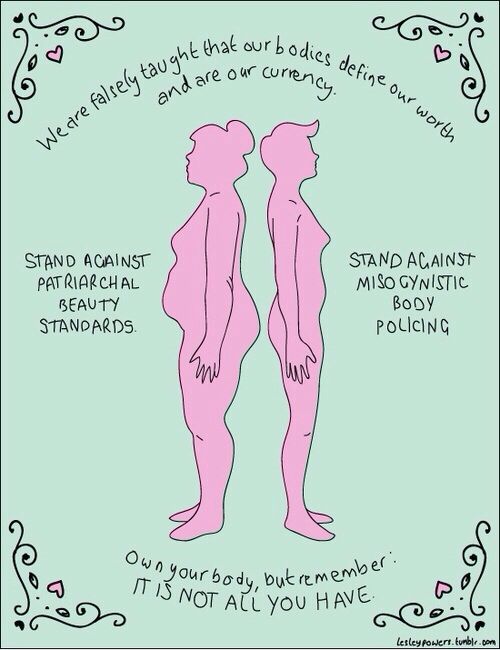
Too often, women & afab people of color, specifically black and brown people, are hyper masculinized by society. Many of us experience gender dysphoria at a young age without even realizing it. In a porn-sick, pedophilic world, we are often told to shave our legs or that we won’t be desirable if we are not petite. We are groomed into believing that compliance with these unrealistic and patriarchal beauty standards is the only way we can be loved or accepted.
This alienation often made me feel like I was a monster, much like how Stryker compares the trans body to Frankenstein’s monster, where both are labeled as “unnatural” creations rejected by society. Even the most natural and feminine part of myself, body hair, was turned into something to be erased. Body hair, a normal sign of maturity, was made to seem masculine, ugly, and unnatural. That made me feel both “not feminine enough” and “not masculine enough,” even as I came to understand myself as genderfluid. I found myself trapped between two conflicting thoughts: one that punished me for lacking male traits, and another that shamed me for not performing femininity “correctly.”
These beauty standards also erase intersectionality, especially when it comes to South Asian bodies. Generations of colonial trauma, famine, and labor have shaped our bodies in ways that defy Eurocentric ideals. Yet we are still told that our features, our curves, our body hair, and our skin are flaws to be fixed. Our oppressors wound us and then teach us to hate the scars it leaves behind.
For me, reclaiming my gender and my body means rejecting those expectations. Like Stryker’s “transgender rage”, I’ve learned that my frustration can become powerful, where I refuse to be molded by standards that were never made for me. My gender exists in the space between what I was told to be and what I choose to become.
The other day, I opened Instagram to a post by one of my grade school classmates, with whom I grew up for most of my life. They were discussing that they identify as “non-binary” and wrote a short piece describing their struggles growing up with these confusing feelings. I was happy that they were able to not only recognize how they were feeling, but also announce it to their mutuals on social media. The thing is, this story yet again reminded me that you truly never know how someone is experiencing life on a daily.
This experience in particular reminds me of Susan Stryker’s Frankenstein essay, as she explores the embodied experience of living in a gendered world that doesn’t quite fit one’s perceptions and feelings of their own identity. I can only imagine how frustrating these feelings must be, especially for a child.
I recall being in school with this person from elementary school all the way through high school. We were in the same classes, had the same friends, and even went on the same field trips together. I can still recall the time that we went on a canoeing field trip to observe the SAV (Submerged Aquatic Vegetation) in our local Chesapeake Bay, when we flipped our canoe and dumped ourselves right into the water. I always joked that we got to see the SAV “up close.”
I’ve made some good memories with this person, but until now, I hadn’t seen anything from them since high school graduation; I’d actually forgotten that I followed them on Instagram. Despite the joy that I felt knowing my old classmate had rediscovered themselves in a new way, I couldn’t help but think about all the times we spent together, while they were struggling with an internal identity crisis, and I had no idea. I absolutely loved my childhood. I’m so blessed to miss every part of growing up as a girl in the way that I did. My classmates’ post was yet another reminder of the sad truth that, ultimately, most people weren’t as blessed to have had the picture-perfect childhood that I did. I truly wish them the best with the rest of their identity journey and hope that they’ve gained some clarity and peace within themselves.
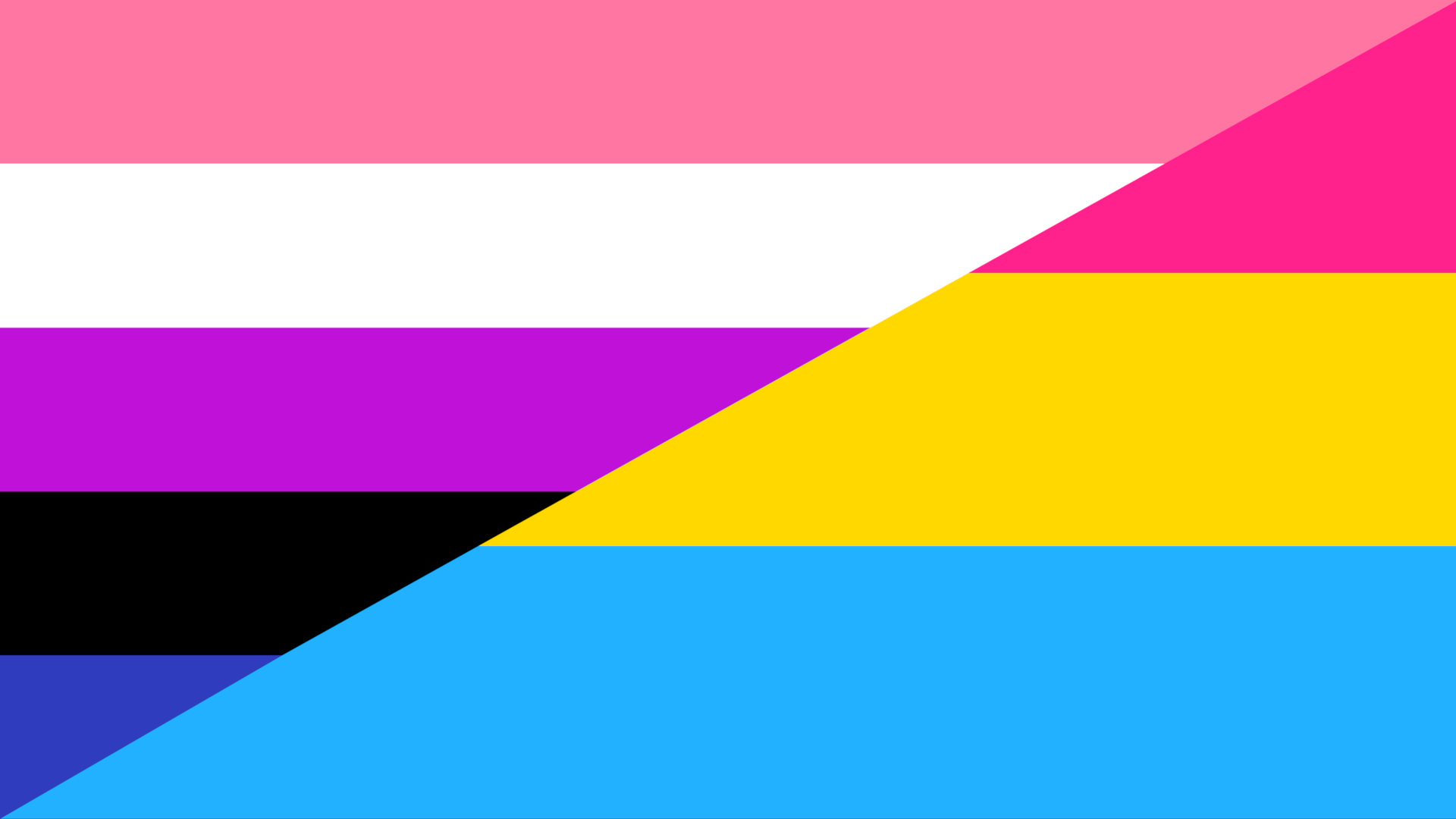
Label the foundation of modern society. Why is labeling yourself or someone so important? Why does it matter so much to someone what my gender or sexuality is? I never really thought about this until recently and the more I think about it the more I question everything. When I was young, I always assumed I was a girl and straight but as I got older and learned more about myself, I learned that no I am not. I learned more about myself. I would describe myself as gender fluid, pansexual and asexual. At the same time labels are not that important to me when come to gender personally but as for sexuality it matter more because I have been with a man for a few years and because of this many people assume I am straight when I tell them I’m pan they seemed confused why I be with a man this irritates me internally because it make me feel like I am not a part of the LGBTQ+ community this way of thinking I have faced more by those in the community then thoughts outside of the community.
Until I started back at college in fall of 2023 when I met the amazing group of people I love dearly I always felt like an outsider I did not feel wanted in the LGBTQ+ community nor the straight people community I felt like I was just drifting in space in a way, this not feeling like I belong the more I go to therapy and work on myself the ,ore I realized this sense of not belonging truly affected me. In the book nonbinary I relate with many of the stories although myself am not nonbinary the questioning of faith and the not feeling like I belong and the questioning of why labeling matters so much. No matter if you feel labels are important to you personally or not, I think things like this should be spoken about more in society, so people like me and many others know they are not alone and feel like they belong somewhere in this strange world we live in.
Have you ever scrolled online and see people confidently declaring their gender and sexuality like they’ve had it figured out since birth? “I’m nonbinary.” “I’m a lesbian.” “I’m pan.” Meanwhile, I’m sitting here wondering, why do I feel like nothing? This question has been bouncing around my head for a while now. But after reading Nonbinary: Memoirs of Gender and Identity, specifically Christopher Soto’s “What Growing Up Punk Taught Me About Being Gender Nonconforming” and Aubri Drake’s “Clothes make the Gender/Queer,” made me realize that maybe this feeling of nothingness isn’t emptiness, but simply uncertainty in a world that demands certainty from everyone.
Soto writes, “I tell my friend who still presents outside the binary that I want to be alive. I want to live. And so this is my gender: a desire to live.” That line hit me like a ton of bricks. For me, identifying as a woman has always been about survival. It’s safer, easier, less questioned. I don’t have to explain myself or fear someone reacting violently because I don’t fit their idea of what a woman “should” be. Soto ties their fear to capitalism and violence because the way safety, livelihood, and even love feel like privileges granted to those who conform. Sometimes I wonder if I’d feel freer to explore my gender if the world wasn’t punishing those who step outside the binary.
Growing up, everyone labeled me a “lesbian” before I could even figure it out on my own. I was the tomboy wearing my dad’s clothes, obsessed with comic books instead of makeup. My mom used to tell me to “act like a lady,” for simply sitting in my own home with my legs open. Then puberty hit, and suddenly I had curves I didn’t ask for. Aubri Drake’s words that “clothes started clinging to my body in all the wrong places… they stopped being a form of expression and instead became material to hide in”described exactly how I felt. I started hiding under oversized clothes because my body no longer felt like mine, but a spectacle for others.
For years, I bounced between labels from bi, lesbian, pan, and now to queer. Each one feeling right for a second and wrong the next. I even dated men exclusively at one point just to prove something, though my attraction to women has always been stronger. Every time I picked a label, I felt like a fraud and that everyone knew I was out of place.
When it comes to gender, being called “masculine” or “feminine” makes me physically recoil. I don’t feel like either. I identify as a woman because it’s practical since it’s what fits easiest in the world’s boxes, but that’s never been the only reason. I’ve briefly thought about identifying as nonbinary, but fear always stops me: fear of losing cis privilege, fear of not being taken seriously, fear of violence. Like Soto, I get what it means to feel “illegitimate” just for wanting to live safely.
That’s why the label queer has been a relief. It’s flexible. It’s fluid. It lets me breathe. I don’t have to get a headache by searching for answers I don’t have yet. My gender and sexuality are personal, evolving, and maybe a little messy, but at the end of the day, that’s ok.
A few months ago, before reading these essays, I went down a rabbit hole on Reddit trying to understand why I felt “genderless.” I remember scrolling for hours through different threads from queer and neurodivergent people describing the same sense of in-betweenness I couldn’t name. One that stood out to me was called “Does anybody else feel genuinely genderless?” on r/NonBinary, more specifically this one quote:
“When I lean more towards masc or femme with my presentation that’s all I feel it is — a presentation. Or really what it actually is is society interpreting my presentation as gendered. Ultimately it’s still just me. I don’t feel more feminine when I wear skirts — but it’s perceived that way.”
When I lean more towards masc or femme with my presentation that’s all I feel it is — a presentation. Or really what it actually is is society interpreting my presentation as gendered. Ultimately it’s still just me. I don’t feel more feminine when I wear skirts — but it’s perceived that way.”
That line felt like someone cracked my brain open and wrote down my thoughts. It echoed everything Soto and Drake described; that gender can feel more like a performance that others interpret than a truth you embody. Re-reading that thread and other ones I mindlessly scrolled actually helped me realize I wasn’t broken for feeling detached from gender. I was just tired of performing one.
I still feel like “nothing,” but I don’t see that as a bad thing anymore. That nothingness feels like freedom; free to move, question, and change without being boxed in. Reading these essays made me realize I’m not alone in that uncertainty. There’s comfort in knowing gender and sexuality don’t have to be solved; they can just evolve. Maybe “nothing” is true freedom. Maybe my gender isn’t nothing — maybe it’s just mine.
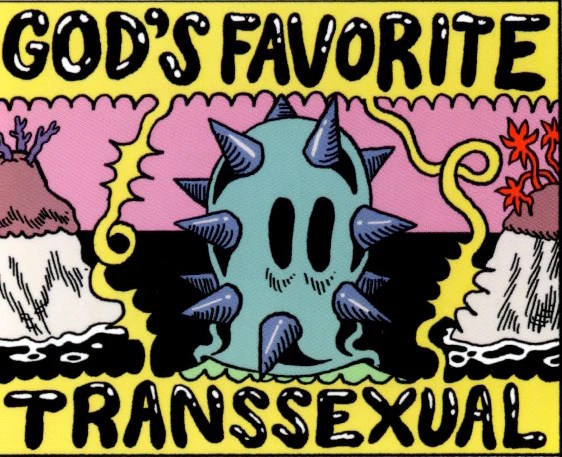
(image description: an illustration of a person with a teal, cactus-like spiky head between two islands on a black ocean against a pink sky. the border, framed in wavy spiked lines, says “GOD’S FAVORITE TRANSSEXUAL” in black bubbly text on a yellow background. this art belongs to Leo Fox, from his trans comic series Boy Island! you can get this image as a sticker at https://store.silversprocket.net/products/gods-favorite-transexual-by-leo-fox :] )
Since before I started medical transition over a year and a half ago, gaining testosterone-linked physical traits through HRT has been a goal of mine. And recently having the ability to “pass” as cisgender has been such a wild ride in a very gender-affirming way (though I still haven’t gotten used to times when I am perceived and treated as cis male in a social context, such as getting pulled in for a strong dap up after finishing a group project).
One thing that I have always been excited about was my “passability” opening up new avenues for me to explore queering my gender presentation. There was always something appealing to me about presenting physically masculine with more body hair and a deeper voice while having the freedom to wear whatever I wanted, like skirts with boots, and feeling confident wearing tight shirts without getting dysphoric about my chest. The physical traits I display are also helpful with decoding patterns of comportment and taking up space that I grew up socialized into as a “girl,” because now instead of fearing gender dysphoria from expressing emotions and being particular about the way my body moves, I feel like I am actively participating in throwing off binary norms, rather than taking up as much space as possible and acting closed off and invulnerable as embodied “masculine” stereotypes often go.
I recognize of course that presenting my gender the queer way I do is something that I have a privilege to do, as I am able to safely be out as transmasculine; I believe not every single trans person should be required to revolutionize trans embodiment and destroy gender norms whenever they can possibly be perceived. No one should be held to that standard, and critiquing those who can find safety within the gender binary is unproductive to the goal of universally embracing trans embodiments.
I believe my medical transition and performed gender, and the euphoria I experience in my trans body, demonstrate Susan Stone’s theory on the transsexual body’s ability to “generate new and unpredictable dissonances which implicate entire spectra of desire” (“The ‘Empire’ Strikes Back”). Her and Judith Butler’s description of the erotic dissonance of the butch lesbian is something I find strong connection to, especially after coming back around to identifying as a lesbian in how inherently queer and “everyone-but-cis-masculinities” my sexuality has been throughout my 8 years of being out. Butch identity and my transmasculine body just feel like they go hand in hand now, and doing what I call “coming home to lesbianism” has been such a euphoric experience for me recently, one that I feel comfortable describing as transsexual gender euphoria.
Autistic people are a lot more likely than the neurotypical population to identify as transgender — something I personally chalk up to us having a keener eye for social norms that make no sense (the gender binary being no exception). As an autistic trans person who has to deal with the social repercussions of both these parts of myself, I have noticed how society is built not only to prioritize cisgender neurotypical people, but to actively shun those who don’t fit in either category in very similar ways.
In high school, I heard the rumors. I knew that I was not the epitome of femininity. It was not the first time I had to evaluate what being a woman meant to me.
It started in 3rd grade, with the best friend of my best friend, who asked why I had a mustache. I didn’t think I had one, but suddenly it was all I could see. Only boys had mustaches—but I was a girl. When I went home, I begged my mom for help. We spread pink Nair on my face and I locked myself in the bathroom where no one could see me washing away my insecurity.
But that wasn’t enough (spoiler: it never is), so in 4th grade, my crush told me my new haircut made me look like a boy—but I was a girl. The “teasing” didn’t stop until my hair had grown past my chin again. I still flinch when I pull my hair too far back and see the more masculine features of my face.
In high school, I’d had enough of hiding behind long hair and getting chemical burns underneath my nose. I decided I would try to stop caring—or at least appear to stop caring. I shrugged off the barbed comments about my face from classmates, refusing to give a reaction, even if it made me think no one could ever love a face like mine. Even if it shook my femininity to the core, even if I began to think my own face was ugly, I refused to cave.
Then the pandemic hit, and I had more time on my hands than before. I had a coworker who identified as nonbinary, and I started to wonder what that would mean. I shrugged off “woman,” which had caused me problems for so long, and I tried on something different.
But gender is weird. I found myself somewhere in between the two, sometimes feeling like nothing but a person inhabiting a body, and at other times like I was more of a woman than I’d ever been (occasionally, I even reveled in my masculinity). But the more scrutiny I put my identity under, the more it seemed to move. Like my gender, my identity is fluid. When I shook off the weight of performing femininity, my biggest insecurity became nearly null. If I don’t have to identify as a woman, then it’s not an insult for someone to point out the ways in which I don’t perform as a woman. Rather, it can signal to others that my identity is not what they assume it to be. Most importantly, it is a (much needed) reminder to myself that I decide what I want my body to look like—not others.
♥ ♥ ♥
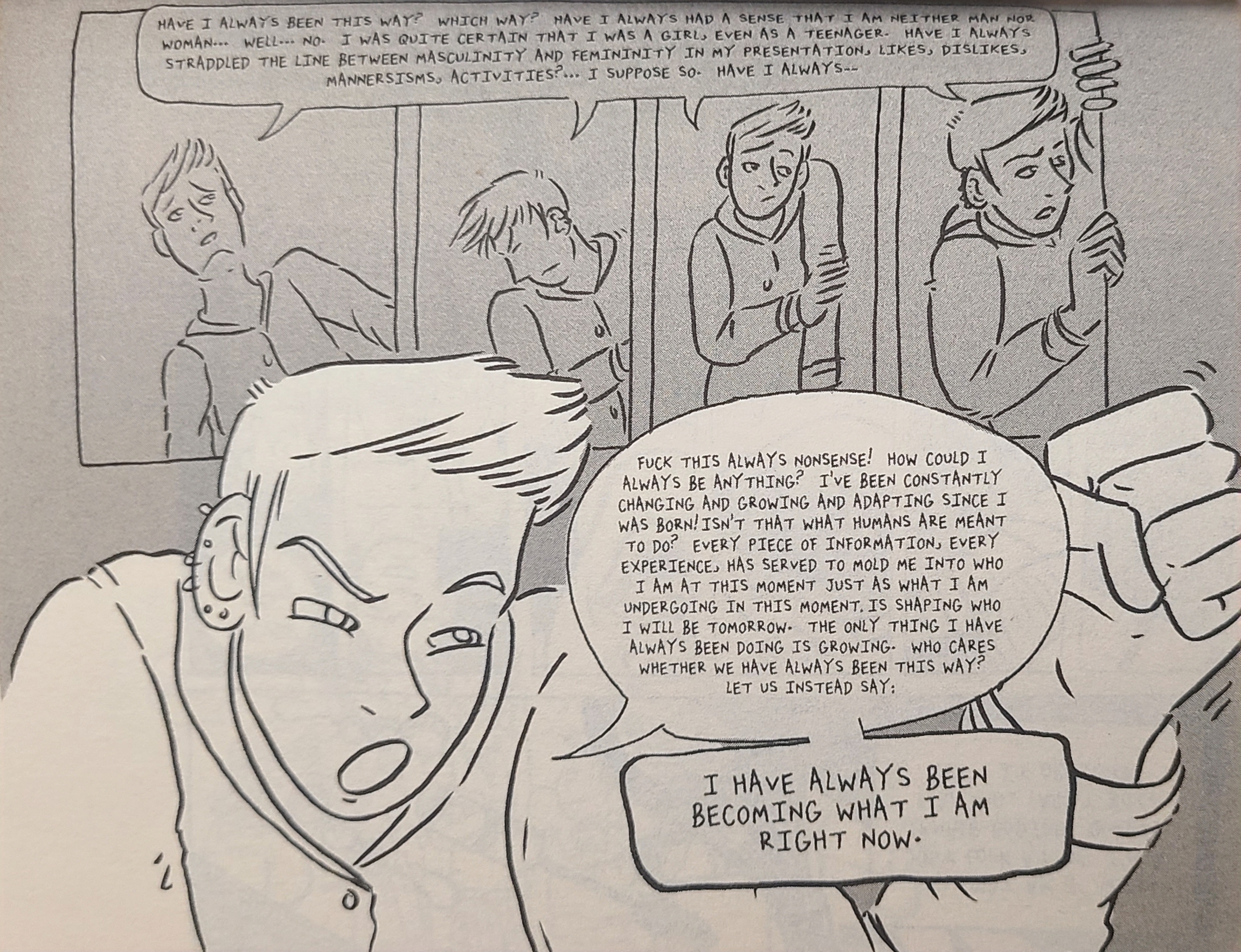
ALT TEXT: An image excerpt from “Gender Outlaws: The Next Generation” page 177. In background: Grayed out images representing an insecure internal monologue. They are saying: “Have I always been this way? Which way? Have I always had a sense that I am neither man nor woman… well… no. I was quite certain that I was a girl, even as a teenager. Have I always straddled the line between masculinity and femininity in my presentation, likes, dislikes, mannerisms, activities? …I suppose so. Have I always…”
The internal monologue is cut off by the person in the forefront, saying, “Fuck this ALWAYS nonsense! How could I always be anything? I’ve been constantly changing and growing and adapting since I was born! Isn’t that what humans are meant to do? Every piece of information, every experience, has served to mold me into who I am at this moment just as what I am undergoing in this moment is shaping who I will be tomorrow. The only thing I have always been doing is growing. Who cares whether we have always been this way? Let us instead say: I have always been becoming what I am right now.”
There’s a problem with anti-trans activists trying to deny gender-affirming care to someone diagnosed as autistic. While it isn’t impossible to receive gender-affirming healthcare with an autism diagnosis, some people have reported issues with being denied on the idea that autistic people do not know their own mind or bodies.
This is becoming a concerning issue when you have to either choose to be autistic or choose to be transgender. I do not mean that you have to choose which one to identify with, as I consider myself to be both, I mean in accessing healthcare. There’s been a trend between transgender people having to choose between gender-affirming care or mental healthcare. James Pisani has noticed an issue where trans people sign up for insurance with good transition care, but terrible healthcare. While it wasn’t discussed in the article I read, when it comes to making a choice, you face mental health issues either way. If you choose good transition care, you get more gender euphoria, you face less personal and public issues regarding how you present yourself, even if it’s at the cost of mental health care and autism support. Say you aren’t the majority of people who made the previous choice, and you instead sacrifice gender-affirming care for mental healthcare. Even if you have the best mental healthcare possible, you will still face the dysphoria or other issues that come from being trans. Being transgender is already a toll on mental health (for most people, I think).
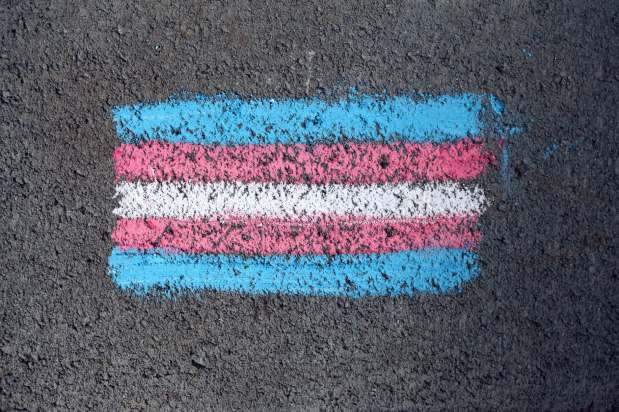
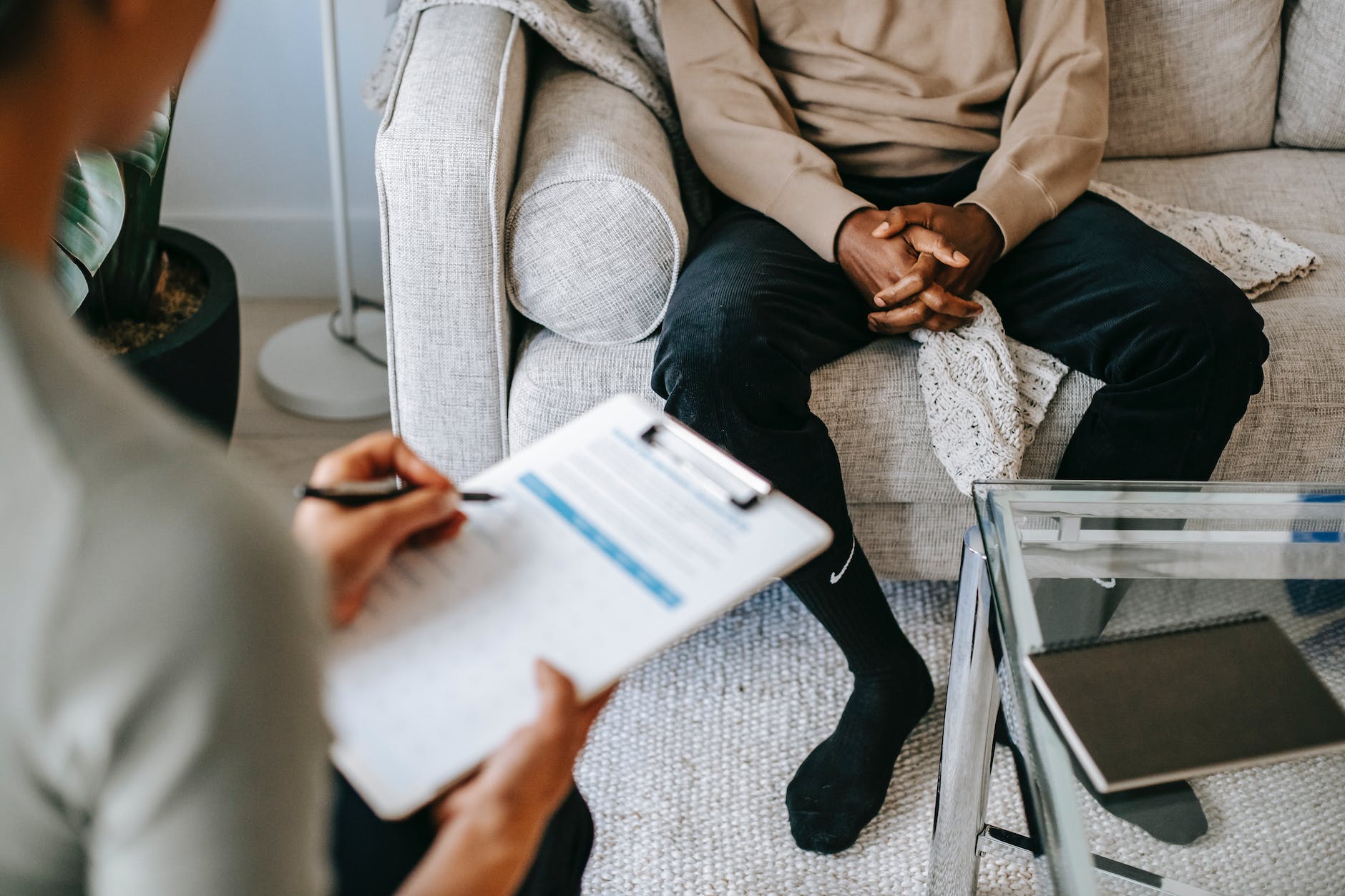
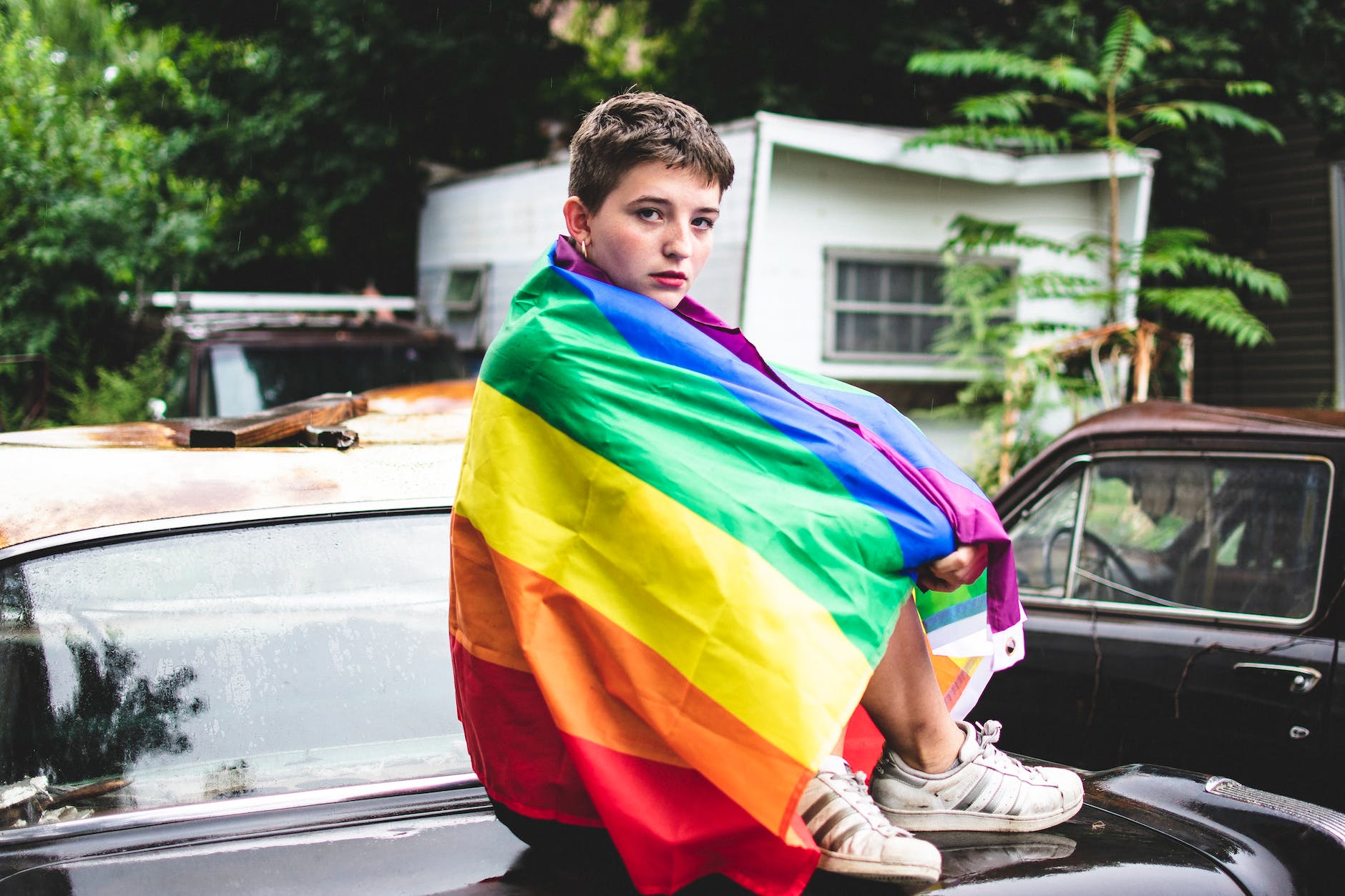
A slider image, with one side showing someone in therapy or similar location with another person holding a clipboard (This is meant to represent choosing healthcare). The other image is someone sitting on top of a car, wrapped inside a rainbow flag (meant to represent choosing transgender care).
Moving on, there’s already been a consistent problem in trying to deny trans identity for a long time. Especially when it become regarded as a “trend”, instead of wider visibility that made people consider their own idea. This exact thing occurs with autism, where some people see the rise in autism diagnoses and consider it to be a trend, rather than the fact they were always autistic and just never had the knowledge or resources to know beforehand.
Correlation between being gender-diverse and being autistic is still under-research. Some researchers, and myself, think that when someone identifies as genderqueer or autistic/ND in some way, that they are less concerned with fitting into society, and are more willing to consider their identity.
I want to wrap this up by the idea that although there’s an overlap in being genderqueer and autistic, that doesn’t mean either should be taken less seriously. I think there needs to be a pushback against the idea that autistic people are incapable of understanding themselves. Thank you for your time 🙂
As an afab nonbinary person who feels most comfortable dressing in “feminine” clothes, I am often misgendered by others. I don’t really mind being perceived as a girl by strangers, personally– I am lucky enough to not experience dysphoria, but I do still want to be visibly genderweird so that other queer people know I’m friend shaped. That doesn’t mean I like being misgendered though, obviously. Like everyone still has to use they/them pronouns for me, but I can’t beam that into strangers’ brains telepathically (yet) so it is what it is.
If you were curious, a few of my favorite ways to describe my gender are “girl adjacent,” “girly girl but there’s something definitely wrong with me,” and “oh you know, just, like, the color pink.” One could accurately say that I have a relationship with girlhood in the same way that the toons in Roger Rabbit have a relationship with the laws of physics. That is, it’s only there when it’s fun or funny– which brings us, finally, to the real topic of this blog post. I misgender myself a lot for the purpose of comedy, and I am definitely not the only trans person I know who does this. And oh boy is it funny. Cis people just can’t be on our level, sorry.
I’ve read somewhere before (and now somehow find it impossible to find a source) that identity is an advertisement for a product that doesn’t exist. I don’t think I’ve ever found a definition that rang as true for me as that did.
In my last post, I wrote about disconnecting from my body through the internet. An aspect of that that I wanted to give its own space is the disconnect I was having with gender.