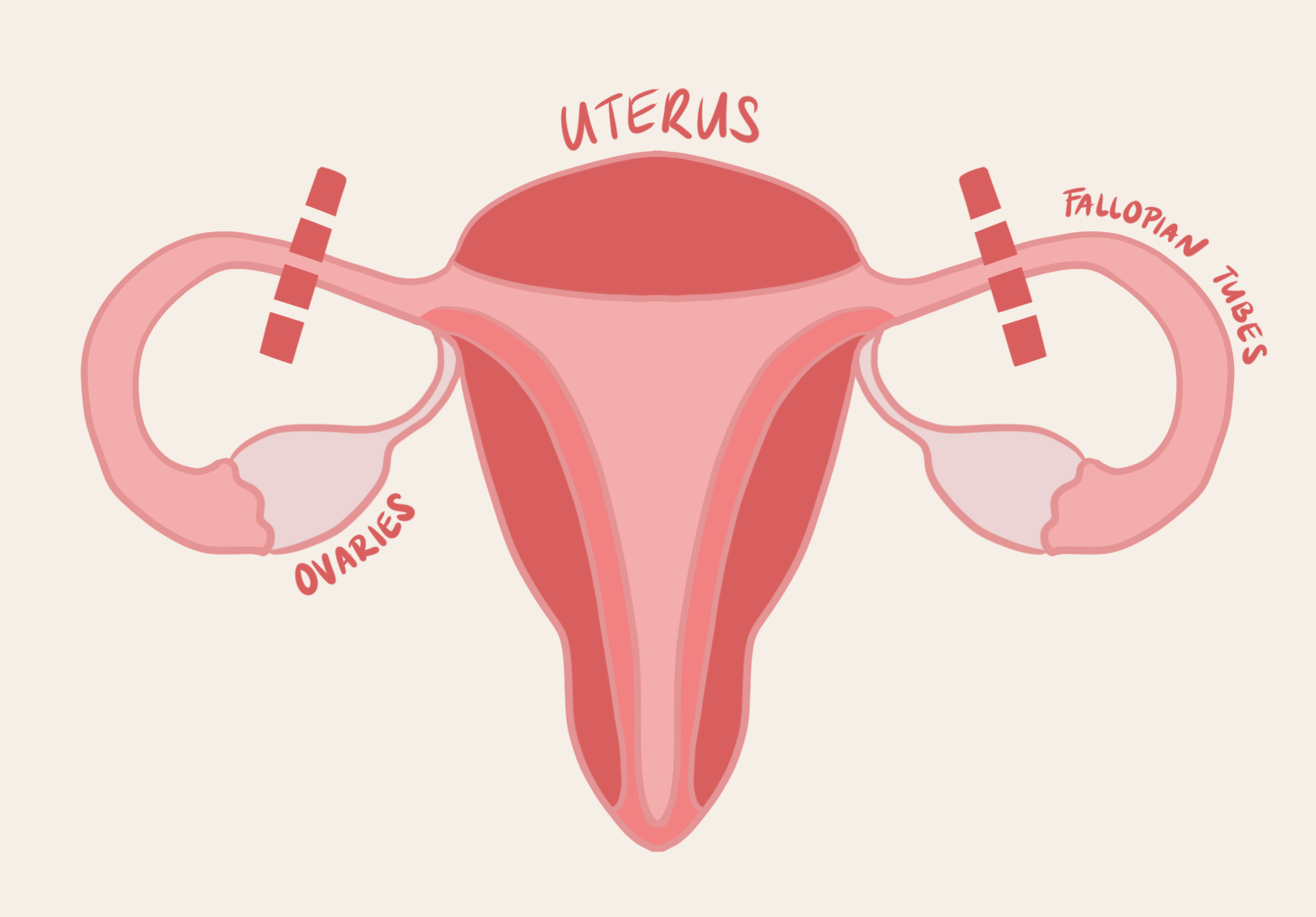
In the past three years, every Papanicolaou test (Pap test, Pap smear) I’ve received has flagged as “abnormal.” A pap smear is a method to screen the cervix for potentially precancerous or cancerous cells in the cervix. The first time you hear/read something in your body is abnormal, you go in to a minor shock. What does this mean? What will this abnormality yield in the future? When a woman gets a Pap smear, it already feels extremely invasive. You lay half naked, with your vagina nearly hanging off of a table, and cold instruments being inserted by a stranger. You don’t know how to comfort yourself through the exam so you spark awkward conversation and drown in anxiety.
Once the Pap smear results return from pathology, you’re either labeled as normal, or abnormal meaning there are cells (lesions) on your cervix that need further examination. The abnormal lesions can either be low-grade squamous intraepithelial lesions (LSIL) or high-grade (HSIL)- a result of the Human Papillomavirus (HPV). HPV is the leading cause of cervical cancer in women. The different strains are classified by the type of mRNA present in the cervical cells. The strains of HPV are then compartmentalized into high-risk (more likely to evolve into cervical cancer within 5-10 years) or low-risk (may revert back to normal cells over time). The strains are identified with numerical indicators- examples would be a high-risk strain type 16 or low-risk strain type 6.
After three abnormal Pap smears back to back, you’re sent for a Colposcopy. A Colposcopy is an exam performed in the doctors office with a colposcope, which is just an inserted microscope. Two solutions are then placed on the lesion: 3-5% dilute acetic acid, and Lugol’s iodine solution. A biopsy is then completed, meaning a piece of your cervix is CUT OUT and placed in a jar. In a doctor’s office. Although the cervix doesn’t possess many nerve endings, the metal instruments feel like you’re being dissected. After the piece of your cervix is removed, a large metal rod is inserted above your cervix and into the uterus to swab for more cells. That was the worst part. Instantly, I cramped and almost threw up. I actually shed a tear and begged the doctor to stop. When the procedure was complete, she told me “you actually handled that very well. Like, wow.” I immediately questioned to myself “how do other women react to this?!” I’ve always managed pain well but, I know others don’t. I feel like a cervical biopsy is….torture? I was then left in a cold room, with one wipe, and a maxi-pad. Go home, everything is fine, you may have some spotting and cramping. After the procedure, I went to class because it was mandatory attendance wise and that was a huge mistake. I sat in the UMBC parking lot for an hour, trying not to vomit.
When I got home, I curled up in bed and couldn’t move. I had a severe panic attack before the procedure. The way the chair sat in the room, the color of the room, the consent form, the doctor. It was all extremely uncomfortable- constantly asking me if I was ready for the procedure as if it was a major surgery only to know there was no anesthesia, no pain medication, no in-depth explanation as to what was about to happen to me…terrifying. I was in the most vulnerable position. My vagina was exposed to three strangers, watching me as if my body were a specimen in a science class.
Women who visit the doctor are often minimized and the procedures we’re expected to endure from strangers are shrugged off. No one acknowledges the elephant in the room- vulnerability. Men go for a colonoscopy to have their prostate examined and receive twilight sedation, are told to have someone drive them, and understand exactly what is happening to them. Women are viewed differently. Maybe it’s due to our child bearing abilities. If we can push out a child, we can be dissected. A woman’s body isn’t viewed with sensitivity and I could tell even as another woman dug out the lining of my uterus.
The anxiety attack lowered my immune system enough to spiral directly in to a flu. I haven’t been sick in 5 years. The procedure was so painful, it induced my period. And not only a period but THE most painful period I have ever endured. Everything after that procedure knocked me down for an entire week and some change. The way a woman’s body is viewed in healthcare has to change.