“The meanest dog you’ll ever meet He ain’t the hound dog in the street He bares some teeth and tears some skin But, brother, that’s the worst of him The dog you really got to dread Is the one that howls inside your head It’s him whose howling drives men mad And a mind to its undoing” – Anaïs Mitchell
A cold room, a lone soul, a lost cause
And yet the silence screeches in their ears
The pounding of their tired heart echos the dreadful reminder
They are alive
They are not sure they want to be
As doubt seeps
What makes their lives worthy of a statement?
Of a movement?
Nobody is listening because nobody cares
Death is not the thing it used to be
People have died before
Some names are sung, faces memorialized across buildings and cities, their stories shared, their families consoled
Millions left us too soon, untraced and unknown
Ungrieved.
You could be next, or you could be the last
Which is worse?
A dog howls in a cold room
He’s a lone soul, a lost cause
His bark is worse than his bite
But the bark is enough to be a mans undoing
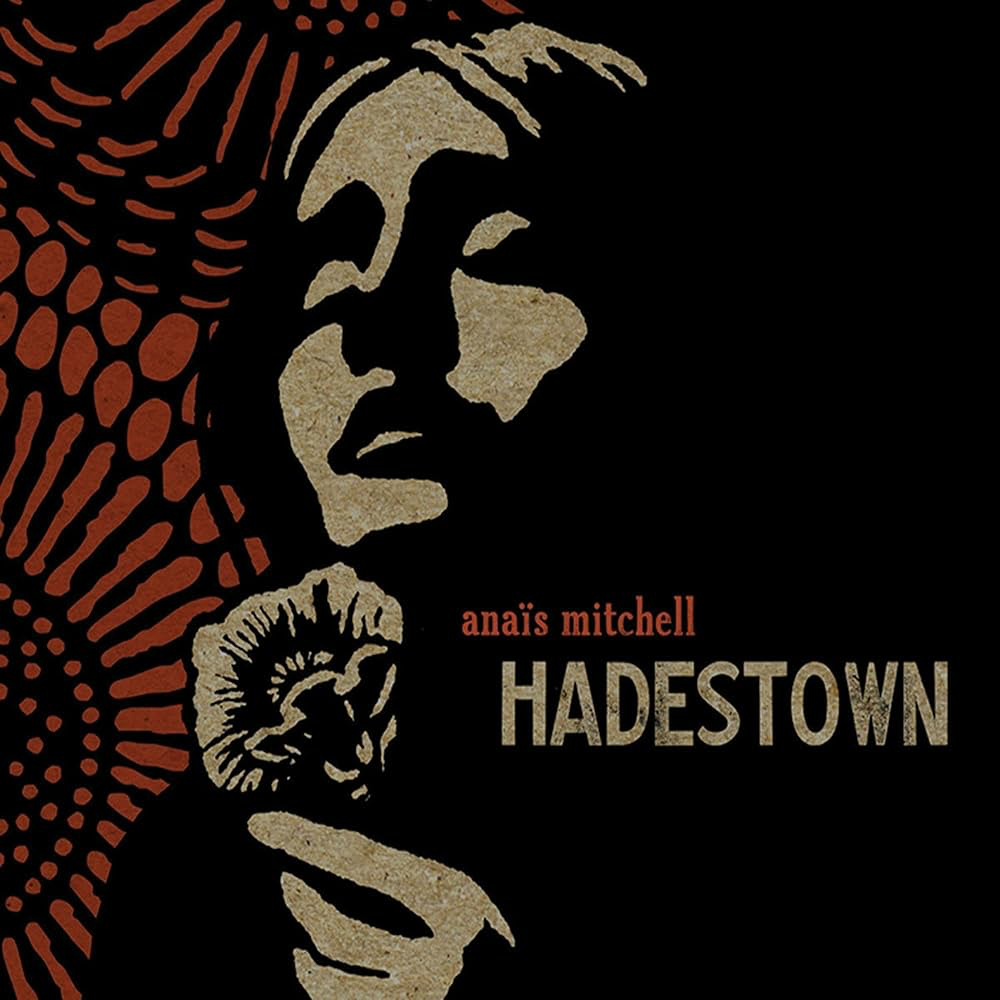
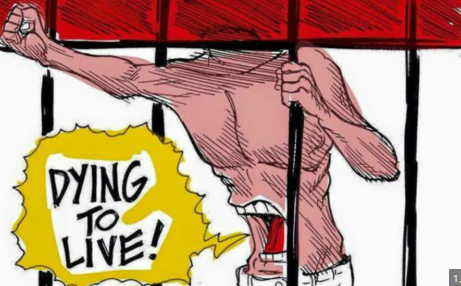
Cover art for the concept album, Hadestown, written by Anaïs Mitchell.
So I am taking a sociology of death and dying class currently, and a lot has stuck out to me. There is this thing called “advanced care planning” which involves things like DNR’s, advanced directives and setting a legal healthcare proxy. Through this class I not only thought about this for myself; I considered sociocultural aspects of planning for worst case scenarios. As a disabled person, I end up in some scary healthcare situation, and often have to think about what happens if I end up unconscious and unable to make my own decisions. Then throw being queer and living a ways away from family on top of that, and it really makes one think. So I have discussed my wishes extensively with family as well as my partner, but that does not mean all is fine and dandy. The family aspect isn’t really an issue when it comes to this as there are inherent legal protections involved with family making medical decisions for a loved ones. For straight couples, an opposite sex partner is often regarded as someone trusted to make some decisions, and in marriage those protections are even more solid. When it comes to queer couples, we face inherent stigma, and less marriage protections. In my particular situation, my family could get to me in an emergency in roughly an hour in perfect conditions. That is an hour unable to have my wishes known if I am unconcious. On the other hand, my partner is much more local. If it was a boyfriend being the emergency contact and someone to speak for me, it wouldn’t be as big of a deal. But I am with a woman, a trans woman at that. This scares me as our relationship will likely be taken less seriously. This is a very common fear for queer couples, as demonstrated in research. A study done by Thomeer et. al studies the occurance of legally binding advance care planning in queer vs straight couples. I will try and link it for the readers out there. Anyways, the researchers found that queer folks are significantly more likely to have legal documents in place, likely due to fears I have highlighted above, supporting my argument that queer folks face healthcare inequality and that is one of many ways sociopolitical factors hurt queer people.
My mother is a well-loved woman, and although she passed four years ago, my family and I still make an effort to stay connected with her friends. When we were extended an invitation to the wedding of her friend’s daughter, it was only natural for my us to go.
With less than a month from my twenty-first birthday, my brother and his girlfriend insisted that I visit the bar at the reception to prepare me. “So that you know what you’ll want when it’s time”, they argued. The bartender knew my brother, and the companionship added weight to the pouring hand. After a fleet of drinks, my brother, his girlfriend, and I ended up in the center of the dance floor. It felt lovely to dance with my brother hand-in-hand, to slow dance with his girlfriend and spin her into my brother’s embrace at the end of the song.
Dinner was served table-by-table, and I retreated to feast with my dad when the combination of alcohol and movement got to be a bit much. My brother, however, continued to chat up his friend at the bar. I watched him and his girlfriend distance themselves from the crowd with drinks in hand.
And as the sun set below the trees, the chill of the October air was no longer one I could ignore. Like a moth to a flame, I found my way to the bonfire just outside the tent, letting the flames dance around my hands and face. My brother had miraculously appeared and was seated on the opposite side of the fire. From the way he was roughhousing with me post-dance and pre-dinner, I knew his alcohol intake was increasing steadily. His girlfriend asked me about any plans I had for my birthday – though before I could thoughtfully reply, she was met with a request for water by my brother, to which she promptly scuttled off to fetch. So with my attention redirected to my brother, I told him that, with a twinge of humor in my voice, I’d like to go to a gay bar for my twenty-first. I watched his eyes crinkle shut in amusement, slurring out “faggot” in a laugh. What? What did he say? What did you say? My blood ran cold; the dancing embers in front of me felt so far away that even the heat couldn’t reach my body. Before I could respond, my brother was already vanishing into the darkness, gone in the blink of an eye in some random direction. Never before have we had a stable relationship, but the connection I felt to him on the dance floor was real, until he muttered that word and the mirage rippled and faded away when I was just in reach of it and I was left alone in the stinging bitter cold. The pale light of the moon illuminated me and my vulnerability.
When his girlfriend returned with the water, she must have been met with a look of absence plastered on my face, because she asked me what was wrong and where my brother had gone. I told her what he’d said to me, nodding in the direction he’d wandered off in and expecting her to follow, but she looked wounded. She told me that was an awful thing to say, that he’s too drunk and we should leave. My dad agreed when he encountered my blackout drunk brother. We had driven my truck to the wedding, but my dad agreed to drive back. I sat in the passenger seat, staring out the windshield with the window cracked open, the cold air grounding me. My stomach was swimming, and even the roaring of the wind could not drown out the nauseated groans of my brother on the bench seat behind me.
What called him away that night? Is there any possibility that perhaps he registered what he said? Maybe instead of expressing remorse, he couldn’t bear to face me? Truthfully, these options are much more appealing. (The zipping-up of his fly upon his return indicated the real reason he left: nature called.)
Alone, in my dark room, my noise-cancelling headphones did nothing to cover up the unmistakable sound of my brother expelling his disgust, spilling all over the front of his formalwear and dribbling from his chin. The kind of stain that can be done away with a fee at the dry cleaners. The interaction that night left a stain on myself, in my mind, and spread like spilt wine down my brainstem to my heart, curdling like milk and pumping through my arteries, clogging my blood flow. Bile rises in my throat when I think of it, but relief can’t be achieved even if I stick my fingers down my throat; it’s the kind of sickness you just have to wait out.
Waking up with the memories of the night before made me want to pull the covers over my head and sleep until I forgot, but that kind of cut simply doesn’t heal with ignorance. My brother issued an apology to my family, though addressed mostly towards my dad, who has been sober for decades and always warned my brother of our genetic alcohol intolerance. He admitted that he was embarrassed about his state that night, promising that it wouldn’t happen again.
How do you resolve a conflict when the perpetrator seemingly has no recollection?
Claudia Rankine’s Citizen tells many stories of this kind of haunting experience, and times like these are painful reminders that you never truly know what people think of you until they slip up and do something to reveal how they truly see you.
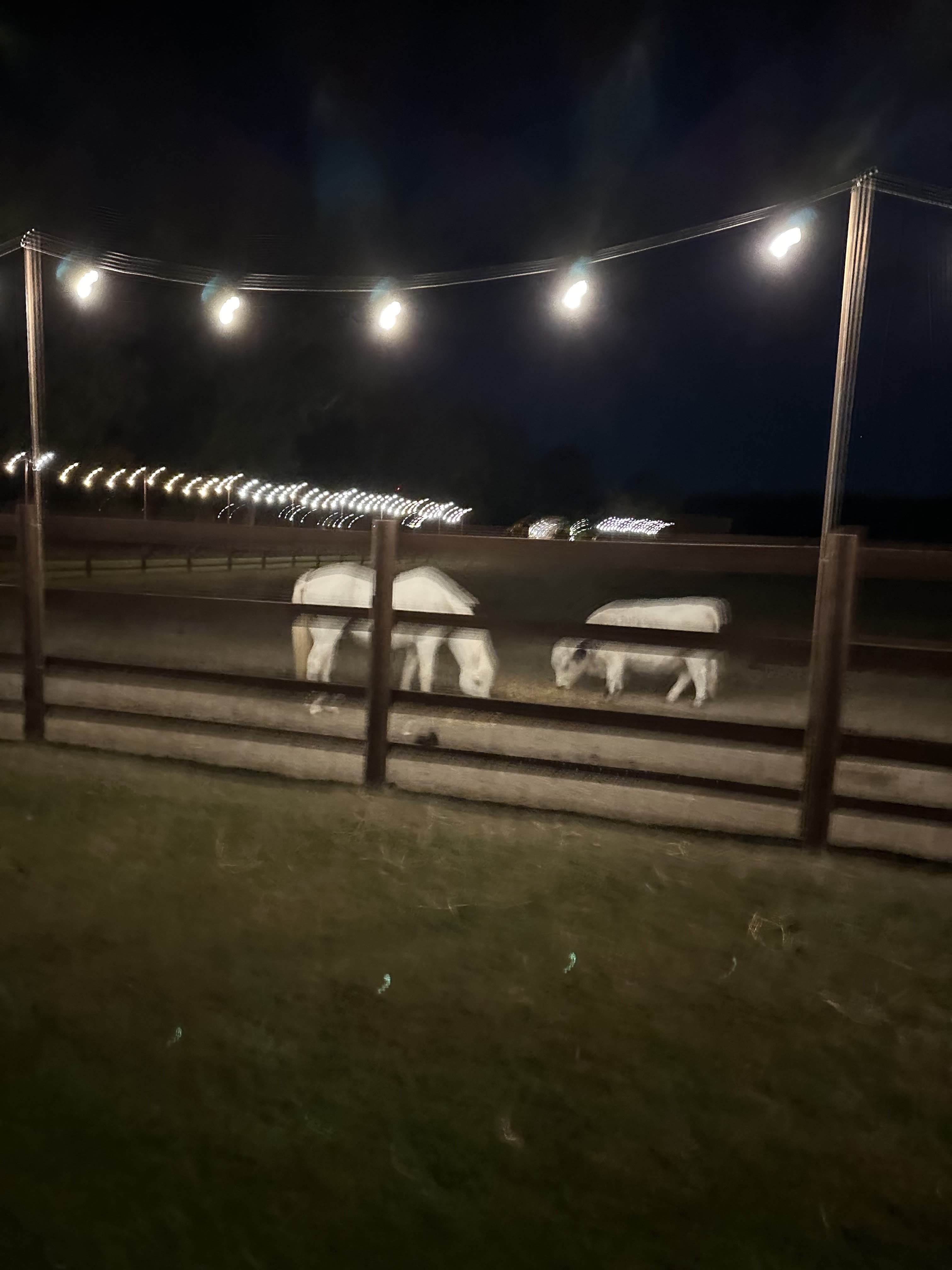
Photo ID: A blurry photo of a white pony and a white-and-black cow grazing in a pasture. It’s dark outside, but there are white shining lights lining the fencing.
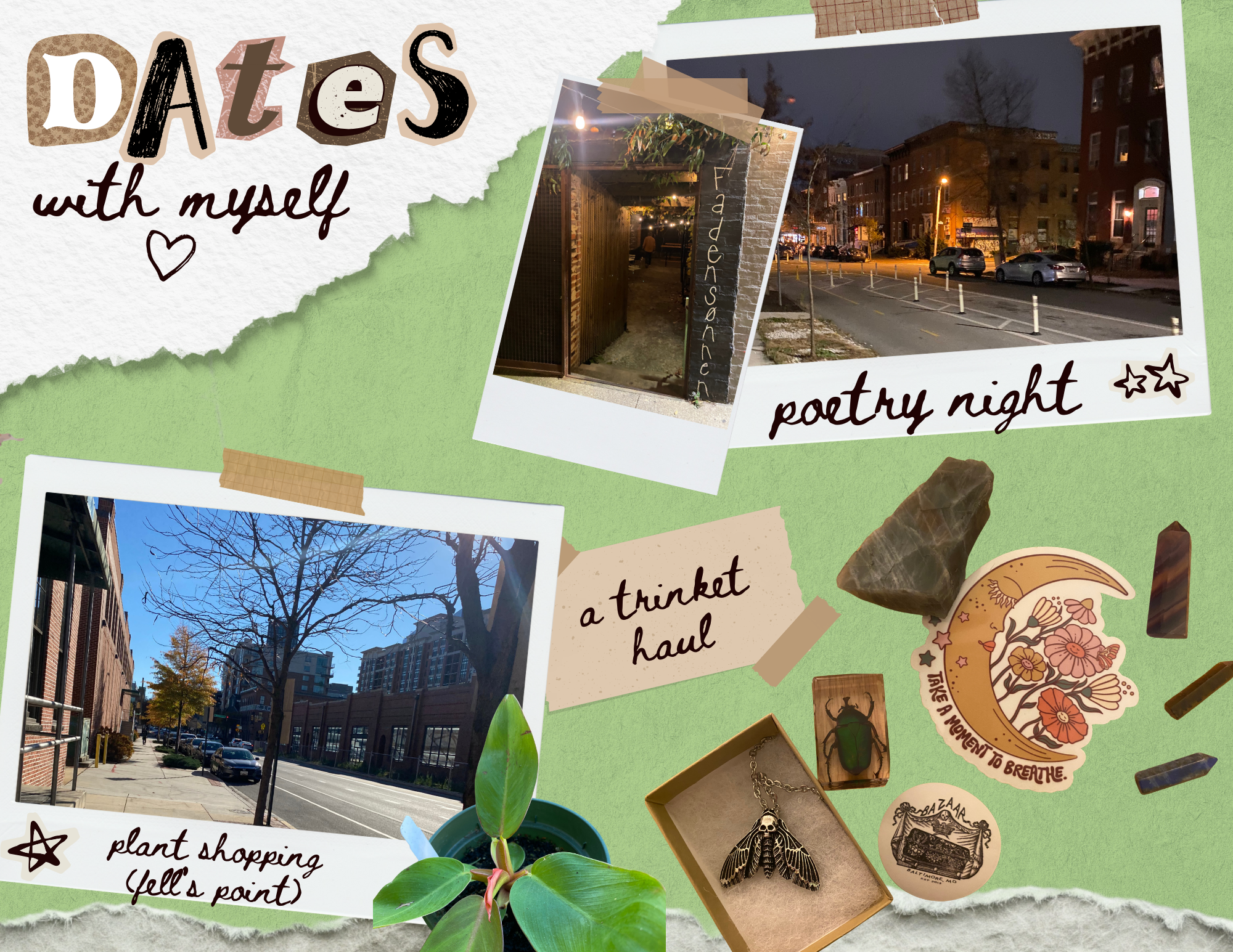
A collage made by me on Canva, consisting of different images I’ve taken while “taking myself on dates” over the past few weeks. Text reads: (top left corner) “Dates with myself”, (top right corner) “poetry night”, (bottom right corner) “plant shopping (fell’s point)”, and “a trinket haul”.
I came to the realization this past summer that I have never lived alone. I grew up with a large family, lots of siblings and cousins always around, and went straight to living with my partner and their family at eighteen. After that, I came to college, where I’ve always shared a dorm or apartment with three other people. So learning to exist by myself, in a way that is not dictated or defined by the people around me, has been trickier than I’d care to admit.
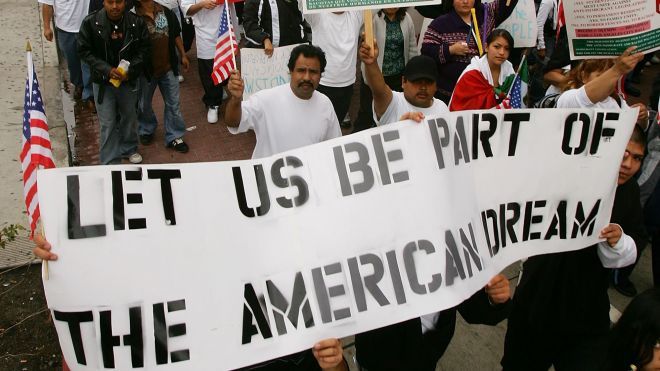
Surrounding all the recent buzz and chaos around immigration status and the laws regarding it, I’ve always had a lot of thoughts, especially as a child of two immigrant parents. I just wonder how people can think of other human beings as ‘foreign’ or ‘illegal’ when in reality, we’re all just one species inhabiting this Earth. What is so wrong about a multicultural society? Is it not a privilege to decide you want to try authentic food from another country, and be able to walk down the street and just do that? Is it not a privilege to work alongside people who aren’t exactly like you, but bring learning experiences, stories, languages and culture with them.
As someone who loves to travel, there is nothing I love more than being able to not only visit other countries but meet people from those countries and understand their everyday lives or learn a line or two in their language. We live in a country so diverse with numerous diasporas, that this can be achieved within our borders, yet we’re not the slightest bit grateful. It’s also interesting to travel to other countries and observe other Americans and how they interact with those within the country they’re visiting. When I visited France this summer, a lot of the Americans I interacted with were very snobby and rude, complaining about the food they’ve had to eat, the subway system, and how busy the tourist areas were. I didn’t really care because I’m not the biggest fan of French people but I definitely noticed. it made me realize that not only are a lot of Americans not very accepting in their own country, but just everywhere.
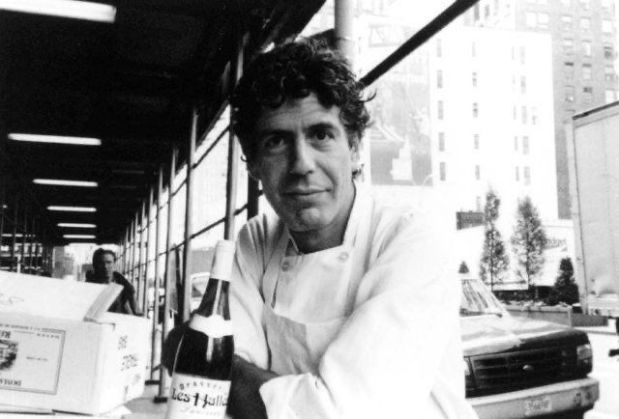
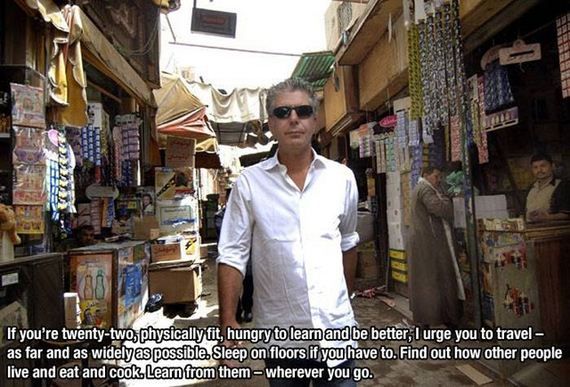
Growing up, every Sunday night around 9pm, I’d join my dad who was already watching CNN, to watch Anthony Bourdain’s Parts Unknown. I’d watch him go to countries throughout the world, and try their dishes, whether they were popular or not. I really admired the fact that for him, it wasn’t about food, it was also about living like these people. He also spoke so strongly and highly of immigrant people and even once stated “The bald fact is that the entire restaurant industry in America would close down overnight, would never recover, if current immigration laws were enforced quickly and thoroughly across the board. Everyone in the restaurant knows this is. It is undeniable. Illegal labor is the backbone of the service and hospitality industry – Mexican, Salvodoran, and Ecuadoran in particular. To contemplate actually doing without is to contemplate mass closings, a general shake out of individually owned and operated restaurants – and, of course, unthinkably higher prices in the places that manage to survive…the ripple effects would be grave.”
While long, this quote is so beautiful because it speaks to the volume that America underappreciates illegal labor while continuously profiting off of it. But dare I say, even if people considered ‘illegal’ didn’t work so hard, their presence should be welcomed as no one can be illegal on stolen land as many say. In class, we read Citizen: An American Lyric by Claudia Rankin, and though it focused on Black stories which I appreciated, the themes of systematic bias and aggression and everyday racism remind me of our society today, which is a shame due to many of the anecdotes being slightly dated. When our society should be progressing it is in fact doing the very opposite, and as American people we deserve to be ashamed. Although Anthony Bourdain’s fate serves as a reminder that no matter where we go, we cannot escape ourselves, his longing for good food and interconnection was a beautiful gift.
Limitarianism. is a concept I encountered in one of my classes this year, and it has stuck with me ever since. A quick summary of limitarinism is that it argues that there should be a limit to how much wealth any individual can accumulate. We constantly hear claims that “there isn’t enough room in the budget” or “there simply aren’t enough resources” whenever social problems arise, but I refuse to accept those statements at face value. The truth is that scarcity is often manufactured. The number of people who have suffered or even died unnecessarily is devastating, not because their problems were unsolvable, but because the solutions were deliberately withheld because of greed. A small portion of the population controls an absurd and unjust share of wealth. Redistributing that wealth into public programs could revolutionize society and drastically improve the quality of life for the average person.
In the text “Framing Long Covid Through Patient Activism in the United States,” we follow a father who expresses deep frustration at no longer being able to fulfill the role he once had before developing long Covid. His struggle is not only physical but financial, revealing how illness in America often leads directly to economic hardship. What makes me frustrated however is that these forms of suffering are treated as inevitable. We see cases like his and respond with sympathy or admiration for the individual’s resilience, yet we rarely question why such suffering exists in the first place. If we allocated tax revenue more effectively and, more importantly, if we regulated how much wealth individuals and corporations are allowed to accumulate—these problems cease to exist to the level they are at now.
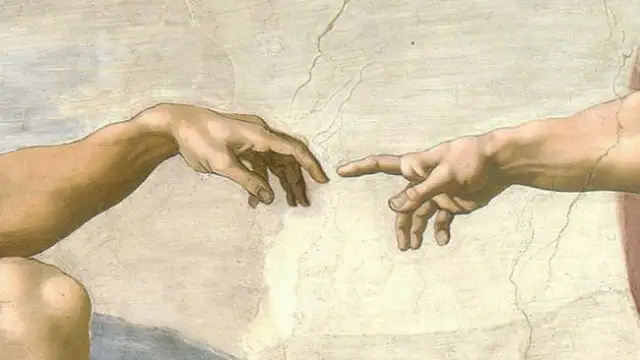
There is a kind of soft-core suffering embedded in our current system, an illusion that sacrifice is necessary, that we must simply make do because resources are limited. But that illusion is intentional. Change is just a finger tip away yet we see excuses rise frequently. The average worker is being exploited and conditioned to believe there is no alternative. The only reason we cannot access that help is because the ultra-wealthy and the systems designed to protect their interests refuse to extend it. Instead, they rely on excuses, fear-mongering, and division to maintain the status quo.
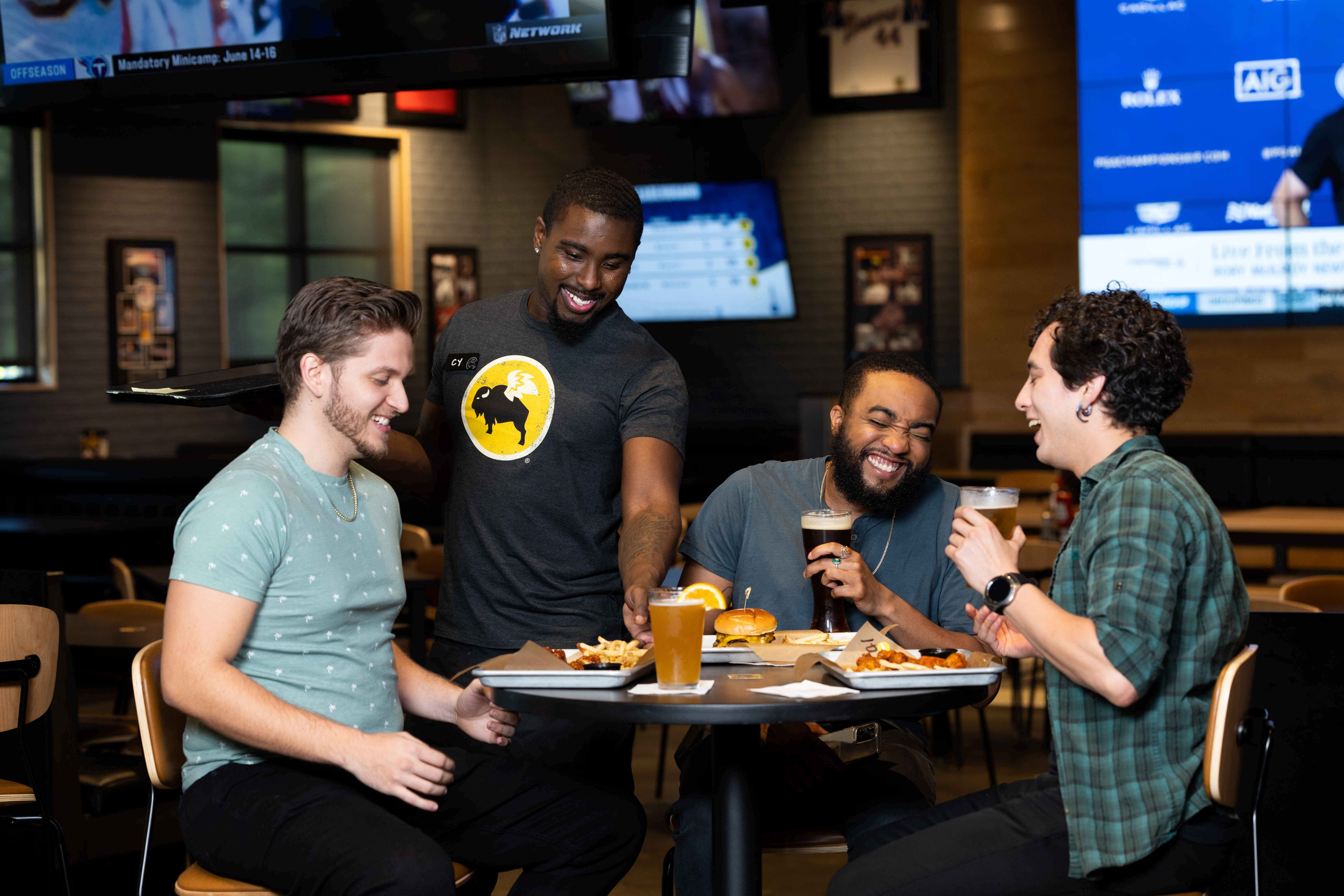
In the past three years, I’ve worked at two different jobs that have an aspect of food service. I’ve never personally been a server (aside from the two tables I served one day when we were short staffed at Buffalo Wild Wings) but being a server means relying on your customers’ generosity to pay your bills. From what I’ve seen, this leads servers to make many, many, MANY assumptions about their customers from the time they walk up to the host stand to when they walk out of the door.
The main factors that come into play when determining if a party will be a “good” (high-tipping, low-maintenance) table or a “bad” (low-tipping, high-maintenance) table are age and race. The age thing is simple. Young people, like teenagers, don’t tip or will barely tip. Older people are more likely to tip because they are accustomed to that social norm and have the money from their grown up jobs to do so. This makes sense to me and I don’t think it’s the most harmful of stereotypes to assume. The racial stereotypes are a lot more complex and 100% more harmful.
These stereotypes, in my experience, include (but are definitely not limited to) a White family will tip well, Black people will not and will ask a lot of their server, large groups of Hispanic will likely order a lot of beers and tip highly as a result, South Asians (often grouped together and labeled “Indians”) will ,without a doubt, not tip a cent, while East Asians don’t have much a reputation for being a good or bad in regards to tipping. Within the last month or so, I’ve heard some of my coworkers talk about how happy they are that it’s “snowing” (aka most of the customers at the moment are white) and when I was at Buffalo Wild Wings I remember an instance when one of coworkers paid another one of my coworkers to take a group of Indian people who came in pretty close to closing (the one who served them ended up getting a handsome tip).
All of these experiences have reminded me of Chimamanda Ngozi Adichie’s ‘The danger of a single story’ speech. These stereotypes and assumptions are all based on a couple interactions and ultimately lead paying customers to be given shitty service regardless of how they plan on tipping. If, perhaps, my past and present coworkers were more open to seeing people (in both groups and individually) for what they actually are, they would earn the big tip they are so eager for. I understand that it’s difficult to serve a table that runs you all over the place just to not really get paid for any of it (most servers get paid around $3 an hour and almost entirely get paid with their tips if you aren’t aware), but viewing entire groups of people and perpetuating single stories doesn’t not help literally anyone.
Growing up, I knew how to research. Researching stuff was my jam, and I built that skill through years of new hyperfixations and special interests. So, when I started to notice some psychiatric concerns and neurodevelopmental differences between me and my peers, I got to the bottom of it.
Even after a few trips to the child psychiatric ward during a few incidents in my teen years, I always ended up being blown away by how little the psych professionals seemed to know about diagnoses and treatment options. On top of that, because I had some background knowledge from my own research, it seemed to make psych professionals more dismissive of my concerns. Automatically, if you have done research that leads you to a diagnosis you think fits, you’re angling for a diagnosis just cause you want one and not cause you need the help. I have written a few of the particularly frustrating incidents below. Most incidents are from Johns Hopkins.
When my social anxiety and sensory issues were particularly debilitating, I brought up whether or not a psychiatric service dog would even be an option for me. To which the psych team looked at each other in confusion and then asked me, “What’s a service dog? You mean like a seeing eye dog for blind people?”
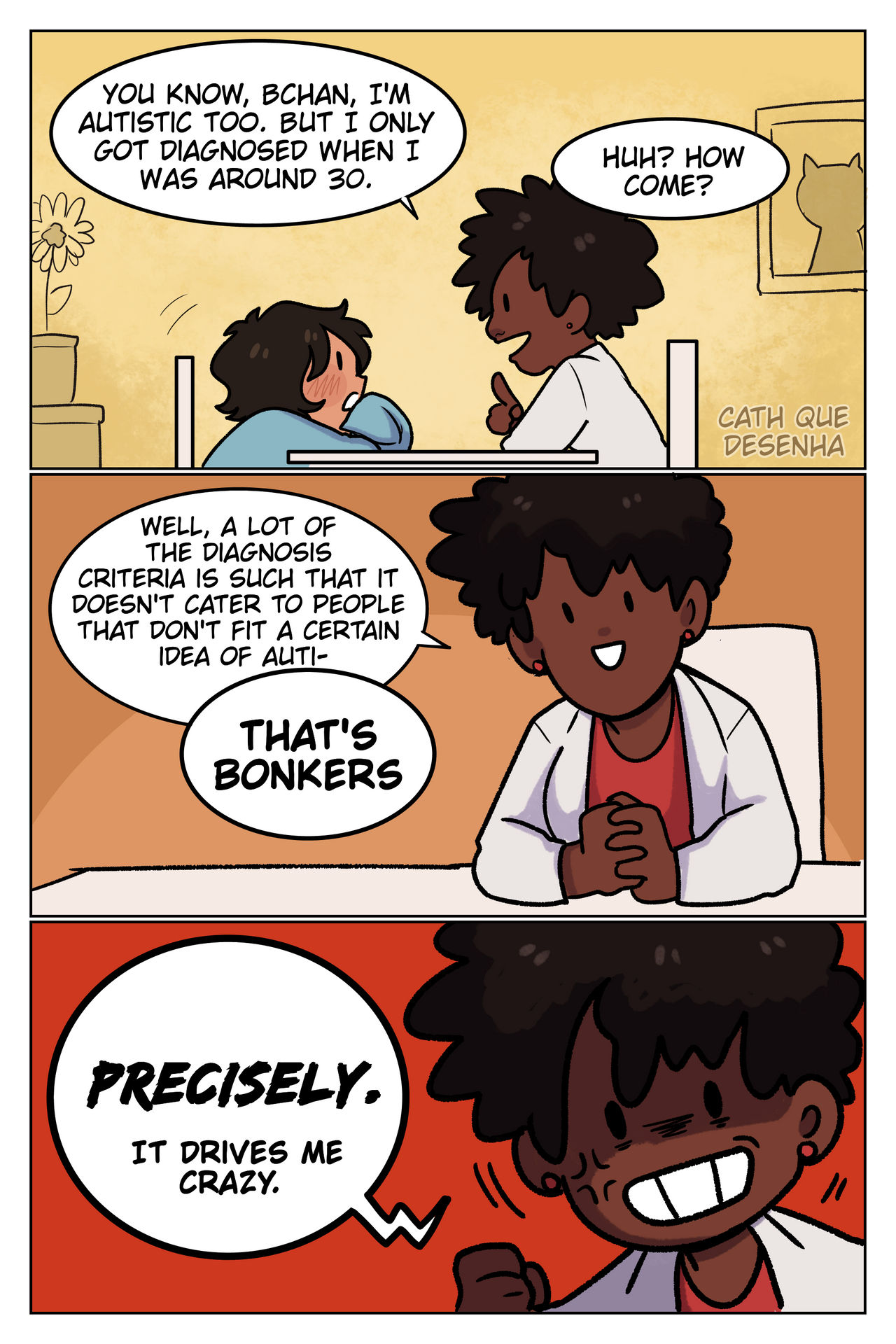
I brought up that I likely have Autism to the psychiatrist(?) assigned to me. She interviewed my parents and decided I didn’t fit the childhood criteria enough to fit the diagnosis, without interviewing me at all. Then, she tried to diagnose me with OCPD, and when I said I didn’t have those symptoms, she visibly deflated as if I had disappointed her
A different psychiatrist told me that even if I did have Autism, there wouldn’t be a point in him giving me a diagnosis because I’d be too high functioning for it to matter
I brought up to the therapist that I wanted to pursue a psych eval. She said, “What do you think they’ll find?” and I said, “depression”, then she actually laughed at me. I did get diagnosed with severe depression, obviously, so I’m not sure what her problem was
I’m not sure what the rules are for becoming a psych professional, but this track record is rough, and not nearly the worst I’ve seen. Please do better.
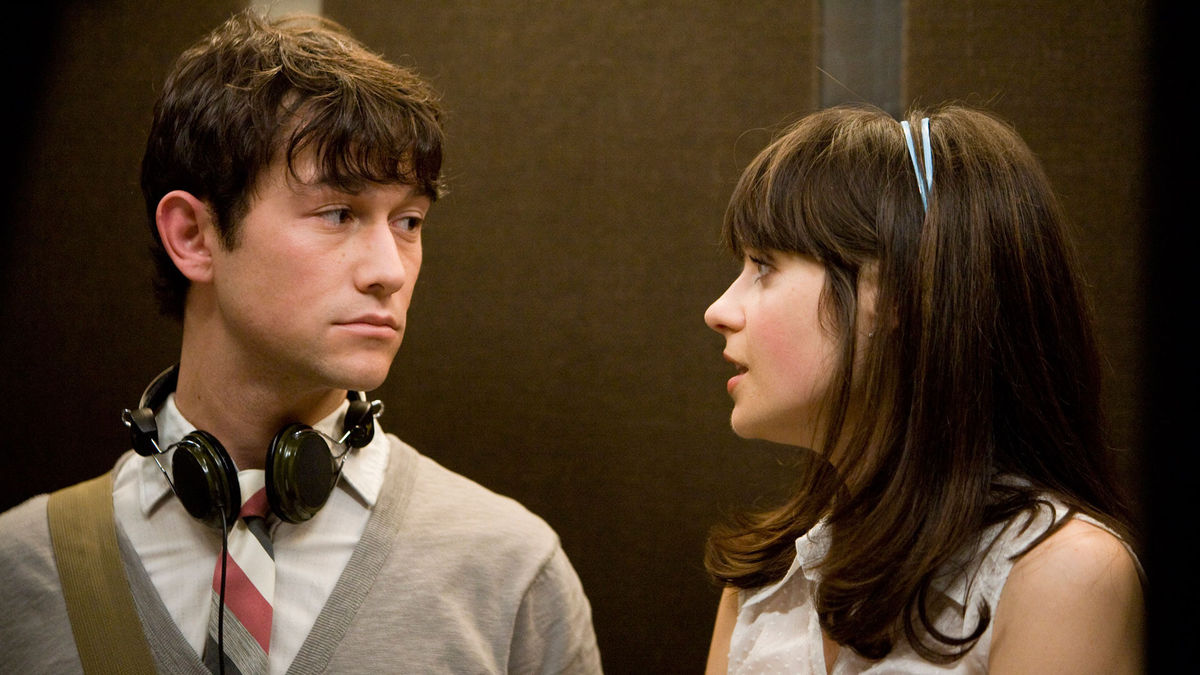
My guilty pleasure has always been romantic comedies and even though a lot of them fall in the girl and guy meet, they fall in love, something goes wrong/ misunderstanding occurs, they separate for a little bit and then they reconcile and live happily ever after, one of them stands out. 500 Days of Summer(spoiler warning even though the story isn’t even linear) is a story about a guy who meets and then falls in love with a girl who likes him back but doesn’t really want a relationship. It goes through a lot of different scenarios where eventually it doesn’t work out and he finds someone new at the very end of the movie. This movie is a perfect example of how the culmination of lived experiences can shape how you view love.
I am absolutely a romantic. I’ve been surrounded by love my entire life, my parents, my grandparents, my aunts and uncles all seemed to be in love and I wanted a piece. My first watch, I completely agreed with the main character. How dare this girl who expressed her feelings of not wanting a relationship with him end up not wanting a relationship with him. The whole point of the movie went over my head and they even tell you at the beginning. After a few more rewatches(I enjoy this movie a lot) and a little bit of growing as a person, I finally start to understand. And the whole reason I was able to understand why what happened wasn’t just one persons fault is because I’ve had more experiences with love since then. Perception of love can be so different from person to person and it’s most likely why love is so difficult.
The opening of the movie is of the main character and the girl’s upbringing, showing how the main characters perception of love was shaped from movies and music, stemming the hopeless romantic mindset while the girl’s perception of love was shaped by how her parents divorced when she was young which stemmed the cynical mindset and we see how their mindsets clash during the movie. It is just so interesting how much experiences and very little or subtle changes in a life can change so much about someone. Always keep a open mind and a open heart.

 Unruly Bodies