No One Mourns the Sick: The Wicked Myth That the Pandemic Is ‘Over’

No One Mourns the Sick: The Wicked Myth That the Pandemic Is ‘Over’

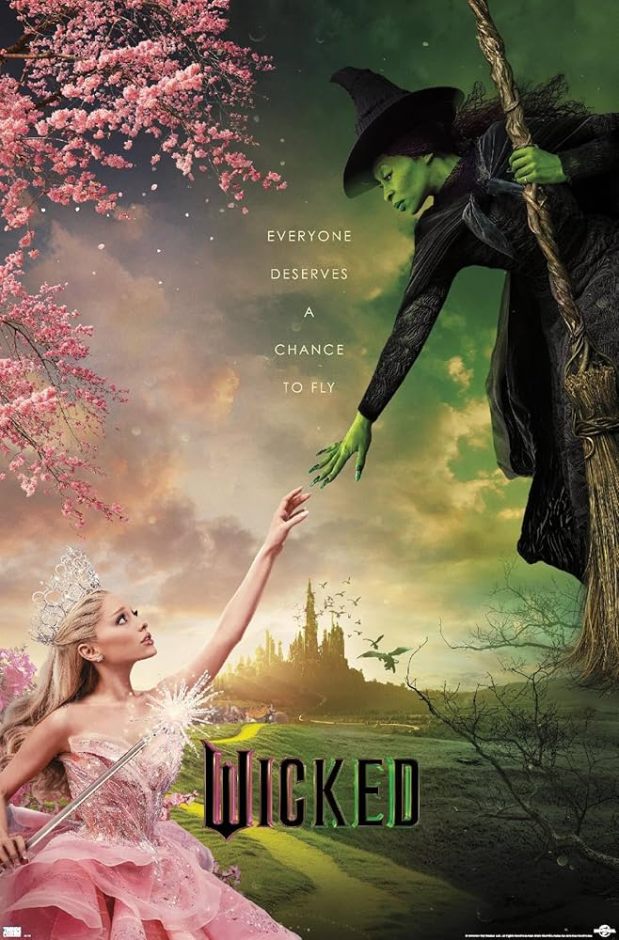
According to a recent Guardian article, “Both Grande and Cynthia Erivo tested positive for Covid during the filming of the first movie, temporarily delaying production. Erivo reportedly contracted the virus days before shooting the climactic first-act number Defying Gravity, while Grande tested positive before filming the song “Popular.”

There’s something horrifyingly Wicked-like about how illness is framed now. If someone masks, they’re “paranoid.” If they don’t appear for a photoshoot or premiere, fans complain. When someone gets COVID, the conversation is about wasted money on promotion, fan backlash over missed premieres, or travel delays , but  rarely about health, recovery, or the toll illness takes. The framing treats sickness as a hiccup, not as human suffering. It treats the sick body as a burden to the show, not as a person in need of care.

“Grande’s positive test was the latest hiccup for the full-court Wicked press blitz that has seen the cast hop continents by the day. Due to flight delays, Grande was unable to make the premiere in Brazil, triggering fan backlash she also addressed on her Instagram.”

That is exactly the kind of abled entitlement Mingus warns about: a culture that assumes certain bodies can and should be sacrificed for convenience. Under this logic, “the show must go on,” regardless of who gets hurt. The Wicked cast situation isn’t just celebrity news, but it’s a reflection of a larger societal pattern where health, disability, and our shared vulnerability are minimized, ignored, or erased entirely.

What’s even worse is how normalized this erasure has become. COVID has become “another thing,” something to power through so cameras and promotions stay on schedule. Workplaces expect people to show up sick. Students are told to push through fevers. Long-term effects are brushed off as “just fatigue.” Public health infrastructure? Largely forgotten. Masks, ventilation, testing are all optional. People who get sick frequently or live with chronic conditions are expected to adapt or be pushed aside.

Mingus doesn’t just name this as negligence, she instead frames it as violence. When we treat care as optional, when we prioritize productivity over people, when we mourn canceled premieres more than lost lives, we are making a statement about whose lives matter. We’re deciding who gets protection, who gets grief, and who doesn’t.

What about the “right-to-live?”

I remember when Jahi McMath died—for the second time. 

Senior year of high school, I came across an article about Jahi McMath, a 13-year-old Black girl who was declared brain dead after her tonsils were removed. It was Jahi’s first surgery, and she was scared. She didn’t want to go through with it, but her mom convinced her it would make her life easier (Jahi had sleep apnea, and removing her enlarged tonsils was intended to help). After speaking with the doctor, Jahi consented to the surgery, and she was fine for about an hour afterwards.

Jahi’s blood vessels were unusually close to the surface of her throat; the doctor had noted this in his chart for her, but the post-op staff was unaware. So when Jahi started coughing up blood, they didn’t see it as the alarm that it was, although Jahi’s family did. They repeatedly raised the alarms for her, but no one listened until her heart stopped.

Jahi was declared brain dead; her brain had stopped functioning due to the massive blood loss. In California, brain death is legal death. But Jahi’s family didn’t accept that. Her mother, Nailah, was convinced Jahi was still alive; Jahi responded to some stimuli and questions. Nailah asked Jahi if she wanted to be taken off life support, and Jahi said no through physical movements her mother taught her.

In the long legal battle that followed, Nailah and her family were forced to flee the state with Jahi under threat of legal action and jail time. Nailah’s insistence that Jahi was alive, and refusal to take her off life support, violated California’s medical ethics, so they went to New Jersey, where families can reject the notion of brain death on religious grounds—Nailah technically “kidnapped” Jahi to do this. There, Jahi had at-home around-the-clock medical support from nurses and doctors who were willing to lose their medical license or be shunned from the medical community; the doctors that treated Jahi were treated as quacks by the medical community. In the view of the community at large, you cannot treat a body that is already dead, and although Jahi’s body was not dead, her brain technically was. The California hospital where Jahi had been declared dead consistently disavowed the McMath family’s efforts and actively disparaged them for “desecrating a body.” But they were wrong.

With consistent care, and rogue researchers willing to look into her case, Jahi was able to exhibit signs of life, brainwave activity, and even underwent puberty. In 2017, a neurologist at UCLA independently confirmed that Jahi was no longer “brain dead.”

Jahi died—for the final time—in June of 2018, not even six months after the New Yorker article was published due to internal bleeding from abdominal complications. Despite overwhelming evidence, the hospital that issued Jahi’s death certificate refused to ever accept Jahi’s recovery and overturn her death certificate.

In 2020, I, much like Jahi, was preparing to go into surgery to get my tonsils removed for sleep apnea, just as she had been. Her name haunted the back of my mind in the days counting down to my surgery, but I, just like Jahi, spoke with my surgeon and asked him how many times he had done the surgery, what the risks were, how long he had been a surgeon. I had the insight that a 20-year-old had and a 13-year-old didn’t, but we were in the beginning of a pandemic, in the middle of the shutdown, and my mom wasn’t even allowed in the waiting room with me. Though I was nearly certain I would be fine (my surgeon routinely did much more complex and precise surgeries, like removing tumors that had grown into the blood vessels of the throat), I was alone when I frantically pulled the anesthesiologist aside and had to shamefully admit that I had been taking quinine pills until yesterday morning, a stupid superstition I had bought into as a way to stave off a Covid infection.

Quinine, for those unaware, is an herbal supplement that used to be used as a “cure all” back in the days of the Black Plague and the Spanish Flu. It didn’t work back then, but I’m a big believer in the placebo effect, and I needed to take something to put my mind at ease. One of the side effects of quinine—that I didn’t know until the morning before my surgery when I actually read the bottle—is that it can thin your blood. This makes you a higher risk for surgery; you’re more likely to bleed uncontrollably because the blood is much harder to coagulate. The bottle said to stop taking quinine two weeks before surgery. Feeling like I was going to cry, and possibly even about to die, I waited anxiously to be taken back and prayed that I would wake up afterwards.

Obviously, I did, or I wouldn’t be writing this right now. But I’m aware how lucky I was, and am. Jahi’s case is in direct opposition to Terry Schiavo’s: Terry Schiavo was a White woman declared brain dead who the hospital refused to stop treating, whereas Jahi was falsely declared brain dead and refused further treatment. Jahi’s family noticed this too; they knew if Jahi had been White, she would have likely received the attention she needed, and even if she had still been declared brain dead, her family’s choices would have been respected. Having come after both of them, and being light-skinned myself, I know my family would have had the respect and space they needed to make whatever decision for me they felt was right if my surgery had gone wrong.

Still, it haunts me; Jahi’s story is barely told outside of fringe medical pieces, but Terry Schiavo’s is well-known enough to be casually referenced in feminist writings. Who gets the right-to-live? Who is allowed to die? Why are our bodies’ needs and wishes ignored depending on the kind of body we inhabit? I hope Jahi is resting peacefully now, but I carry the anger and fear of what was allowed to happen to her.

How Covid Destroyed My Family’s Life

I am an immigrant but I came to America at a young age. When my family first came everything was great. Back home my parents owned their own business and they were doing pretty well. They had built a house from scratch with land they bought and I was daddy’s little girl. I got whatever I wanted and my closets were decorated with dresses of all sorts of colors in the rainbow. My sister and I went to a private school and we had our own taxi take us back and forth. Needless to say, I was living in a fairy tale, so I thought America would be no different.

At first everything was fine, then suddenly my life around me started to turn into a nightmare. My father became more and more distant and soon very scarce in my life. The man I had seen every day of my life was now a stranger to me. My parents divorced and my mom had to start from rock bottom. There were moments where we slept in her car, and had no home. My mother would scrape up everything she had just to get us food and sometimes there wouldn’t be enough for herself. She worked as a Certified Nursing Assistant and that took such a toll on her body that she ended up having to go into surgery to remove masses from her stomach. She worked at this job for 10+ years and made less than 25,000 dollars a year. But during all this, she made sure my sister and I had a good life.

When I started college, she went back to college and got her Nursing Degree. About 5 months before Covid hit she officially became licensed as a Registered Nurse. She called me on the phone so proud of herself saying how we were going to finally be able to do the things other families get to do like go on vacation. All her dreams had turn to reality, and again, like before her life suddenly turned into nightmare. Her job failed to give her PPD, leaving her at the mercy of covid, and unfortunately she caught it. Immediately we knew something was wrong. Her symptoms became more severe over time and she was not able to work anymore. The woman I had seen go through so much was defeated by a virus that no one was taking seriously. As I went to sleep I could hear her cry in her room because of all the pain.

During that time she talked about very bad things and it worried my sister and I for her safety. No matter which doctor she went to everyone would say it was all in her head. Or that she is old. She went through more than 8 doctors during quarantine and none of them would listen to her. As a black woman she felt betrayed by the health care system. I thought about this when we had discussed in class the issues with the health care system.

My family is back at square one. My mother had plans that she may never be able to fulfill, and I now have no motivation or hope for the world. I find it hard now to take school seriously because seeing everything my mother went through, will any of this ever be worth it? The stress, the anxiety, the late nights, not knowing what kind of job you will get when graduate college, the debt all seems like such a high price to pay when you might just end up exactly where you began.

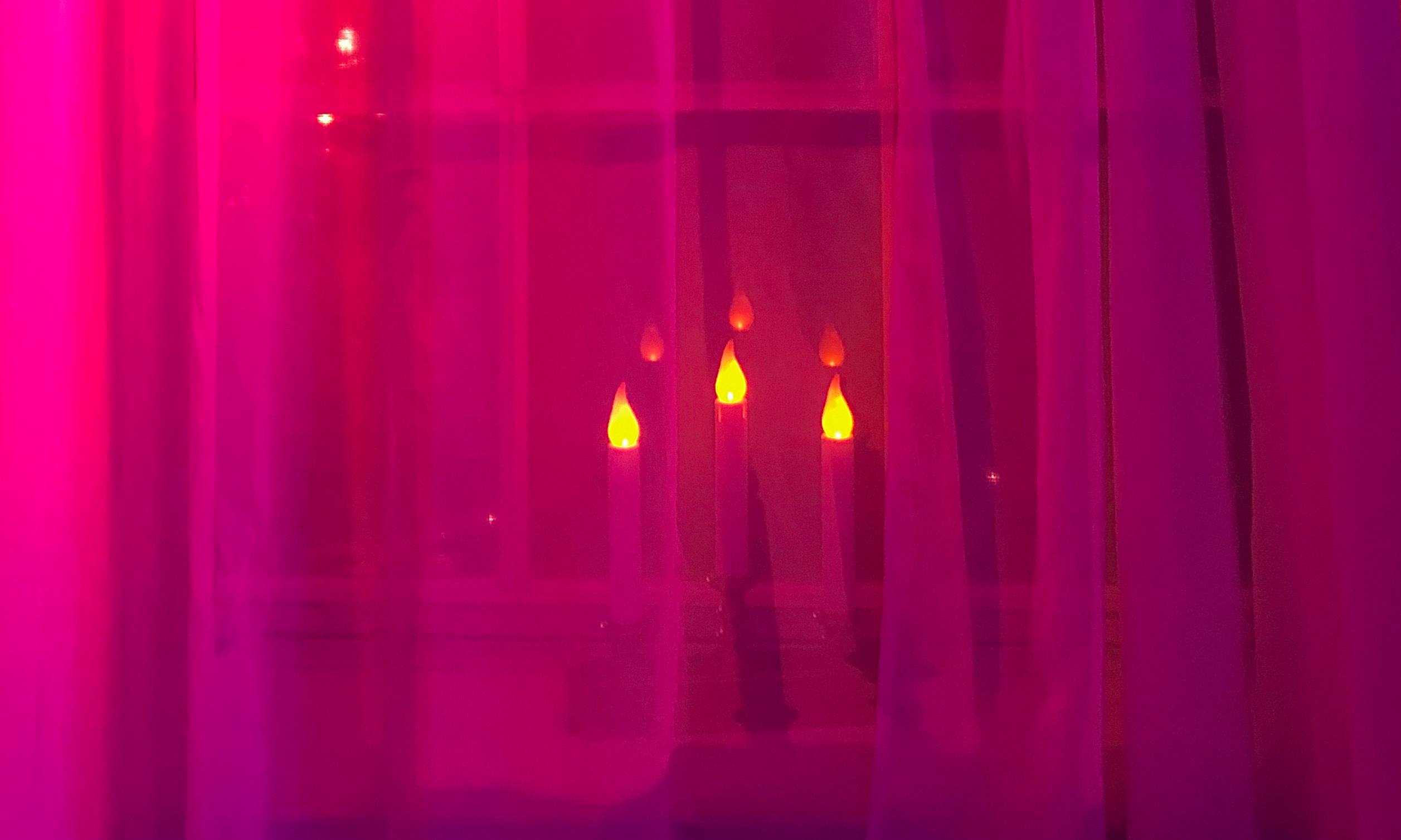
Bedroom.

A view from my bed [ID: Hazy photograph of a window illuminated by vibrant red and purple lighting. In the center there is an electric candelabra sitting on the window sill, slightly obscured by sheer curtains.]

2011 was the year I began distancing. By which I mean, I began a life lived from my twin bed, fueled by goldfish crackers and electrolyte drinks, seldom able to access the outside world. It wasn’t mine to call home anymore.

I was drowning in conditions that these doctors hardly knew about. I had no choice but to become my own doctor, nurse, and historian. More than anything, I became my own community.

The outside world was stolen from me by sickness, uncertainty, and administrative violence – this world was never built for my survival. Such predicaments were met with constant calls to push through – go into the world anyways, risk it all for a “normal” life. They said adapting to it would make me better. It wrecked my body and my mind. Being bedridden was extraordinarily taxing and painful in a way that cannot be understood by those who have not been fully immersed in it in this way, yet. But I am inseparable from my bedroom life, I am made of soft pillows and the world I built among them. 

Continue reading