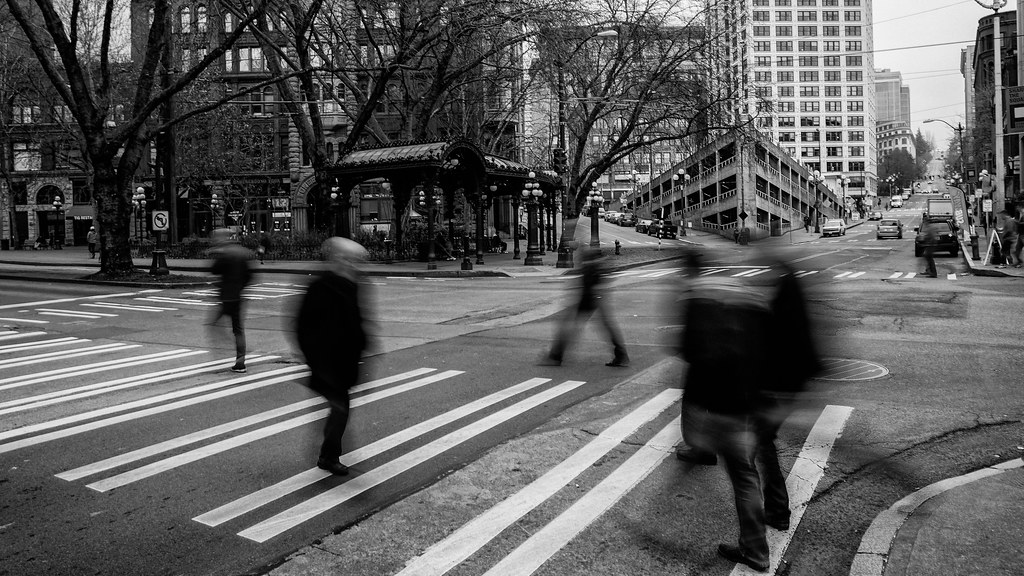
Picture dancers behind a pop star at a concert, they are moving as one. They have matching outfits, hair styles, and builds. Different images of them may conjure given the minds of each individual, especially given their identity. From a more dominant Western perspective, one may think of people who are relatively skinny, muscular, and occasionally of different body types. There may be a semblance of diversity scattered through the row of dancers, but this can be infrequent depending on where you look. This is a pattern that shows up at concerts or more generally, stage performances. This isn’t a criticism on a singular performer or production but rather a reflection of the music industry and what dance as an art form and how it has taught people what to define as a “good” dancer. Dance fundamentally treats symmetry, synchronicity, and sometimes looking identical while dancing in tandem as the way to achieve “true” performance. This belief doesn’t appear from out of nowhere. Dance in classical forms awards a limited body ideal and the industry just keeps rebuilding it.
Something that I deal with on a fairly frequent basis from my family are expectations that are not privy to my knowledge. I have the habit of doing the same to them and feeling justified in doing so without even thinking. This is a habit that many people have towards those who are close to them but it’s fair to say that we all hold it for each other as well. We have an idea of what the “right thing” is and oftentimes judge others and treat them differently for it. But what about when that “right way” only exists in your head.
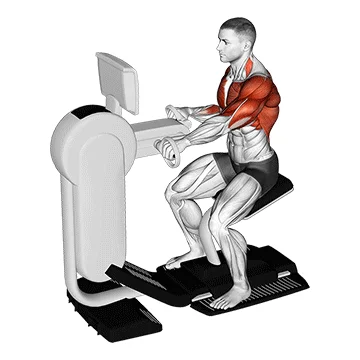
The gym is such an interesting place from an academic’s point of view, as each person experiences it differently. So as a fem-presenting disabled person, I decided to do some field research in regards to the gym (aka I needed an excuse to suck it up and go) So off I went in my wheelchair, leg braces in tow to get some walking practice in. As I arrive at the RAC, I am greeted by the out of order door opener!! What a great start… way to encourage disabled people to be active. I got some (a lot of) stares, because disabled people being active is outside of the norm to which people perceive. Where I see opportunity, and things I can do and adapt, able-bodied people see what I can’t do, and get all surprised when I do something outside of their idea of what disabled people are capable of. To me, I was just minding my business working out, but to others, I may have been perceived as inspirational or extraordinary simply because of phenomenology. What I experience and the people around me experience are two totally different things. Going to the gym is normal for me, whereas its not “normal” to see a disabled person in the gym for many able bodied people, making it seem out of place in how they experience the world. I also experience gym equipment differently, and it is evident that those who designed the gym and it’s equipment designed it from their own experience. For starters, there was a hand cycle in the gym (think of a stationary bike, but with the pedals at about shoulder height, a photo will be attatched) At least the gym had one, but that is not without faults. A wheelchair user like myself needs to a) transfer onto the seat on the machine and b) have enough lower body and core strength to balance on the seat. As someone that is ambulatory, it is not an issue for my own lived experience, but to someone else it very well may be. The hand grips also require a LOT of hand strength to hold onto, and I found it to be quite difficult. There are hand cycles out there that a wheelchair user can roll up to, and I just wish that was the case at the RAC. There were also no tactile buttons, braille or a headphone jack for audio instructions on ANY of the machines throughout the gym, making it so someone that does not experience vision cannot use the machines unassisted. I think learning about the concept of phenomenology is something that a lot of people that design gyms and other spaces should learn about. How you experience things is not the same as others for so many reasons, whether that be race, trauma, upbringing and ability. Growing up I was told to “put myself into the shoes of others” and that is the very basics of phenomenology, which gets built upon by looking into factors that I mentioned previously. Understanding how another person may feel is great, but understanding how someone may experience your creation, words or actions is a great step to bettering the world. Rather than connecting to course materials in the form of articles, I decided to conduct some field research to apply the overarching concept of the course so far: phenomenology. It felt fitting considering phenomenology is all about experiencing the world, and I think that it was a success!
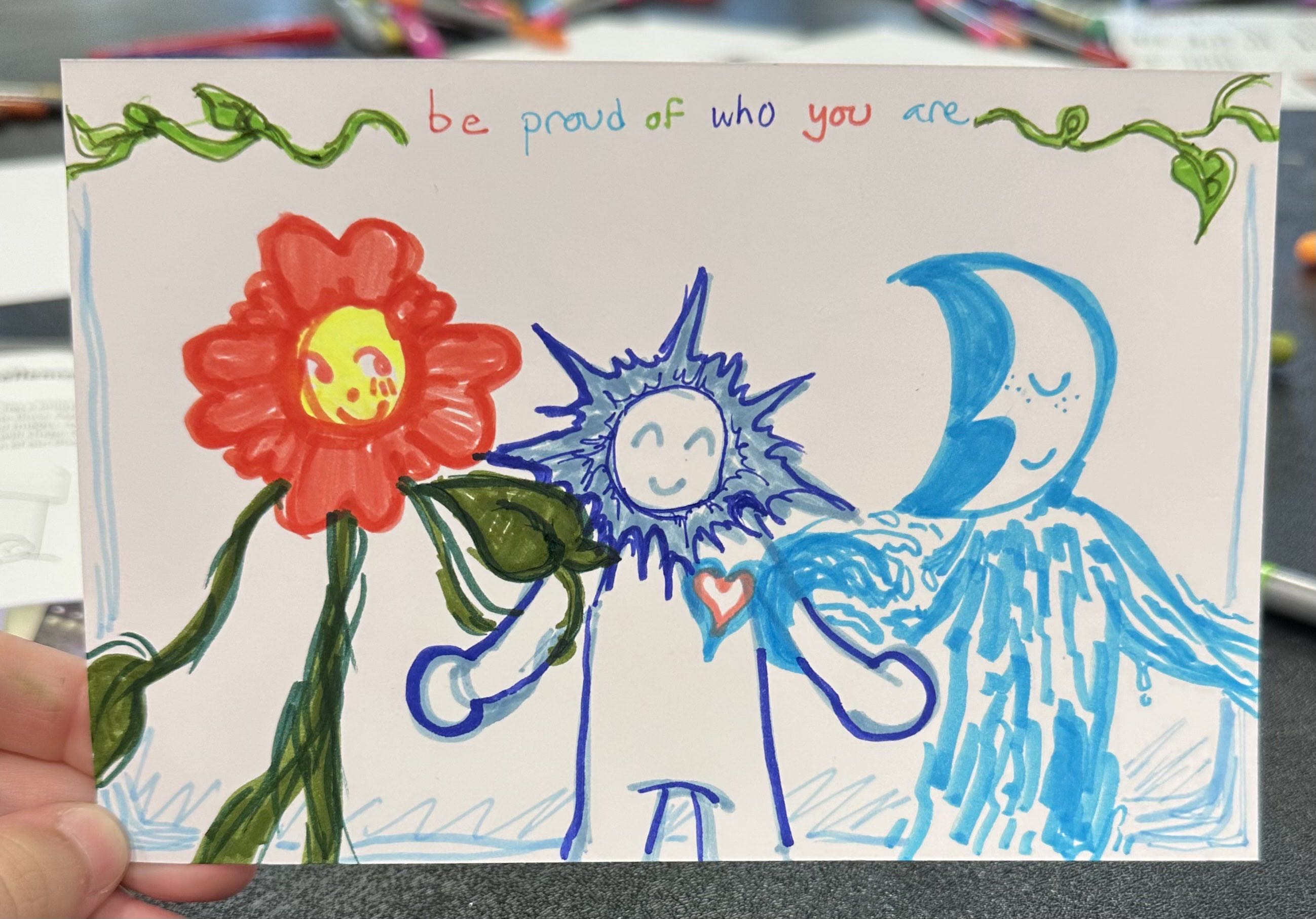
A quick notecard drawing I did at the UMBC Community Art Project.
“The flesh is inscribed with meaning both from ourselves with our consent and by others against our will.” Kosut & Moore, Introduction: Not Just the Reflexive Reflex.
In times when my community is the center of media, I feel like an ant being scorched alive under the microscopic lens of a snot-nosed child. Why, in my own habitat, must I smell my burning flesh? It’s not as if mine or my neighboring hills have done anything to incite such a cruel fate. Still, man believes himself to invade and reign supreme over bodies he views as ‘other’.
Growing up in a small town is difficult because you know everybody and everybody knows you. Being divergent from those who surround you, the burden of being seen feels suffocating; you’re not really sure what people think until they say something to indicate how they feel about people like you.
Twice now have I received a call from my dad following cases of gun violence in which the shooter – or someone personally involved with the shooter – identified as transgender. First, he’d sent me a text saying to call him when I had a minute. He’d preface the call with “now I’m not saying this to scare you, but” before updating me on the latest crass life-threatening narrative spun about my community and subsequently spread like wildfire among people who haven’t known how it feels to live with intrinsic fear laced in their veins. And although it was coming from a place of love, he told me this time to “be selective of who I tell”; as if that is something I needed to be told, as if telling me to keep my identity a secret isn’t painful no matter the place it comes from.
Michael Foucault’s Docile Bodies describe “a body that is docile may be subjected, used, transformed, and improved”. The modality of control is an uninterrupted coercion, and technicians of discipline become dominating. Where there is power, however, there is always resistance.
What does self-preservation in the face of tyranny look like? Under the scrutiny of everyone’s eyes, I feel like I’m expected to shrink, to slink quietly back into stealth and hide an integral part of myself. The fighting part of me refuses to go unnoticed and I yearn to get irrevocably intertwined in activism, to bloom into a symbol of hope. My pride will never get ripped away from me. I will not be a docile body.
Claudia Rankine, author of Citizen, poses a question that stings like alcohol on a raw wound; “How difficult is it for one body to feel the injustice wheeled at another? Are the tensions, the recognitions, the disappointments, and the failures that exploded in the riots too foreign?” Are minority groups viewed as so far removed and alienated from ‘typical’ society that we are seen not as human, but as beast? When the very structure designed to serve you strips you of your rights, your protections and defenses, and discusses rescinding your amendments, the answer is an aggressive, spit-in-your-face “YES”.
Phenomenology is the study of first-person experiences and sensations that give life more meaning. When we were discussing this topic in class I immediately thought about how much my experience and perspective on my life shifted after my adult autism diagnosis. After the diagnosis I began to look back at my life and pick out moments and traits that, in hindsight made so much sense with me being autistic. But before the diagnosis, were just a confused, muddled mess. I remember thinking back on basically every interaction I had ever had and wondering if I would have reacted differently had I known. They say ignorance is bliss, but in all reality the not knowing led me to become a traumatized, jaded individual. The world isn’t built for autistic folk, and imagine going about your life wondering why you are facing barriers and roadblocks at every turn and not even knowing why. It messes with your sense of self and you begin to think something is deeply wrong with you. I am still having to unlearn that one. Yay for therapy!
Something that you do when you spend your whole life not knowing you’re autistic, is you get really good at masking. I was able to play the part semi-well and be sociable, friendly, and well-mannered. And when I got older I became even better. But when you learn that you are autistic, that mask begins to crack. It crumbles away and you are left with a messy, soupy, puddle of sensory issues, lack of social awareness, and fixations. It’s extremely common for adults who are diagnosed with autism to regress in a lot of their skills once they find out about their diagnosis. After holding themselves together by the seat of their pants their whole lives, their whole world is turned topsy turvy. This is what happened to me. It’s taken me years to reacclimate to my new way of perceiving the world, and myself. Slowly I’ve built myself back up and created a new, stronger identity. Diagnosis saved my life.
When I was a kid, sometimes I use to just sit there and feel myself. Not physically put my hands on myself but I would sit and think, “I am a person who is alive right now in this present moment. This is not a dream or some sort of video game but I am sitting here as a physical being. Breathing, thinking, sitting down etc.” I am glad that I finally have been introduced to a proper name for that stream of consciousness I acquainted myself with. I felt okay with being just me. I realized that I stopped this practice because I started to feel less like me and got consumed with the different roles I fit into and play in different circles of society. In some I am a child, some I’m an adult, some I’m a student, some I’m gay. Some I am a villain, some I’m a hero, some I’m gay, some I’m a black woman. As I got older I felt like there were so many labels that were plastered on me that I did not feel like a person rather a characteristic. I miss when I could just exist in my own bubble as my own entity without feeling a part of someone else’s.
I woke up one day with a new body and it wasn’t the first time.
The earliest memory of my first body was when I asked my father, “if I cut myself and then bleed out, will I get smaller?” He laughed and said that it doesn’t work like that. I remember having thought long and hard before asking him this question because at 6 years old, it just made sense. Perhaps that was the first time I got a new body. Surely I had one before but I didn’t notice it but this new one I saw was too much. Too much of what exactly, I wasn’t sure yet but I knew I hoped it would shrink some to make me feel better. I kept that body for a while, probably until 8th grade right before I went to high school. Throughout that time I began to realize what I didn’t at six. That this body was too big. I was always the tallest person amongst my peers and sometimes I was the fattest too. In middle school I found a way to cope with these feelings of taking up too much space by making that body the punch line in jokes. I saw how others who had bodies like mine were treated and figured it was better to be the one to take charge of my own disparagement rather than be on the receiving end. When we learned about whales having blubber in science class, some students started naming classmates who had “blubber” (i.e. were fat) and I quickly decided that it would be funny to call the fat on my arms blubber and I would shake it to make my friends laugh. For me, it was better for that body to be laughing, not crying even though it felt the same inside.
I got a new body the day I was helping my older sister move into her college dorm and she commented on the size of my butt. I was confused because we all knew to have a big butt meant you were sexy and attractive and everything this body was not. I was suddenly aware that the body didn’t look the same as when I was six but was somehow the exact same. It seemed that the body I gained that day had new forms. It was still Ugly but…? I kept that one until I was 19 years old. I grew to accept the polarizing experiences I had in that body. That body got catcalled while playing volleyball because of the spandex we wore but also was stared out because of how it looked compared to the white, thin girls who dominate the sport. I could go a day with it being the last thing anyone wanted to be around and later that same day it could be the object of someone’s desire. That desire was typically sexual and the person was likely older than me. I always thought that this body had potential but…… At 19, I hated that body. I saw myself going back to the ways of my youth by saying to people, “I’m so ugly. Aren’t I ugly? Tell my the truth, I’m ugly right?” Initially I got the responses I likely was looking for, denying my assertions and telling me no. Then one day after I went through the whole act with my sister she sighed, exasperated and said “Yes!” I think that was something I wanted to hear too. I needed validation for my feelings of hatred towards the body so many other people told me was not the ugly I saw in the mirror.
Since 19, that body changed shape a few more times but really it’s still the same. What’s really changed is how I view it. I enjoy being in this body despite constantly working to change it. This body likely has an eating disorder (LOL) but I don’t remember a time when I didn’t avoid mirrors or taking selfies so I wouldn’t have to look at it so I’m taking that as a net positive. I haven’t decided whether or not my body is my own. I thought I was getting a new body (it’s always either a “good” one or a “bad” one) every time I realized there were different ways that people were perceiving it. In reality, this body may have grown taller, changed shape, or lost and gained weight but it was the same fat Black feminine body in an anti-Black, anti-fat, and misogynistic world. This world both fetishizes and disposes of people with bodies like mine and it’s always confusing to be on the receiving end of such differing responses to it. A question that has always stuck with me in regards to our bodies and positionalities is “How can I live differently in the same world that harmed my parents when I look just like them?”
“Yes, and the body has memory. The physical carriage hauls more than its weight. The body is the threshold across which each objectionable call passes into consciousness— all the unintimidated, unblinking, and unflappable resilience does not erase the moments lived through, even as we are eternally stupid or everlastingly optimistic, so ready to be inside, among, a part of the games.”
Claudia Rankine, “Citizen”
How is this body my own when it holds the history of my ancestors’ first body in a new world? How can I get rid of the negative thoughts that always linger? This current body has never changed but becomes new whenever its beholder has a new use for it.
I’m hoping for just one more body but I want to see it in a new life.
How would you know that you didn’t experience the world differently from most other people? Well, you wouldn’t! You’d go about your day, taking everyone’s actions at face value. That is until you cross a line that you had no inkling existed. One small gesture to you ended up being a declaration of malice and hate to someone else. You are not only wildly confused, but now you realise that people have vastly different lived experiences. So, you change to widen your view. You not only start to regulate how you navigate interactions, but you also take into account how others carry themselves and talk.
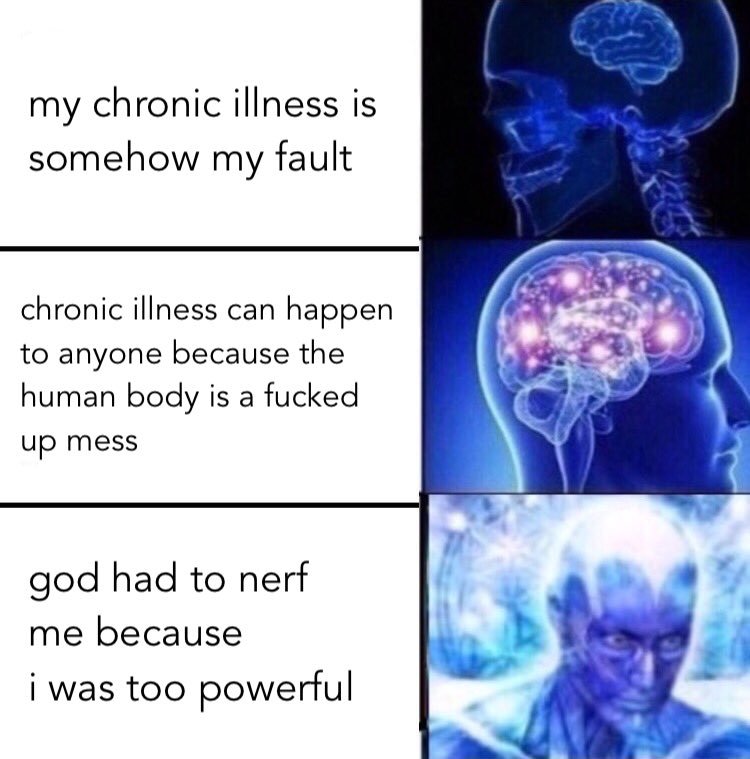
Being chronically ill has to be the funniest thing in my life. When I started a job last year, I was given a magnetic nametag to fasten to my shirt. I did it without noticing the warning on the back not to put it near pacemakers—a warning I assume the higher-ups had never considered either, because what kind of able-bodied young person has a pacemaker? An hour or so into the presentation, a muffled beeping fills the room. No one recognizes it, so we move on. And a few minutes later, beeping again. It’s coming from near me. Is it in my jacket? No, it’s literally in my body, because I put a very strong magnet right on top of my implanted defibrillator.