
Something that I deal with on a fairly frequent basis from my family are expectations that are not privy to my knowledge. I have the habit of doing the same to them and feeling justified in doing so without even thinking. This is a habit that many people have towards those who are close to them but it’s fair to say that we all hold it for each other as well. We have an idea of what the “right thing” is and oftentimes judge others and treat them differently for it. But what about when that “right way” only exists in your head.
Continue readingsociety
Can Society Truely Change?
Are any of the phenomena that society has built their understanding of the world around truly changeable, or are humans just flawed to always fall victim to them? I have struggled with conceptualizing if changing how society has built and its understanding of people can actually become a reality, because people will always be flawed if the society they live in was built wrong. I am not saying humans cannot change and we cannot redefine the phenomena that have built societies deep-rooted issues with sexism, racism, homophobia, and more. I truly believe individual people can change, can grow, and can become educated on things that they were not before; and learn from the past. Sexism, racism, homophobia, ableism, and so much more were institutionalized into how our society was built though. If they are built into something, how does it get removed; without completely rebuilding the flawed creation of society? These are not little issues that can be worked around, like sometime happens when something is built wrong, these are fundamental and structural flaws on what was built. Fundamental and structural flaws will often lead to destruction or demise, and that is why many things with fundamental and structural flaws are completely redone. This leads me to struggle with the idea of how to redo society without completely rebuilding it and completely redoing it would be tearing down and stating over without these fundamental structural flaws. Yes, the world is becoming more accessible, adaptable, accommodating, and people can change, but can those fundamental structural flaws/issues ever truly go away or will there always be a struggle for equality because they are built into the world so deeply?
When Will the Ouroboros Run Out of Body-Length to Eat?
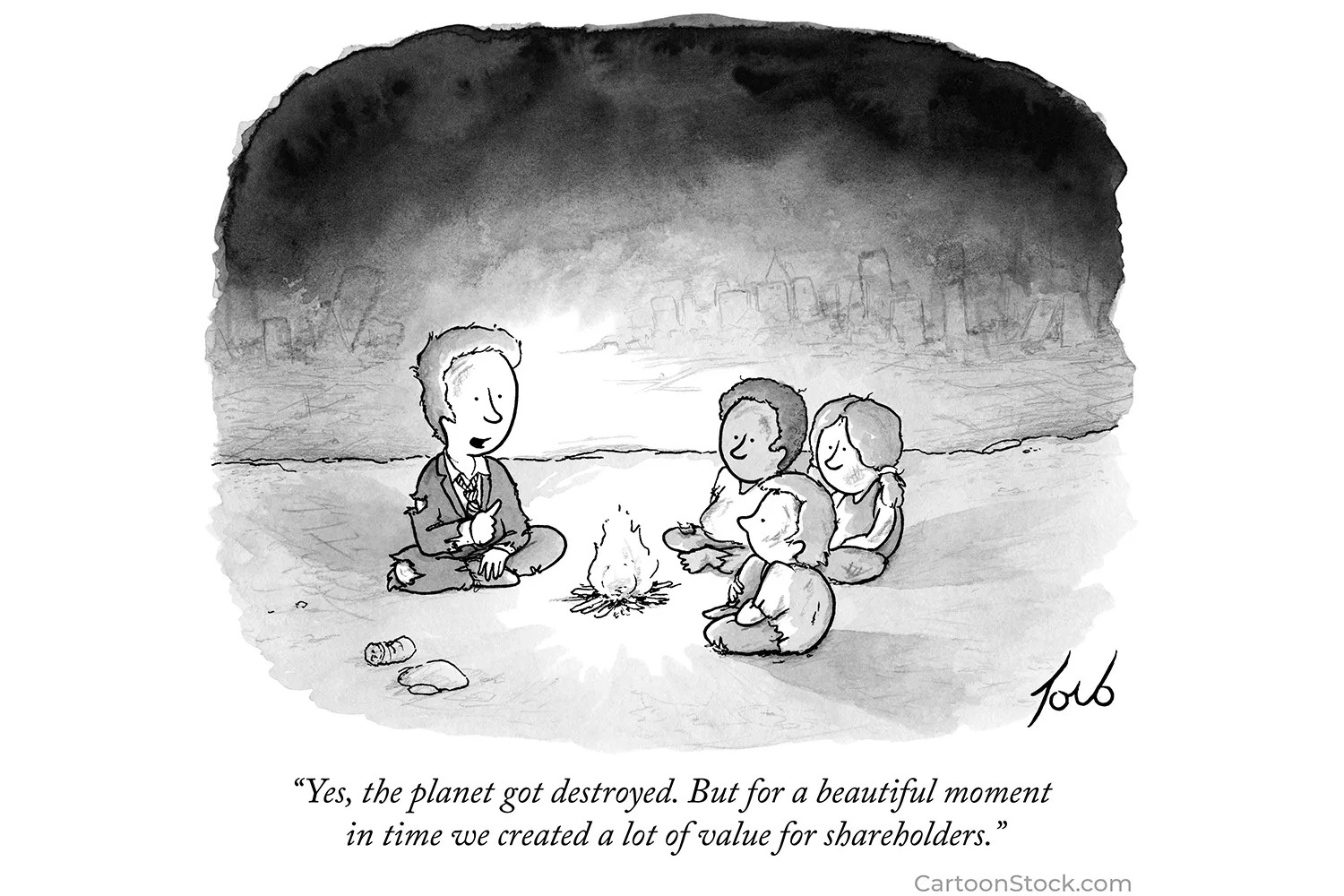
Our system postures itself as a beneficial ouroboros; one is led to believe in the presence of infinite resources fit for infinite consumption, yet one can look beyond this façade and see that individuals who rank power and profit above all else have been devouring those deemed unimportant or undesirable. Within the false notion of never-ending resources, one can see a paradox in which abundant resources suddenly become scarce when those outside of a particular group request them. It has been declared that our society cannot have free healthcare, clean air, timely cures for devastating conditions, affordable housing, public health measures, food for hungry children, or the absence of war because it is too expensive or difficult.
Beyond this excuse, one can see that the most likely reason for withholding and denying is that many of these protestors’ demands would not generate sufficient profit for the right companies, nor would the outcomes conform to the prejudiced worldview that has kept the systemic divide alive and well for centuries. As such, numerous causes do not receive attention until a problem becomes so impossible to ignore, so popular, that one may wring profit and control out of it. We produce reusable straws at the detriment of many disabled people, greenwash products made by grossly underpaid workers, and tout ‘personal carbon footprints’ in an unwalkable society, yet the majority of polluters are allowed to continue.
How loud must one be in order to be heard by those in a nearly soundproof box? How visible to be seen through the frosted glass wall that surrounds us? There is a highway barrier between the suffering and the indifferent, built by those who seek profit and power. Even in the places where this barrier crumbles, one is conditioned, either through excess exposure that rots one’s ability to fully see the magnitude of it all or dismissive falsities meant to cloud one’s perception, to see one’s suffering and look away. Those in the figuratively often-less-dangerous slow lane are told that those stuck in the fast lane are to blame for the highway, for its traffic and danger, forgetting that we are all trying to safely reach the same destination while those who built this system fly overhead.
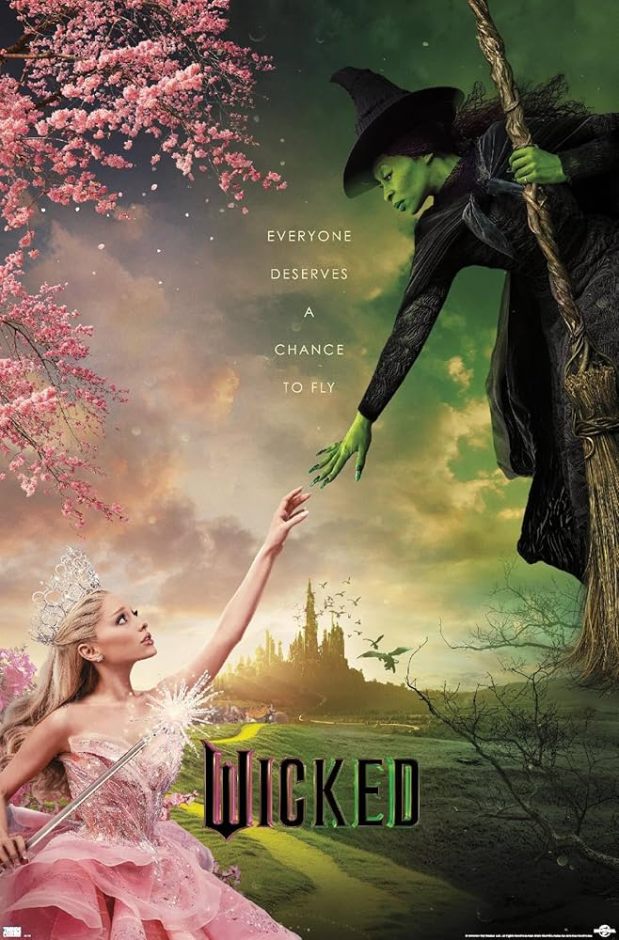
No One Mourns the Sick: The Wicked Myth That the Pandemic Is ‘Over’
You don’t have to watch Wicked to know its famous line—“No one mourns the Wicked”—which basically means that some people aren’t worth grieving. This kept echoing in my head when I heard that both lead actresses of the Wicked: For Good film recently tested positive for COVID.
According to a recent Guardian article, “Both Grande and Cynthia Erivo tested positive for Covid during the filming of the first movie, temporarily delaying production. Erivo reportedly contracted the virus days before shooting the climactic first-act number Defying Gravity, while Grande tested positive before filming the song “Popular.”
The same article notes that during the current press tour Ariana Grande again tested positive, forcing her to miss several events.
That news made me think of Mia Mingus. In her blog “You Are Not Entitled to Our Deaths”, Mingus challenges the idea that disabled or sick bodies are disposable and that those lives aren’t worth protecting or grieving. After reading this blog and our discussion in class, it made me remember hearing about the Wicked news. It made me realize we’re acting like COVID is just a production hiccup, an inconvenience to filming or press tours, rather than the ongoing threat which is killing and disabling countless people. The fact that both leads got sick, during filming and promotion, yet the media and public reaction centers on delays, missed appearances, and disappointed fans speaks volumes.
There’s something horrifyingly Wicked-like about how illness is framed now. If someone masks, they’re “paranoid.” If they don’t appear for a photoshoot or premiere, fans complain. When someone gets COVID, the conversation is about wasted money on promotion, fan backlash over missed premieres, or travel delays , but rarely about health, recovery, or the toll illness takes. The framing treats sickness as a hiccup, not as human suffering. It treats the sick body as a burden to the show, not as a person in need of care.
“Grande’s positive test was the latest hiccup for the full-court Wicked press blitz that has seen the cast hop continents by the day. Due to flight delays, Grande was unable to make the premiere in Brazil, triggering fan backlash she also addressed on her Instagram.”
That is exactly the kind of abled entitlement Mingus warns about: a culture that assumes certain bodies can and should be sacrificed for convenience. Under this logic, “the show must go on,” regardless of who gets hurt. The Wicked cast situation isn’t just celebrity news, but it’s a reflection of a larger societal pattern where health, disability, and our shared vulnerability are minimized, ignored, or erased entirely.
What’s even worse is how normalized this erasure has become. COVID has become “another thing,” something to power through so cameras and promotions stay on schedule. Workplaces expect people to show up sick. Students are told to push through fevers. Long-term effects are brushed off as “just fatigue.” Public health infrastructure? Largely forgotten. Masks, ventilation, testing are all optional. People who get sick frequently or live with chronic conditions are expected to adapt or be pushed aside.
Mingus doesn’t just name this as negligence, she instead frames it as violence. When we treat care as optional, when we prioritize productivity over people, when we mourn canceled premieres more than lost lives, we are making a statement about whose lives matter. We’re deciding who gets protection, who gets grief, and who doesn’t.
We shouldn’t act like the pandemic is over. We need to stop shrugging when someone gets sick, framing illness as inconvenience, or acting like the only thing that matters is the show going on. Production, entertainment, or convenience is not more important than actual human lives. Because if we care at all about disability justice, about valuing every life, then we can’t pretend the pandemic is done. We have to mourn the sick. We have to fight for care. And we have to stop believing the myth that pushing on by ignoring risk, ignoring illness is normal or acceptable.
No, No, No, Stick to the Status Quo
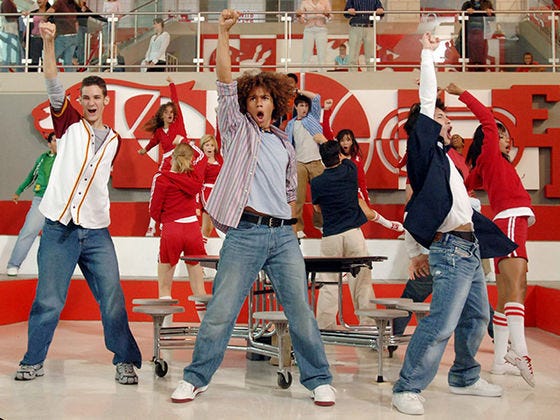
Since birth, we have been subjected to the status quo and fitting in norms, like, for instance, growing up as a girl and being told that you shouldn’t play sports or you should like the color pink, or telling young men that they cannot cry and they have to remain emotionally stoic at all times. While we were reading from Nonbinary: Memoirs of Gender and Identity, I just kept on thinking about this random song from High School Musical, and while this song focuses mainly on students knowing their niche and sticking to it, whether they be the jock, the braniac, etc. I think it relates to the topic at hand because they focus on how any efforts to stray from their niche will overthrow the whole system, and they have to stop that from happening by any means necessary.
“Stick to the stuff you know
If you wanna be cool
Follow one simple rule
Don’t mess with the flow, no no
Stick to the status quooooooooooooo”
Anything that does not follow the status quo, for instance, being nonbinary, elicits such vehement responses. While I don’t identify as nonbinary, I deeply appreciated getting to read the memoirs from people of various walks of life talk about their experiences, and I think this meshes so well with the video from Chimamanda about the dangers of a single story. When identities that society has not deemed to be the status quo arise, society imposes its own labels on them and forces them to fit into a box, thus pushing this single story on a vast group of people. While the memoirs vary in their own ways, a common theme among them is the way other people impose their assumptions about one’s identity on another person, or very clearly display their discomfort with constant stares or looks of disgust because they stray from what we have deemed to be the status quo. There is this itch that society has to oppress people, and if one tries to exist in some sort of gray area, it will pick you out of that gray area, forcefully, to maintain control.
our LIVES are not your political agenda – make the world STOP!
pussy (n.) 1. Nice name for a cat
- Slang for women’s genitals
- Cowardly
Credit to Urban Dictionary for the lovely definitions.
Being born with a body that possesses a vagina has always been…well, there isn’t one word I’d use to describe it. It can be joyful at times, and a burden the next. It can hold me back from feeling immense happiness, and it can also make me feel on top of the world. I never thought I’d have complicated feelings about my vagina, but now as someone who is taking testosterone and seeing the effects it has on this important body part of mine: I can’t help but feel constantly conflicted. Don’t get me wrong, I am in no way saying I want phalloplasty. I, frankly, would prefer if no surgery had to happen within/outside/around my vagina. But I still can’t help but feel this weight of it pulling me back from fully being myself, and fully feeling happy.
Read more: pussy (n.) 1. Nice name for a catAnd why is that? I mean, the short answer is dysphoria. But OK, try a different path: even if I was cisgender, would I still feel conflicted in having a vagina? Could I join the cisgender women in arms and discuss how owning a vagina makes me the most badass, powerful woman on Earth? I mean, maybe. The reclamation of the vagina as an empowering symbol has its appeal to me currently: I’m a man with a vagina, suck on that Republicans! But still, that concept of my genitalia never meeting the “norm” for a cisgender man will always feel as though it’s holding me back. And yes, I know, the “norms” were created by folks who wanted a mass genocide of the Black, Brown, queer, disabled, and all things deemed “other” – so knowing this, why do I still feel the need to appease this massive dictator of a concept?
One answer could be: it’s just easier to submit to society. Another could be that I’m just starting to unlearn these things as the “norm”, so falling into “old habits of thinking” is prone to happen. And, perhaps, the third answer is just that it is also the “norm” for transgender men to feel dysphoria surrounding their genitals, to feel as though they are “lesser”. And maybe that’s the norm that I find myself stuck in: I have to be depressed about my vagina, because I’m trans and society says I have to feel sad about being trans. By actively going against this, and creating joy out of the otherwise dysphoric – it begins to open up a world of new possibilities. The thing that once felt as though it was holding me back, now holds significant power – just as it does for others.

Wild Nature & My Attraction to its Lack of Control
Our class discussion regarding nature and its many forms caused me to question my own understandings of how to define nature. I suppose I never really considered that nature can take on varying forms, and the concept of nature can exist on a spectrum Continue reading
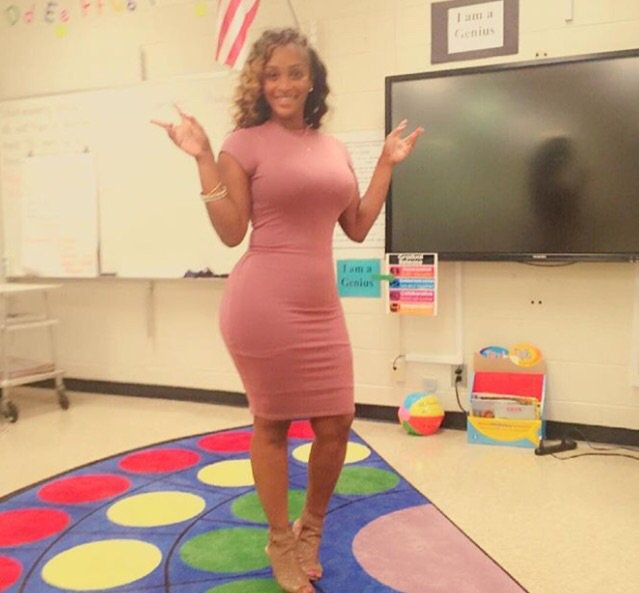
Alright, Let’s Be Honest America: Black Women’s Bodies Are “Inappropriate”
Be Polite
“Don’t say that, you’ll make people feel uncomfortable!” “You shouldn’t speak that way, what are people going to think?” “Be quiet, we’re talking right now.” “You know, you talk a lot.””Why are you so bothered by it, it’s not that serious, it was just a joke. Can’t you take a joke?” “That’s not ______, I’m just giving an opinion!”
I know exactly what you’re doing.

