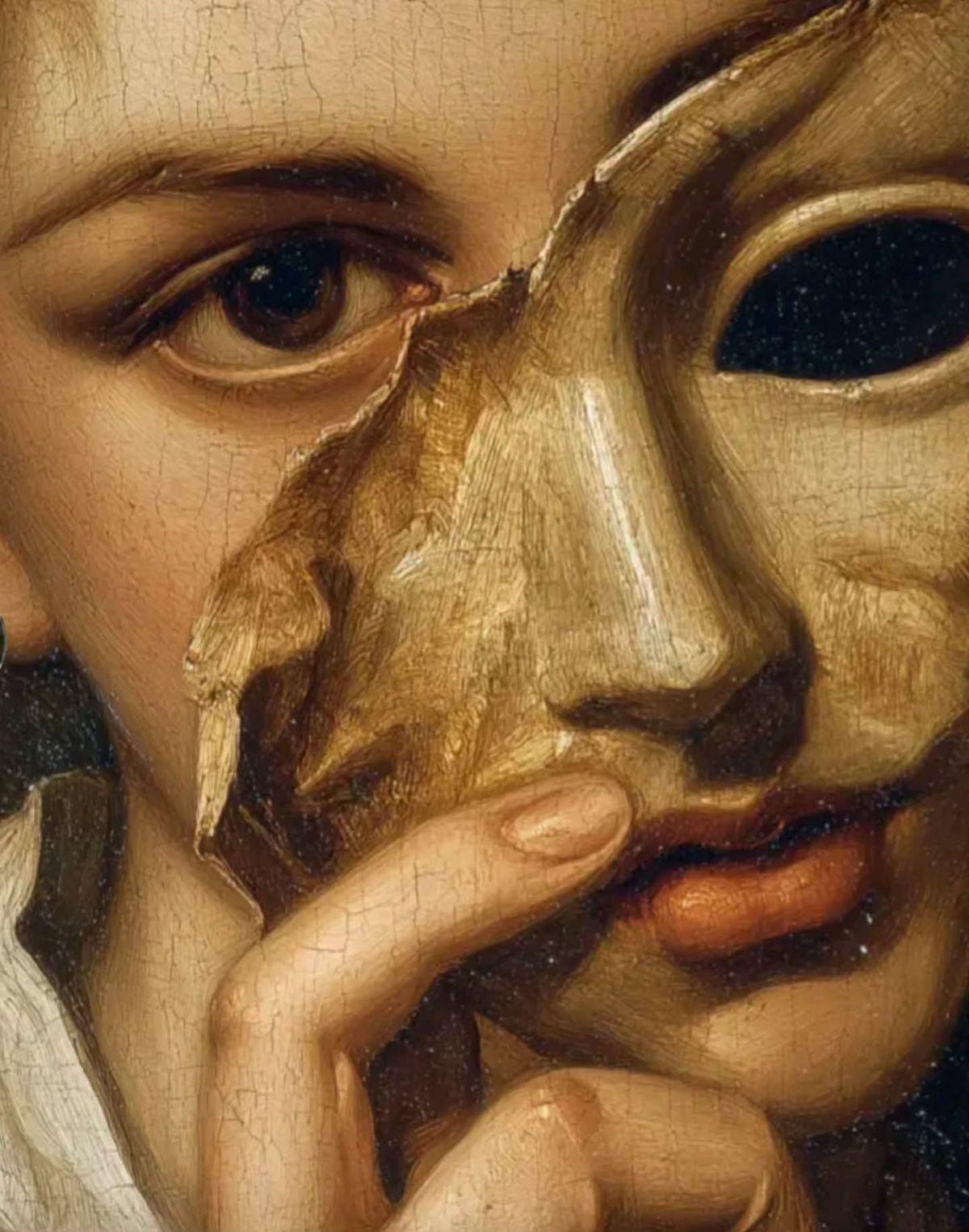
Are Men “Visual Creatures”?: A Discussion on Porn & Bioessentialism

TW//mentions of SA, porn addiction, objectification

One thing that really stood out to me in Throwing Like a Girl is how Iris Marion Young criticizes bioessentialism, which is the idea that men and women behave a certain way because it’s just “biology”. She shows how people explain things like throwing differences as natural, when they’re really learned through social expectations. It is similar to how people perform worse due to the stereotype threat, which is when minority groups tend to underperform on tests because they believe that they are not capable of performing well, leading to a self-fulfilling prophecy. 

I think that same logic of “inherent” or “biological” behaviors can be applied to how men justify watching porn by saying “men are visual creatures”, which is not based in fact at all. That phrase is so harmful because it makes it seem like objectifying women is unavoidable, instead of something that men are choosing to participate in. 

Read more: Are Men “Visual Creatures”?: A Discussion on Porn & Bioessentialism

Porn is extremely dehumanizing because it turns people, often women, into objects meant to be looked at, not individuals with complex life experiences who have their own agency. Young talks about how women are taught to experience their bodies as something to be watched and judged, rather than as something they fully control. Porn takes that even further by reducing women to their body parts and presenting sex as something women exist to provide. It trains people to see women’s bodies as products rather than as a part of an intimate and sacred human interaction.

The idea that porn allows people to “buy” consent is disturbing on its own as well. Consent in porn is always available and detached from real emotional or physical consequences. Sometimes consent can even be depicted as NOT freely given, and disrespected, as part of r*pe fetishes. Humans were never meant to have instant and unlimited access to sex like this, and pretending that it’s just “natural male sexuality” ignores how artificial and extreme this level of access actually is. The harm doesn’t just affect the person consuming porn, it impacts the women in it, who are often exploted, and women in the modern dating world that have to deal with unrealistic expectations and porn-driven violence and entitlement.

Just like Young argues, bioessentialism isn’t harmless. It is used to excuse behavior that causes real harm by making it seem inevitable, and vanishing accountability for those who are engaging in them. Saying “men are visual creatures” works the same way as saying “girls throw like that”. It hides socialization behind biology.

A Society Built on an Unattainable Standard

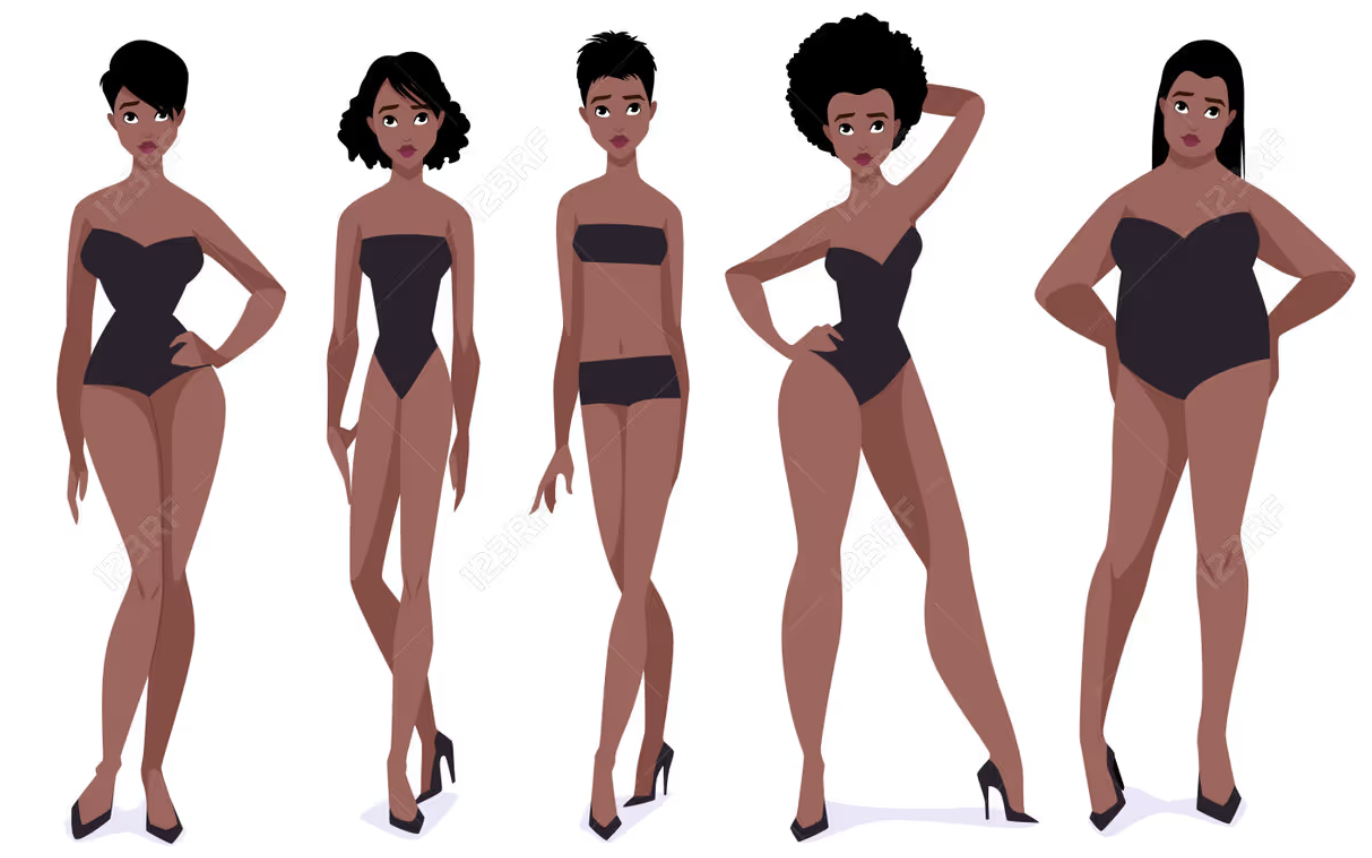
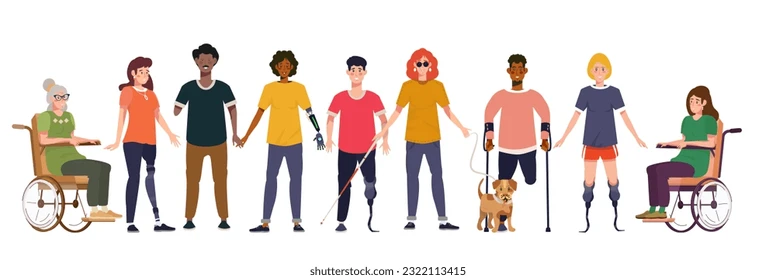
I’d like to know the who, what, when, where, and why behind the time in human history where it became a concept to have an ‘ideal’ type of person within society. Who’s judgement of another person decided that having a thinner body type is ‘normal,’ while having a bigger one is not. Or, are these judgements just an innate human nature, that was always bound to be unavoidable? I truthfully wonder why people’s judgements and opinions towards certain types of bodies became so prominent/trendy. These bounds within society seem nearly unbreakable, as in, can we ever really alter these narratives? This goes hand in hand with the question of: who decided what a ‘normal, nondisabled body’ looks like within society? Why was it never initially concluded that there can be multiple versions of ‘normal,’ and why isn’t being simply human, normal enough? Insecurities are oh so prominent amongst humans, particularly due to the crafted narrative that’s come to be, surrounding what the ‘preferred body’ is within society. It’s all too common for people in today’s age to feel the need to ‘fix’ something about themselves. Whether it be thinking that you’re too big, you’re too small, your nose is too big, your lips are too small, etc., it seems that hardly anyone is ever fully satisfied with how they look, and I believe that this didn’t always have to be the case. Obviously, society has always been excluding and hateful towards differing groups of people, so the current global dynamic full of insecurities and judgement is anything but surprising. The film Crimp Camp strongly supports these concerns as a sense of normalcy was experienced by the campers when they existed together in nature, away from society’s restricting expectations. The film emphasizes that ‘normalcy’ is not a simple definition, but a spectrum of human experience.

Fighting internal battles inside a cage

Fighting internal battles inside a cage

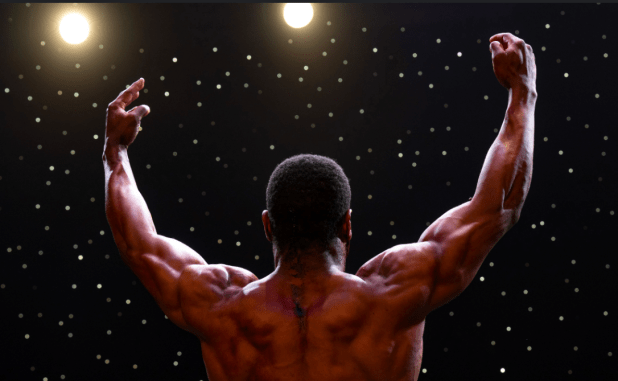
Over the weekend, I watched the film “Magazine Dreams” starring Jonathan Majors. I found it to be a very potent and powerful film, navigating the troubled topics of mental health and toxic masculinity seen in a bodybuilder. I personally think its one of the best films in the past 5 years, masterfully crafted, and the acting of Jonathan Majors was nothing but masterful, 9.5/10 in my opinion. But watching it, I couldn’t help but find parallels in a recent essay we read in class, Roxanne Gay, “My body is a cage of my own making.” Roxanne writes with raw honesty about how her body has become both a site of protection and imprisonment, shaped by trauma, shame, and the desire for safety. Her essay tussles with the views of society on fatness seen as failure and how internalized expectations of beauty and worth can distort the relationship one has with the body. The body seen as a “cage,” is not just physical, it’s psychological and societal, shaped through years of punishment, judgement and self-loathing. Just like Roxanne Gay, Jonathan Majors character, Killian Maddox goes through a similar struggle, like Gay, Killian’s obsession with control over his body will grant him love, recognition, and dignity, it becomes his own form of imprisonment. It’s this desire that turns self-destructive; these hypermasculine ideals reflect societal views on strength, dominance, and visibility, and can warp one’s self-image. It’s this toxic masculinity image that Killian aspires to. It’s the muscle-bound body that Killian builds that becomes his own “cage”; he builds his own prison. I can relate to Killian’s view of wanting to look better and that there is something even above perfection; my family calls me a perfectionist and that nothing is ever really good enough for me, I’ve been working out for 4 years now, and even now I can’t find the satisfactory approval of others; I can’t even find it within myself. I feel as if I have to keep pushing myself with no end in sight; there is no prize to perfection, only the endless pursuit. Ultimately, both works reveal the violence of living in a body that society misreads or refuses to acknowledge fully. Gay’s body is seen as “too much,” and Killian’s body as “not enough.” Both ideas are detrimental and harmful to both, and both end up internalizing this worldview until it ultimately consumes them. Both of these works reveal the battle between the body you create for yourself and the socially defined aspects of it.

One characteristic fits all, except beauty standards

TW: Mentions of body shaming, eating disorders and rape/SA.

“Have you tried losing weight?” “Maybe you should get on a diet.” “The pain would go away if you were smaller.” These are all poor excuses that people When going to the doctor as a bigger person, there is almost a preparation internally that is done to face the same two statements.

Continue reading
Femininity, Fluidity, & Faloodas

Femininity, Fluidity, & Faloodas

Being born female has always felt like a curse to me. Although I do love presenting femininely, girlhood, and feminism, femininity always felt like an objective that I could never, ever reach. Growing up, I was surrounded by ideals of what a “real woman” should look like and act like, but none of them ever felt like me.

Read more: Femininity, Fluidity, & Faloodas

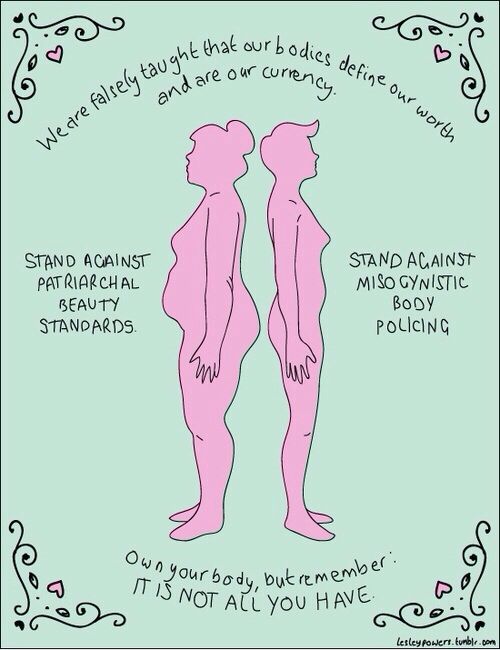
Too often, women & afab people of color, specifically black and brown people, are hyper masculinized by society. Many of us experience gender dysphoria at a young age without even realizing it. In a porn-sick, pedophilic world, we are often told to shave our legs or that we won’t be desirable if we are not petite. We are groomed into believing that compliance with these unrealistic and patriarchal beauty standards is the only way we can be loved or accepted.

This alienation often made me feel like I was a monster, much like how Stryker compares the trans body to Frankenstein’s monster, where both are labeled as “unnatural” creations rejected by society. Even the most natural and feminine part of myself, body hair, was turned into something to be erased. Body hair, a normal sign of maturity, was made to seem masculine, ugly, and unnatural. That made me feel both “not feminine enough” and “not masculine enough,” even as I came to understand myself as genderfluid. I found myself trapped between two conflicting thoughts: one that punished me for lacking male traits, and another that shamed me for not performing femininity “correctly.”

These beauty standards also erase intersectionality, especially when it comes to South Asian bodies. Generations of colonial trauma, famine, and labor have shaped our bodies in ways that defy Eurocentric ideals. Yet we are still told that our features, our curves, our body hair, and our skin are flaws to be fixed. Our oppressors wound us and then teach us to hate the scars it leaves behind.

For me, reclaiming my gender and my body means rejecting those expectations. Like Stryker’s “transgender rage”, I’ve learned that my frustration can become powerful, where I refuse to be molded by standards that were never made for me. My gender exists in the space between what I was told to be and what I choose to become.

Why are breasts so sexual?

Growing up Baptist, I was always told that my body was to be hidden, especially the breasts. I always wondered why that is. AFAB people have breasts, consisting of tissue and mammary glands to give life, to feed their young. Why is that sexual? As a lesbian, I understand the appeal, but once again, why is there such a deep seated sexualization of these two orbs of tissue? An example of the sexualization of breasts is seen in the change of saree styles pre and post British rule in India. Before the western influence, sarees were often worn without a blouse under it, simply consisting of a long piece of cloth draped around the body. With the British rule came the western ideals of modesty, leading to sarees being worn almost exclusively with blouses in the modern day, ensuring there is no breast visible. I remember being 15, babysitting for an Indian family that taught me this. The mother who is now a dear friend of mine showed me historical portraits of Hindu deities, many of which had breasts visible, specifically the goddess Durga. She is a warrior goddess, seen as a symbol of feminine strength, depicted in ancient sculptures with breasts uncovered, the breasts being a part of symbolizing feminine strength. In this sculpture, she is seen slaying a buffalo-headed beast called Mahisha. (See photo.) Durga was a fierce warrior while simultaneously being a symbol for motherhood and maternal love. She is the Hindu maternal protector of the universe itself.

The first photo is a painting of a woman wearing a saree in the 19th century. The second photo is of a woman wearing a saree in 1910.

Breasts themselves are not sexual, rather they a reflection of the broader societal issues regarding women’s bodies. Sexualizing breasts gives men power over them by making women uncomfortable with them being visible or sexualised, leading to a change in women’s behavior, in this case, covering the breasts. If men are ogling something about your body, you will feel pressured to hide it, therefore the men have the power over what of the body is shown. It all goes back to the patriarchy.

When My Body Wasn’t My Own

TW: mentions of SA, dissociation

Growing up in a conservative household, I was constantly told to cover up because of men’s “wandering eyes”. I was taught that if I were to be sexually assaulted, it would have been my fault, instead of the person who sexually assaulted me. Out of fear, I obliged, wearing modest clothes throughout my childhood, convinced that I could never be safe. My mother also told me to speak properly, to never talk back to elders or men, and to hold my tounge if I was uncomfortable. In Throwing Like a Girl, Iris Marion Young describes how women move with “inhibited intentionality”, we know we can act, but we feel like we shouldn’t. That was my childhood: constantly silencing and covering myself to make myself more palatable for men. These habits became ingrained in me, because for so long, they were all I knew to do.

Continue reading
The Muse’s Misfortune

The Muse’s Misfortune

The Muse’s Misfortune 

To be a muse is to be worthy. To be a muse is to be beautiful and talented, chosen and seen. To be a muse is to be exhilarated and exhausted, honored and objectified, proud and pornified. There cannot be one state of being without the other, so long as there is one being to perceive and one being to be perceived.

Read more: The Muse’s Misfortune

In some societies, perhaps, it is possible for a muse to exist without the constant fear and awareness of their own and another’s presence. In patriarchal and sexist cultures, however, the muse faces an internal and external threat of surveillance, and therefore sexualization. “(Patriarchal and sexist) society defines woman as object, as a mere body, and… are in fact frequently regarded by others as objects and mere bodies” (Young, I. “Throwing Like a Girl: A Phenomenology of Feminine Body Comportment Motility and Spatiality,” p. 153-154). For feminine muses, they “learn to live out (their) existence in accordance with the definition that patriarchal culture assigns to (them, and) are physically inhibited, confined, positioned, and objectified” (152). The definition becomes internalized, which then manipulates and forces women into being more feminine- more submissive, docile, small, quiet. “Women often approach a physical engagement with things with timidity, uncertainty, and hesitancy… (They) lack an entire trust in (their) bodies to carry (them to their) aims. There is… a double hesitation here. On the one hand, (women) lack confidence that (they) have the capacity to do what must be done… The other side of this tentativeness is… a fear of getting hurt… (They) often experience (their) bodies as a fragile encumbrance, rather than the medium for the enactment of (their) aims” (143-144). The subordination of feminine beings is at the root of patriarchy, and it grows as more minds and bodies accept the notion that feminine and masculine categories cannot intermingle. The stronger the patriarchy becomes, the more ‘natural’ it seems that feminine bodies are weaker than masculine bodies. In reality, women “have more of a tendency than men to greatly underestimate our bodily capacity,” as well as the relentless pressure of being perceived as a muse, which results in under-performance.

The Feminist Message In Gentlemen Prefer Blondes

A few weeks ago, due to my GWST major, I had decided to watch the movie Gentlemen Prefer Blondes starring Marilyn Monroe and Jane Russell. After thoroughly enjoying the movie, I realized that some of it’s themes were being discussed in our CSST class. One of the themes that seems evident in Marilyn’s character is Cartesian Dualism. This is the theory that the mind and body are separate. The idea that the body of a human is simply a distraction from the depths of their mind. This idea is one that could be applied to the two characters, Lorelei Lee (Marilyn Monroe) and Dorothy Shaw (Jane Russell). In Jane Russell’s character, we see that she is perceived solely as a sidekick or obstacle to the gorgeous and the blonde Lorelei. Before diving deeper, Gentlemen Prefer Blonde’s, is essentially about two showgirls who go on a trip to Europe after Lorelei gets engaged to her rich fiancé. Ms. Lee’s father-in-law, concerned about the woman’s intentions, sends a private investigator to spy on Lorelei’s whereabouts throughout the trip. Eventually, The P.I ends up falling in love with Dorothy Shaw, Lorelei’s best friend. Though being a pretty generic love story, the film does good in displaying the double standard between men and women as well as the villanization of women who value their bodies. The phrase “gold digger” that is used by men, against women (despite the fact that men have created and continue to fuel that system), is always shown in the media as a means to make an audience sympathize with a man. In many cases, this is a harmful practice. However, in the movie, Lorelei is more often than not transparent about her goals. In a conversation with her father in law, she explicitly states, “I don’t want him for his money, I want him for your money!” She uses the airheaded blonde persona that men have used to fetishize women with, in order to make men fall in love with her.

Though she’s quite intelligent and is more of a pragmatist than anyone, men refuse to see that due to how little they think of women. She, along with other women, is perceived through her beauty instead of from what lies within. More specifically, her mind and experience as women is disregarded as if she exists to be only a shiny trophy. On the flipside of that coin, Dorothy Shaw–the less desirable and more logical best friend. Though always being seen by men as this woman who is constantly overshadowed by her best friend, she is secretly a naive and sexual woman. She is the complete opposite of Lorelei: A “lover girl” with no regard for a man’s financial stability. We see her naivete when she can’t help but fall in love with the P.I, despite being made aware of his underhanded behavior. While Lorelei uses her beauty because she’s aware of its value and of the politics surrounding it, Dorothy thinks with her heart and a lustful mind. All of which is overlooked due to society’s inability to see women’s minds through their bodies though the mind is far more important.

Pretty for a demographic, but not for society

“You’re pretty for a Black girl!”

It’s a phrase that many Black women have unfortunately heard at some point in their lives. But what does it mean? Does it mean that the bar is lower for attractiveness among Black women? Does it mean you’re surprised that you find a Black woman attractive? Do you not believe Black women could be apart of the beauty standard?

Continue reading