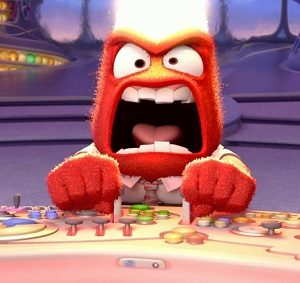
Depicted is the character of “Anger” from the Pixar animated film Inside Out (2015). A short, red, square-shaped character with flams bursting from his head as he screams in rage.
Have you ever scrolled online and see people confidently declaring their gender and sexuality like they’ve had it figured out since birth? “I’m nonbinary.” “I’m a lesbian.” “I’m pan.” Meanwhile, I’m sitting here wondering, why do I feel like nothing? This question has been bouncing around my head for a while now. But after reading Nonbinary: Memoirs of Gender and Identity, specifically Christopher Soto’s “What Growing Up Punk Taught Me About Being Gender Nonconforming” and Aubri Drake’s “Clothes make the Gender/Queer,” made me realize that maybe this feeling of nothingness isn’t emptiness, but simply uncertainty in a world that demands certainty from everyone.
Soto writes, “I tell my friend who still presents outside the binary that I want to be alive. I want to live. And so this is my gender: a desire to live.” That line hit me like a ton of bricks. For me, identifying as a woman has always been about survival. It’s safer, easier, less questioned. I don’t have to explain myself or fear someone reacting violently because I don’t fit their idea of what a woman “should” be. Soto ties their fear to capitalism and violence because the way safety, livelihood, and even love feel like privileges granted to those who conform. Sometimes I wonder if I’d feel freer to explore my gender if the world wasn’t punishing those who step outside the binary.
Growing up, everyone labeled me a “lesbian” before I could even figure it out on my own. I was the tomboy wearing my dad’s clothes, obsessed with comic books instead of makeup. My mom used to tell me to “act like a lady,” for simply sitting in my own home with my legs open. Then puberty hit, and suddenly I had curves I didn’t ask for. Aubri Drake’s words that “clothes started clinging to my body in all the wrong places… they stopped being a form of expression and instead became material to hide in”described exactly how I felt. I started hiding under oversized clothes because my body no longer felt like mine, but a spectacle for others.
For years, I bounced between labels from bi, lesbian, pan, and now to queer. Each one feeling right for a second and wrong the next. I even dated men exclusively at one point just to prove something, though my attraction to women has always been stronger. Every time I picked a label, I felt like a fraud and that everyone knew I was out of place.
When it comes to gender, being called “masculine” or “feminine” makes me physically recoil. I don’t feel like either. I identify as a woman because it’s practical since it’s what fits easiest in the world’s boxes, but that’s never been the only reason. I’ve briefly thought about identifying as nonbinary, but fear always stops me: fear of losing cis privilege, fear of not being taken seriously, fear of violence. Like Soto, I get what it means to feel “illegitimate” just for wanting to live safely.
That’s why the label queer has been a relief. It’s flexible. It’s fluid. It lets me breathe. I don’t have to get a headache by searching for answers I don’t have yet. My gender and sexuality are personal, evolving, and maybe a little messy, but at the end of the day, that’s ok.
A few months ago, before reading these essays, I went down a rabbit hole on Reddit trying to understand why I felt “genderless.” I remember scrolling for hours through different threads from queer and neurodivergent people describing the same sense of in-betweenness I couldn’t name. One that stood out to me was called “Does anybody else feel genuinely genderless?” on r/NonBinary, more specifically this one quote:
“When I lean more towards masc or femme with my presentation that’s all I feel it is — a presentation. Or really what it actually is is society interpreting my presentation as gendered. Ultimately it’s still just me. I don’t feel more feminine when I wear skirts — but it’s perceived that way.”
When I lean more towards masc or femme with my presentation that’s all I feel it is — a presentation. Or really what it actually is is society interpreting my presentation as gendered. Ultimately it’s still just me. I don’t feel more feminine when I wear skirts — but it’s perceived that way.”
That line felt like someone cracked my brain open and wrote down my thoughts. It echoed everything Soto and Drake described; that gender can feel more like a performance that others interpret than a truth you embody. Re-reading that thread and other ones I mindlessly scrolled actually helped me realize I wasn’t broken for feeling detached from gender. I was just tired of performing one.
I still feel like “nothing,” but I don’t see that as a bad thing anymore. That nothingness feels like freedom; free to move, question, and change without being boxed in. Reading these essays made me realize I’m not alone in that uncertainty. There’s comfort in knowing gender and sexuality don’t have to be solved; they can just evolve. Maybe “nothing” is true freedom. Maybe my gender isn’t nothing — maybe it’s just mine.
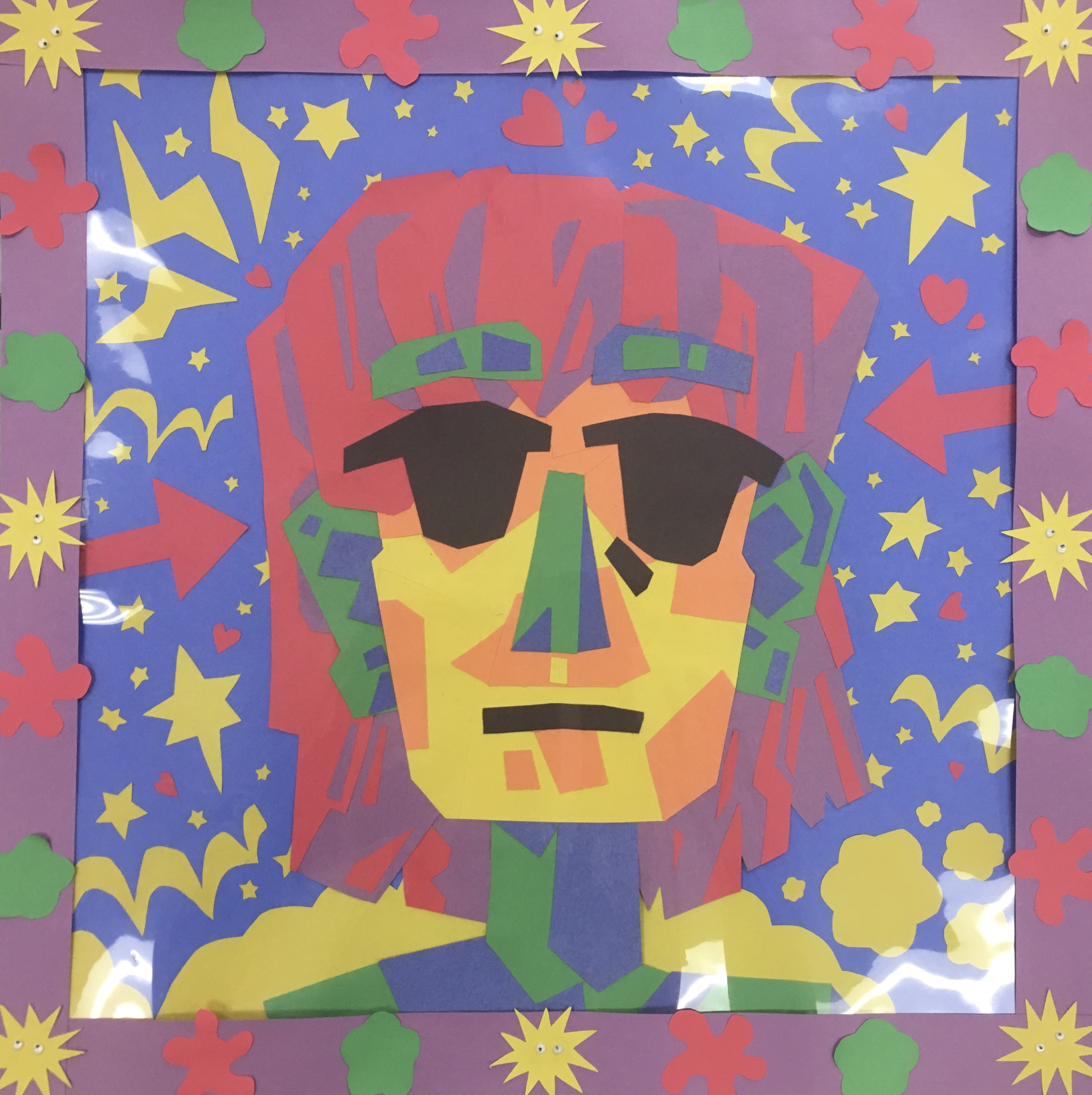
(“SHAPES AND COLORS,” a colorful, self-portrait stylized construction paper collage piece I created centered around masking.)
Growing up it was incredibly obvious I was on the autism spectrum. I was very rule-following and smart at school, getting described as “demonstrative” by preschool teachers (who calls a four year old that word?), but was very sensitive about minor things like the texture of lotion or potatoes or certain fabrics, or toys being organized differently from the way I wanted them, or frustration with not being correctly understood. While no diagnosis is the same, these are signs of being on the spectrum, and at three years old when my mom talked to a friend who was a psychologist she posited that I might be autistic.
But when I went to get evaluated, four year old me was denied an official autism diagnosis. Then I was denied again at age seven, and instead put under the label of Sensory Processing Disorder. I finally got the Autism Spectrum Disorder diagnosis at age 12 (a year after also getting diagnosed with anxiety and depression). I also found out that in the years before the DSM-5, I was on the part of the spectrum that would have been denoted Asperger’s Syndrome, but luckily I got the diagnosis too late to become attached to that term and was educated of its problematic origins.
Looking back on my history of diagnoses, I always wondered why despite it being obvious with all my quirks growing up I was over and over again refused a clear answer. But learning about gender and disability studies/justice in the last couple years, it has become apparent why: I grew up a girl.
I was very lucky to have the privilege of parents that let me express myself whatever way I wanted as a kid, and I did exactly that in my special interest of dinosaurs, which were gendered as a “boy” thing. But I realize that I was still unable to escape the social part of socialization: Specifically, the experience of girlhood (as I have understood from mine and others) that involved making yourself and your problems smaller, while boys around the same age were allowed to be loud and take up space.
This difference was especially present when looking at the differences between ways that autistic cisgender boys expressed their traits without much dramatic behavioral intervention or judgement from other kids, such as verbal or physical expressions of stimulation. Meanwhile, if a young girl was perceived to be “different” in the way they behaved, they faced more bullying and ostracizing than boys might. So as I grew up into the American school system as a girl, I learned that I would face more unspoken social consequence for expressing my traits, and thus felt more pressured to mask. And as these traits went unexpressed, from classrooms to doctor’s offices, they too went undiagnosed.
Finding out that this experience I had growing up was validated through the study of how disability is embodied differently across genders and social standards (as Shakespeare implies, there is no accurate one-size-fits-all model of disability), I felt quite vindicated honestly. Even after transitioning and finding community with other transgender autistic people, I can still see this difference in how traits are expressed due to assigned-at-birth-gender socialization. I worry that I may seem annoying at times for making this intersection of my identities my “personality,” but with how much I’ve come to terms with how it has affected my entire life I cannot really deny its stake in the person I’ve grown up to be.
I have failed to work with a system that prioritizes productivity over personhood.
I have chosen moving forward over suffering
I will accept myself to spite a value system that does not want acceptance – but always striving for “better”. If I internalize it, that I am always striving for “better”, then I build a comfortable place for the belief that I will never be enough, to rest upon. Instead, I will build space within myself to be less than ideal.
I often find that mental illness and queerness aren’t addressed properly or constructively when talked about together. So often the public at large would have us believe that queerness is a result of mental illness or that mental illness is the result of queerness exclusively. With this in mind, the queer community will often push back on society’s behavior by talking about the two exclusively from each other, frequently ignoring all the ways mental illness intersect. That’s does not go to say that queerness is the result of mental illness or vice versa at all, but rather it shouldn’t be ignored that many people in the queer community go through both because of the way society has constructed and reacted towards queerness. For example, queerness has often been perceived as a deviant thing, it has historically been punished and worked against in a variety of ways. Continue reading →
In 2011 I came out while simultaneously accepting Christ. Apparently, that is a very odd thing to do, especially on a Southern Baptist mission Trip in Lousiana. My camp counselor cried tears of joy for me, but looking back on it I think he thought I was rejecting my homosexuality, rather than affirming it. I thought I couldn’t be a good Christian if I wasn’t being honest with myself, my community, and God. So this decision made perfect sense to me at the time, and I stand by that, even though I don’t attend church much anymore (for many reasons that do not pertain to this discussion). Continue reading →
In the way gender and sexuality operates in our world, often times they are highly construed and mistaken for each other. Are they related? Yes. But they are still separate things. Because these identities are often mistaken in this way many people have this idea that being transgender is an identity that’s ‘chosen’ to receive some kind of access to heterosexuality and that to be validated as a trans person you need to be engaged in this effort to be on some end of the gender binary only performing gender in ways that are widely accepted in a hyper policed way, this includes heterosexism as it relates to transess. In fact there’s a whole other level of heterosexism that is applied to trans people.
But sexual diversity is just as diverse in the trans community as it is in the cis population. I can only speak deeply about my own experience, and I realize it is but a mere single experience in a sea of many others and I do not speak for other trans people, though I feel like my story is relevant to this topic. My personal experience with my gender identity and sexual identity, has been a long and arduous journey that starts out in the closet as being reluctantly bisexual, often leaning towards my attraction to women. Then I was introduced to concepts of there being more than two genders, and it struck me. There were months of tears, denial, and confusion. Once exposed to different genderqueer, nonbinary, and trans identities that I suddenly felt aligned with I couldn’t go back to a reality where my sexuality was the same in relation to my gender identity ever again. Ultimately this ended up being a positive thing, something freeing, something that just ended up feeling more comfortable. But my initial reaction was fear, uncertainty, and feeling disingenuous because of the way the world saw identities like mine and I reflected that back into the way I saw myself. I still do feel internal conflict, I still get scared that I, in no way, have all of the answers about my identity, but as I come into my gender identity I find that I’m making progress in establishing peace with my bisexuality. It’s as if I didn’t want to identify as bisexual before, something about seeing myself as a ciswoman before I knew about the trans identities that fit me, dating a man really did not sit with me well, it just wasn’t me and it isn’t. I’m finding that being trans and accepting it has essentially worked me into actually being more comfortable about my bisexuality. Now I find new complications in grieving my previously thought of lesbian/queer woman identity, but again I can’t go back, it’s just not me. I am a transmasculine person who is bisexual and with that I am queer and transgender. I think it’s a timeline and identity that defies this heterosexist view of trans people, as different stories and sexual identities of many trans people do. I wanted to provide my own experience as an example of how transness does not equate to gayness. There are certainly many other narratives out there that proclaim trans does not equal gay as well and encourage people inside and outside the LGBT community to realize that there is no one way to be trans or queer and that there is no reason someone can’t be both.
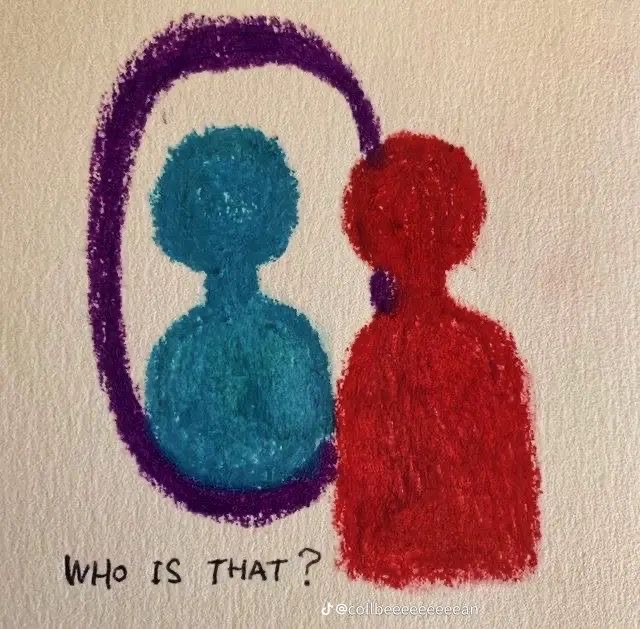
After writing my paper on the argument of the body being a medium, it got me thinking about the question, ‘who am I?’. In most cases, in order for the body to function as a medium of self-expression one need to know who they are in order to know what they are trying to express to others. So in order to express yourself, it is assumed that you know yourself. And of course this got me thinking about how would I answer the question “who am I”?
In my case the question ‘who are you?’ has to be one of the most difficult question for me to answer. Have you ever really looked at yourself and don’t know
really who you are? Like you know who you should be, what people (family, friends, etc,) expects you to be but apart from those expectations, you don’t know who you are? Continue reading →
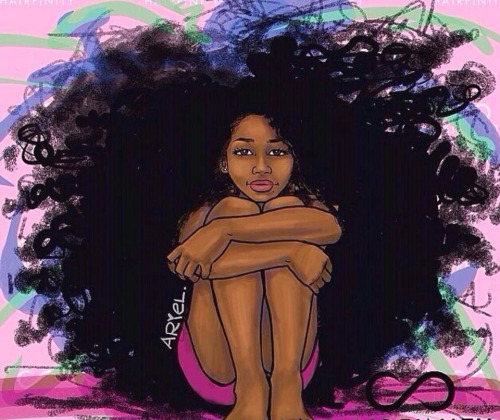
As someone who spends $25 on threading her eyebrows, among other things, every month, Matthew Immergut’s Manscaping: The Tangle of Nature, Culture, and Male Body Hair struck a chord with me. Body hair removal is connected to capitalism – I could have told you that a long time ago, while shelling out money for shaving cream, razors, and those monthly threading sessions. I could have also told you that hair, and lack thereof, for women is policed by nearly everyone, from boys on the playground making fun of your “unibrow” or “moustache”, aunties telling you that you should wax your legs every six weeks instead of using a harsh razor, by friends telling you that the extra hour spent straightening your hair every morning is “totally worth it! You look SO much better!” Even today, there are countless memes all over social media about how vital it is to get a perfect eyebrow arch and brows that look perfect, but not too perfect. However, reading Immergut’s Manscaping helped me continue the process of fitting together all those fragments into one larger picture that reflects not only my experiences, but the way that Western society treats body hair on brown women as a whole.

 I’m getting tired of hearing that….
 In my case the question ‘who are you?’ has to be one of the most difficult question for me to answer. Have you ever really looked at yourself and don’t know
