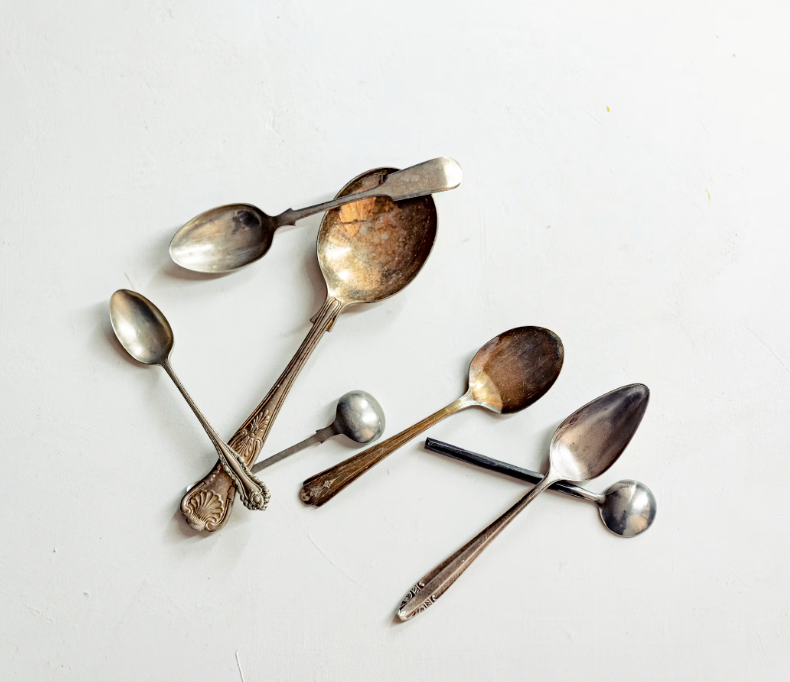
I first heard about “spoon theory” from my mother when I was younger. She had lupus, and hearing “I just don’t have the spoons for that today” wasn’t anything out of the ordinary in the house, it was just another Tuesday. It was the first time I’d heard someone use that example for describing a pretty much invisible currency. I didn’t think about it again for years though, until it was brought up in class, and suddenly, it was linked to the social model of disability.
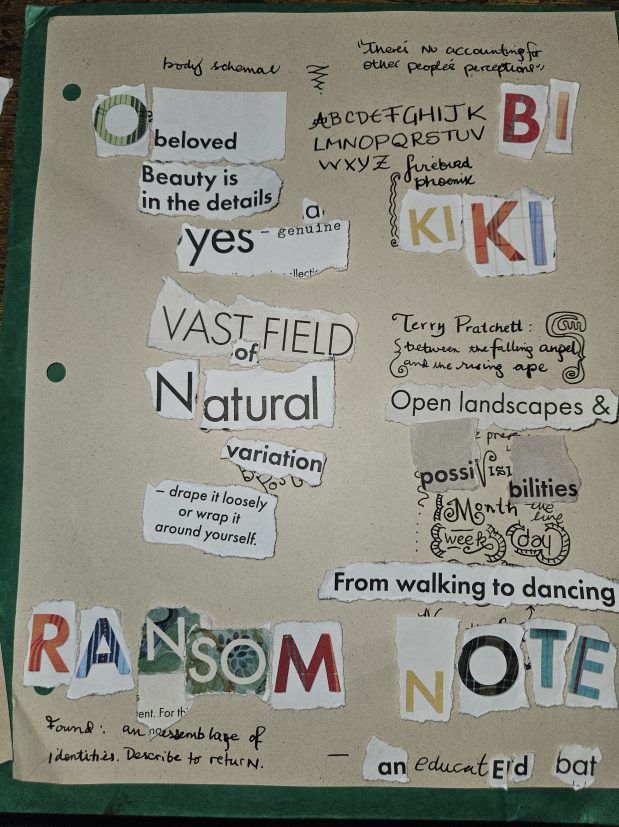
Each person lies within the spectrum of natural human variation, both unique and within a widely-diverse continuum of bodyminds. As this is the case, nothing seemed more appropriate for discussing body schema and the intersection of identities than a literal assemblage piece — layered and gathered letters, words, and phrases. All of the magazine lettering was torn from a single fashion catalog and was completed in one sitting, laid over the handwritten notes I had so far taken for this post.*
I would love for this to be all I wrote about it, but as it’s academic work and also because alt-text is access, there will be unpacking.
Queerness, at least within queer theory, is the breaking of social norms. Disability breaks the norms of ability, gender, and sexuality. Therefore, Disability is queer.
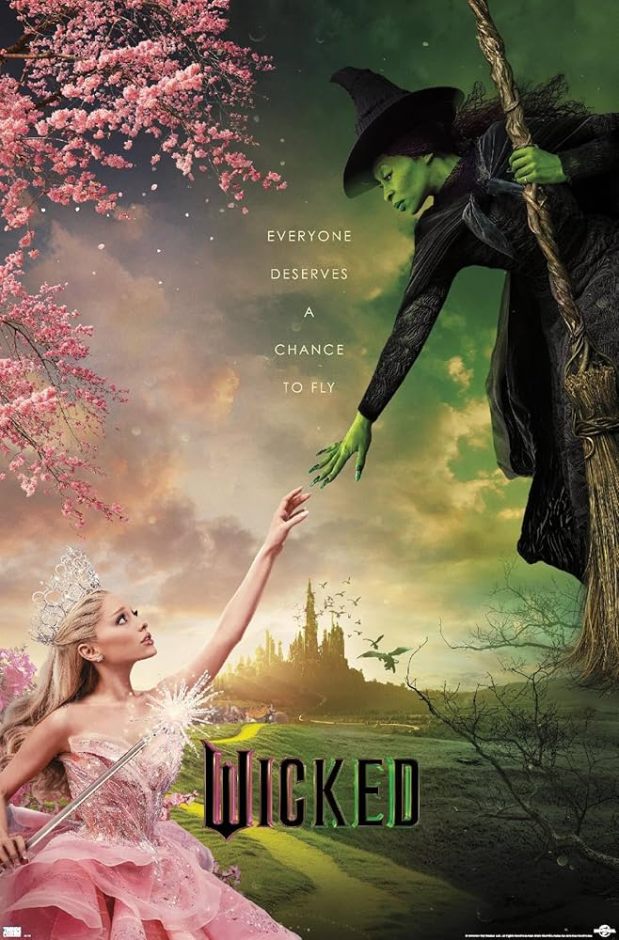
You don’t have to watch Wicked to know its famous line—“No one mourns the Wicked”—which basically means that some people aren’t worth grieving. This kept echoing in my head when I heard that both lead actresses of the Wicked: For Good film recently tested positive for COVID.
According to a recent Guardian article, “Both Grande and Cynthia Erivo tested positive for Covid during the filming of the first movie, temporarily delaying production. Erivo reportedly contracted the virus days before shooting the climactic first-act number Defying Gravity, while Grande tested positive before filming the song “Popular.”
The same article notes that during the current press tour Ariana Grande again tested positive, forcing her to miss several events.
That news made me think of Mia Mingus. In her blog “You Are Not Entitled to Our Deaths”, Mingus challenges the idea that disabled or sick bodies are disposable and that those lives aren’t worth protecting or grieving. After reading this blog and our discussion in class, it made me remember hearing about the Wicked news. It made me realize we’re acting like COVID is just a production hiccup, an inconvenience to filming or press tours, rather than the ongoing threat which is killing and disabling countless people. The fact that both leads got sick, during filming and promotion, yet the media and public reaction centers on delays, missed appearances, and disappointed fans speaks volumes.
There’s something horrifyingly Wicked-like about how illness is framed now. If someone masks, they’re “paranoid.” If they don’t appear for a photoshoot or premiere, fans complain. When someone gets COVID, the conversation is about wasted money on promotion, fan backlash over missed premieres, or travel delays , but rarely about health, recovery, or the toll illness takes. The framing treats sickness as a hiccup, not as human suffering. It treats the sick body as a burden to the show, not as a person in need of care.
“Grande’s positive test was the latest hiccup for the full-court Wicked press blitz that has seen the cast hop continents by the day. Due to flight delays, Grande was unable to make the premiere in Brazil, triggering fan backlash she also addressed on her Instagram.”
That is exactly the kind of abled entitlement Mingus warns about: a culture that assumes certain bodies can and should be sacrificed for convenience. Under this logic, “the show must go on,” regardless of who gets hurt. The Wicked cast situation isn’t just celebrity news, but it’s a reflection of a larger societal pattern where health, disability, and our shared vulnerability are minimized, ignored, or erased entirely.
What’s even worse is how normalized this erasure has become. COVID has become “another thing,” something to power through so cameras and promotions stay on schedule. Workplaces expect people to show up sick. Students are told to push through fevers. Long-term effects are brushed off as “just fatigue.” Public health infrastructure? Largely forgotten. Masks, ventilation, testing are all optional. People who get sick frequently or live with chronic conditions are expected to adapt or be pushed aside.
Mingus doesn’t just name this as negligence, she instead frames it as violence. When we treat care as optional, when we prioritize productivity over people, when we mourn canceled premieres more than lost lives, we are making a statement about whose lives matter. We’re deciding who gets protection, who gets grief, and who doesn’t.
We shouldn’t act like the pandemic is over. We need to stop shrugging when someone gets sick, framing illness as inconvenience, or acting like the only thing that matters is the show going on. Production, entertainment, or convenience is not more important than actual human lives. Because if we care at all about disability justice, about valuing every life, then we can’t pretend the pandemic is done. We have to mourn the sick. We have to fight for care. And we have to stop believing the myth that pushing on by ignoring risk, ignoring illness is normal or acceptable.
“If you don’t respect yourself and you don’t demand what you believe in for yourself, you’re not gonna get it.” -Judy Heumann
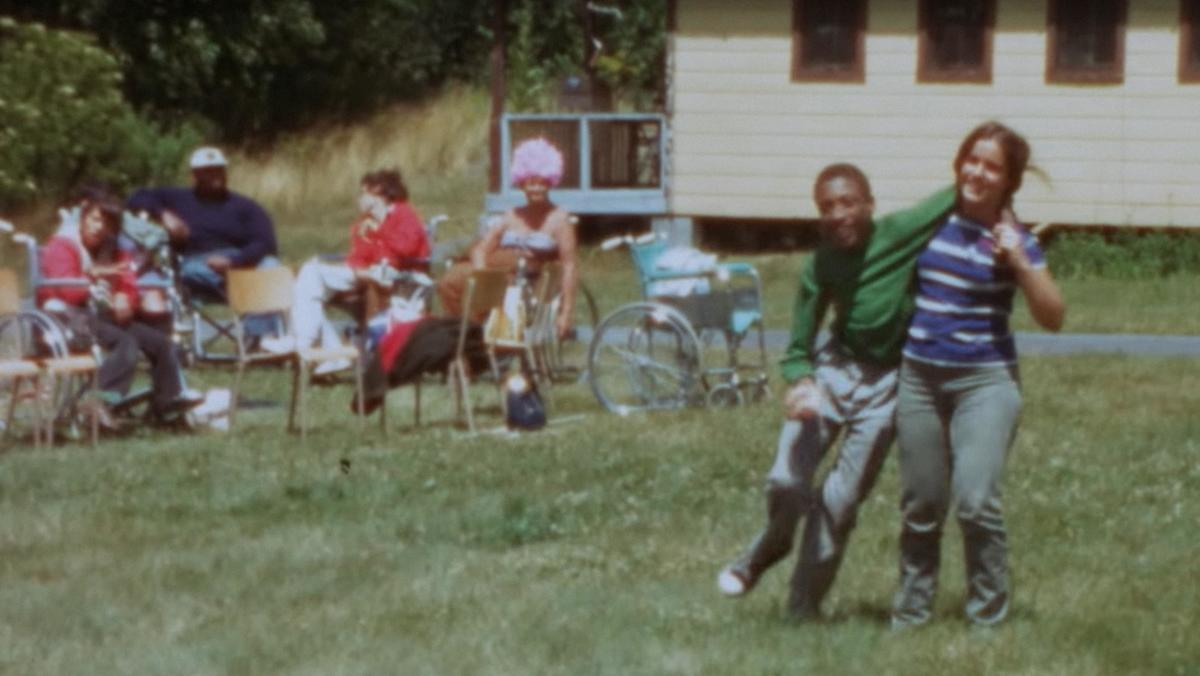
A photo taken at camp Jened. In the foreground to the right are two people, one of which supports the other via an arm slung around the neck. In the background are four figures sitting in wheelchairs.
An accepting environment is the backbone to an unfractured society. For marginalized communities, the opportunity to exist wholly – to present as you wish to without masking, trying to fit in, to just be without fear of discrimination or worse – is few and far between. Camp Jened was a safe space to meet other people who knew the struggle of living in a world that is majorly inaccessible; some campers even stated that it felt like a second home to them. For Woodyard, it was one of exposure, a different way of living than he’d known in Alabama. LeBrecht explained feeling as though he had to fit into a world that wasn’t made for him. O’Toole told about how she would pretend to be able-bodied, hiding her cane under the couch. The weight of masking’s burden remains unknown until you no longer have to pretend. Only once that weight is removed do you realize the damage its done, yet how freeing it feels to live without it.
Heumann, explaining how she took special education classes that were in the basement of her school, stated that “in some way, even when we were that young, we knew that we were all being sidelined”. Similarly to Heumann, I also took special education classes in high school. My experience with them was quite frankly horrible and my teacher brought students to tears multiple times due to a short temper with questions regarding the material. Jened was empowering: an environment curated specifically with those cast to the sidelines in mind, encouraging them to raise up their bat and knock able-bodied expectations out of the park. A topic discussed amongst the campers in the film was parents. One camper expressed distaste for her parents’ overprotectiveness, and another raised that many parents often wish to conceal the disabledness of their child out of fear. The coddling you face as a disabled person is endlessly frustrating, and when you speak out about it, you’re likely to be told that “well, it’s coming from a place of love, so you can’t be mad”. A parent should of course protect their children, but there is a line between protection and infantilization, and too often does it cross the line into the latter.
Within the strictly imposed, purposeful, and artificially manufactured hierarchy of our society, the term ‘power’ consists of numerous meanings. The first definition that most think of is how, in many settings, power is about dominance, control, authority, and oppression. It is a matter of commanding people how to act, what to look like, and where to place one’s body. This is presumably the type of power that most incites the oppressor or the privileged to fear any semblance of gain from oppressed groups, as one’s acquisition of power is identified as something that only happens at the detriment of another’s. It is as though some are terrified that they will be unable to impart shame, terror, disdain, or indifference if those they subject to such tools of oppression and control have enough power to refute their efforts. When someone places themselves wherever they choose, exists in a body that defies social norms, or performs actions that are implicitly or explicitly forbidden without politely carrying the emotional or cognitive burdens for others’ comfort, the power dynamic experiences a significant shift.
Perhaps this view of power, as if it is a finite resource, is why our society so carefully enforces arbitrary rules and prioritizes those who can embody them. One can see this when Roxanne Gay is shouted at by a stranger who feels entitled to comment on her body, when civil rights protesters are subjected to horrific violence for challenging atrocious laws and attitudes, when the demands of disabled protestors to attend the activities of everyday life are ignored, and when incarcerated people are forced into appalling conditions. The same message applies: if we cannot control every aspect of your physical being, we will at least attempt to control our view or knowledge of your presence.
In parallel, power can be regained by the supposedly powerless in many ways, such as when one reclaims one’s autonomy and refuses to accept, either internally or externally, the disrespect one has been bestowed. What is power, if not the presence of respect? What is power, if not autonomy over oneself, and even over others? Power is in the ability to go on with one’s day without being harassed and criticized; it is in the circumstances that allow one to move about the world freely, without social or physical barriers; and it is wholly anchored in the presumedly simple concept of peacefully living one’s life however one chooses. Why should one not have the opportunity and ability to determine one’s own life as much as possible in one’s circumstances, with as few barriers as possible? One should further ask oneself, why is seeking oppressive power over others normative and incentivized, yet the simple request of wanting to be seen and treated as human is consistently dismissed as grossly idealistic?
I’d like to know the who, what, when, where, and why behind the time in human history where it became a concept to have an ‘ideal’ type of person within society. Who’s judgement of another person decided that having a thinner body type is ‘normal,’ while having a bigger one is not. Or, are these judgements just an innate human nature, that was always bound to be unavoidable? I truthfully wonder why people’s judgements and opinions towards certain types of bodies became so prominent/trendy. These bounds within society seem nearly unbreakable, as in, can we ever really alter these narratives? This goes hand in hand with the question of: who decided what a ‘normal, nondisabled body’ looks like within society? Why was it never initially concluded that there can be multiple versions of ‘normal,’ and why isn’t being simply human, normal enough? Insecurities are oh so prominent amongst humans, particularly due to the crafted narrative that’s come to be, surrounding what the ‘preferred body’ is within society. It’s all too common for people in today’s age to feel the need to ‘fix’ something about themselves. Whether it be thinking that you’re too big, you’re too small, your nose is too big, your lips are too small, etc., it seems that hardly anyone is ever fully satisfied with how they look, and I believe that this didn’t always have to be the case. Obviously, society has always been excluding and hateful towards differing groups of people, so the current global dynamic full of insecurities and judgement is anything but surprising. The film Crimp Camp strongly supports these concerns as a sense of normalcy was experienced by the campers when they existed together in nature, away from society’s restricting expectations. The film emphasizes that ‘normalcy’ is not a simple definition, but a spectrum of human experience.
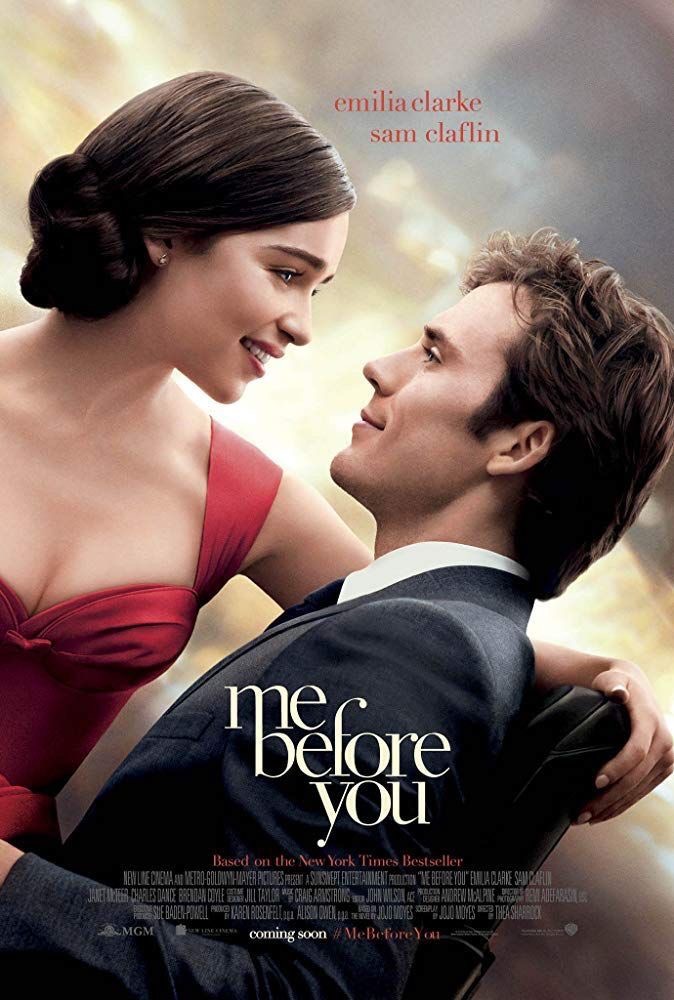
When I first watched Me Before You, I felt like my heart was ripped out of my chest. The story follows Louisa “Lou” Clark who becomes the caregiver of Will Traynor, a man who was adventurous before becoming paralyzed after an accident. Will unfortunately faces many challenges both physically and mentally, leading him to choose assisted suicide despite falling in love, and I haven’t been able to stop thinking about this movie ever since. Recently I started to question, if it was romantic, or was it reinforcing the idea that a disabled life isn’t worth living? After reading Nicole Schroeder’s “Dying a ‘Good’ Death: Disability and the Assisted Suicide Debate” from the Disability Visibility Project, I started to see the story through a completely different lens.
Before I fully dive in, I want to fully paint the picture of this movie. Firstly, Will’s parents hire Lou to care for him after his accident two years in an attempt to raise his spirits. Lou’s unapologetic, positive personality slowly breaks through his bitterness, and they form a deep connection. After finding out he plans to go to Swtizerland for assisted suicide, Lou tries her best to change his mind by trying everything from taking him to concerts and a trip out of the country. But in the end, Will does not change his mind even after falling for Lou. The movie paints his choice as noble as a way of reclaiming control over his life and giving Lou a chance to live hers. The final scene shows Lou reading Will’s farewell letter in Paris, smiling through her tears. It’s meant to be bittersweet, but it also raises difficult questions about what “a good death” really means, and whether society offers disabled people real choices about living.
Nicole Schroeder’s essay completely reframes this debate. She argues that the real issue isn’t about whether people have the right to die, but it’s about why so many disabled people feel they need to. She writes, “those of us protesting do not want people to be in needless pain; instead we want resources other than death to alleviate suffering while people are still alive.” That line stuck with me because it exposes how the conversation around assisted suicide often ignores the failures that lead people to that point: lack of access to care, isolation, and social neglect.
In the film, Will isn’t shown receiving much support beyond Lou’s companionship and his personal caretaker, Nathan. Even with wealth, he seems completely alone in a world not built to include him. Schroeder highlights that in a “hyper-capitalist world,” assisted suicide can become a cheaper alternative to improving care and accessibility. It’s haunting to think about how Will’s decision might have been shaped not by genuine choice, but by a culture that sees disability as tragedy especially after losing the hyper-active life he once had.
One of Schroeder’s most important points is that assisted suicide is often presented as a form of autonomy, when in reality, many disabled people are making choices under pressure. She shares that in Canada, nearly half of those choosing Medical Assistance in Dying (MAID) cite feeling like a burden or experiencing loneliness. That statistic immediately reminded me of Will telling Lou he didn’t want her to give up her life for him. What sounds selfless in a romantic story becomes more complicated when you realize how society teaches disabled people to internalize guilt for simply existing.
The movie’s emotional framing makes Will’s death feel inevitable, even “beautiful,” but Schroeder challenges that idea. She calls out how assisted suicide has “eugenics-centered roots,” meaning that the very systems allowing it have historically viewed disabled lives as less valuable. When I look back at Me Before You now, I can’t unsee this unfortunate pattern that tangles up love, care, and death into a message that equates disability with hopelessness.
When I first watched Me Before You, I can still remember myself tearing up during the beach scene when Will tells Lou that he is still going to Switzerland after she pours her heart out to him. Me and many fans of this movie are still heartbroken over what could’ve blossomed between Will and Lou. But now, I think the real heartbreak isn’t Will’s death….it’s that the story never gives him another option. Schroeder’s essay reminded me that true dignity doesn’t come from the “freedom” to die; it comes from having the support and resources to live fully. The film romanticizes Will’s choice, but if it reflected the realities Schroeder describes like underfunded care systems, social isolation, and ableist messaging, it might look less like empowerment and more like surrender to a world that failed him.
I still love Me Before You for its intensity and emotional honesty, but I see it differently now. It’s not just a love story; it’s also a mirror of how our society defines whose lives are worth fighting for.
I have been chronically ill since I was 16. It started with POTS. Then came the classic Fibromyalgia. Chronic Lyme Disease. You name it. But I didn’t label myself as disabled back then. “Chronically ill” was the phrasing I used. Back then I didn’t know much about the disability community. I was just a sick teenager and young adult.
Then in 2020 I was diagnosed with an degenerative autoimmune disease- Ankylosing Spondilitis. I had to be put on immunosuppressant medication; the only thing that would stop the progression of my disease. It was scary to be immunocomprimised during the pandemic. I had to be really careful, and I basically couldn’t do anything or leave my house.
This is when I started learning about the disability community. I began to identify as disabled. I started educating myself about disability rights, and quickly became an advocate online. And of course some people decided this was too much for them. My (ex lol) best friend broke up with me (via text) spouting some nonsense about talking about my disability too much. She also claimed I was faking my autism (I had recently begun to self diagnose, and would later go on to recieve an official diagnosis) for attention. My own parents constantly questioned me about my referral of myself as disabled. It caused me so much pain and imposter syndrome.
Thankfully, I was able to work through this and come out on the other side, proud to call myself disabled. I am greatful for my friends and family that support me, help me, and care for me. They don’t dismiss me. I know I am disabled enough.
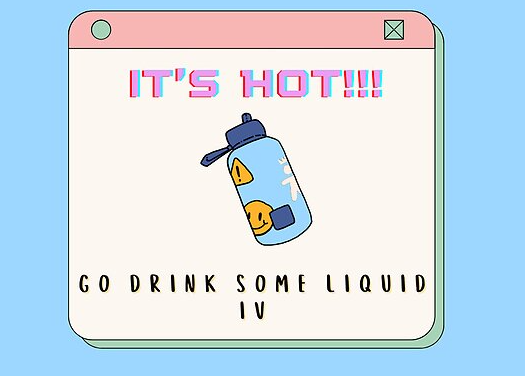
A sticker of a computer pop-up with a water bottle reading “IT’S HOT!!! Go drink some Liquid IV” by the artist disablelovely on redbubble.
When I was younger, I knew something wasn’t exactly right with my body. It wasn’t necessarily hard to see, but one of the biggest issues always had to do with water.