Pretty for a demographic, but not for society

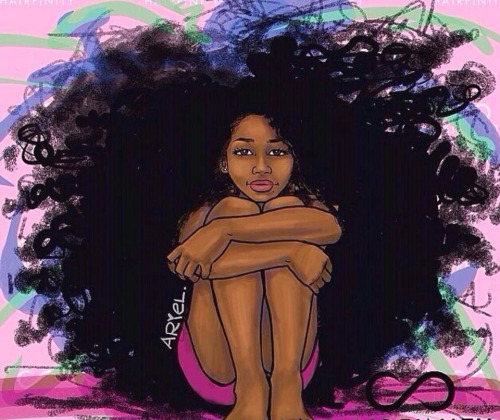
“You’re pretty for a Black girl!”

It’s a phrase that many Black women have unfortunately heard at some point in their lives. But what does it mean? Does it mean that the bar is lower for attractiveness among Black women? Does it mean you’re surprised that you find a Black woman attractive? Do you not believe Black women could be apart of the beauty standard?

Continue reading

How it feels to be me

Honestly this blog post is probably just going to be my inner monologue for the past week because I needed to get it out so it might be a little jumbled but I hope it makes some sense to whoever reads this.

You know I thought I had it all figured out by senior year of High School before I came to this PWI but now that I’m here it seems I still have so much more to figure out. Me coming probably was my best and worst mistake I could’ve made due to me starting to have that feeling like I don’t belong again because of the way I talk or the way I dress I feel like everywhere I go there are small criticisms being made of me and sometimes it comes from the people I consider friends here. Joke or not it really open up my eyes to how different everyone can grow up and how different everyone really is but do I deserve to be called a “thug” because I’m comfortable with sagging my pants or because I come from a all black area. And the answer is of course no I don’t deserve that.

But I’m not going to bash this school that much because if I would’ve never went to a PWI I would’ve never truly understood some of my thought processes, like I just came to a realization recently that I have become someone that little me would’ve never wanted me to be and it’s sad but without the people that I met this year and those “thug” comments I would’ve never been able to look at myself from a outer view.

So, now I truly am starting to understand it even if the healing process hurts but I am who I am and there’s nothing wrong with it and everyone will have their own perceptions of me but that’s ok as long as I don’t lose sight of me again I’ll be ok.

I am but I’m not

In Alcoff’s piece we learn about the three basic pastimes for understanding race and one of them being essentialism. In essentialsim the key piece is that racial identities are stable across time and space. And that is not true. And I say that is not true because of factors like time period and location. Identities like African-American, Afro Latino/Caribbean are new identities. They are literally only identities because of the transatlantic slave trade. 450 years ago African-American Afro Caribbean Afro none of those things were being used by anyone because they were not terms until mid 1600s . As an African-American woman myself one thing me and my Caribbean or Latino friends always talk about is that there’s somewhat of a disconnect between us and Africans because Africans are like lucky in a way. They are going by the original term. Yes there was death and destruction and colonization for them but they have that tiny fact that they didn’t get shipped off to other continents. They got to keep the OG term. Technically we should just be African or even like the term black woman back in 1191 and 1347 no one was using that. Same with people in Malaysia and they weren’t saying oh I’m Malaysian/ I’m a south east Asian they went by their tribal identification. All those terms like black girl, asian girls, etc…

Continue reading

What about the “right-to-live?”

I remember when Jahi McMath died—for the second time. 

Senior year of high school, I came across an article about Jahi McMath, a 13-year-old Black girl who was declared brain dead after her tonsils were removed. It was Jahi’s first surgery, and she was scared. She didn’t want to go through with it, but her mom convinced her it would make her life easier (Jahi had sleep apnea, and removing her enlarged tonsils was intended to help). After speaking with the doctor, Jahi consented to the surgery, and she was fine for about an hour afterwards.

Jahi’s blood vessels were unusually close to the surface of her throat; the doctor had noted this in his chart for her, but the post-op staff was unaware. So when Jahi started coughing up blood, they didn’t see it as the alarm that it was, although Jahi’s family did. They repeatedly raised the alarms for her, but no one listened until her heart stopped.

Jahi was declared brain dead; her brain had stopped functioning due to the massive blood loss. In California, brain death is legal death. But Jahi’s family didn’t accept that. Her mother, Nailah, was convinced Jahi was still alive; Jahi responded to some stimuli and questions. Nailah asked Jahi if she wanted to be taken off life support, and Jahi said no through physical movements her mother taught her.

In the long legal battle that followed, Nailah and her family were forced to flee the state with Jahi under threat of legal action and jail time. Nailah’s insistence that Jahi was alive, and refusal to take her off life support, violated California’s medical ethics, so they went to New Jersey, where families can reject the notion of brain death on religious grounds—Nailah technically “kidnapped” Jahi to do this. There, Jahi had at-home around-the-clock medical support from nurses and doctors who were willing to lose their medical license or be shunned from the medical community; the doctors that treated Jahi were treated as quacks by the medical community. In the view of the community at large, you cannot treat a body that is already dead, and although Jahi’s body was not dead, her brain technically was. The California hospital where Jahi had been declared dead consistently disavowed the McMath family’s efforts and actively disparaged them for “desecrating a body.” But they were wrong.

With consistent care, and rogue researchers willing to look into her case, Jahi was able to exhibit signs of life, brainwave activity, and even underwent puberty. In 2017, a neurologist at UCLA independently confirmed that Jahi was no longer “brain dead.”

Jahi died—for the final time—in June of 2018, not even six months after the New Yorker article was published due to internal bleeding from abdominal complications. Despite overwhelming evidence, the hospital that issued Jahi’s death certificate refused to ever accept Jahi’s recovery and overturn her death certificate.

In 2020, I, much like Jahi, was preparing to go into surgery to get my tonsils removed for sleep apnea, just as she had been. Her name haunted the back of my mind in the days counting down to my surgery, but I, just like Jahi, spoke with my surgeon and asked him how many times he had done the surgery, what the risks were, how long he had been a surgeon. I had the insight that a 20-year-old had and a 13-year-old didn’t, but we were in the beginning of a pandemic, in the middle of the shutdown, and my mom wasn’t even allowed in the waiting room with me. Though I was nearly certain I would be fine (my surgeon routinely did much more complex and precise surgeries, like removing tumors that had grown into the blood vessels of the throat), I was alone when I frantically pulled the anesthesiologist aside and had to shamefully admit that I had been taking quinine pills until yesterday morning, a stupid superstition I had bought into as a way to stave off a Covid infection.

Quinine, for those unaware, is an herbal supplement that used to be used as a “cure all” back in the days of the Black Plague and the Spanish Flu. It didn’t work back then, but I’m a big believer in the placebo effect, and I needed to take something to put my mind at ease. One of the side effects of quinine—that I didn’t know until the morning before my surgery when I actually read the bottle—is that it can thin your blood. This makes you a higher risk for surgery; you’re more likely to bleed uncontrollably because the blood is much harder to coagulate. The bottle said to stop taking quinine two weeks before surgery. Feeling like I was going to cry, and possibly even about to die, I waited anxiously to be taken back and prayed that I would wake up afterwards.

Obviously, I did, or I wouldn’t be writing this right now. But I’m aware how lucky I was, and am. Jahi’s case is in direct opposition to Terry Schiavo’s: Terry Schiavo was a White woman declared brain dead who the hospital refused to stop treating, whereas Jahi was falsely declared brain dead and refused further treatment. Jahi’s family noticed this too; they knew if Jahi had been White, she would have likely received the attention she needed, and even if she had still been declared brain dead, her family’s choices would have been respected. Having come after both of them, and being light-skinned myself, I know my family would have had the respect and space they needed to make whatever decision for me they felt was right if my surgery had gone wrong.

Still, it haunts me; Jahi’s story is barely told outside of fringe medical pieces, but Terry Schiavo’s is well-known enough to be casually referenced in feminist writings. Who gets the right-to-live? Who is allowed to die? Why are our bodies’ needs and wishes ignored depending on the kind of body we inhabit? I hope Jahi is resting peacefully now, but I carry the anger and fear of what was allowed to happen to her.

“You’re Really Good At Taking Everyone’s Sh!t”

“You’re Really Good At Taking Everyone’s Sh!t”

Whose Fault Is It?

Emotional labor is the act of “regulating or managing emotional expressions with others as part of one’s professional work role”. For the context of this blog post, I will also be referencing emotional work as well, which is the role people use in any social context.
RANT: Every post, YouTube video, and link that I looked at typically focused on the emphasis of how women have been the brute focus of emotional work and often, labor. WHAT ABOUT THE MEN?!
BLOG: Ideally, men have been the focus, but in our current generation, I am starting to wonder if men are becoming the scapegoat for blame. There are good and bad things to this, but I can only share my experiences. From growing up in a household as an adopted child to working in hospitality at some of the best hotels in the Houston area, to coming home and being expected to “clean up everyone else’s shit” (one of my ex’s fathers literally told me this and suggested I work for some type of plumbing company) to experiencing my own version of emotional labor is…exhausting. As a recommendation, if you’re dealing with being the emotional laborer of your family or workplace, I suggest counseling, good friends, hobbies, and money.
Now that I have your attention, the emphasis on emotional labor during this period of the class was for women. Honestly, I love that. Often, the strongest women in my life have carried the emotional labor of EVERYONE in the family. My Grandmother (capital G, because she truly is a G), and my Aunt (who raised me, God bless her soul) have not only raised multiple members of the family but have guided others and influenced people for generations to come. I can endlessly explain what they have done for everyone, including my impaired brother (this falls into the disability category of the past few weeks, but I decided to not go in-depth with these issues and instead focus on emotional labor…anyway) My Grandmother has done amazing things as a widowed woman, and when my grandfather was alive, what I recall of him, he was a remarkable man, veteran, and overall generally good person. In order for him to be that he needed to have an even stronger woman there to not only support him, but to motivate and guide him. We so often focus on a certain gender, but I think its vital to focus and include everyone because we cannot physically do it all on our own – even if social media suggests that we do.
When it comes to emotional labor for myself, as an older male, I grew up with the family vibe of “you want it? Do it yourself” This mindset has its own version of toxic masculinity and it worked for a time, but as I have grown older and started practicing gratitude, meditation, and fitness, I have learned that kindness is the key to growing. However, that is also the curse of being easily manipulated and being the scapegoat out of a lack of emotion – if you allow yourself to be. When working as a hotel supervisor, I found myself taking on the emotional verbal abuse of people that travelled so far and attempted to check in, but one minor inconvenience (Well…one time there was a major inconvenience, we sold out and by the time they got there…the people didn’t have a room… and they were diamond members which is equivalent to being a traveling version of Karen) set them over the top, and I had to apologize profusely, make up for their issues by giving them a free nights stay at another hotel, etc… all while keeping a smile on my face. So dumb, but it was vital in learning how to maneuver around people when they are angry and teaching myself how to stay calm in the face of disappointment. That’s an invaluable trait and lessons/memories that I am grateful for.
I don’t know, I am a believer in the idea that everything happens for a reason. Maybe I should allow myself to be the gatekeeper of my own “shit”, to be more selfish and selfless at the same time, and to lack the attempt to understand everything and everyone around me but I cant do that shrug. In essence, I think all of us must have some type of role in emotional labor, but please, don’t forget to take care of your mental, physical, and financial well-being. Your family, friends, and pets will thank you for it. (I will always choose to be kind and thank you to all of the people in my life, wouldn’t be me without YOU).

Not Having Social Media Has Given Me A New Confidence!

Everywhere I go I see younger children, teenagers, and young adults snapping everything they do. My sister literally stays on Snapchat/IG so much that I do not enjoy her company because that’s ALL she does. I see people dying to post on Instagram. I see old people on Facebook 247. My mom can barely get though the door before she is on the computer looking at her newsfeed, for hours. Both of my grandparents are 70 and they both are on Facebook, and they comment on EVERYTHING, it is beyond annoying.My grandma has at least 50 repost a day, seriously. About 3 in half years ago I deleted my Instagram for many many reasons. I ended up deleting my Facebook this year, because it was just too many old people and all long post that were just to annoying to take anymore. The first reason I deleted my social media was because I was always stalking someone, wanting to see what they were up to, simply being nosey and accidently liking their pictures…. embarrassing. Continue reading

“I Liked Your Hair Better Straight”

tumblr_n7r6vgKPpR1t6dcj7o1_500.jpgI’m getting tired of hearing that….

Continue reading

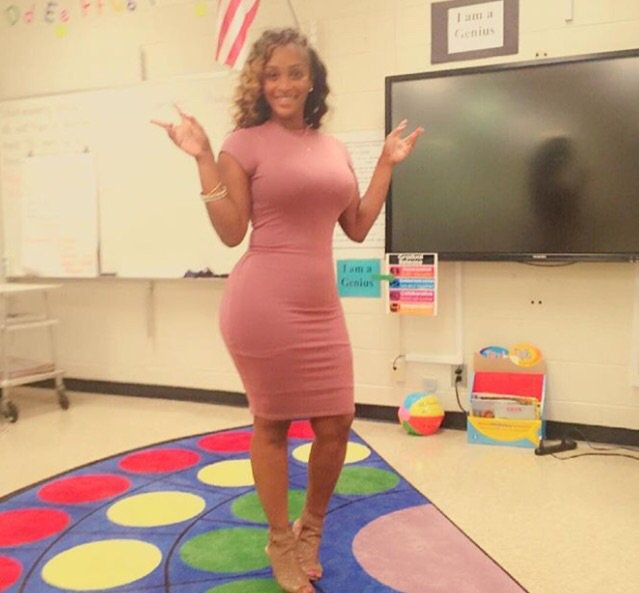
Alright, Let’s Be Honest America: Black Women’s Bodies Are “Inappropriate”

CsKH3_pWIAAZ1h3.jpg

I know what you’re thinking.

“Oh my god, how could to title your post that?” Continue reading