
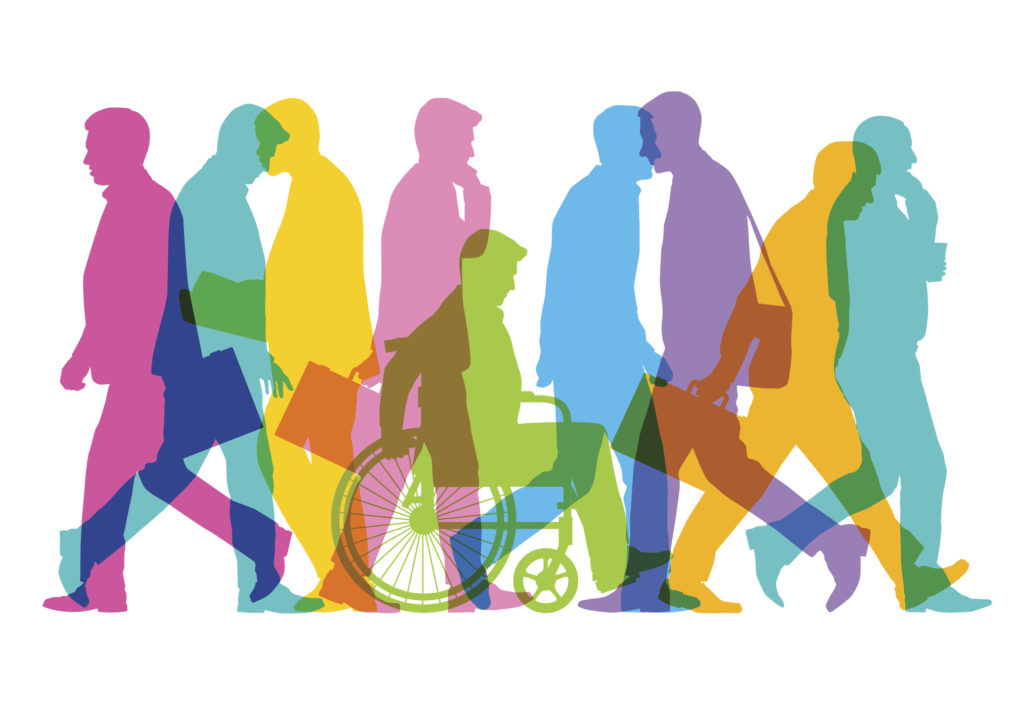
Our Disabling Tendencies; What are its ramifications to the physically and mentally impaired?

When my mother first began feeling weak, I remember no one at first took her condition seriously. For the most part, we all took it as a normal aging process since she had just turned sixty-nine and was on medication for a high blood pressure diagnosis. She herself didn’t give it too much thought, I remember her dismissing some of her symptoms as “side effects of my medication.” While away from home, I would often speak to her on the phone, and would ask if her health was improving, but she would always reply yes, only adding that she was feeling “a little weak on my left side.” one day while at work this past summer, I received  a call from her telling me that she had a stroke, but that she was doing fine. When I finally got the chance to visit her, it was immediately obvious that her health was in serious decline despite all that she had told me. What made things even worse for us was the fact that her application for health insurance kept on getting rejected, without any coherent reason. I remember one time driving her to the social workers office with hopes of finally getting a clearer picture of what was wrong with her application, and why it was taking so long for it to be approved, only to return empty handed without any answers, but with instructions to keep in touch with them.

All this time her health remained in steady decline as we could not keep up with follow up appointments and other mounting bills. After waiting in vain for her application to be approved, and because she could no longer perform simple activities of daily living like cooking or cleaning, we decided as a family to move her in with my eldest sister. Because it was a different state, we decided to reapply with hopes of finally getting approved. Because she already had an application being processed, it was demanded that her file be sent over for a reevaluation. A quick review of her old application revealed one small discrepancy; apparently while completing the application she had mistakenly wrote down my father’s social security number instead of hers, and surprisingly, while she was being denied health insurance, no one had the patience of accurately checking her application before forwarding it for approval.

Evidently in not being prompt in their response and professional in their approach to her case, they had neglected their duties and failed to see the disabling effects of their actions on an individual whose advanced age and align health had severely impaired her ability to adequately complete the application process. Though subtle and usually done unconsciously, such oppressive and discriminative tendencies against the disabled especially those with limited mental capacity remains rampant partly because it has not been adequately defined and identified. In the “social model of disability”, Tom Shakespeare accurately identifies “the neglect of impairment as an important aspect of disabled people’s lives.” He furthers this notion by adding that “while other socio political account of disability have developed important insight that people with impairments are disabled by the society as well as by their bodies, the social model suggest that people are disabled by the society, not their bodies.” Though there is unanimous consensus among sociologist that there can never be a world devoid of such oppressive tendencies towards the disabled, until there is some alternate model which properly address this issue people like my mother are bound to remain oppressed by the society. Her ordeal accurately Exemplifies the psychological and physical torture millions of impaired individuals endure before they are fully acknowledged.

After identifying the discrepancy, my mother’s application was finally approved and she could finally get health coverage through Medicare. However, by his time, her health had gotten even worse, and her symptoms were more evident. After visiting with her new physician, her MRI revealed she had Encephalopathy, with early stage Parkinson’s disease. It does appear as though her lack of proper health insurance had landed her an inaccurate or incomplete health care, leading to a wrong diagnosis. When I visited her again in December, she had been prescribed new medications and her tremors were improving. Though she was still quite frail, she was gradually gaining some strength. As always, she blamed everything on the side effects of her medications, but at least I now know what she is going through, and can personally adjust so as not to be disabling in my approach towards helping her meet her daily needs.
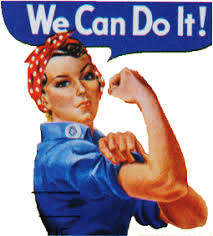
Blueprints for a Gender Neutral Society.

The laws and cultural norms that govern most societies around the world has typically been overwhelmingly male oriented, and for this reason, it is not uncommon to see that such societal norms are biased and predominantly favors everything male. In some cultures for instance, it is the norm that the female body is solely for procreation. Compared to the male body the female body  has historically been deemed “fleshy”,” leaky” and “primitive”, whereas the male body generally has been associated with” logic”, “rationality” and “civility”. Such a perspectives has always shaped world view of women, and have hampered their ability to contribute to societal affairs and a vast array of other social issues. In most western cultures like the United States for instance there is so much stigma associated with a woman’s quest for a leadership role this was evident in the 2016 presidential elections in which the default expectation that there are too many limitations that prevents a woman’s from successfully executing such leadership roles limited her chances for success in favor of the male candidate.

Similarly, it has well been established that in the past few decades, sexual violence and its use have been and continues to be exploited in an attempt exert control and subjugate minorities especially in the slavery and pre civil rights era. By many accounts however it goes beyond race and civil rights, and traverse the contours of gender and gender equality especially if viewed in the perspective male quest for control over the female body. With the establishment of such norms aimed at establishing control over the female embodiment, one can’t help but argue that by extension women as a whole suffered and continues to suffer from gender disparity norms especially for reasons that such norms are put in place by men with no clue of how a loss in agency might effect the female body. In many ways, the quest for such male dominance can be likened to Foucault’s description of sexual exploitation (in this case of the female body) as a way of projecting power.

In recent years however, the calls for change continues to get louder and old societal norms are increasingly being challenged by new and informed standards aimed at guaranteeing gender equality and reclamation of female embodiment. The “me too” movement for instance challenges the male domination of societal norms, and seeks to dismantle the male claim to the female body as a price possession. Because the role played by the disembodied male perspective in shaping the current view of the female body, one important question which arise is that as the winds of change continues to sweep across all major sociopolitical spheres, what role if any should men play in ensuring a more pronounced and long lasting change in gender education and equality?

Recently in the media, when the Gillette razor company unveiled a TV commercial challenging the old gender bias norms, it drew a lot of heart felt criticism and backlash from those (mostly men) who felt offended by the central theme of the commercial. The message though controversial had most communities talking, and served as a blueprint on how such issues can be dealt with moving forward. It should start with breaking the cycle of misinformation, with bold fathers stepping forth to educate their sons as they will be the fathers of tomorrow, and hold the responsibility of passing on what they have learned to their children. In other words the key to a less gender biased society starts with adequately orienting such ideologies through education on gender discrimination and female disembodiment, especially among youths be it in the classroom, at home, with friends or no social media.

Therapeutic interventions for dealing with mental health behaviors.

The increasing number of Americans living with some form of mental health Problem has prompted the need for treatment facilities to help tackle this problem. With the establishment of such facilities, ethical concerns has been raised about the available forms of treatment. Mostly, hospitals and other mental health facilities employ the use of a variety of treatments, including the use of anti-psychotic medications which are for the most part used in conjunction with other forms of therapy. In most cases, hospitals attempt to refrain from the overuse of such anti-psychotic medications, in favor of other less invasive methods. If a decision is made for it to be used however it is usually accompanied by some form of written or verbal consent from either a guardian or an individual that has been deemed mentally capable of consenting to treatment. Combing the use of medications and other forms of therapy is generally enough to effectively limit an individual’s symptoms, enabling them to return to the community and be productive citizens.

Sociologists view an individual’s body as an agent of communication, especially as it relates to mental health, and identify one problem with “the disciplined body”; the inability to maintain self-control. Unlike an infant with a complete lack of self-control, a fully grown adult is expected to have the ability maintain or conceal the loss of such control. However, when an individual has completely loss the ability to maintain self-control, a situation might arise in which there is need for use of medications without
consent from the patient. Others might arise in which the is dire need for
mechanical restraints such as in a situation in which safety can’t be
guaranteed .Implementation of such treatment routines often raises the
possibility of ethical violations, for instance what are some effects to the
mental health of an individual whose mental well-being is already compromised? How might such loss in agency through the trauma experienced from being physically restrained affect the overall well-being of an already compromised mental health? In such instances of complete loss of self-control, a facility designed for care of mental illness, and equipped with a team of Doctors psychologists and nurses is expected to come up with techniques that can be applied to therapeutically remedy the situation and allow  the body to adjust to a stressful situation at hand.

From inferences drawn from past experiences, mental health
professionals are beginning to design new and better ways to dealing with these problem. At the top of their list of priorities is coming up with ways that help prevent mental health behaviors from escalating in the first place. One technique is to instill policies with strong guidelines on procedures to follow when faced with such escalating behaviors. One of such procedures consists of the use of a set of choices termed “Triangle of choices” to help mental health professional deescalate seemingly agitated behavior. Such choices ranges from offering several therapeutic items of choice to an agitated individual like music or quiet time to allow for reflection. In some cases, prescribed doses of anti-anxiety medications can be used only after the first two attempts at de-escalation has failed. With successful implementation of these techniques, it is only on seldom occasions in which such behaviors escalate past the verbal stage and there is limited chances of a traumatic experience since there is no use of physical restraints or forced medications. With the sudden jump in number of incidents of police brutality due to alleged failure of compliance by citizens, implementing techniques aimed at deescalating evident loss of self-control could drastically reduce such incidents and limit the number of deaths from police brutality.