
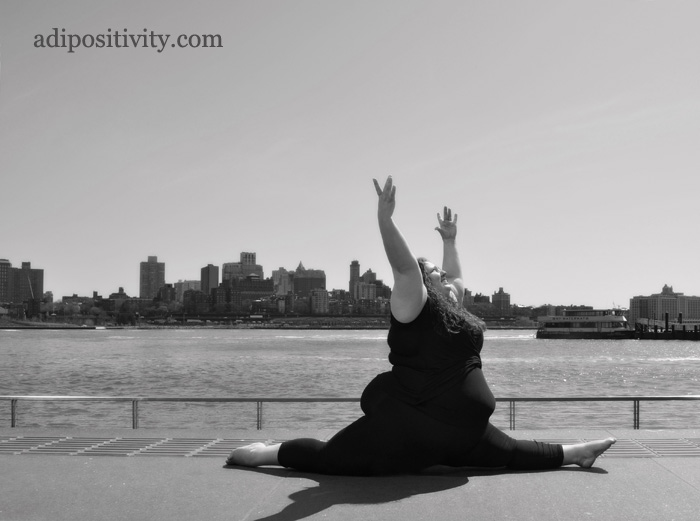
I’ve been aware of The Adipositivity Project for a number of years. Most people who float around Fat Acceptance circles online are aware of it, but when I’ve shown it to friends who aren’t aware of FA, it’s always surprised them. I thought, given the reading for our next class, this was at least visually on topic. I’m also always a fan of activism through art and you can’t say Substantia Jones’ photographs aren’t beautiful or radical. Many of the photographs are nudes, so beware if you decide to click through. I’ve pulled some of the more modest ones to show the intent of the images.
Adipose: Of or relating to fat.
Positivity: Characterized by or displaying acceptance or affirmation.
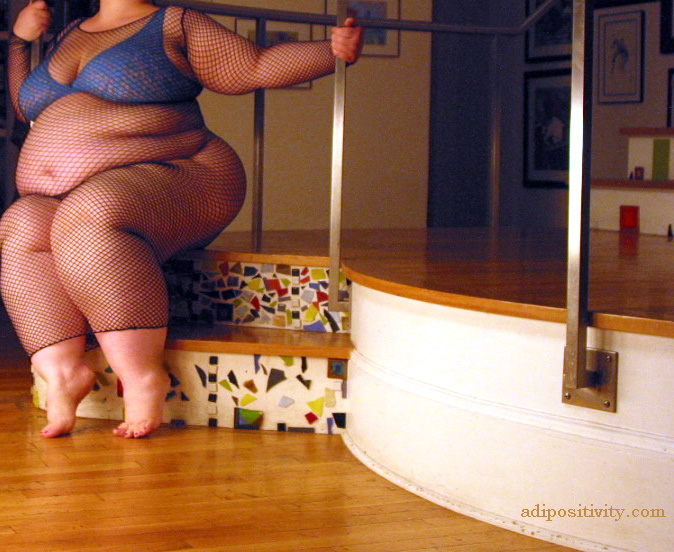
MISSION: The Adipositivity Project aims to promote size acceptance, not by listing the merits of big people, or detailing examples of excellence (these things are easily seen all around us), but rather, through a visual display of fat physicality. The sort that’s normally unseen.The hope is to widen definitions of physical beauty. Literally.
The photographs here are close details of the fat female form, without the inclusion of faces. One reason for this is to coax observers into imagining they’re looking at the fat women in their own lives, ideally then accepting them as having aesthetic appeal which, for better or worse, often translates into more complete forms of acceptance.
The women you see in these images are educators, executives, mothers, musicians, professionals, performers, artists, activists, clerks, and writers. They are perhaps even the women you’ve clucked at on the subway, rolled your eyes at in the market, or joked about with your friends.
This is what they look like with their clothes off.
Some are showing you their bodies proudly. Others timidly. And some quite reluctantly. But they all share a determination in altering commonly accepted notions of a narrow and specific beauty ideal.
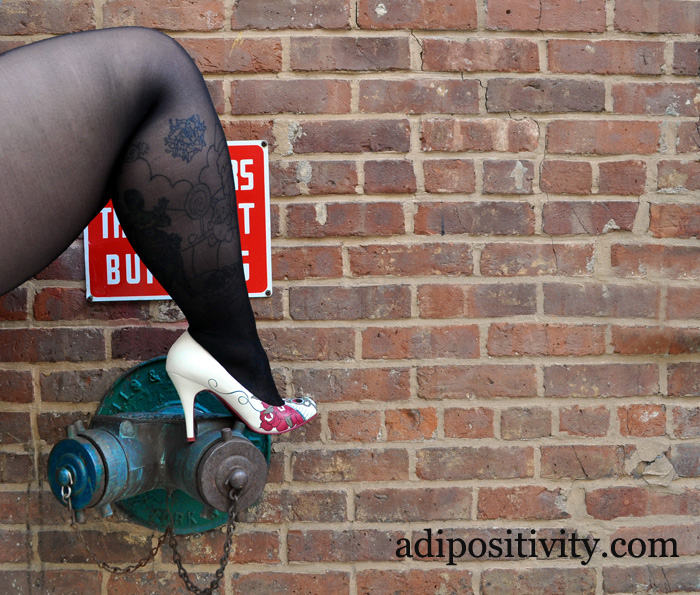
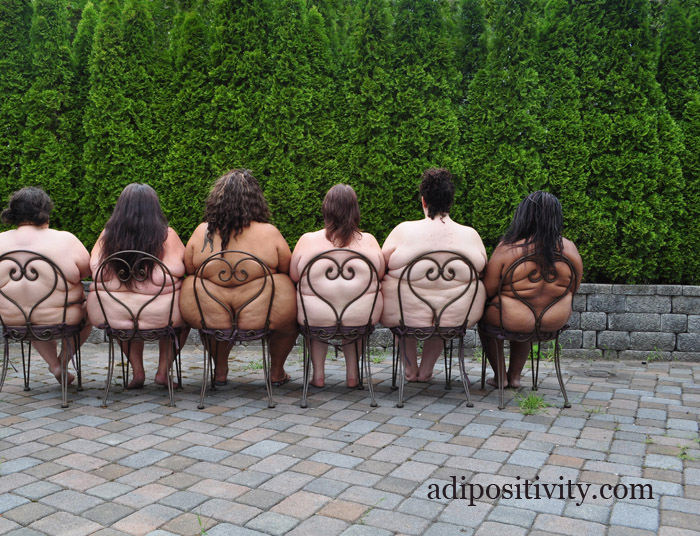
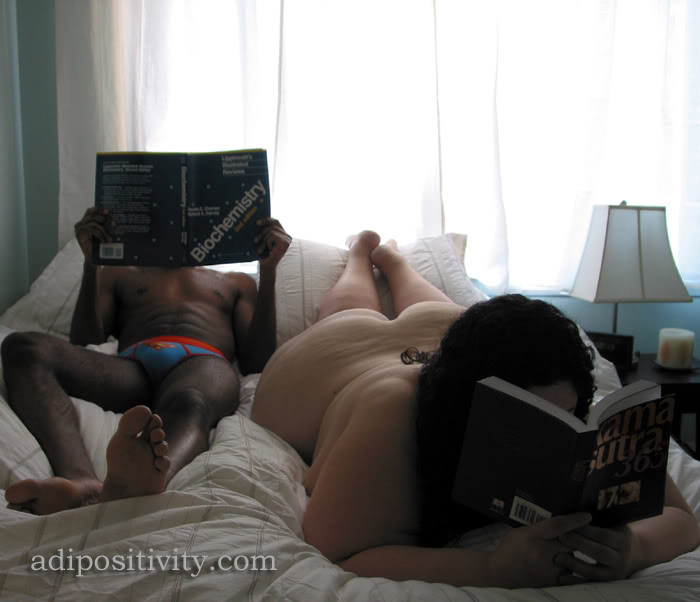
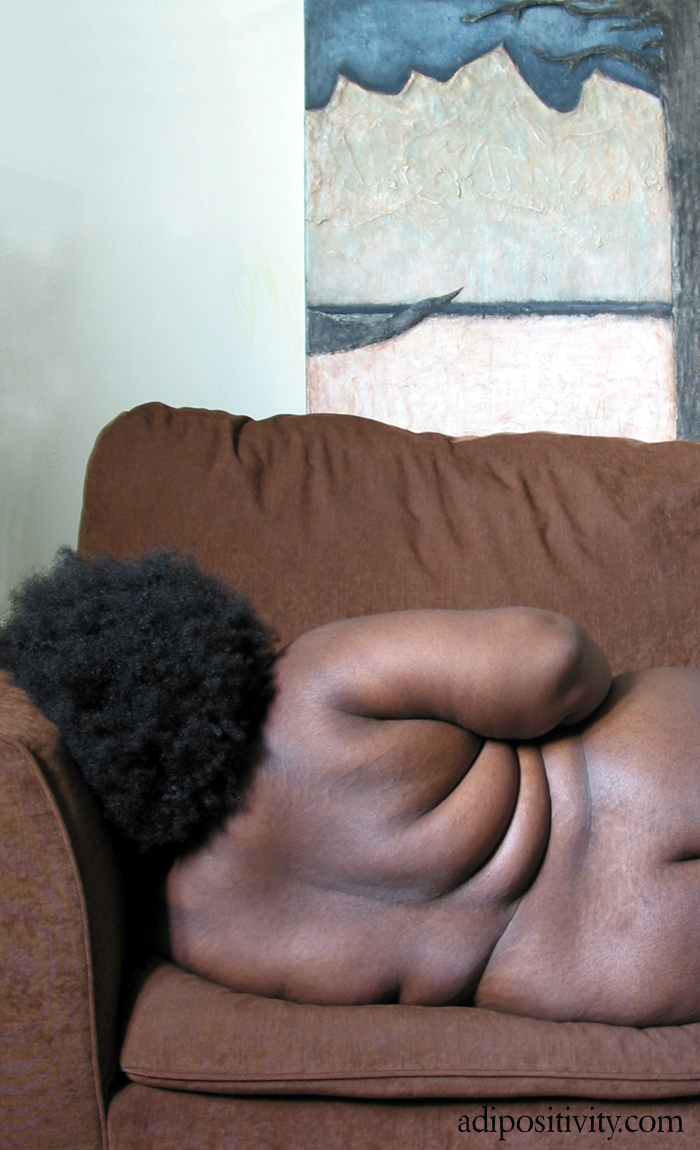
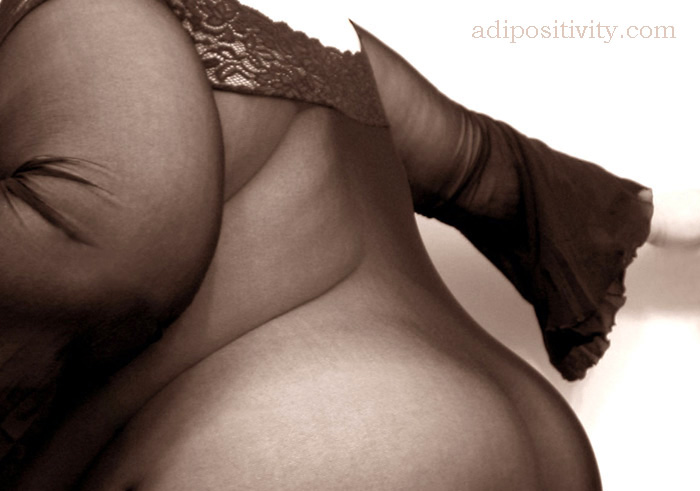
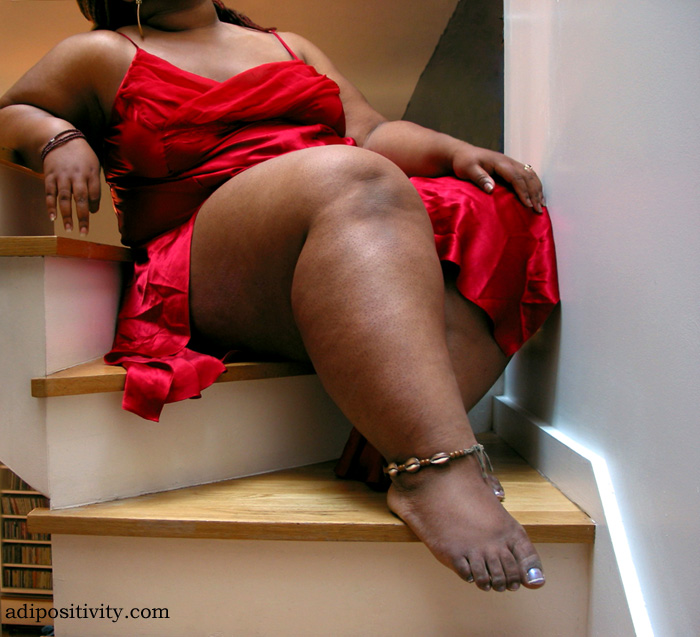
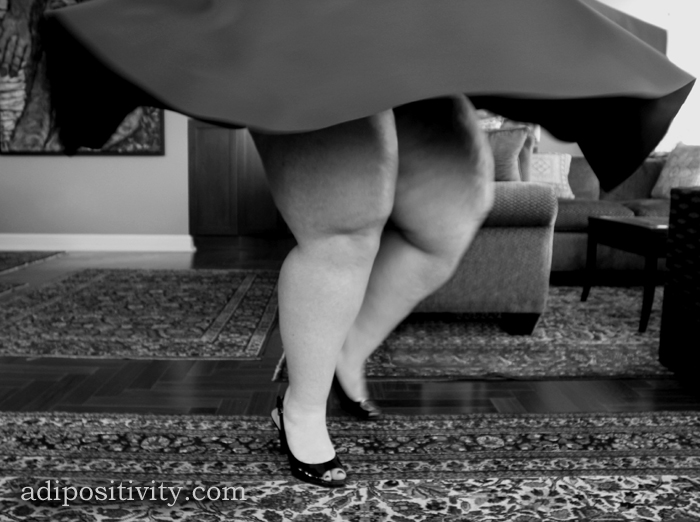
I love this project, especially considering the attempts by the media to include “real” bodies through the use of marketing like the Dove Campaign for Real Beauty and “plus size” (really a size 6-12) models, and how different these fat people look from those culturally approved fat bodies. These aren’t the media portrayed idea of what is “real” (and how problematic is that word in regards to any person?). These (mostly) women, 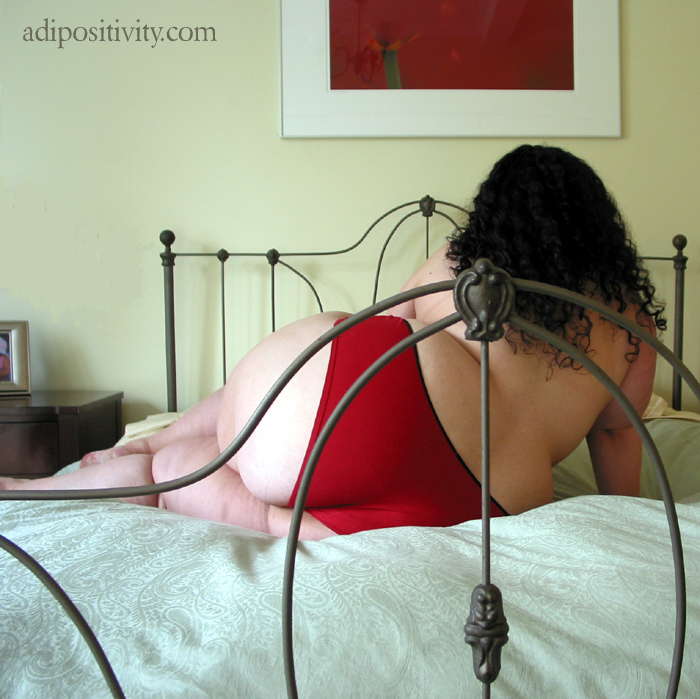 according to the BMI (another problematic method of judgment!), are obese, or more likely morbidly obese (sometimes called Death Fat in the FA community). Most of them probably weigh somewhere in the neighborhood of 200 or 300 or even 400 pounds – yet I don’t think they look like the stereotypical bed-ridden mordibly obese person most non-fats think of when they hear those numbers. Or maybe they do look like those ZOMG FAT people to you.
However you see them, these people are fat, but they have accepted the bodies they have and are living their lives in them.
 Unruly Bodies
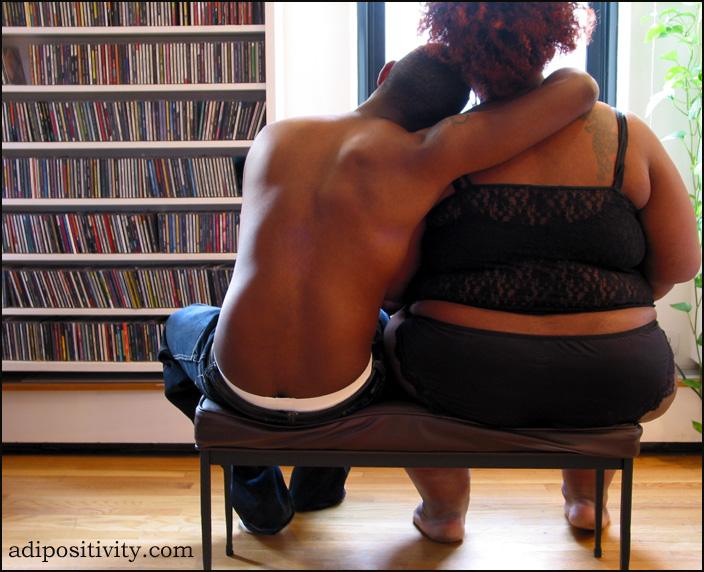
These are lovely images; I’m thankful people have the confidence to show their bodies off in a society in which thinness is so emphasized. The showing of skin has an “in your face” effect like no other, one that delineates “this is my body and I love it, regardless of your opinion”.
I found it a little interesting that a lot of the images (or at least the ones in the original post) featured legs. I imagine this might be related to the stigma against cellulite, but I’m not sure.
I would bet a lot of it is showing some thick thighs with cellulite to help combat the stigma.
Personally, I made the decision to not show full nudes so I was limited to only the suggested nudes, which included a lot of legs.
Lovely post. Left me feeling grateful for my curves!
I really loved these images and found them to be not only beautiful but incredibly moving as well.
However, I did have one issue: You pointed out that some of these people have incredibly high BMI’s and can be considered “morbidly obese” but they still love their bodies.
I can appreciate people loving their bodies and fully support it, but what about the health problems associated with being morbidly obese (i.e. diabetes, early heart problems, etc)? Perhaps I’m misinformed but from my limited knowledge morbid obesity is known to have an incredibly detrimental effect on one’s health.
I love these pictures, I think it’s incredibly refreshing to find a community of people who embrace their bodies even when the rest of the world is telling them to find only shame in it.
But can health and morbid obesity go hand in hand? I really have no idea, which is why I’m posing the question…
We actually talked about this exact topic in class today – one conclusion we came to is that regardless of a persons BMI (whether it’s morbidly obese or underweight) the only thing you can tell from a persons weight is how much they weigh. There’s this conflation between weight and health and one does not determine the other.
The other issue is that BMI classifications are extremely problematic – they are arbitrary numbers that are actually supposed to describe groups of people, not individuals. There is a LOT written in the feminist fat acceptance community about the issues with BMI and with automatically assuming fat = unhealthy.
If you’re curious, I suggest readings from Lesley Kinzel, Marianne Kirby, and Kate Harding. Lesley and Marianne are both writing for xojane.com if you want something for a more mainstream audience. Okay, I just checked and oddly enough Lesley recently wrote an article about the BMI and it’s issues: http://www.xojane.com/issues/bmi-pointless-unscientific-garbage 🙂
I really like these pictures! They are lovely compositions – colors, textures, spacing, everything. And it is brilliantly refreshing to see gorgeous pictures of big bodies.
I love this project and I am so glad that you highlighted it in your post. I am not sure I would have been made aware of it otherwise. These photos are, unfortunately, too rare. We rarely see “a-typical” (meaning anything outside of a size 0-2) being displayed, portrayed, or featured in the mass media and I am certain that the lack of diverse representation of bodies contributes to the ignorance people may have regarding body variations. To see women, of all shapes and sizes, embracing and owning their bodies is empowering and enlightening. We need more of this. We need people to see that our bodies are beautiful and they don’t have to fit into a certain paradigm to be appreciated and accepted. Now, my only question is, how to we make sure this becomes a mainstream movement?