Wait, Can I Dance?

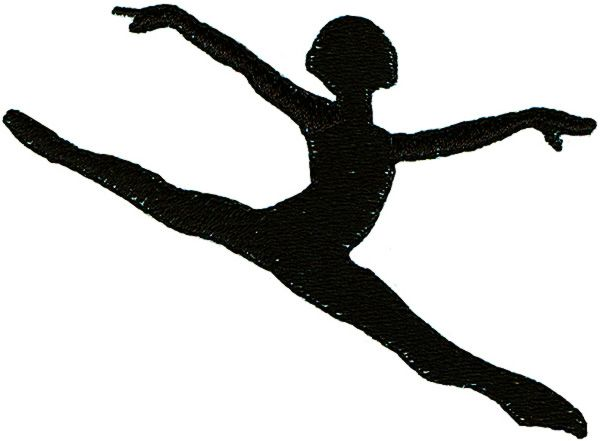
It is a silhouette of a person performing a jete.

My last formal dancing experience was in the sixth grade, when I decided to take dance as an elective. I had never tried it before and I was curious about how I would fare. I remember my favorite part being our lessons on ballet. Beyond the basic positions, I do not recall much from that class except how liberating it felt to be able to move my body in a way that was not to endure labor or stress. Evidently I was not very good because I was always placed in the back during performances. Facing dejection, I have since then subconsciously internalized the notion that I am not meant to dance and I am not ‘good enough’ to. 

As I have matured and spent more time in my own company, I have grown to appreciate music. Music has been there through all of my car rides, relationships, breakups, breakdowns, and the many other aspects of my life. Similar to dance, music has allowed me to feel liberated by providing a space where I can feel different emotions. But now I realize how much I have limited myself. Aside from the occasional dance session when I am alone in my car, I have not considered dancing to music. I have limited myself to a life where I can appreciate music but not be able to express it through my body. I feel that dancing along to music can make my lived experience more enjoyable, as that is the case for numerous people. 

LaMothe, within “As the Earth Dances,” explores the relationship between dance, philosophy, and the human body. She advocates that the human body is constantly changing and can develop with the help of dance and movement. I resonate with her idea that dance is a method of expression that embodies individuals’ relationships with the world and ourselves. Engaging our bodies can help to shape our relationships, experiences, and personalities. I look forward to reconnecting with a lost part of myself by allowing myself to dance and express my emotions.

Wait, I Can be a Different Gender?

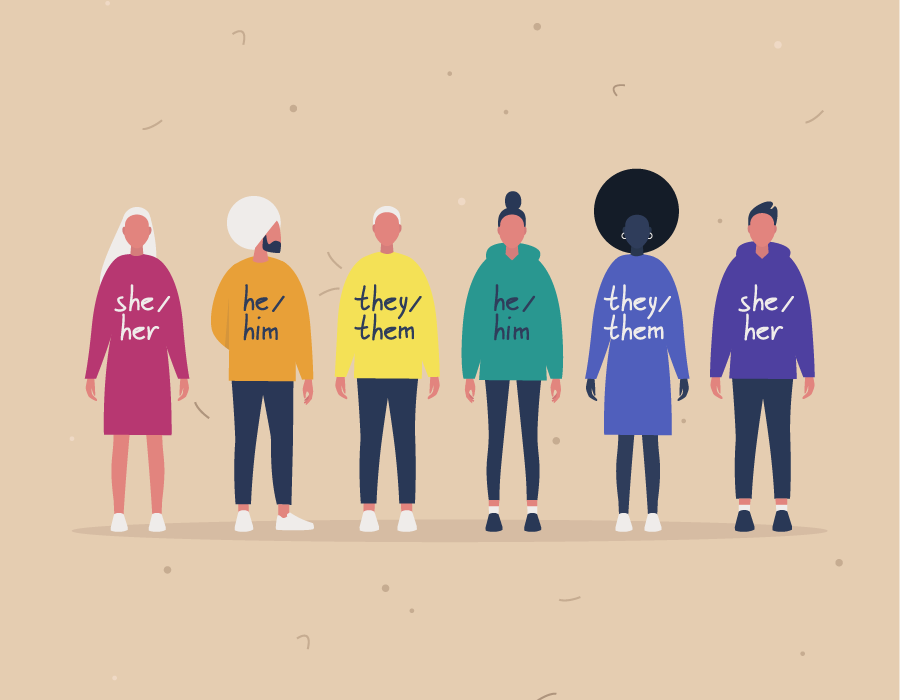
There are 6 different people, each with pronouns on their clothes.

There is such a disparity between Chinese and American culture, in terms of sex and gender embodiment. I lived in China for a few years before moving back to the states, so I was able to experience the social culture of each country. In China, it is very conservative and traditional. Everyone is expected to adhere to ‘traditional’ gender roles, otherwise they are criticized by society. This kind of mindset has been long ingrained into Chinese culture, leading it to become the norm. Whereas, in the US, the culture is different. Although there are still unaccepting individuals, society can be receptive to people defying traditional gender roles. Here, there are numerous settings where individuals are not expected to adhere to ‘traditional’ gender roles and society welcomes those who identify differently than what they were assigned at birth. There are more advocates for gender embodiment and sexuality studies in general, which is rare or unseen in China. 

The culture that I have seen in China has been perpetuated by my parents. Growing up, it was never a question of whether I identified as a woman or if I was cisgender. To them, there was no doubt that a daughter of theirs would be anything other than a cisgender female. I did not know any better so I never questioned their assumptions. Looking back, I realize how limited and confined I was. I was never able to explore my gender identity. It was not until high school that I learned about gender embodiment that extends beyond ‘traditional’ roles. I realized that I did not have to confine myself to that restrictive mindset and that I had the option of identifying as another gender. 

As emphasized by Stryker and Stone, gender is not just a ‘natural’ part of the human body that is apparent just by looking. Stryker describes the relationship between the body and gender identity, where it extends beyond physical appearances. There are performative and dynamic aspects of gender. Stone also emphasizes how the embodiment of gender includes more than physical attributes. It involves subjective experiences, identity formation, and the negotiation of societal norms. Gender embodiment has been largely influenced by social constructs but it differs between every individual. Subjective experiences lend gender to vary amongst people, but gender identity should nonetheless be recognized and respected in all cultures.

I am Capable of Doing Work

Woman with four boxes isolated on white

Since middle school, my body has been subjected to various types of work. When I was about 11, my parents started their own wholesale distribution company. They would order items from overseas and deliver them to different stores throughout the DMV. They felt that this routine was not enough to support our family so they began to sell their products at local flea markets on the weekends. When I was finally old enough, my parents brought me along with them to help out. The first time that I worked with them was arduous. We left for our local flea market at 3 AM because my parents wanted to get the best spaces. We slept in the car until about 5 AM, when it was time to set up our “shop.” I helped my parents unload the box truck, moving banana boxes that were filled with random items from their company. I was on my feet and talking to customers all day. We started to pack up around 1 PM, where we had to put all of the items back onto the truck one by one. When I got home all I could do was lay down and the next day, everywhere on my body felt sore. I have continued this routine every weekend, whether it is raining, snowing, or 95 degrees outside. This has affected both my mental and physical health. Having to forgo weekend plans that my friends make or talking to rude customers leads this work to be emotional labor for me. As Hochschild describes it, emotional labor is work that involves evoking and suppressing feelings. When I work with my parents, I feel mentally and physically drained. My body has adapted to strenuous activity but I still feel worn out every time I come home from work.

This routine has led me to not only dread the weekends but to wonder what my body would look or feel like if I did not engage in physical labor. When I look at myself, I do not see the “petite” and “small” girl that I am often described as. Instead I see someone able to lift heavy boxes and be on their feet for countless hours, propelled by many years of experience in physical labor. I am still unsure of which one I prefer. Society condemns those who are not stick-thin but part of me wants to overcome the stereotype that girls are weak. As mentioned in Slavishak’s “Made by the Work,” bodies are often symbols. Bodies that are bigger or muscular are seen as tough, strong, and capable of work. Whereas bodies that are small and non-muscular are seen as frail and not meant for physical labor. On first look, anyone would assume that I am the latter but in reality I am capable of doing work.

Wait, am I Capable Enough?

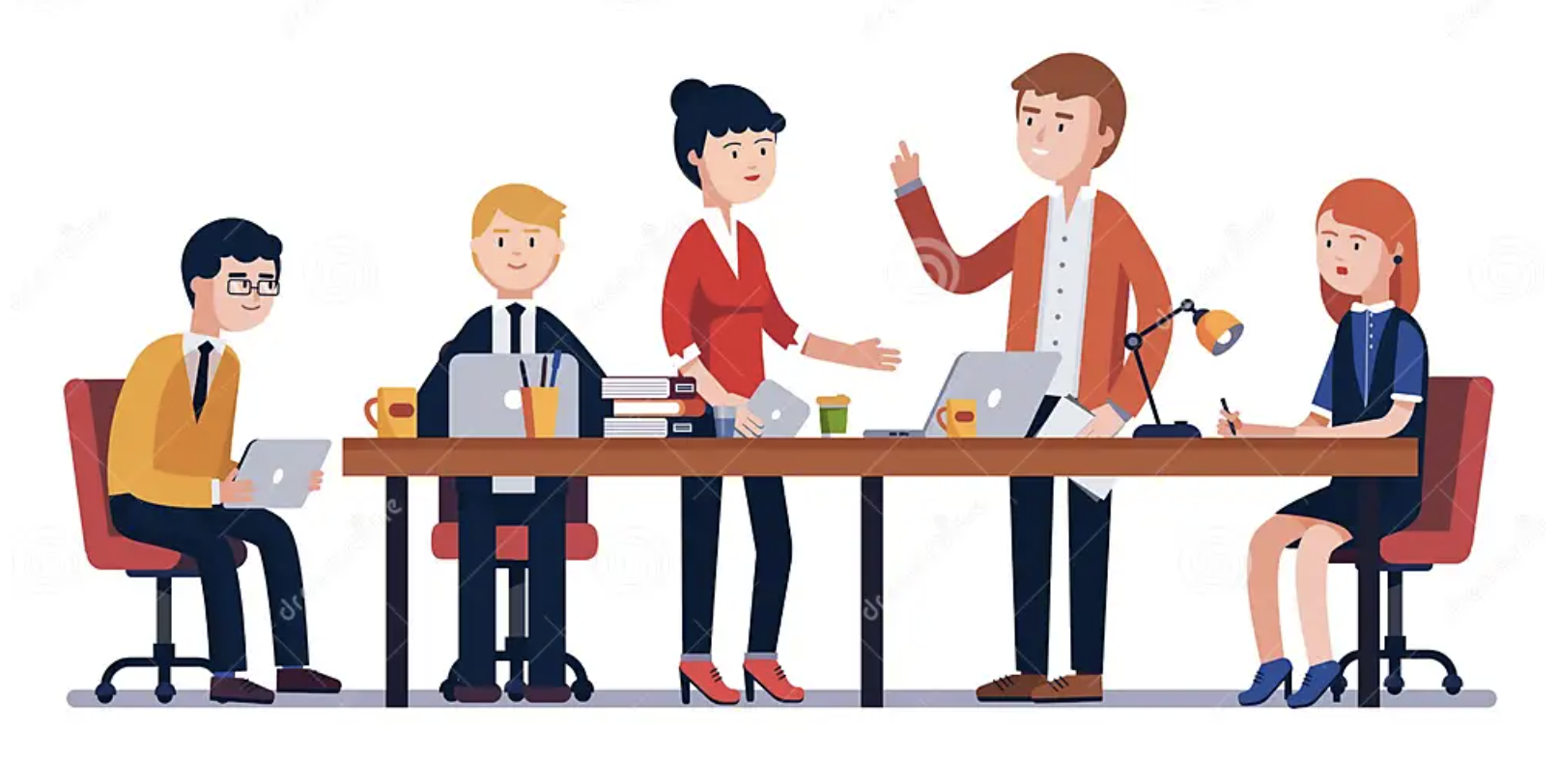
This is a picture of people in an office setting, sitting at a conference table. There are 2 people actively talking, one who is a white man and another who is an Asian woman.

Being a woman of color in the financial sector, a traditionally male dominated space, has always intimidated me. Growing up I would picture older, white men when someone would talk about business or finance. I never imagined myself in this space. But perhaps it was my parents’ demand that I pursue something other than the arts or it was my intrinsic desire to prove that I was capable that motivated me to pursue economics. In my economics courses at UMBC, I have noticed that although the classes are diverse, they are still male dominated. I have also noticed this in the previous finance related internships I was in. Being surrounded by those who did not look like me has contributed to my feelings of being ostracized and questioning whether I was competent enough to fulfill the roles I was in.

When I was applying to all of these roles, I doubted my ability to fulfill them, even though I had multiple relevant courses and skills. I had to make sure that I ticked each qualification before applying to each job, which is characteristic of women’s lived experiences all around the world. Women are generally not considered business-minded and instead are expected to pursue less challenging or more domestic roles. On the other hand I have noticed that compared to women, men are more willing to apply to a job even if they are not qualified. They do not harbor doubts about how fit they are for a job but instead apply without a second thought. I feel that my tendency to give myself credit has been improving over time but it definitely hindered me in the past, especially in applying to jobs. As an example, a recruiter recently reached out to me about a position at a company I previously worked for. The position was quantitative and challenging, and I was extremely apprehensive about applying even though I took the required courses and had the fitting skillset. I remember reading the qualifications over and over and asking myself whether I was competent enough to fulfill the role. I realize now that if a man was in that situation, they likely would have agreed to apply instantly without a second thought.

If I had not taken this class, I would not have realized that I experienced and continue to experience inhibited intentionality, as mentioned in Young’s “Throwing Like a Girl.” Even though I have certain intentions or desires, I feel limited by external social norms, which further inhibits my intentionality. This experience is one of many that describes my human experience. In phenomenology, human consciousness and experience are different between individuals. So even though this experience may feel like the norm to me, someone else can have an entirely different experience because they perceive and interpret the world differently from me.