
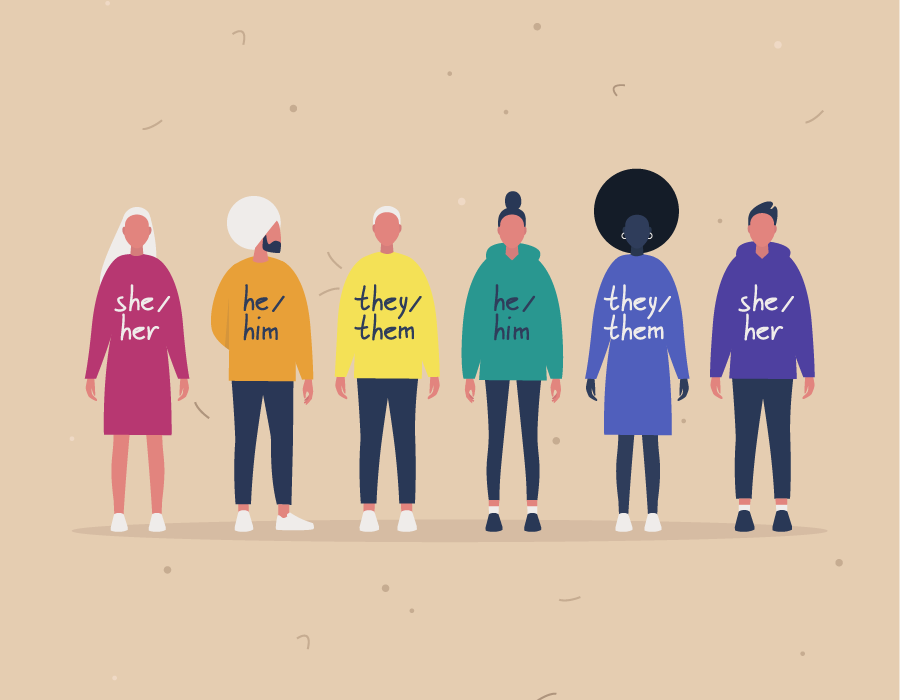
There is such a disparity between Chinese and American culture, in terms of sex and gender embodiment. I lived in China for a few years before moving back to the states, so I was able to experience the social culture of each country. In China, it is very conservative and traditional. Everyone is expected to adhere to ‘traditional’ gender roles, otherwise they are criticized by society. This kind of mindset has been long ingrained into Chinese culture, leading it to become the norm. Whereas, in the US, the culture is different. Although there are still unaccepting individuals, society can be receptive to people defying traditional gender roles. Here, there are numerous settings where individuals are not expected to adhere to ‘traditional’ gender roles and society welcomes those who identify differently than what they were assigned at birth. There are more advocates for gender embodiment and sexuality studies in general, which is rare or unseen in China.
The culture that I have seen in China has been perpetuated by my parents. Growing up, it was never a question of whether I identified as a woman or if I was cisgender. To them, there was no doubt that a daughter of theirs would be anything other than a cisgender female. I did not know any better so I never questioned their assumptions. Looking back, I realize how limited and confined I was. I was never able to explore my gender identity. It was not until high school that I learned about gender embodiment that extends beyond ‘traditional’ roles. I realized that I did not have to confine myself to that restrictive mindset and that I had the option of identifying as another gender.
As emphasized by Stryker and Stone, gender is not just a ‘natural’ part of the human body that is apparent just by looking. Stryker describes the relationship between the body and gender identity, where it extends beyond physical appearances. There are performative and dynamic aspects of gender. Stone also emphasizes how the embodiment of gender includes more than physical attributes. It involves subjective experiences, identity formation, and the negotiation of societal norms. Gender embodiment has been largely influenced by social constructs but it differs between every individual. Subjective experiences lend gender to vary amongst people, but gender identity should nonetheless be recognized and respected in all cultures.


I’m in the same boat as you, I wasn’t able to explore my gender identity until high school. Prior to that, I was in a conservative Catholic school, so of course they didn’t want us to know about anything off the binary. In fact, the one time they talked about trans people, they painted them in a negative light, essentially calling them “people who mutilated their God given bodies.”
Then, I went to a public high school, where I attended LBGTQ club meetings, and withing a few months I realized I was genderfluid, in addition to aromantic and asexual.
It really sucks that so many people can’t explore their gender, since they are in an environment that tells them that deviation does not or cannot exist. You bring up a great point in how the environment around people can confine them, and how deeply ingrained it is in many cultures. And how it is important that people should be able to recognize and explore gender identities.
This makes me think about Indigenous culture and if they view American culture about gender how you view about Chinese. Questioning my gender in American culture has been confusing because I did not have the vocabulary for how I feel until I was 18 and even then I had to unlearn the conservative views about gender I subconsciously had. Even though I was probably the most forward thinking of my friends and family I still could not escape the society that I lived in and it caused me pain.