
Burnout Feels like Smoke

Burnout feels like smoke.

Smoke in your head, so thick you can’t think straight.

Smoke in your bones that makes your movements heavy and sluggish.

Smoke in your eyes, burning them with tears and clouding your vision.

Smoke all around you, a never-ending haze that you struggle to work through.  Following you around wherever you walk.

The smoke stays with you.

It stays in your lungs, making you choke on your words, and eventually you realize that speaking is just too goddamn exhausting to do right now.

It stays in your mouth, as you struggle to eat a simple meal since you haven’t eaten in hours.   But chewing is a slow and anguishing process, and you can barely taste the food over the ash.

It stays in your throat as you force it all down, threatening to make you cough.  But you don’t even have the energy for that.

Where there’s smoke there’s fire, a flame just recently extinguished.  If you leave it alone long enough, the last embers will fade and the smoke with it.

But not if you keep stoking the fire.

If you could just rest, the smoke would fade.  If you could take a day off, just a single day, it would be clear enough to think.

But you don’t even have a single day; every day you need to do so much, and you know that if you stop now then everything will pile up and you’ll have no hope of ever catching up.

So, you need to keep stoking the fire.

Some days are better, some are worse.  

Sometimes it is just a haze that makes you wheeze slightly and forces you to squint to see everything.  But, you can mostly see and mostly breathe, so it’s okay.

Sometimes it’s a thick cloud, almost unbreathable, making everything around you difficult to see.  But you still have tasks to do, so you force yourself through every agonizing breath you take as you stumble around near blind.  

It can happen with anything.

In school from having to do too much homework, to many assignments, to many tests to study for.

In sports from doing the same drills for too long, or having too many competitions, going and going but never stopping for a second.

In dance from needing to perfect the routine, practicing the same things for hours and hours, and you can’t stop now lest you forget everything.

Anything where you put in so much, but get so little in return.  Anything where despite your body’s pleas, you just can’t stop.

Something that you don’t enjoy anymore even though you used to.

Where there is always someone saying “It’s not good enough, you must do more,” despite the fact that you’ve used all your efforts to the point of burning.

No, it’s not perfect.

Hell, it’s probably not even that good.

Because I’m doing this surrounded by smoke that you are forcing me to stoke.

I’m tired.

I just want to rest.

Please just let me rest.

When I said this song feels like burnout, I meant that it feels like how burnout makes you feel. The feeling of being too tired to do anything, and everything you do feels like it’s slowly killing you. You are tired and unhappy, and you just want it to be silent.

On living with executive dysfunction:

I can’t write when I need to.  I can’t take my thoughts and put them onto paper.  I can’t do this assignment.  I have things to talk about.  I’ve already talked about them.  Can I talk about them again?  Some people get mad when I repeat things.  I’ve learned to stop repeating things.  People don’t like repetition.  They don’t like to repeat themselves either.

I have things to do.  I need to get out of bed.  It’s morning, I have class in two hours.  It takes two hours to make coffee, breakfast, get dressed, and brush my teeth.  I feel like it doesn’t take this long for everyone else.  My parents and sister never understood how I took so long.  We didn’t know I had ADHD.

I don’t think my mom wanted to know.  She took me to Jewish social services when I was in 5th grade so they could evaluate me for autism.  They said I didn’t have autism.  

They said they thought I might have ADD.  They couldn’t evaluate me for ADD.  It’s not ADD, it’s ADHD.  My mom knew.  She didn’t pursue it.  

She’s a substitute teacher.  She’s seen kids with ADHD, young kids, get prescribed heavy medication.  That’s what the doctors prescribe.  That’s what the other teachers want the kids to take.  She didn’t want me on medication, said it would permanently alter my brain chemistry.  She was scared.

I don’t think medication was necessary in my case.

It would have been nice to have other accommodations though.

I think I might need medication now.

I was almost 18 when I got my diagnosis.  I found out my older sister got diagnosed with ADHD too, a few years before mine.  I didn’t know about it.  They never brought it up.  They were in college.  Mom didn’t mention it.

Or did she?

I can’t remember.

My clock is set 5 minutes fast so I get to class early.

I show up to class 5 minutes late.

It’s 7:30 pm.  I should find a place to wrap up my homework so I can start heating up a frozen dinner.  I don’t have the energy to cook.  Cooking from scratch takes hours.  Cooking takes longer for me than others.

It’s 8:00.  I should eat.  I’m no longer working.  I’m sitting at my desk.

It’s 9:00.  I need to eat.

It’s 10:00.  I still havent eaten.

It’s 10:30 and I’m finally starting to heat up dinner.

I finish eating at 11:00.  I still need to shower.  I won’t get into my bed if I don’t shower, because I don’t want the sheets or blankets to get dirty, because I don’t want to clean them.  I can’t clean them.  I have a washing machine.  I just can’t clean the sheets.

I need to sleep.

I need to get into bed.

I can’t leave my desk.

I’m going to do this tomorrow.

It’s tomorrow.

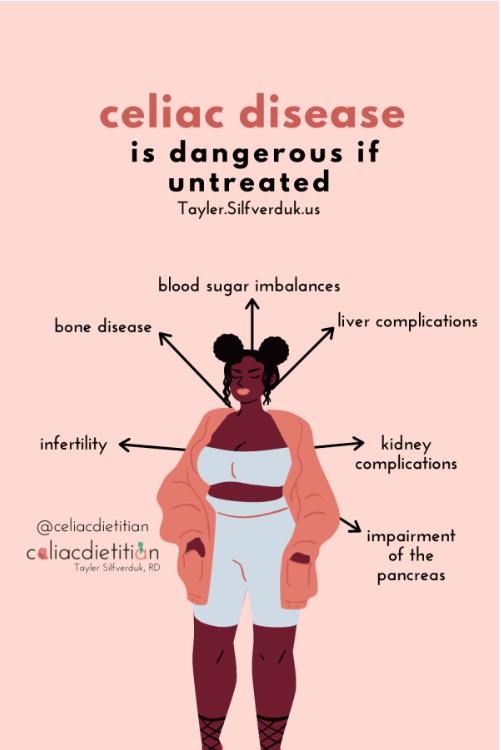
Reflecting on having an untreated digestive disease

This previous summer, I was diagnosed with celiac disease.  For those who don’t know, celiac disease is “a chronic digestive and immune disorder that damages the small intestine. The disease is triggered by eating foods containing gluten.”  Essentially, gluten destroys the villi in my small intestine.  I have been living with this for almost 21 years at this point, but I only got it confirmed less than half a year ago.  And I’ve been looking back on a lot of the symptoms I thought were normal.

For starters, there have always been a lot of foods that I never liked, and sometimes felt ostracized for not liking them.  This included: plain paincakes, animal crackers, Cheez-its, goldfish, croissants, fortune cookies, pizza, and a variety of other bready foods.  A lot of peers would always ask “Wait, you don’t like (insert food here)? Why not? What’s wrong with you?”

When I was in elementary school, I remember getting headaches in the morning after eating breakfast.  I brought this up to my parents, but since I had no fever they just assumed I was tired from waking up early.  The headaches didn’t stop.

In middle school, the stomach aches started. I attributed it to stress and being overworked with the massive homework assignments we had to do.  I had also begun to develop insomnia, which made it hard to get enough sleep at night.  We also weren’t allowed to eat in class, so I always made sure to eat an egg for breakfast to tide me over for the four hours until lunch.  Even so, I was still hungry.  I was still tired.  In eighth grade I got into the habit of, whenever the teacher asked how we were, I would calmly respond “tired and hungry”.  Eventually she got tired of my complaining, and she had what can only be described as a fit of anger that morphed into a mental breakdown, and by the end both of us were crying (since I was 12 and she was a grown ass woman yelling at me).  I stopped complaining after that.  The hunger and tiredness didn’t stop.

In my junior year of high school I started developing nausea, but I attributed that to the fact that I was going through my hardest year of high school.  The nausea didn’t stop.  

Last year, I thought everything was going relatively okay.  I still got frequent stomach pains and stopped eating donuts because they made me sick, but I still thought everything was fine. Then I suddenly had a seemingly unprompted mental breakdown.  I couldn’t shower for a few days, and it took about a week to eat a portion of food somewhat large enough to call a meal.  In the weeks that followed I still couldn’t finish meals.  I called my parents to let them know what was going on.

That winter I had a doctor’s appointment, and we found out I had lost 20 pounds.  After I explained how I was feeling and she checked my medical record and family history, she suggested I get bloodwork: A full metabolic panel along with testing for thyroid and celiac.

The bloodwork came back positive for celiac antibodies, and the metabolic panel showed that I was pretty damn anemic too.  A few months later I got an endoscopy and biopsy; we already figured that I had celiac disease, but they needed to see the extent of the damage and make sure I didn’t have something else like parasites or things like dysplasia (something that, if untreated, can lead to cancer).  The good news was that I only had celiac; the bad news was that my upper intestine was flat since all of the villi were basically destroyed, and while it would heal on a gluten free diet, it could take up to a year before it’s fully healed.

So I switched to a gluten free diet, and also read up on the information the doctors had provided.  I researched the symptoms and, after everything, it all clicked.

I realized that almost everything I felt was likely contributed to celiac disease.  The headaches, stomach pain, insomnia, nausea, anemia, and heightened anxiety are all symptoms of celiac.  I was probably hungry and tired all of the time because my intestines were actively and continually being destroyed, and that was causing malabsorption (a type of malnutrition), so I wasn’t getting enough energy.  

And one way or another, various people who were supposed to help me brushed me off, and taught me to ignore my symptoms.  Particularly in middle school.  I remember telling teachers that I had frequent stomach aches, and they were the ones who told me it was likely stress.  And for the one teacher: every day I told her I was tired and hungry, and she didn’t care.  Every day I was experiencing symptoms of celiac disease, and I mentioned it to her when she asked how we were doing.  She knew I ate “enough” food, but she didn’t care that I was in pain, and just wanted me to shut up.  She didn’t stop and think “Hey, if a child is hungry and tired all the time, there might be something wrong.”

I am fine with the fact that I have celiac.  I’m not fine with the fact that I could have realized it sooner if people just listened to me and took my symptoms seriously. 

On Being Perceived as a Woman

I am genderfluid, but I was still born in a female body. However, I didn’t learn about different genders until high school, and for most of my childhood I presented as and was viewed as a girl.  So of course, I was subjected to the horrors that come with living in a female body.

Especially in Catholic middle school.  I looked feminine, so everyone around me thought I must have a “feminine attitude” (as mentioned in “Throwing Like a Girl”), although it did vary from person to person.

The girls were kinda judgy. A lot of them wanted to straighten my hair, on account of it being “prettier” than my frizzy curls, but I always said no.  One day a girl asked to brush a strand of my hair.  I allowed her to brush a single strand, and she learned very quickly why you can’t brush curly hair dry. She was horrified.

Meanwhile, the boys in my class thought of me as the embodiment of innocence.  I looked feminine and I spoke in a high pitched voice, but I couldn’t really change that.  I also followed the rules, but that was out of wanting to avoid punishment.  I learned that the guys thought that I never heard a curse word in my life (I knew plenty).  One time they approached me by the lockers, giggling, and told me to curse.  I said “fuck”, and they went wild with shock and bewilderment.

So, girls saw me as a girl, but also someone who wasn’t doing enough to be a girl, or someone who needed to be molded into their form of femininity.  Someone they had to fix. The boys thought that I was some kind of dainty, clueless, innocent being  based on mannerisms that were out of my control, and fully intended on mocking me for it. 

My teachers (all women), shared a similar if not more intense sentiment of the girls.  One time in class, I was sitting the way that a bored student with undiagnosed ADHD would sit.  The teacher looked at me and told me to “sit like a lady.”  Then there was the dress code.  One time we had a free-dress day (otherwise we wore uniforms) and I was wearing thick, snug pants.  At lunch my teacher called me over, and calmly explained to me that my form-accentuating clothing could distract the boys or give them ideas, and I couldn’t wear anything like that again without getting a conduct referral.  I almost cried on the spot.

My teachers shamed me for not being feminine enough and for being too feminine.  They saw me living my life in my body and wanted to police that.  I learned that no matter what I did, I would be shamed for not acting the way I was “supposed” to.  This was even more confusing given my complicated feelings on my gender identity, but not even knowing about genders off the binary (Catholic school education).  I felt uncomfortable in my own body.

It was hard for me to learn to be comfortable with my own body.  After realizing my gender identity, I had to work out how I really felt about my body.  I had to figure out which uncomfortable feelings were from body dysphoria, and which were from all the gross, sexist ideas that I was bombarded with.  

And after that, I felt a lot more comfortable.