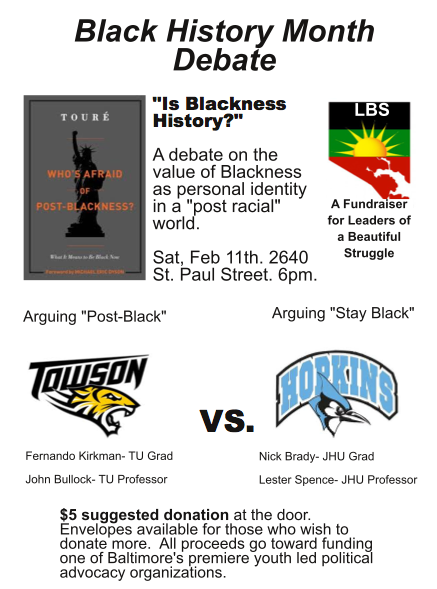
“Is Blackness History?”

Leaders of a Beautiful Struggle (LBS) presents a public debate on the meaning of Black history and Black identity in a “post-racial” moment.

Sat, February 11th, 2640 St. Paul street, 6 pm

The debate will pit teams of 1 professor and 1 student from two local universities against each other. Lester Spence, Professor of Political Science, and Nicholas Brady, a recent graduate, will represent Johns Hopkins University. John Bullock, Professor of Political Science, and Fernando Kirkland, a recent graduate, will represent Towson University.

There will also be a chance for the audience to ask questions and participate in the discussion.

$5 suggested donation at the door.

Envelopes available for those who wish to donate more.

All proceeds go toward funding one of Baltimore’s premiere youth led political advocacy organizations.

FREE ADMISSION
Light refreshments
Free street parking is available

Come out and participate in this timely and hotly contested topic.

This event is extremely last minute, so for those of you who are interested in the topic but cannot attend, what are your thoughts? What do you believe the meaning of Black History is? What role does gender play in Black history? What does it mean for Black identities to exist in a “post-racial” moment? Is this even possible?

Sculpture, Shoes, Height, Misogyny, and Damage

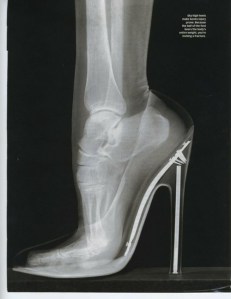
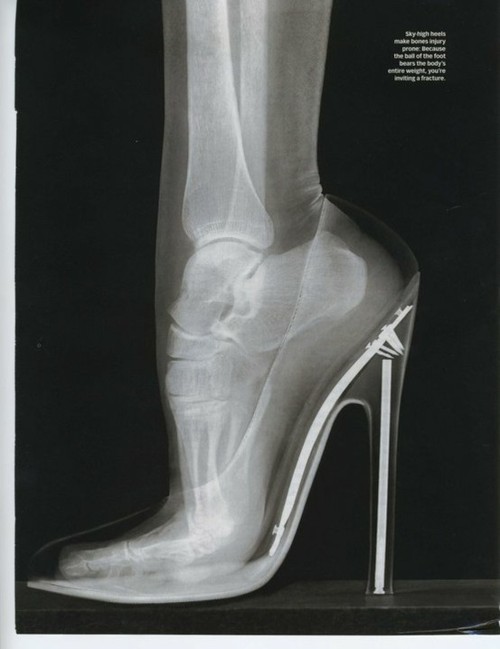
Are high heels hetting higher? What do super-heels do to the bodies that wear them? What does the design of super heels say about expectations of feminity, and what role does height play in those expectations?

I am 5’0″, or 5’1″, depending on the time of day. Sick of being teased for my height, I started wearing high heels at the age of 13, packing them in bookbags until my mother was out of sight.  The only time I felt comfortable not wearing heels as a teenager was when wearing soccer cleats, which did add an inch, but the soccer field was was of the only places where, as an offensive forward, my size allowed me to weave through and past other players, giving me an advantage. Seventeen years later, having spent my entire formative years running around in cleats and my entire twenties dancing in three inch heels until the wee hours, I have a pinched nerve between two metatarsals. The treatment involves cortisone shots followed by three days of limping. Not fun. This came as no surprise. I came to accept a life in flats, and that I would never “be taller when I grew up” by my late twenties. What has shocked me, in my relentless and foot-tiring search for comfortable shoes, is the marked increase in the height of high heels lately. While looking for sensible and “flattering” or “feminine” flats, all I have found is orthopaedic, hippie/nurse/grandma styles (yes this is honestly how  I see comfort shoes), babydollish flats seemingly designed for twelve year olds with no cushioning anywhere, and HIGH heels – heels frequently over four inches high.

If shoes meant for formal, fun, or even some proffesional occasions, mean adapting to styles usually directed at erotic dancers, what does this say about the sexualization of women’s bodies? Is the added height considered sexy? Or is it the discomfort and vulnerability? I certainly would not want to walk down ANY street alone in four  or five inch heels, or literally stumble out of bed the morning after wearing them. In my search for shoes, both in person and online, I have found some of the following styles:
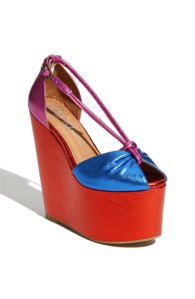
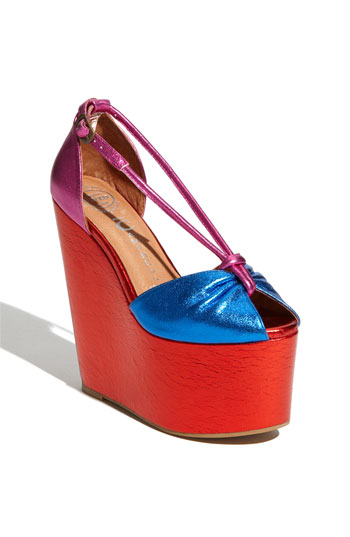
Jeffrey Campbell “Wedges”, for a mere $275 at Nordstrom. What a nice, colorful sculpture! I’m sure they’d be great for walking on cobblestones.
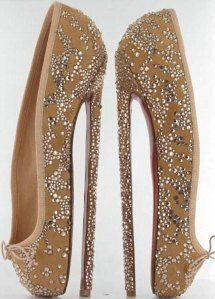
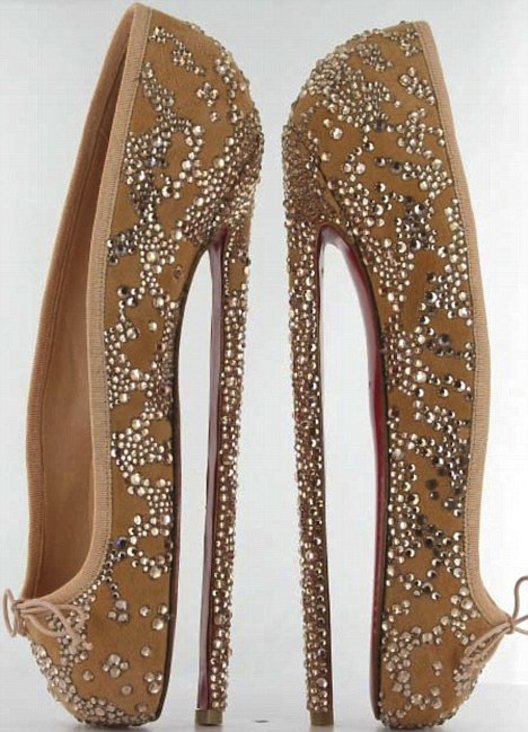
Christian Louboutin “Pointe” ballet stilettos, designed by a man, high fashion of course, but are they meant for a body?

 Born “Comfort” wedges, $145 on zappos.com. These claim excellent arch support but still have an overall height of four inches.

So ,what, exactly is wrong with being short? Would strangers ask my height or tell me how tiny I am (like I have no idea) if I was 5’4″ and in considerable pain? Would men, as women have for centuries, submit to any accessory or piece of clothing that tortured them? Tortured them but let them be fashionable, stylish, and “with it”?

I frequently see girls on campus wearing stiletto heels, in the daytime, trucking around from class to class, and this is what I see: Morton’s Neuroma
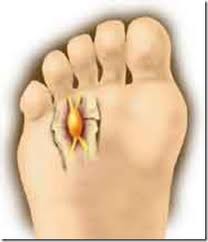
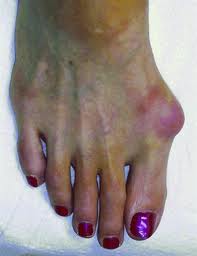
 The Classic Bunion

Sadly, in the year 2012, in the country where women supposedly have the most “freedom” in the world, some still choose a Foucauldian self-discipline (or torture) not far from that of Chinese footbinding. Heels are higher than they’ve ever been. I would love to know why.

What determines the beauty of the African American Female

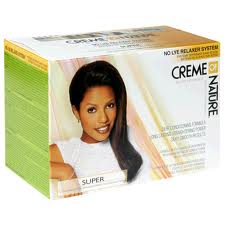
It is surprising to me that people believe that the beauty behind an African-American women is the straightness of their hair. not their beautiful complexion, the figure God gave to them or the way we carry ourselves but our hair. Black women today say the straighter the better, but why not the healthier  the hair better. African-Americans are putting many chemicals in their hair to straighten it so they can try to come close to the women of the opposite races or whites.

Actor Chris Rock featured a documentary called Good Hair to ask the African-American Population what they consider good hair. He interviewed many African-American female actors to give this definition on what they feel. Many of them responded “the straighter the better”. To them if it’s not straight then it is an embarrassment to them. when watching that movie all I could notice was that many of those women were not even wearing their own hair, many if not all were wearing weaves-an attachment pieces to the head that is sown in after real hair is hidden away in braids. How can these women know what African-American beauty is when they don’t show it.

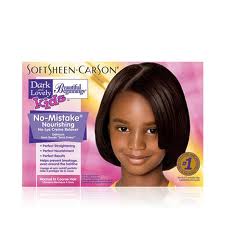
The term that many African-American use for their hair care products that would straighten their hair is called “Hair Crack” or relaxer the reason why this chemical is called Hair Crack is because once you use it once your natural beauty is gone and you must continue to use it to keep hair from being damaged. one thing that really disturbs me with the using of these chemicals is that children as young as six get these relaxers, destroying their hair because mothers think that their natural-born hair is not acceptable and ugly and will make their daughter’s beauty suffer. When watching Good Hair, Chris Rock talked to a little girl while getting her hair done and asked her why does she need a relaxer, she says that it makes her look pretty. What are we teaching our young daughter that without a relaxer our young female are ugly and are not as pretty as our white women and daughters and the only way to look like them, beautiful we must put chemicals in our hair to become them.

In conclusion black women should not be judged and classified as beautiful because of how straight their hair is but the inside. Yes, African-American women are known for their hair but the natural beauty of it, the way it grows, and the way women have used the natural beauty to pave the way for the daughter of African-American decent to look at themselves in the mirror and this of themselves as beautiful even though their hair isn’t straight or looks like the opposite race. just knowing that if a young black woman look in the mirror with their natural hair and say that they are beautiful and will not be tempted to change it because it doesn’t fit society and what they think is beautiful. Be confident in your natural beauty and one should let no one to tell you otherwise.

Between Sexes/ Between Species: The Politics of Isabella Rossellini’s “Green Porno” and “Seduce Me”

Debates over nature and sexuality have become, recently especially, a frequent affair in mainstream U.S. political discourse. U.S. presidential candidate Rick Santorum attracted a wave of controversy from the mainstream center left for his equation of homosexuality with bestiality, the subtext being of course that attraction to one’s own sex is inherently “against nature.” Reproduction-centered sexuality and heterosexual familial relations are, according to adherents of this position, the foundation of a functioning society. Contemporary queer theorists not only take issue with the assumption of a universal “natural” normative sexuality but critique the entire imperative of reproduction and future-oriented sexualities in favor of a politics of immediacy and contingency. Identities exist within a complex social network, and a variety of genders and sexualities emerge from that network. The critical response to people like Santorum rests on the reality of socialization, of complexity, of difference, multitude, and contingency, and diverges from the language of hegemony employed by Santorum to approach the debate from an entirely different epistemological framework.

Isabella Rossellini’s video series, both “Green Porno” and the similar “Seduce Me” cleverly re-opens this discourse, and reinscribes the question of nature in polemic opposition to its appropriation by crusaders for heteronormativity. The video depicts the head of Rossellini in the bodies of various animals, and explores (in a scientifically accurate manner) the ways in which their many bodies do sexuality, and the way the “nature” of a body changes the nature of sexuality. Normative conceptions of sex are, as Rossellini displays, impossible to impose outside of the limited reach of their own discourse and the limited bodily representations they encompass.

Rossellini’s fun, absurd, cleverly stylized and narrated series depicts a variety of modes of animal embodiment and sexuality. The female bedbug’s lack of genitalia, the self-cloning sexuality of the earthworm, parthenogenetic (virgin birthing) insects…Rossellini employs a perverse, ironic perspective, herself appearing as an absurd and disorienting hybrid of animal and narrator. Breaking down these normative relations, which are “by nature” hierarchical, Rossellini brings the viewer into a world of heterogeneity, absurdity, and bodily difference and multiplicity—the absurd world of nature in stark contrast to the hegemonic narratives of monoamorous, heterosexual embodiment parading as self-evident natural law.

The “Green Porno” and “Seduce Me” series can be found at http://www.sundancechannel.com/greenporno/

The Embodiment of Death

The chapter for next week about the embodiment of death – in terms of finding ground between the ‘body’ and the ‘self’ – resonated with me for various reasons. One of the biggest things I noticed was the unwillingness to deny that a person’s identity has left the body after death, which is a theme that has become prominent in various science fiction stories. Iconic characters such as the vampire or zombie relate the idea that after death we do not have to give up our bodies. Reanimated bodies, such as Frankenstein’s monster, also seem to feed into a belief that the remains of a body can be recycled to create new life (or something similar). Furthermore, the father in Pet Sematary who buried his dead son’s body within the grounds that were known to reanimate bodies did so to cling to the fact that his son would return once again after identity and body united.

These representations in literature and media walk a line between trying to beat death and keeping claim over your body, but ultimately there is something in the characters that lacks humanness. Vampires, zombies, Frankenstein’s monster, and the little dead boy from Pet Sematary all lost their identities after death and were changed completely. Something about the mysterious nature of death – one that we cannot completely have knowledge about, yet we all will experience – feeds into these representations of bodies that face the unknown. The characters definitely find an imbalance between the ‘self’ and ‘body’ being continuously connected, but for the most part these characters illuminate a world where bodies are meat and fodder. Identity may change after the cross between life and death, but the body will withstand composition (albeit disfigured and sutured, I suppose).