The Werewolf as Synecdoche of the State?

Two or so years ago in the process of having my political mind entirely changed forever by reading Giorgio Agamben’s brilliant Homo Sacer: Sovereign Power and Bare Life, I came across a lively section on the archetypal wolf-man, or werewolf. Agamben’s thesis in the book is essentially that, since Enlightenment thought and the construction of statehood as a rational institution subject to a code of normative ethics, sovereign state power has been based upon the principle of “exception.” The individual subject is theorized in Enlightenment political literature as being the result of the imposition of a political structure upon a natural “bare life.” Agamben counters this top-down theory by proposing that “nature” or “bare life” only becomes intelligible through the apparatus of sovereignty. The “natural” that lingers outside of the polity or municipality is always already formulated within state terms. The “state of exception”, popularized in World War II era by political scientist Carl Schmitt, is the concept of an emergency structure put in place, outside and beyond the written law, in particular situations (a recent example would be George W. Bush and Barack Obama’s suspension of international human rights laws, through torture and unjust imprisonment, in the name of defending “freedom” in wartime.) Agamben’s theory postulates, however, that state sovereignty is always already a state of exception: “rights,” as the bedrock of law, are always constructed by and “enforced” by the same powers that are supposedly equally subject to them. Thus state power is always already “outside” rights and the law. The rights that are based in “nature” and the natural sovereignty of the individual are codified by state power. The state is thus a liminal between-space, with nature and the political not as two poles but as between and within each other.

Agamben illustrates this theory with the archetype of the werewolf. The werewolf acts as a symbol of state sovereignty as the threshold between bios and nomos, between nature and the political. “It is a threshold of indistinction and of passage between animal and man, physis and nomos, exclusion and inclusion: the life of the bandit is the life of the loup garou, the werewolf, who is precisely neither man nor beast, and who dwells paradoxically within both while belonging to neither.” The werewolf embodies the concept of liminality upon which state sovereignty is founded. Pretty cool, right? I realize I spent more time explaining Agamben’s central thesis than on the werewolf paradox, but it’s something to consider when thinking about the ways in which (fictional and nonfictional bodies) are simultaneously “natural” and continent/political. 
Racing the “White” Body, The Invisible Arab, and the Curious Hybrid.

As a child, people often asked me or my parents where we were from. Was I Iranian? Jewish? French? In eighth grade a boy told me I had “negroid” eyes, and for most of my adolescence I was mocked for having a “ghetto booty.” Last summer while in a thrift store near D.C. a complete stranger, a white middle aged man, approached me and asked in deliberately slow English if I was from Honduras. A former boyfriend once commented on the fact that I was not “pale” when naked in winter. I live in a mixed neighborhood with many Central American immigrants, and have been addressed in Spanish on a few occasions.

To most people, I assume that I appear white. I have brown hair, black/brown eyes, and an “olive” complexion. I consider myself to be on the pale side of this “olive”, paler than most of my father’s family at least.

I am of North African/Tunisian, Sicilian, and “Black” Irish decent. None of these categories have been deemed pure “white” by historically racist notions of U.S. “whiteness.” I am not a WASP. I have often wondered if I had blonde hair and blue eyes if people would ask where I’m from on a monthly basis. I gets worse in the summer as I do tan very quickly. But, if I was clearly white, of no curious or “exotic” background, would strangers feel as comfortable violating my personal space? It’s as if my height, skintone, and eye color are an accent – one to be met with “Where are you from?” My cousin, who like most of the women in my family, has very curly hair, was called a “mulatto” all through high school. We have all learned to laugh this off. We eat ravioli, my grandmother travels to Sicily frequently, we know where we are from. And yet, of all the assumptions strangers have made regarding my or my family’s ethnicity, Arab is never one of them. If we all wore headscarves perhaps our “origins” would be more apparent, more clearly marked. After 9/11 some of my friends would joke about my father getting pulled over due to racial profiling, and I would laugh with them.

So after years of being hailed as less white than my white friends I decided that I am not. I am not entirely white. A few years ago when the U.S. census came to my apartment, I had to check off my ethnicity. While “Other” seemed the best choice for me other than “White”, I noticed that there was no “Arab” choice. “African American/Black” was available, but many North Africans are not black. Most are Arab or Berber. Although Arabs constitute a large number of the world’s population, covering North africa and Western Asia, as a people or race they are simply invisible in the United states. So unwanted as to not be counted. I checked every single box and handed it back to the census worker.


Bows and Arrows vs. Vampire Fangs

If you’re a nerd like me and spent this past Thursday night eagerly waiting for The Hunger Games midnight premier, you might recognize the name Katniss Everdeen. Katniss is the heroine of the wildly popular Hunger Games series by Suzanne Collins. If you haven’t had the opportunity to read these books yet I highly recommend checking them out at your local library.

Recently, I’ve noticed a lot of media comparing Stephanie Meyer’s Twilight with Suzanne Collin’s The Hunger Games, or more specifically, Katniss vs. Bella.

I did a little research and I found this article: http://www.washingtonpost.com/lifestyle/style/in-katniss-of-hunger-games-a-lasting-heroine/2012/03/20/gIQAXvVbUS_story.html

The main point of the article is Katniss is not a new character, her physical and emotional strength are not new concepts to female heroines. However, many of the “sheroes” depicted in present day teen fiction, such as Bella Swan, are the exact opposite of the force that is Katniss Everdeen. Bella doesn’t push herself forward, and fight. Bella’s route is different, but her choices are her own. I am not a Twilight fan in any sense of the word but this article had a fascinating insight: there is room for both sheroes. Katniss needs to exist alongside Bella, both are representational of different aspects of feminism and the choices it allows women to have.

I appreciated the article for having the insight to point out characters like Katniss, who defy the norm, have existed in literature for ages. Has anyone besides me read Little Women? Jo and Katniss would have been best friends.

Ultimately I have to agree with the Washington Post article; Jo, from Little Women is remembered as is Alana from  Tamora Pierce novels, and I don’t think anyone will ever forget the brilliant Hermione Granger from Harry Potter. These women, along with Katniss Everdeen, are powerful, dynamic creatures who put their complete selves into a struggle against all odds.

So I offer up the question, of all the female characters in modern day literature, whom do you think will be remembered?  Will our daughters read about Bella Swan while Katniss fades quietly into the background and is eventually forgotten? Or will it be characters like Bella, who passively accept their surroundings, who will eventually be forgotten?

Orgasm During Birth…What?!?!

http://youtu.be/8EQ_-irO50w

Image

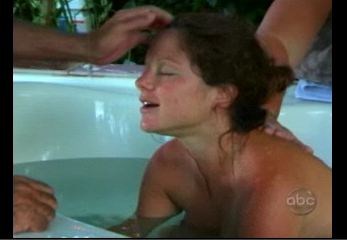
So I came across this video when someone posted it on Facebook a few months ago. The video is a clip of a newscast about women who have experienced orgasms during child birth. The idea of experiencing pleasure during a process that has been portrayed to be the most painful thing a woman can go through is strange and confusing to me. How can birth be so painful to some women, but pleasurable to the point of an orgasm to other women?
    My first reaction was that I was sort of grossed out when I thought about the idea of my own mother having an orgasm while she birthed me. My mother actually had an awful experience with labor, she was given too many drugs accidentally, causing her to lose all feeling in her body. If my mom and other pregnant women could have better experiences I am all for it. About 99% of births in the U.S. are not in a hospital, yet we rank 28th in the world in infant mortality. The hospital setting is no more safe than home births. So why not have a birthing plan that allows you to be in the comfort of your own home, and possibly give you an orgasm? Of course, pregnancies with complications need to be more monitored and may possibly require a hospital birth.
    Ultimately, these are personal decisions that need to be made by each pregnant woman for herself. I still think it is a bit strange to get pleasure from the baby leaving the birth canal, but that is just my opinion.

Sharing the Experience? The Menstruation Machine.

Image

To the phenotypical male, menstruation will always be a mystery that we will never experience.  Or is it?

Growing up as a boy, the only information I received about menstruation was by eavesdropping on girls whispering to each other, or the odd incomprehensible schoolyard insults about PMS.  Television provided images of pads (with wings!) that women were supposed to wear in order to catch an unnaturally blue liquid, but no indication of where those pads went, or what that odd liquid actually was. Sitcoms taught men to just stay out of the way during “that time of the month,” lest all hell break loose.  It wasn’t until many years later, when I screwed up my courage and started to ask questions of my partner, that I was able to come to understand what happened.  Sort of. I mean, I could be sympathetic, but how can one be empathetic of a bodily process you can never experience?

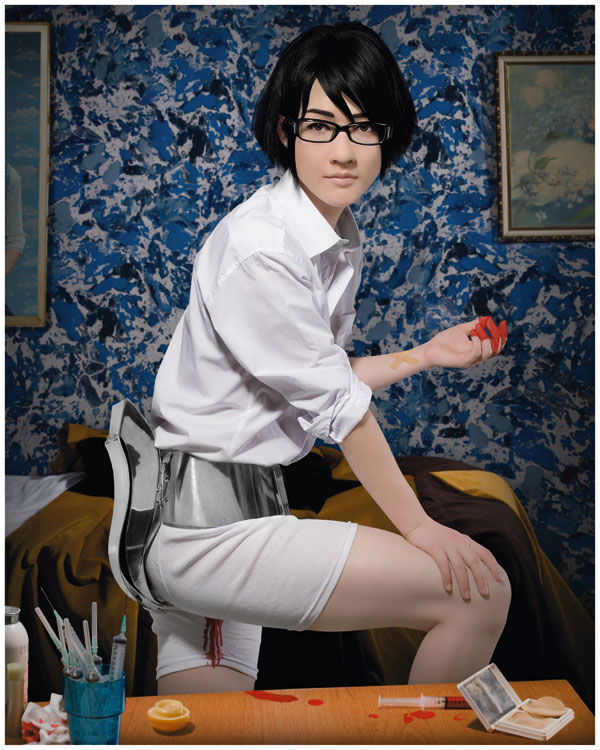
Performance artist Sputniko! (aka Hiromi Ozaki) seems to have developed a solution of sorts to this conundrum.  The Menstruation Machine, a gleaming chrome device that straps to the abdomen, is meant to simulate menstruation for those who would not otherwise experience it.  Prior to putting it on, a vial inside the machine is filled with the wearer’s own blood.  Once on, the strap around the abdomen simulates cramps, and the vial inside slowly drips blood into the wearer’s underwear.  Sputniko! created a music video of Takashi, a drag performer, wearing the machine out on the town and experiencing cramps and bleeding:

On the surface, this seems like a really interesting opportunity for someone who doesn’t menstruate (whatever their gender identity) to experience what goes on during this part of the menstrual cycle.  But in the end, it is just a simulation, and like all simulations, it can be stopped.  And it has limitations- it does not simulate the anxiety of a late period, or account for variations in severity over time.

Obviously, Sputniko! created this as an art piece to stimulate discussion.  Can such a machine be used to bring about empathy in those who don’t menstruate? Or would it create a sort of false empathy because the experience of menstruation is a fully embodied, ongoing experience? I find myself sort of in-between these two stances. What do you think?

The Phallic Titty Manifesto: Queer Sex and the Naming of Parts

Transitioning is often seen through a medical lens, marked by physical changes to the body including hormone replacement therapy and sex reassignment surgery. While transitioning clearly demonstrates the fluidity of gender, the body, and how gender and the body interact and are perceived, the locations of sex on the body are often viewed as static. For someone to have fully transitioned, their gender and biological sex would seemingly “match.” I am in support of people doing whatever it is they need to do to feel good about their gender and I am in no way against this type of transitioning. However, what I believe is problematic is how this is typically seen as the default for trans* people. Not all trans* people transition or transition in this particular way.

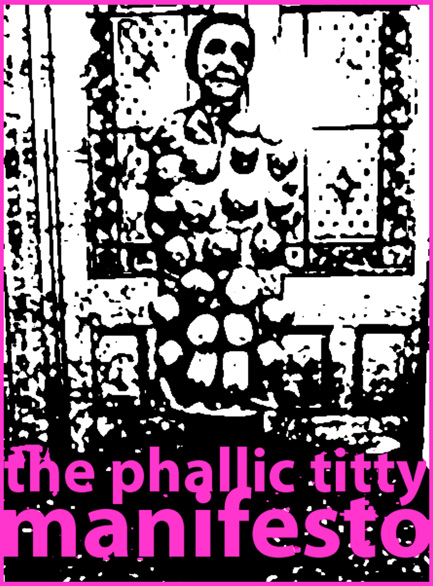
The Phallic Titty Manifesto, a zine by a friend Jackie Wang

discusses the ambiguity of flesh, tits as dicks and dicks as clits, erotic lactation, Judith Butler, pregnant bodies, Louise Bourgeois, the lesbian phallus, unmaking and remaking bodies, expanding erogenous zones, and queer sex.

Through a queer lens, sex is no longer isolated to biological parts associated with our sex at birth or if they are their weight no longer holds. In this sense, there is a radical capability to transition or transgresses gender norms while still seemingly embodying the sex you were assigned at birth.

This makes me think of the usage of terms “female-bodied” and “male-bodied.” I have typically heard them used in the context of referring to trans*, genderqueer, and non-gender conforming folks. While someone will refer to someone with “they/their” pronouns in one breath, they will use “female-bodied” or “male-bodied” to refer to them in another. While I think this is subjective, dependent on the specific person and how they like to be referred to, I think this is extremely interesting. From this example, it is clear how deeply embedded sex and gender are in physical bodies. I think at times terms like these can (unintentionally) reinscribe the gender binary, in which some folks clearly do not identify with. If someone is trans*, why wouldn’t they be trans*-bodied (or however they would like to be referred)? Do you think it is inherently impossible to view the body, specifically sex on the body as fluid?

Transgendered Kids

Most people spend years and years trying to figure out who they truly are. What if you didn’t need decades to figure it out? What if you knew since the age of 11 or even sooner that what you were born into was not fitting of who you were supposed to be. The transition from male to female or female to male (transgenderism) that an increasing amount of individuals are beginning to make has become an uncomfortable and extremely controversial subject for many. Most people see black and white and fall on either end of the spectrum as far as right or wrong goes concerning transgenderedness. These positions become all the stronger however, when children are involved.

The documentary, Jazz: A Family in Transition, and supplementary articles about this courageous kid raised a few questions for me. As much as I value individualism and seeking happiness, when should someone be allowed to have control of their own body? 18 is the official age when an individual can provide legal consent to make important decisions especially life altering ones without parental permission.  But as a parent when do you allow your child to make decisions regarding their identity, appearance, and ultimately their life. Jazz’s parents not only allow her to dress as girl but they have also considered actions for a more permanent changed and have shared her story with the world all of which will impact her for the long run.

Another part of the article that I found interesting was the excerpt regarding the special box of hand -me down bras that Jazz keeps in hopes of one day being able to fill them out with breasts of her own. Though Jazz has already assumed the female gender role, it is interesting to see how the physical features matter. Something such as breasts not only affect Jazz’s self concept, but it also affects the way that others will perceive her and her gendered roles in society.

As Jazz is rapidly approaching puberty, her and her parents now face the question as to whether or not begin Jazz on hormones and hormone therapy to offset the male traits that she would encounter ones puberty starts. As with most medications, there are side effects, many of which can be extremely harsh especially for children. The fact that medications, and hormone therapy is a very real reality for Jazz and her family is intriguing. Unlike many transgendered individuals, Jazz has the support of her family and is able to dress and act accordingly to the gender that she identifies with even at such a young age. The fact that her and her family are strongly considering these possibilities despite all of the ways it can affect her body for the worse is interesting. Though Jazz already assumes the role of female, it seems as though she won’t feel complete until the physical matches up to the socially constructed definition of what a woman is.


http://janetmock.com/2011/11/25/i-am-jazz-transgender-jeanette-documentary/

to see the documentary, enter I am Jazz: A Family In Transition into the Youtube search

Full Throttle Exercise: The Impossible Standard.

A few days ago class discussion touched on a topic that has always been sensitive to me: exercise.

Modern culture if full of ads and products for getting fit, working out, and losing excess weight, all which will lead to a better and more beautiful you. The more you work your body out, the better the results and the better life you will have, or so says all the diet and exercise literature that I have read.

But is this true?

Every magazine I pass in the grocery store offers at least one full spread of exercises that will transform your body for all to see while low-fat, fat-free and zero calorie food and drink are everywhere. In society’s drive to be “healthy” are we really just pushing ourselves beyond the scope of what we are actually supposed to look and feel like?

Throughout history women’s bodies have been viewed from a skewed lens; as chattel, as something that must be covered lest it seduce man, as dangerous, and now as something that must be shaped to fit a standard. That standard being a skinny, tall, large-breasted but without curves, form. The religion of Exercise has only given credence to this standard, with the abundance of gyms and fitness classes there is no reason not to have a “perfect” body, no reason not to count every calorie and run a mile for every slice of pizza eaten.
Are these expectations even possible to meet?

I recently saw an ad for a gym that read, “It’s not Fitness. It’s Life.” This ad made me angry, from a larger societal standpoint and as a woman I should not have to view exercise, or “fitness” as a lifestyle. Some days I may choose to take a walk, go to a yoga class or run and other days I may not do much at all in the realm of exercise. I’m not advocating for laziness or avoidance of physical activity, I believe an active lifestyle is healthy and beneficial in many ways, it’s the overabundance and extremes that are almost forced down our throats that frustrates me. You aren’t running every day? Le gasp. How about abs and shoulders, when will those become bikini body toned? Have some ‘extra’ poundage? There’s a pill/drink/diet/exercise for that.

Learning to love my body is hard being surrounded by the mantra of fitness=life, when for the majority of women fitness is really an impossible standard instead of just being a healthy BMI.

Fitness is not life; life is friends, family, beautiful days, meeting new people and moving because it makes your body feel good and not because you want to maintain an impossible and ridiculous standard.

Thoughts/Disagreements?

The Body in Poetry.


The video is Andrea Gibson preforming her poem, “I Sing the Body Electric, Especially When the Power’s Out”. I thought this was fantastic because it does self-consciously reflect the ways in which we take our bodies for granted until something is wrong. She points out that she wrote the poem when her body was hurting her – this is a reflexive way to recognize that the body exists. Her poem, however, extends pass that and praises the body as a machine in poetry. The imagery really counts towards her overall message. Body parts are representative of their function and ultimately, their worth.

The body does so much, but we also picture the internal features as something much more pristine. The use of heart beats keeping rhythm, of the mouth as a fire escape, and the smoke in her lungs points to the ability of the internal body to ampify our natural processes. What resonated with me the most were the lines about her injuring her body and the doctor assuming it was for attention. I feel like that’s one of the ground rules we’re expected to take about the body: we’re blessed to have it and should appreciate everything it does, so those who do modify the body are transcending the whole “body is a temple” concept

Who gets to talk about bodies?


(author’s note: I fully acknowledge the irony of writing this piece while being someone who identifies as male.)

Over the past two weeks, there have been two very different public showdowns over different parts of women’s bodies.  In the first, the Susan G. Komen Foundation found itself under fire for its decision to stop funding grants to Planned Parenthood because of a politically-motivated Congressional investigation into the federal funding the latter organization receives.  The second, more recent firestorm has arisen over a provision in the new federalhealth care regulations that would essentially require religious organizations that perform non-religious work to provide birth control coverage for their employees.

The real difference between these two events has been whose voices have been raised in anger, and who has garnered the media’s attention.  The Komen controversy began largely through social media channels, promulgated by well-known feminist activists as well as networks of those involved in the various breast cancer movements.  When the issue was brought to the attention of the mainstream media, the angry voices and stories of women both famous and not were splashed everywhere, supporting Planned Parenthood in a nearly unprecedented way.

Compare and contrast those scenes with what we have seen since the US Council of Catholic Bishops started to speak out against the administration’s birth control policy.  Not only have the public faces been overwhelmingly white and conservative, but they have also, almost universally, been men (with the exception of New Hampshire Senator Kelly Ayotte, best known for her previous encounter with Planned Parenthood). It doesn’t matter the network, you’re almost guaranteed that they have relied on a white conservative member of the clergy, politician, or talking head.  ThinkProgress tallied it up and published a report last week showing that over the course of three days, the cable networks relied on male voices more than two to one over women’s voices in the debate.

Given that the focus was on reproductive self-determination, shouldn’t the focus have been on the voices of women?  Surely, the Komen controversy showed us the value of women’s stories in understanding the impact of policy decisions?  The fundamental difference turns on the public role of men and male privilege in the areas of reproductive health versus their public roles relating to breast cancer.  When it comes to breast cancer, men and women have the shared goal of prevention.  For women, it is about the preservation of their health, while for men it is about the preservation of one of society’s most fetishized body parts.  Increasing access to breast cancer screening is thus a net win for both parties.

But birth control is a different story.  Men held an extreme advantage in sexual power relations prior to the mass marketing of hormonal birth control.  In a heterosexual relationship, it was only the male who was able to avoid the reproductive consequences of sex, by simply walking away.  But with the pill, women were suddenly able to control more accurately when, where, and with whom they would have a child.  Suddenly, there was a certain level of sexual equality.  The most misogynistic corners of our society, ably represented by the Catholic hierarchy and social conservative politicians, have yet to recover from this remarkable shift.  As a result, when the Obama administration presented them with this golden opportunity to limit access to birth control, they could not resist.  Throwing their privilege around, they were able to dominate media conversation, framing it as an issue of “religious liberty” instead of the attack on personal freedom it actually is.

Where the debate will end up has yet to be seen, but one can’t help but hope that women will actually be able to get a word in edgewise.