The construction of bodies is based on an assumption of materiality which manifests itself in the image of Da Vinci’s sketches of man. With arms and legs, the body is type cast as a spectacle to be witnessed, constructed, and cultivated. The importance of this construction of the body in this manner is we have the privilege of assigning these traits to other objects and animate images. Personification of forms in this manner speaks to our ability to systematically idealize an “imagined other” to reinforce the traits we value in ourselves.
This academic jargon is a round about way to ground a discussion of LOLcats. Icanhascheezburger.com is an online community in which various posters contribute and caption pictures of adorable cats. I believe that the ways in which we attribute human qualities to the cats is indicative of our nature to cultivate bodies that matter. There is a particular drive in trying to personify cats as human, giving them contextual markers of human-like reactions and even (although adorably misspelled) speech, that we make these bodies bodies that matter – bodies that gain meaning of contextual placement and situational histories. These are taken from generous readings of the visual texts that we apply our own experiential lenses to and draw meaning from.
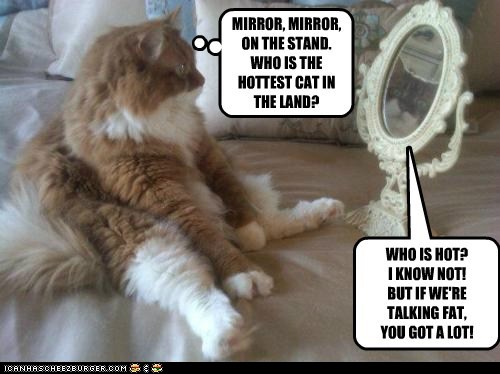
This cat, for instance, is sitting and looking into a mirror. His position is very atypical of cats and is closer to the posture of a person sitting. But what is more important is the text overlay that points to humanness: vanity, attractiveness, body image, and even self-recognition. These traits work in a way to humanize the cat and make it a body that matters because we can essentially connect with what the cat is asking – validity of attractiveness. The incorporation of body image (the fat) is also a reflexive way in which we think about other bodies because to be honest, hell, how can we say a cat is fat? Are there really standards by which we can measure animals in the same way we measure humans and try to denounce an average as an idealize weight? Do cats even have the same desires to compare versus other cats? I doubt this.
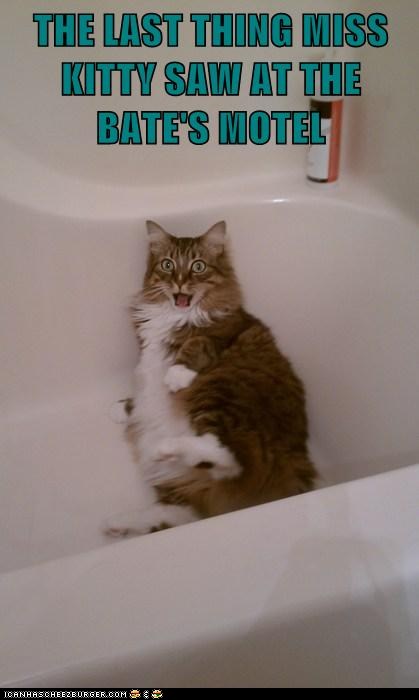
This cat I am using to illustrate the contextual clues that we apply to the bodies as if they are relevant even across situations. This cat is sitting in the bathtub probably mid-meow, but based on the assumed look of shock (fear? surprise?) we attribute to the look and the almost defensive looking pose, we situate the body in the same context as the woman from Pyscho who had been stabbed by Norman Bates. I think it is interesting the way we transpose the meanings of the body to read emotion and intent in the bodies that aren’t even of human nature. By this proximity, we are animating real life to construct a mindset that everything operates in the same nature that the human body does which is problematic. We cannot control or assess the intent of other bodies in the same way, but based on these situational clues, we try to read into images the same meaning we would if they were human – materializing the bodies through history and experience.
Or maybe I just need some more cats and accept my fate.