
As you can tell from my username, I love vintage stuff. I’ve been this way my whole life. I was that dorky little kid who listened to the Beatles and Buddy Holly, and when you came to my house to play Barbies with me, the story had to take place during World War II on the home front. By far, my favorite aspect of vintage culture was always Archie comics. Does anyone remember Archie, the redhead teen from Riverdale? When I was maybe seven or eight, my mom bestowed upon me her huge collection of Archie comics from her 1970s childhood, and about a year later, my aunt sent me an anthology of Archies from the 1940s entitled Archie Americana Series: Best of the Forties. I was obsessed. I was particularly taken with Veronica, Archie’s spoiled, snarky, and bee-you-tiful girlfriend.
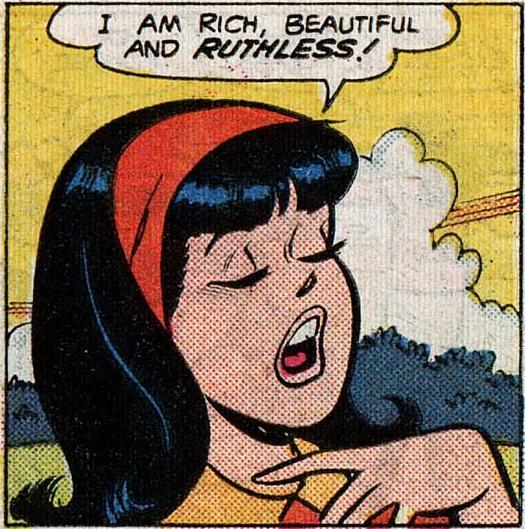
Image borrowed from howlingantiquity.wordpress.com…
I wanted to be her. I studied her rad outfits and her figure intensely. Seriously, DAT BOD! Slender, shapely legs, well defined yet tastefully-sized curves, and a teensy weensy lil’ wasp waist that Archie frequently wrapped his hands around. Just perfect. I used to spend countless hours staring in the mirror, distressed that my waist wasn’t narrower than my head, like hers is.
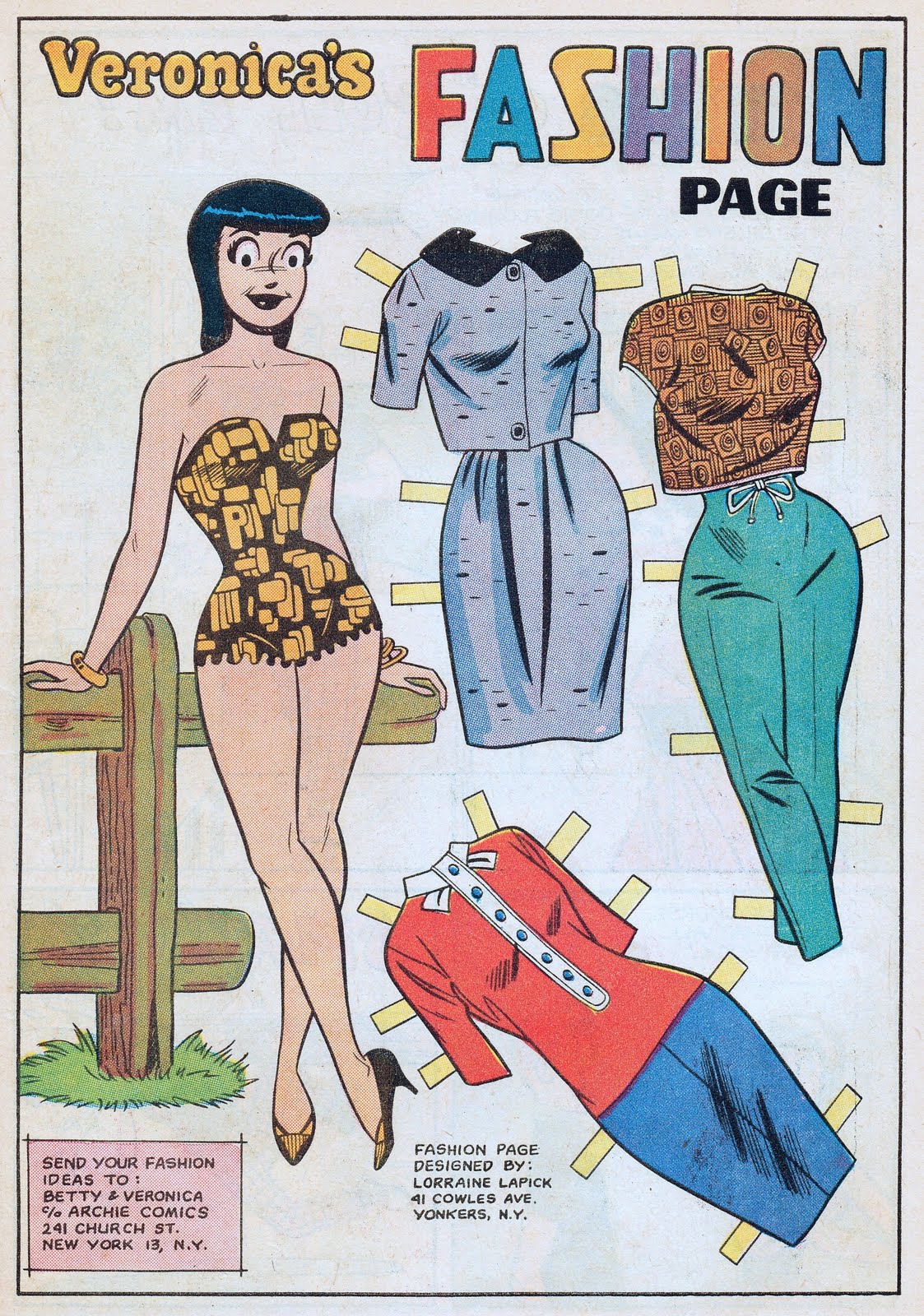
Image taken from vintagevandalizm.com…
So one day, my mom gave me a book she bought on clearance at some obscure little bookstore: “From Girls to Grrrlz: A History of Women’s Comics from Teens to Zines” by Trina Robbins. She didn’t bother to flip through it first to check for appropriateness, as, like most people, she was oblivious to the existence of any comics other than Archie or the superhero ones. She thought it would explore the history and cultural significance of Veronica and her blonde best friend, Betty.
When I sat down to read it, I discovered that it did… for like, the first three damn pages. The book progressed into a discussion of the history of “women’s comics”, feminist comics written by women, for women. The comics of this genre, which concerned topics such as abortion, welfare, sex, lesbianism, body image, contraception, PMS, promiscuity, politics, and patriarchy, starred female characters who were frequently overweight, crazy-haired, harsh-featured, short, lumpy, tattooed, un-sexily dressed, etc. Bitchy Bitch with her saggy chest, Maggie (from “Love and Rockets”) with her large hips, and Hothead Paisan (the “Hothead Lesbian Terrorist!”) with her muscles and pointy hair… WTF?
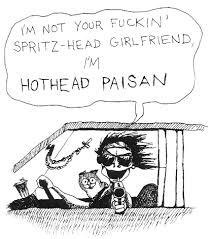
Borrowed from flickr.com
Being the sheltered, conventional little girl that I was, I felt sick and overwhelmed. Now, I come from a liberal family, but we’re more of the Kennedys-vacationing-in-Hyannis Port type stodgy establishment liberals, if you catch my drift. I knew that if I told my mom about the “radical” content in it, she’d snatch it away. So I kept it a secret.
The “forbidden” element of it all sucked me in. Late at night, I memorized the pages. I devoured the histories and descriptions of the female protagonists, and realized something: these female characters were openly “imperfect” and didn’t give a flying fuck about it… they just are what they are and you can take it or leave it. That made them flippin’ cool, something that my hero Veronica, for as pretty and perfect as she looked, never really was. Suddenly, Veronica’s spoiled princess act seemed a little passé, not to mention boring and totally lame-stream. As I became more inspired by them, I stopped feeling the need to measure head against my waist.
So here’s the question: Why is body acceptance so underground, so “forbidden”? Why did I only find it tucked away in the corner of a tiny bookstore? Why was I terrified that I would be “found out” for reading about depictions of diversity, when perhaps obsessing over Veronica’s perfect figure is more damaging for a young girl’s mind? Now don’t get me wrong, Veronica is still my gal. But right next to my stack of Betty & Veronica comic books and anthologies I’ve got Robbins’ book propped up on a book stand.
Anyway, that’s just the lil’ story of how I accidentally and illicitly gained body acceptance.


Something that I really liked about this post is how you made me think about where our “idols” come from. I think we can easily get caught up in this idea that it’s “just” TV shows or movies or ads. A comic character, especially “just a girl” versus a super heroine is a source of body representation I hadn’t considered. When you talked about measuring your weight and head… that really resonated with me. Even though you were pretty unaffected by the mainstream beauty myths that are all-too pervasive, you still somehow found yourself with strange, and dangerous, body image ideals. Your point about body acceptance being “underground” was really poignant too. It seems like we’re so busy telling girls how to look that we forget, or ignore, how this kind of beauty standard can affect health and self-esteem. I’m glad that you managed to find self-acceptance despite feeling that it was “forbidden”.