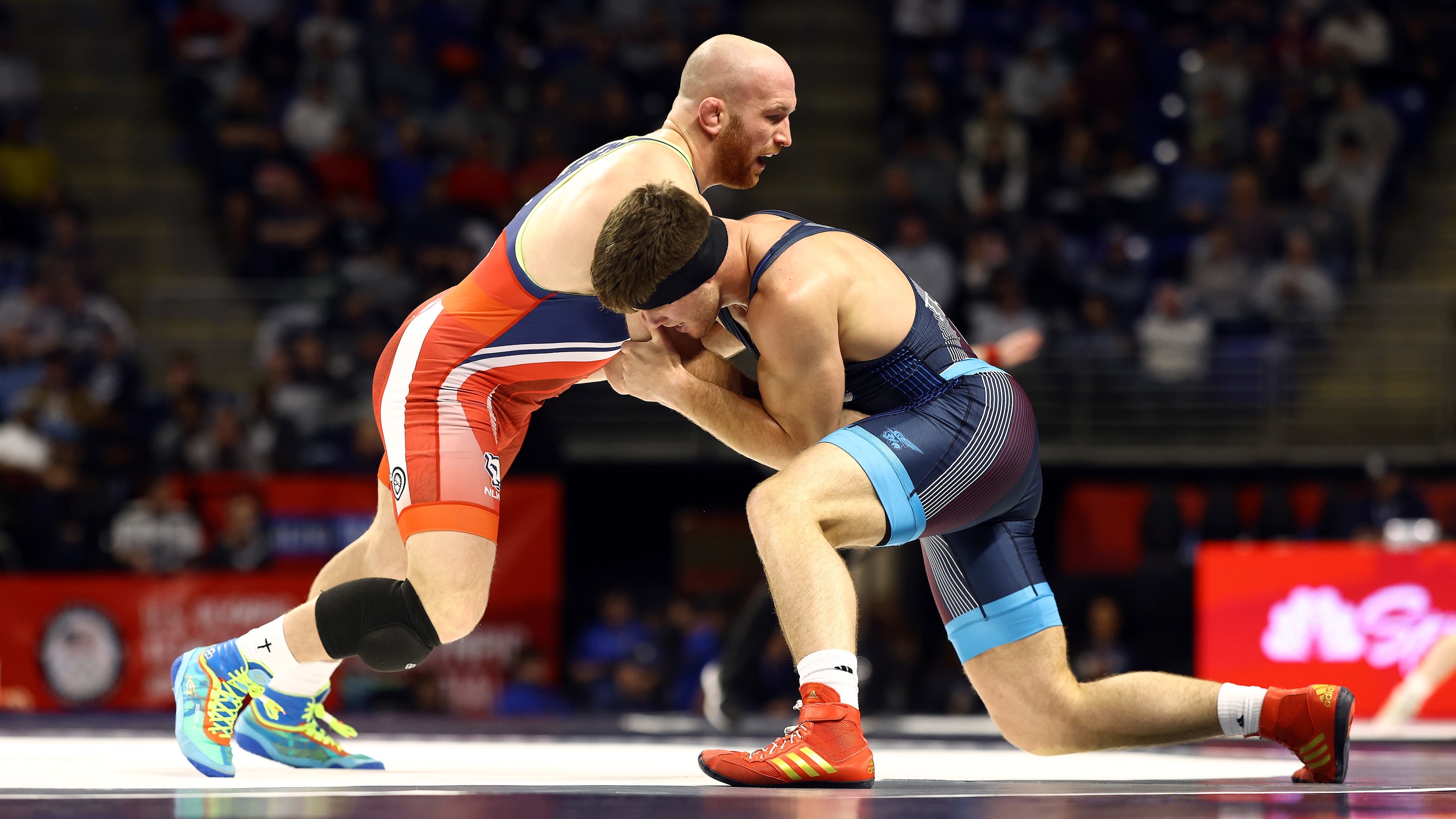
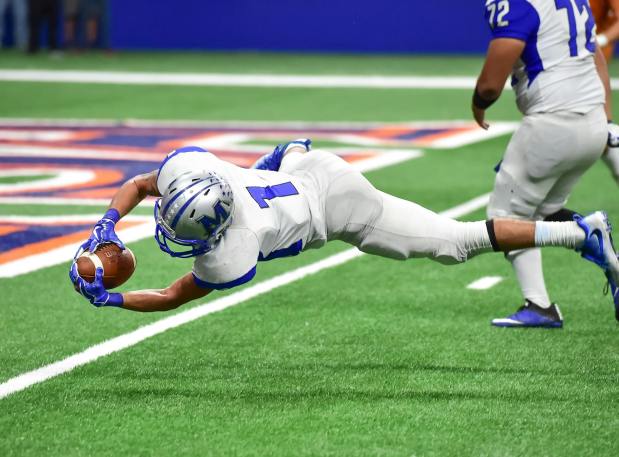
Within the past year or so, I’ve been slowly getting more and more into football. Most of my friends were already huge fans, but in high school I was into other things. That all changed when I got to college and found myself with nothing to do on Sundays, so I started following the NFL. Now, I’m even starting to get into the college football scene. While reading Brian Jay Eley’s “You See Me” in Nonbinary: Memoirs of Gender and Identity, I came across a quote that really stood out to me, “I believed the rhetoric I was told as a child. I believed that America was great. I believed God was good. I believed that all people were equal. I believed that it was wrong to be mean to people based on who they are. I believed that anyone could grow up to be anything. No one told me explicitly that I couldn’t play with toys for girls. I grew up with the implicit bigotry that surrounds us all.” (page 157) I found this quote incredibly powerful. Eley lists all the things he was told to believe as a child, only to realize later that society often contradicts those ideals. His realization that even something as small as being discouraged from playing with “girls’ toys” reflects larger social standards and restrictions really struck me. It made me think about football. At my high school, they recently created a girls’ flag football team. Now, this might be a hot take, but I’ve never really understood the point of flag football. To me, tackling is part of what makes football, football y’know? Pulling off a flag just feels… different. But what stands out more is that, for a long time, girls didn’t even have the opportunity to experience the sport in any form, at least not where I’m from. Only recently have those opportunities started to appear even if it’s not the same version the boys get to play. I think everyone should be able to experience the game in its full form if they want to. Regardless of gender, anyone should be able to put on the pads, line up on 4th and 1, and feel the same rush that comes with playing the sport.
sports
The Privatization of Dance: Examining the Dallas Cowboys Cheerleaders
As we discussed sporting bodies, there is an overarching understanding of how factors like race and gender prescribe certain bodies to sports, in which industries and society deem who can and can’t participate. With this, something that continued to infiltrate my mind was the occurrence of the privatization of sports. This can be attributed to the dance industry, which determines who can and can’t participate through various factors such as race, class, sexuality, and gender. A noteworthy example of this could be considered within the Netflix docuseries, “America’s Sweethearts,” about the Dallas Cowboys cheerleaders, which displays how dance is privatized and systemically pushes certain people out while keeping others in.
In my experience as a competitive dancer, the aspect of having money is one of the largest barriers to becoming a successful dancer. You have to be able to afford the costumes, the shoes, the uniforms, the makeup, and the classes. And if you want to get ahead, you have to be able to afford the private classes and the fees that come along with being on the competitive dance team. Consequently, the dance world is not the most diverse, and there is still a severe lack of effort in considering dancers who don’t fit the mold of able-bodied, white, thin, and wealthy.
You even see it in “traditional” dance attire. You know those pink tights and pointe shoes that everyone correlates with ballet, even sometimes referencing the color as “ballet pink?” That color is intended to match a dancer’s skin tone, to make their legs appear longer on stage. The problem with this, however, is that not everyone has a pale skin tone. This alone is enough to understand why dance is so privatized—to keep certain people in and certain people out.
Throughout the Netflix show, the viewers see how these women are expected to be classically trained to a high standard, have the most expensive costumes, have all the necessary equipment to upkeep their hair and makeup, and maintain particularly expensive diets, all for the sake of the chance of auditioning to make the team. Here, it becomes clear that there is an obvious class barrier to getting on the Dallas Cowboys cheerleaders, as all the mentioned aspects cost extensive amounts of money. Of course, this is only further complicated when we think about who is barred from gaining access to wealth. Additionally, the Dallas Cowboys Cheerleaders, in adhering to Eurocentric beauty standards, tend to prioritize thin-white women to upkeep their identity as “America’s Sweethearts.”
Thus, I find that the Netflix series about the Dallas Cowboys Cheerleaders provides a prime example of how dance is privatized. While you might not see it from outside of the dance world, the show gives some insight into how the dance industry has become dominated by wealthy white people. Ultimately, as made clear by this series and the industry as a whole, dance is privatized to avoid being accessible; only certain types of bodies are welcome, and only certain bodies can be seen as “professional” dancers.

Understanding Privilege
As a cisgender woman, I’ve grown up aware that my body fits the societal norms laid out for me. From an early age, I was taught that my body should look and act a certain way, especially in sports. While I’ve had access to opportunities and acceptance in athletic spaces, I’ve come to understand that this isn’t the reality for everyone. Transgender athletes—especially transgender women—face barriers that often seem impossible to overcome.
Read more: Understanding PrivilegeIn the article, “Beyond Physiology: Embodied Experience, Embodied Advantage,” Torres et al. delve into the challenges transgender athletes face. They show how discussions about their participation in sports are often reduced to debates about physiology, particularly for transgender women. These athletes are often subjected to scrutiny about their bodies, which overshadows their identities. The article highlights not only the social and political hurdles they encounter but also the privilege cisgender athletes like myself often take for granted.
Reflecting on my own experience as a cisgender woman in athletics, I realize how much privilege I carry. My body is rarely questioned or scrutinized in sports; it is accepted without hesitation. I’ve been able to compete without worrying about being excluded or misgendered. In contrast, transgender women often have to fight for the right to compete—against opponents and, more often, against institutions that marginalize them.
This constant fight can take a toll, and creates mental and emotional barriers. It’s not a question of whether they can succeed in sports but whether they’ll even be allowed to try. Recognizing my privilege as someone whose body aligns with societal expectations reminds me of the need to advocate for more inclusive spaces in sports, where everyone has a chance to thrive without fear or discrimination.
“You’re not a girl!”
After reading “Throwing like girl’ and listening to everyone’s stories about how they grew up being treated as less than a girl or too much like a girl by their male peers had me thinking about my experiences when I was a kid and how I was treated just because I had different interests from other girls and had the same interests as some boys.
I remember in elementary school all the girls would play and talk about boys under the playground, but me I was that one girl on the basketball court or the football field trying to show out and out play the boys. Now this came with a lot of difficulties for me because at some points the boys would go easy on me and be like “well you’re a girl and I don’t want to hurt you”. But on the other hand they would undermine my skills in the sport after I beat them by saying “I went easy on you so I don’t hurt your feelings” now both of these sayings would hurt my feelings pretty bad and would make me feel like I truly couldn’t be apart of their little sports groups so it would push me away a little bit to try and hang out with the girls thinking that it would be different but come to find out I was very wrong about that.
As I gravitated under the playground so I could talk with the girls, it very quickly showed me just how uninterested I was in what they were talking about. All of the conversations consisted of them talking about how good the boys looked playing basketball or what new dress their mom bought them that week . And little old me would just sit there and listen and soon after all the girls started realizing that I wasn’t speaking in any of their conversations so they started to catch on and tried to single me out just as much as the boys. It got worse for me when we played this “girls vs boys” which was any game but with girls on one side and boys on the other, I would try and join the girls team when we would do this and the first thing I would hear was “you’re not a girl” and they would force me to be on the boys team completely altering the way I thought and I would try to change myself and act like I liked boys to please them.
Honestly as time went on the playing with boys part left after middle school and I was able to play sports freely in high school but the way that girls felt about me never fully changed because once I entered 10th grade I started becoming more masculine as I found myself so if anything it got worse. Girls wouldn’t let me say the word bitch, some girls didn’t want to change in front of me, I couldn’t be feminine, I couldn’t talk about periods because they “forgot” I got them and definitely couldn’t wear anything remotely feminine or I would get weird looks. They basically looked at me as a man and put me into a box but let me try and switch it up and be feminine it was always a problem so in the end I could never win. But as I got older I stopped caring what people had to say and it let me be as expressive as I want to be and happy in my body, masculinity and femininity.
The suffering body
My first year of college I joined the women’s rugby team. I got many comments,especially from my family members, asking me why I would do something like that to my body. Rugby is a tough sport, the only protective gear you’re allowed to use is a mouth guard. It leaves you in pain, covered in cuts and bruises for a week or more after every game. So i’m not surprised when people look at me like I’m crazy after I tell them I play. I don’t play because I like pain or because I have a death wish. I play simply because I enjoy it. Although the aftermath inevitably leaves me sprawled out in bed covered in ice bags, the feeling I get when I’m on the field is worth it.
I believe the same goes for situations where people go through painful body modification rituals, drink alcohol, or do any other thing that they know hurts their body. They like the way it makes them feel, they enjoy it.
So should we feel bad for doing the things we like doing even though it hurts us?