Head of The Table

The Societal Imprisonment of Us All

Something that I deal with on a fairly frequent basis from my family are expectations that are not privy to my knowledge. I have the habit of doing the same to them and feeling justified in doing so without even thinking. This is a habit that many people have towards those who are close to them but it’s fair to say that we all hold it for each other as well. We have an idea of what the “right thing” is and oftentimes judge others and treat them differently for it. But what about when that “right way” only exists in your head. 

Continue reading →

Women in Sports

I’m sure many of you have seen the Sydney Sweeney sports gambling ad. When I saw this ad for the first time, it got me thinking about gender roles in society and a lot of topics discussed in our class.

It’s more marketable to have a topless woman holding footballs saying she knows sports rather than showing a female athlete. The line “You think you know sports? Prove it” felt like a this is how we get men to gamble. This is the only way women in sports could be appealing to men.

Continue reading →

Gender Norms: A Family Heirloom

I was 12 years old when I first experienced aversion to my family’s concept of gender. It was fall 2019, and I was staying with family in New York City for a weekend. I have a clear memory of being in the shower when my older cousin walked into the bathroom to get something. I don’t remember what I said to her, but I must’ve expressed the extreme discomfort I felt at the time, because I remember her responding with something like “we have all the same parts. Why does it matter?” I just wanted to have some privacy during the 10 or so minutes I was in the bathroom, but apparently it was okay for my cousin to come because we were both girls, because “we have the same parts”. I didn’t know it at the time, but this was the start of my years-long critique of my family’s version of womanhood.

Continue reading →

The thoughts that divide us

Anywhere in the U.S., you will find that the underpaid, under-benefited jobs are saturated with people of color. Never mind the reasons behind white people being offered the higher-paying and often less physically strenuous positions; the more controllable concern stems from the places where passersby are falling short. The unreasonable expectations placed on workers, particularly workers of color, by the users of their services make it clear that we engage in the receiving of care by service workers in an entitled manner.

Continue reading →

Fairytale Indoctrination

** For this blog post, I will be focusing on the perspective and experience of girls and/or femme presenting people. However, I also acknowledge, appreciate and hold space for the damage that is done to little boys and masc. presenting people as well. **

Childhood stories and fairytales do a lot more than just entertain us. They quietly build the blueprint and script for how we’re expected to act, look, and feel as we move through the “innocence” of childhood and into the vulgarity of adulthood. Children are depicted as “women” and portrayed in these fantastical stories as helpless, passive, and submissive objects for others, usually men, to enjoy.

Continue reading →

Why My Music Sucks.

A friend of mine recently told me she doesn’t like her own music, as she finds it stale, predictable, and boring. My first reaction was to immediately argue, that in my eyes I think the songs she writes and plays are some of the most interesting and engaging pieces of music I’ve had the pleasure of interacting with. But it also got me thinking: what does she see that I don’t? Many musicians, when asked how they came up with a musical idea, might simply say “it came to me.” Or “it just happened.” As if the idea was given to them by some mysterious third party, that knows exactly what melody would perfectly encapsulate the emotion that they were trying to convey. The interesting thing about this is to the musician, the basics of playing their instrument is akin to walking or maybe even breathing. As shown by Kosut and Moore in the introduction to their book Just the Reflexive Reflex, actions like walking that don’t necessarily need to be thought about shouldn’t be considered purely mechanical. Why do people walk the way they walk? Perhaps some of it is biology, or habit, or that one ankle injury in 4th grade, or perhaps it is some combination of all of that. In this case, it would be safe to say that the musician’s musical ideas are the fruit of the seeds planted every time that they have practiced, every song they’ve analyzed, and every show they’ve been to. So what my friend sees is simply what is intuitive to her ears and fingers, which is incredibly interesting to me yet very drab to her.

When Seeing Is Not Neutral: Race and Learned Perception

In our discussions over the past few weeks I found myself taking away the most from our conversation about “learned perception” from Linda Martin Alcoffs’ “Towards a Phenomenology of Racial Embodiment”. What stood out to me was the idea that seeing is not neutral. The way we perceive others is often influenced by ideas which we have learned throughout our lives. I assumed that even physical characteristics which seem like objective truths are usually perceived neutrally, but this is not the case.

Continue reading →

Why are spoons so damn expensive?

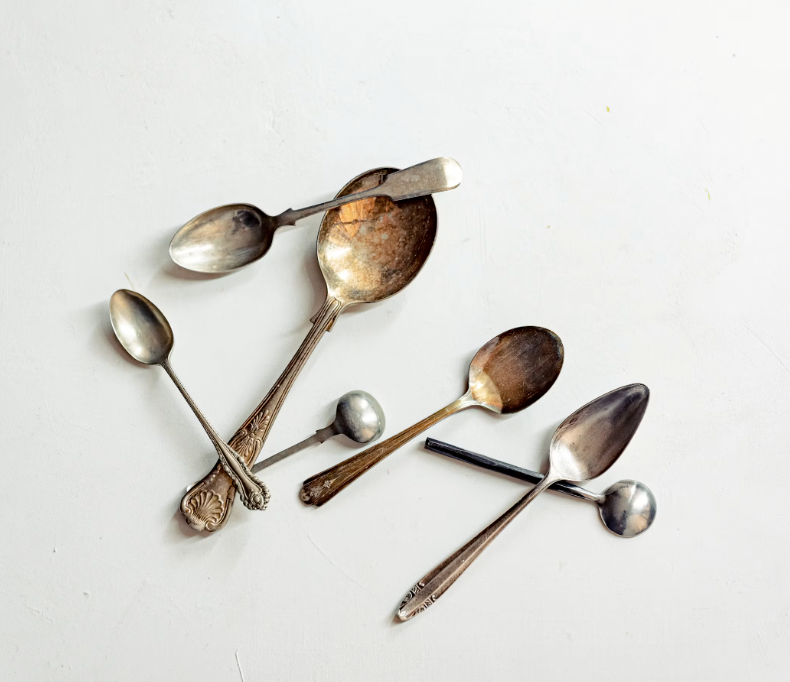
I first heard about “spoon theory” from my mother when I was younger. She had lupus, and hearing “I just don’t have the spoons for that today” wasn’t anything out of the ordinary in the house, it was just another Tuesday. It was the first time I’d heard someone use that example for describing a pretty much invisible currency. I didn’t think about it again for years though, until it was brought up in class, and suddenly, it was linked to the social model of disability.

Continue reading →