I’ve spent most of my life believing I was fat, and thinking that was a bad thing. I was born with a stomach that stuck out, as stomachs tend to do, and I grew up thinking I was fat because of it. That was pretty much the only reason. I remember feeling insecure about my body as my mind compared it to others in every situation I found myself in. I was one of the fattest kids in my large extended family. I was one of the fattest kids in most of my classes. I was one of the fattest kids I knew.
That’s what my mind told me. None of it was true.
I was born with a stomach that stuck out, and thin fingers that were paler compared to the rest of me. I have a short, boxy torso, and bony joints. For about 18 years, that’s how I thought about my body.
I am fat.
But some parts of me are skinny.
I didn’t think they could coexist as partial truths when I was younger. There was usually just one truth, and sometimes it was replaced by another.
Looking back, I can say that regardless of the connotation or context of the word, deeming myself fat was inaccurate at best and idiotic and harmful at worst. But because of the way society sees fatness as a moral failure that’s constantly being redefined, I grew up thinking that being fat was a justifiable reason for disrespect. Not necessarily because of how I felt personally, but because I don’t remember anyone disagreeing. I thought that inevitable disrespect applied to me too, but I was never fat. The world just convinced me I was.
It’s crazy to me how widespread fatphobia’s become in the past few decades alone, with things like “heroine chic”, GLP-1s, being obese/overweight, diet culture, and so much more. It’s all just normalized. It’s infinitely harmful to people, but it’s inescapable. There are no exceptions. I just wish the lenses we examine ourselves through were a little kinder.
Growing up as an Indian girl, it is inevitable to hear comments regarding your skin color. I constantly heard comments like “Don’t go out in the sun; you will get darker” or “You were much lighter as a child”. These comments never really bothered me because I was content with myself. Most times, it felt like they wanted me to feel upset about being darker-skinned and see that as a minus.
I can’t blame them because these are values that are instilled in Indian society, and I’m positive the same people grew up hearing the same comments. Colorism is extremely complicated in Indian households because it often isn’t from malicious intent; they truly think they are trying to help with these comments, which makes the situation more heartbreaking. It’s very sad to see that they think these types of comments are supposed to help them. These harmful ideologies are so incredibly normalized.
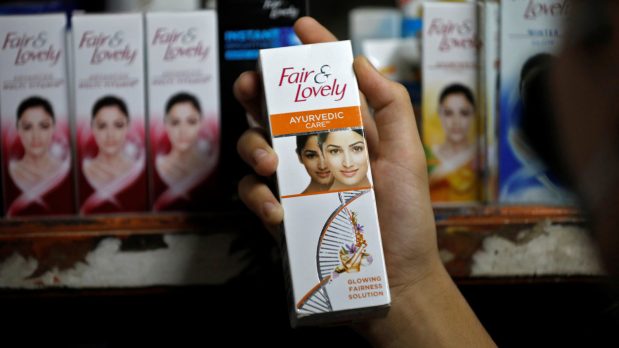
India has a huge colorism problem. One of India’s most popular moisturizers was called Fair and Lovely, and it was meant to make your skin lighter. Lighter skin is seen as more beautiful while darker skin is seen as ugly. This is due to darker skin being often associated with the lower class, caste, and poverty.
This ideology is not only prevalent in families and in business but also in the Indian movie industry. The majority of actresses in Indian movies are light-skinned and don’t reflect what the majority of Indian women look like. An example of this that is absolutely bizarre is when I learned about a British white actress who played many roles as an Indian woman. I was shocked when I first learned about that because it was insane that a white woman was cosplaying as an Indian woman. It was setting up standards for the audience that are unrealistic and overall disgusting.
History also plays a role in this harmful ideology. Colonialism had a huge impact because it reinforced racial hierarchy where whiteness is at the top and is seen as the standard. Whiteness is also associated with power and wealth.
This topic reminds me of when we listened to The Danger of a Single Story by Chimamanda Ngozi Adichie and when she talks about how a limited narrative shapes how we view and understand the world and people. This applies to viewpoints on colorism and how a single view impacts others and how we view ourselves.
The single story in this situation is that lighter skin is more beautiful than darker skin. This single story has been repeated and continued within families, media, and movies, and it has shaped a society that looks down on dark skin and caused dark skinned people to find fault in themselves
Colorism is an extremely complicated topic that not only exists within the South Asian community but also among other ethnic groups. I believe that addressing this harmful ideology is the beginning of making sure this single story is no longer spread.
We cant help but relate things we see to anything similar we have seen before, this trait we have developed we apply to everything people included. We love to put people in a box based on their appearance, their identity and their way of life, but no box is large enough to describe all that a person is.
The readings the past week have made me think about how our society has convinced itself that the way we operate now is functionable, and we punish those who don’t or refuse to conform, that they are the ones who need fixing. The first narrative in class that first made me think about this was the Maintenance Phase podcast episode, Fat Camp. Essentially, these camps are for children to lose weight. Many of these kids report bullying in school, lack of friends, and isolation. These kids, as observed from the documentary they played, also received verbal harassment from their parents to lose weight. The agreed solution for these issues is to send them to a camp, away from family and friends to put them on strict diets and intense exercise. The solution is to “fix” the kids. These children don’t learn important lessons about their body. Their peers don’t learn important lessons about bullying or people who are different from you and their parents don’t learn important lessons about their children. None of these people unpack the actions they’ve endured, or the actions they have taken. We undertake individual solutions to social problems.
These kids’ problems are not individual. These kids don’t speak into the camera about how it’s harder for themselves to walk or play, in fact much of the footage of them at home is exactly that, them playing in the skate park, or running around with friends. These kids lament about how they’ve been ostracized for their weight, at school and at home. They don’t end up hating their bodies in a vacuum. The problem that needs fixing is not the children, or anyone who is fat, but rather the society that alienates and otherizes fat people. A society that is obsessed with diets and weight loss and justifies the harassment of fat people. Why should the marginalized have to change themselves for a problem they did not create? A problem that they have are the victims of?
A similar concept is presented in “When Coercion In Care Makes Kilmeade’s “just kill ’em” Thinkable” a blog post by Shannon Pagdon on the Disability Visibility Project website. The post discusses how our society demonizes people with mental health and forces them into institutions, robbing them of their autonomy. Further along in the article, Pagdon mentions laws that seek to “fix” the growing homeless population by forcibly placing the homeless into psychiatric wards and forcing people with mental health issues into treatment, threatening legal sanction if they don’t. Harmful solutions are only undertaken to “fix” the individual. They strip them of autonomy, remove consent, forcibly place them in institutions and inject their bodies against their will. These resources are not used for community or housing support but rather control of the person. The problems that are caused by society are not treated as the social issues they are, the individual and only the individual needs to be “fixed.”
When I look back at photos of myself, I see a puppy whose paws are too big for his body, arms and legs too long, and hands and feet too big. In elementary school I was a pretty tall kid and that tallness came with pride, when transitioning to middle school however the pride was slowly stripped away. My height, although advantageous on the surface level, left me open to ridicule in other areas.
When people go for a walk outside, they admire the atmosphere, surroundings, and the weather. But eventually, during that walk, they start to think about whatever topics are on their mind that day. Like what’s for dinner, how long it’ll take to get home, what their friends are doing, their hobbies, their lives, etc. But when you’re trying to exist in a society that has done everything to reject or be repulsed by you, it’s hard not to internalize it and ponder it. You start to wonder if your clothes look okay, how your face looks, your hair, and eventually you start to question your entire appearance and take it apart piece by piece until there’s nothing left. All just to make sure that you fit within this version or idea of yourself- what you should be or what’s “authentic” to your personality and ideals- but what truly defines authenticity?
This is what I thought of while I walked home after reading ‘My Words to Victor Frankenstein’ by Susan Stryker. In the reading, the author discusses how society viewed people who were transgender as otherworldly and perverted, and found disgust in their existence. They made a connection to Frankenstein because society thought that they mutilated their bodies to fit in and would never be accepted. By society’s standards, they could “never truly be whoever they want to be”. But the author triumphantly combated those views and wanted society to recognize that just because people feel uncomfortable, unseen, and not right in the bodies they’re currently in, they’re still human nonetheless and not just some inhumane creation that society draws them out to be. They’re actual human beings just like everyone else, with families, friends, thoughts, passions, and emotions. Yet society’s bias towards what’s authentic enough is what prevents them from acting like decent human beings to others who may just be even a sliver bit different than what they can fathom.
CW: weight loss, weight gain, weight loss medications, obesogenic medications, medication side effects
Wegovy. It could alleviate the cognitive dysfunction of the post-viral condition I have been dealing with for decades, the bonus amount I acquired free with Covid, or both (reports return the I could brain with some reduced level of difficulty, which is rather exciting). It could cause thyroid cancer (but maybe only if I were a mouse). I might lose the 35-odd extra pounds I gained thanks to a prescribed antidepressant (if I were among the small percentage who lose 20% of their bodyweight). I might lose a goodly deal of my hair. It may be a godsend. It may make me end up looking like a Simpsons alien, and give me some pretty severe pancreatitis as well. Thanks to insurance and a manufacturer’s discount card, it would cost me $25 a month to find out first hand.
As Hunter S. Thompson would say (about much more exciting things than this), “Buy the ticket, take the ride.” Will I take on this body project? Apparently I am lacking in gonzo or this would be a field report from the GLP-1 agonist trenches rather than my ambivalence regarding entering them. The Maintenance Phase podcast episode on Ozempic has helped me get a better idea of the matter, but at the time of writing this paragraph, I still haven’t decided. Read on to find out if I do by the end of this post.
Though I have started losing a little after discontinuing escitalopram, I recently massed 20 pounds more than the heaviest I have ever otherwise been: nine months pregnant with a soon-to-be entire independent person. That may not sound like a lot, but I’m only a little over 5’2″ and am not currently gestating anyone. Thanks to dysmorphia I hadn’t known I had plus a very forgiving wardrobe, I was able to mostly not notice the difference until the scale at the doctor’s office let me know that no, I wasn’t just retaining a little fluid in my ankles and that when I found not-sweatpants that fit, they would be my spouse’s old jeans.
Since then, I’ve been vacillating about GLP-1 agonists. Will I? Won’t I? I consider myself as vain as the next person, but am I “vain enough” to risk my thyroid (a pre-Maintenance Phase worry) on something that I ‘should be able to do on my own with enough willpower’, as the discourse goes? (These are things I would never consider saying to anyone else. But some of our minds are prisons of our own makings just as much as bodies can be.) And in my case, heavy exercise that would illustrate ‘willpower’ is not an option. Willpower would include willingness to power through to post-exertional malaise and system overwhelm the likes of which could send me to the hospital with a sprained brain. Which is how I ended up with a Lexapro scrip in the first place.
Luckily I was able to wean off of it, and if my luck holds, I might not have to make a permanent commitment to the choice of Sane vs Svelte. I’m aware it’s not a choice that many chronically ill and disabled people get to make. The vicious cycle of medications to mitigate the side effects of the medications you take because of the side effects of your medication is one that I know, and many others do as well. This is a part of the fat discussion that goes unsaid by the general population: medication-induced weight gain is overlooked in favor of the single story of obesity, that of self-discipline and the individuated Calvinist work ethic. A HHS report on “obesogenic medications” states, “Many prescription medications have weight gain as an adverse and unintentional effect… and the use of these medications has been recognized as a preventable cause of obesity” and that use of them lowers weight loss with programs and laprascopic surgery , but that the rate at which these drugs are used has not been determined(Obesity (Silver Spring). 2022 January ; 30(1): 229–239. doi:10.1002/oby.23299). It also states that my anti-POTS beta blockers are “obesogenic”. So there’s another thing to address. (I’m learning a lot from writing this post.)
When used vs. long Covid, it’s the anti-inflammatory effects that are the main attraction as they seem to be reducing neuroinflammation. I am not a doctor, nor a lawyer, nor your real dad, but I am intrigued about this above the reason I first looked into the medication. Maintenance Phase talked me down from the hyperbole regarding side effects. What remains is that the benefits of GLP-1 agonists are temporary. I’m Buddhist. (Ish.) What isn’t? Do I want to sign up for yet another maintenance medication? I already have a daily handful; what’s one more thing?
Do I want to line up for this ride? It seems, for me, the possibility of cognitive benefits is the headliner and possible weight loss a side attraction, and that being able to brain is worth the price of admission. Whether or not it’s the opposite of obesogenic, I think I am going to ride this ride for its auxiliary effects and see what it and I can make of this bodymind of mine with thanks to the non-hyped, non-discourse conversation and perhaps a smidge to Uncle Hunter.
Like the trash you ball up and toss next to the trash can, You leave me as though it wasn’t so easy to have just put the trash inside the can You leave me on the ground.
Hold on to these words above, and let me hold your hand while you read the words below.
That’s you, with your hand on the trash, crumpling it up while you recite your morning affirmations to avoid responsibility.
“I am worthy. I am enough. I am needed”
Some people really relied on those affirmations, but you’ve turned them into the therapy-speak that you use to evade allegations of ableism.
“I am an empath”- says everyone who spends the most time vomiting too many details about their trauma to strangers whose history they don’t know and have decided isn’t as important to theirs.
The empath consumes conversations. The space they demand is like food; it fuels them. The person on the other end of their words could be begging for room to speak, and they would never know. They don’t sit in silence long enough to become aware of the needs that surround them. They spend so much energy defending their titles that they have no energy left to defend taking half of a minute to give a granola bar to a man whose life depends on it.
They affirm their behavior just like how they leave their trash so close, but so far, from the trash can. “BUT IM AN EMPATH, I literally FEEL the trash’s pain! You’re already on the ground, why are you making me do it? No one understands how hard my life is!”
Yes, I am already on the ground.
I’m on the ground because you always find a reason to leave me here.
“I’m one hard day away from being on the ground with you, so I can TOTALLY feel your pain.”
You can feel my pain, which is why you can’t do the right thing?
“I have to protect my peace.”
That is not an excuse.
“I’m disabled too”
Disabled people don’t leave eachother on the ground.
There is an overlap of white people who identify as queer and/or disabled with those who identify as empaths.
Over the last three years, I have been on the receiving end of a massive spike in the “I have EDS and POTS, I assume you do too?” statement/question that every white queer has become so uncomfortably confident in asking/telling me. When I put them in their place about assuming disabilities, I am met with more labels. “Oh, I’m autistic and don’t know social ques”. That’s not a reason to be ignorant. “I’m just so excited to have a diagnoses and have disabled friends”. Bold of you to assume I want to be your friend just because I am also ill.
I have learned through existing as a minority that people feel entitled to my time while they prove their connection to me. They want to be familiar to me so badly. They want to BE me.
No, I am not flattered and I am not sorry, because when it comes time to throw out their garbage, I am the only one who tends to the litter, and they run away from my reality while my cheeks kiss the pavement. To them, I am also trash. They will leave me on the ground just the same when the time comes to acknowledge the disparities that separate us from being even remotely similar.
They aren’t met with remorse because they abandone the harm they’ve done before they are ever asked to feel remorseful. They have so much support and ultimately only have to tend to their labels. They want to be a minority SO BADLY, until the time comes to actually experience minority status. They get to walk away from the consequences of their ignorance. Heaven forbid you try to tell an empath that they hurt you… They will step into the role of the victim and turn you into the perpetrator. You will end up their therapist.
What is taking place now is gaslighting on a large scale. These self-proclaimed “empaths” seem to have far less empathy than the common man.
If it really does make you so sad to see me on the ground, you are not AN empath, you just HAVE empathy. Congrats, you’re a human. Maybe give me a hand?
When it’s no longer cute to be disabled, and when the trends fade,
We live in a world where our physical appearance is constantly being evaluated, whether we ask for it or not. Thinness is often celebrated as a sign of discipline and self control, while fatness is associated with laziness and unhealthy habits. But when did the way someone’s body looks become an indication of their worth?
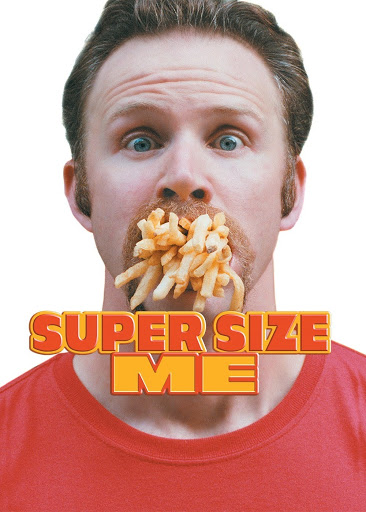
The movie poster for Super Size Me reflects this same attitude toward bodies. The poster features a man with his mouth stuffed with French fries, creating an exaggerated image of excessive eating. Although the documentary focuses on the consequences of eating fast food, its messaging also contributes to a larger conversation about how we associate weight with health and personal responsibility. In American society, gaining weight is often portrayed as a consequence of poor decisions, while losing weight is celebrated as an accomplishment. But this way of thinking ignores how complicated our relationships with food, exercise, and our bodies actually are.
It reminds me of my experience running track, where being slim and athletic made me appear healthy, even when I was pushing my body to the point of vomiting. Meanwhile, someone in a larger body could be exercising regularly and still be judged as unhealthy. Both examples reveal how quickly we make assumptions about people’s habits and well-being based on appearance alone. What bothers me is that these judgments are often disguised as concern for someone’s health, when they may actually reflect society’s discomfort with bodies that do not fit a particular ideal.